Scientists have developed precise methods to measure the weight of single cells, such as yeast and bacteria, using physics principles like Stokes' law and vibrating microchannel resonators, revealing that these tiny organisms weigh only a few picograms.
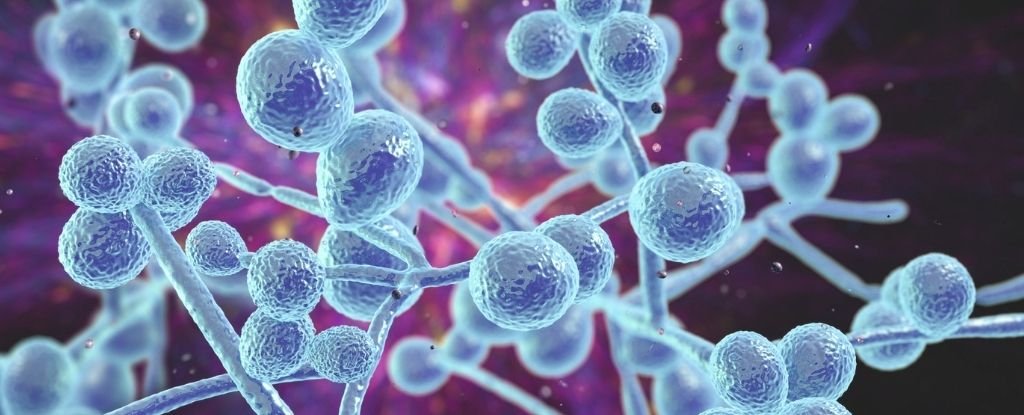
Scientists have discovered a new yeast species, Kazachstania weizmannii, in the guts of mice and humans that appears to combat the potentially dangerous yeast, Candida albicans, which can cause invasive fungal infections. The new yeast has shown promise in keeping C. albicans in check, particularly in immunodeficient mice, by out-competing it for gut occupancy and reducing the spread of invasive candidiasis. This finding could lead to potential therapeutic applications for managing human diseases caused by C. albicans. Further research is needed to understand the implications of this discovery for human health.
New research reveals that while yeast cells actively transcribe nearly all genes, mammalian cells naturally repress transcription, challenging our understanding of genetic transcription across species. The study involved inserting a synthetic gene in reverse order into yeast and mouse stem cells, uncovering significant differences in transcription activity. Understanding these default transcription differences across species could guide genetic engineering efforts and help in the discovery of new genes.
Scientists have discovered that using Torulaspora delbrueckii yeast in carbonic maceration wines enhances their color, aroma, and overall quality, while also accelerating the fermentation process. This breakthrough provides winemakers with a valuable tool to differentiate their products in a highly competitive industry. The research conducted by the Universitat Rovira i Virgili found that the quality of these wines can be increased by using this unconventional yeast, which considerably improves their organoleptic properties and speeds up the malolactic fermentation process. This discovery has the potential to produce high-quality wines and gives wine producers a new tool for differentiating their products in the market.
Dandruff is often mistaken for a dry scalp, but it's actually a manifestation of the skin condition seborrheic dermatitis caused by an inflammatory reaction to yeast. Triggers for flare-ups include going long periods between shampoos, and the frequency of washing hair to prevent dandruff varies by person. Using antifungal shampoos and shampooing as often as possible can help reduce yeast build-up and lead to a more dandruff-free head of hair.
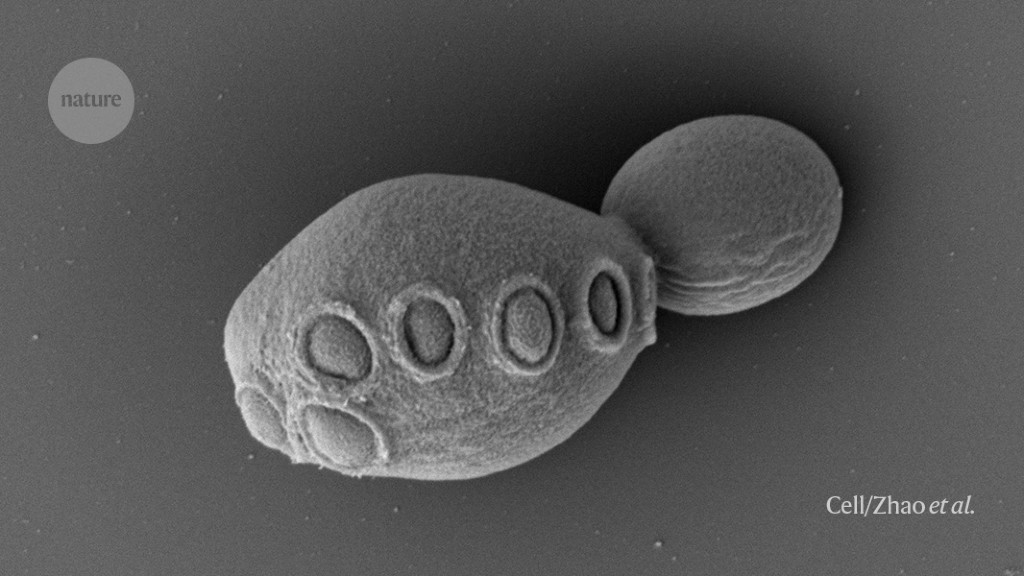
Biologists have successfully engineered a strain of yeast with a genome that is over 50% synthetic DNA. The achievement was made by editing and synthesizing 6.5 of the yeast's chromosomes in the laboratory, along with stitching together an additional chromosome from edited bits of the genetic code. The project, led by the Sc2.0 consortium, aims to create a strain of yeast with a fully synthetic genome, which would be the first eukaryote with such a genome. The engineered yeast has potential applications in producing drugs and fuels, and the project is also advancing biological engineering methods.
Researchers have discovered that dietary changes in yeast, specifically switching from glucose to galactose, can delay cellular aging and improve overall health without the need for caloric restriction. This suggests that dietary adjustments, rather than severe calorie reduction, could promote longevity and wellness in later life. The study conducted by scientists from the Babraham Institute highlights the potential for optimizing diet to achieve healthy aging and challenges the notion that ill health is an inevitable part of the aging process. Further research is needed to explore the applicability of these findings to humans.
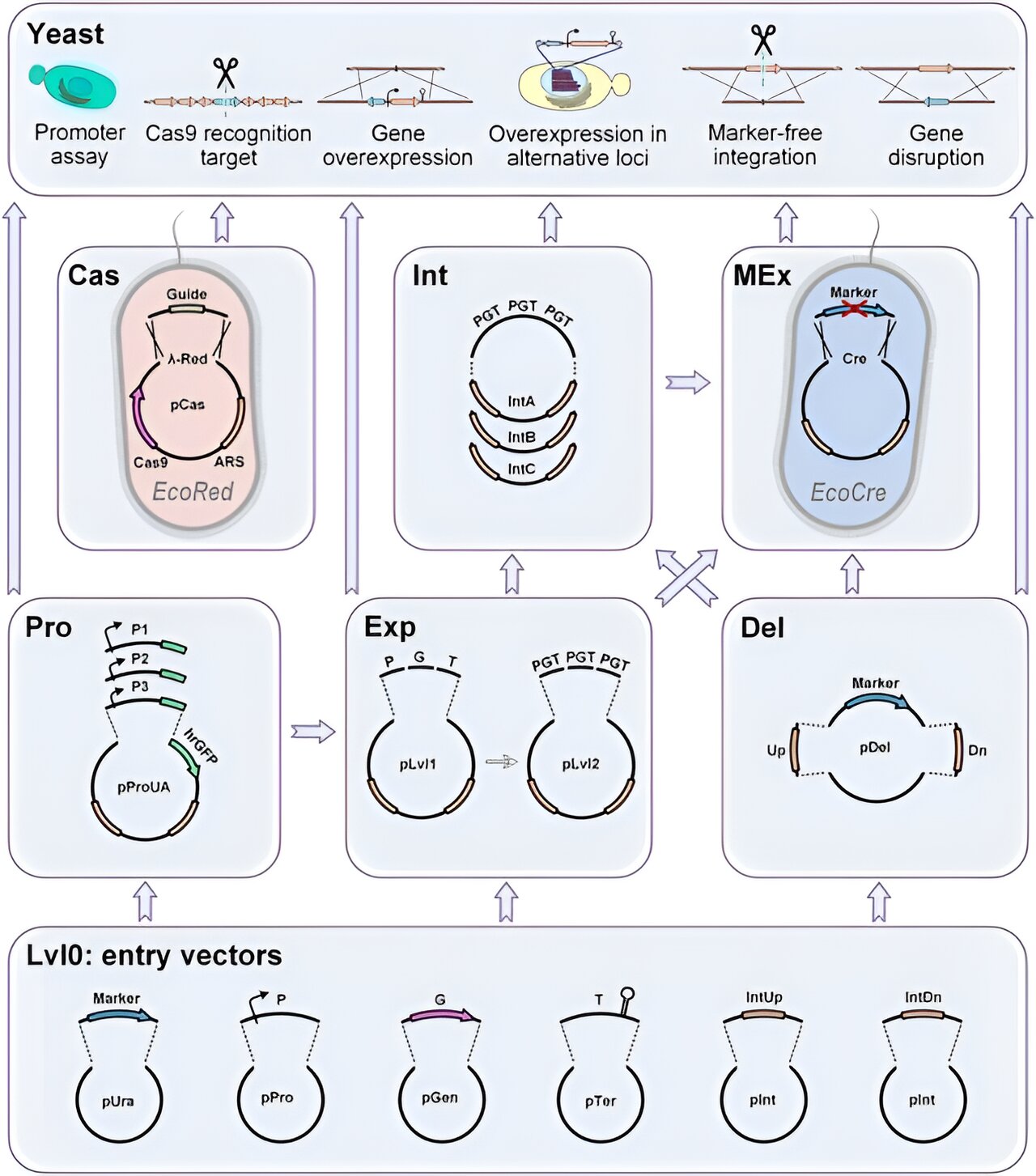
Researchers have developed a comprehensive DNA assembly toolkit to unlock the potential of CRISPR-Cas9 for metabolic engineering. The toolkit consists of seven modules that enable quick and easy assembly of integrative constructs and Cas9-helper plasmids. It includes methods for marker-free integration, donor DNA re-direction, and cloning of guide RNAs. The researchers demonstrated the functionality of the toolkit by engineering yeast to produce homogentisic acid, a precursor for pyomelanin, a constituent of natural sunscreens and cosmetics. The toolkit has broad applications in strain engineering and is expected to facilitate advancements in metabolic engineering and other fields of biological engineering.
Researchers from UNSW Sydney have completely defined the essential cellular process known as methylation, which is a chemical reaction where a small molecule gets added to DNA, proteins, or other molecules. The study emphasizes the essential role methylation plays in the creation of proteins and how it affects how a cell behaves. The researchers have proposed a near-complete picture of this system, implying that there's very little left to be discovered. The study opens up new avenues for how we may be able to control aspects of cell growth and behavior.
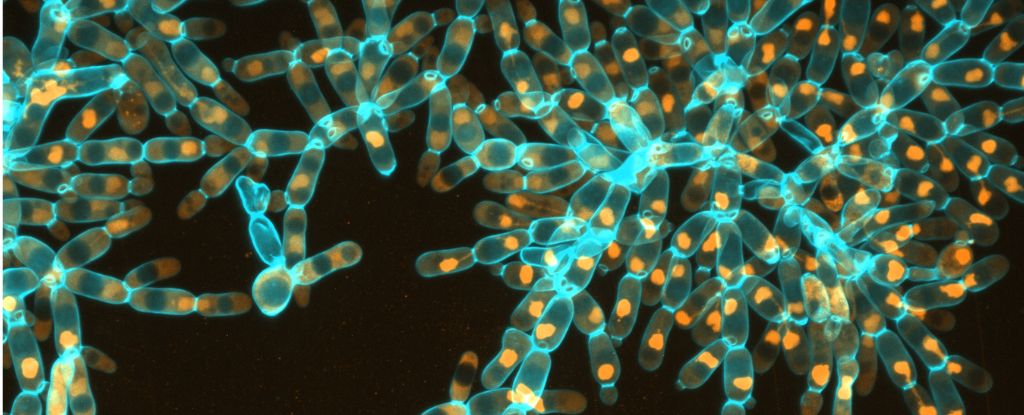
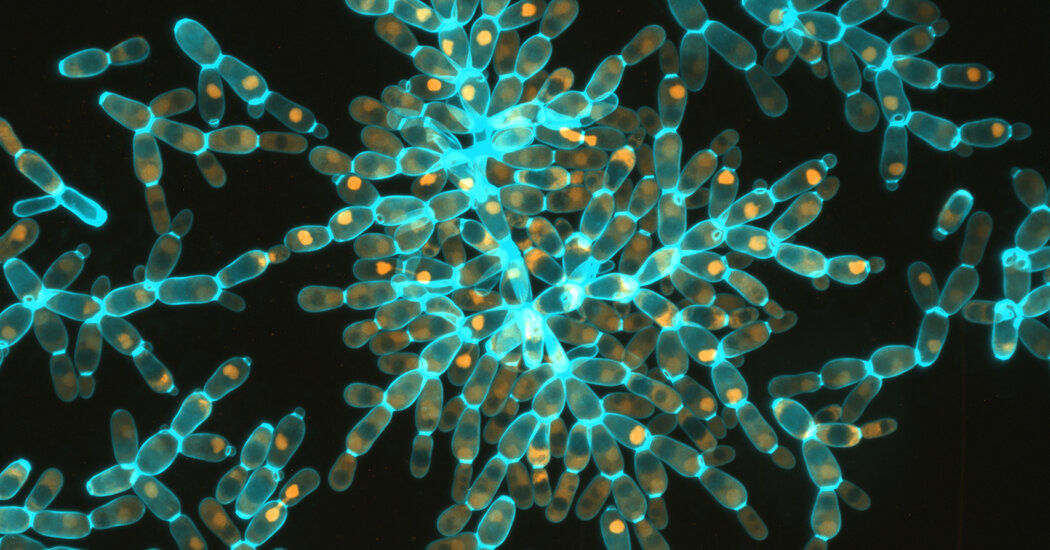
Researchers at the Georgia Institute of Technology have been studying a brewer's yeast that mutated to remain attached in clusters as 'snowflake' yeast. After thousands of generations of careful selection, the organism has grown to over half a million clonal cells, 20,000 times larger than its ancestor. The study is called the Multicellularity Long-Term Evolution Experiment (MuLTEE), and researchers are hoping to run it for decades. The first major findings have come after 3,000 generations of evolution. The evolution of snowflake yeast in the lab supports the idea that oxygen was a significant constraint on the first multicellular life forms on Earth.
Researchers at Georgia Tech have conducted experiments with yeast cells to understand how single-celled organisms evolved into multicellular organisms. The team found that over 3,000 generations, the yeast clumps grew so large that they could be seen with the naked eye, evolving from a soft, squishy substance to something with the toughness of wood. The study suggests that feeding all the cells in a cluster is a crucial part of the trade-offs an organism faces as it goes multicellular. The team is now exploring whether dense clumps of snowflake yeast might develop ways to get nutrients to their innermost members.
Scientists have successfully slowed aging in yeast cells by using a biosynthetic "clock" to rewire the circuit controlling normal deterioration. The researchers engineered a negative feedback loop to stall aging, transforming its normal function as a toggle switch. This created a clock-like device, called a gene oscillator, which drives the cell to periodically switch between two detrimental "aged" states, avoiding prolonged commitment to either and thus slowing degeneration. The clock-like gene oscillators could be a universal system for achieving this goal. Meanwhile, sticking to eight simple, heart-healthy habits can help people reach a ripe old age as well, according to a recent study. Dubbed "Life's Essential 8" (LE8), the main healthy tips include eating healthily, not smoking, and getting plenty of exercise and sleep.
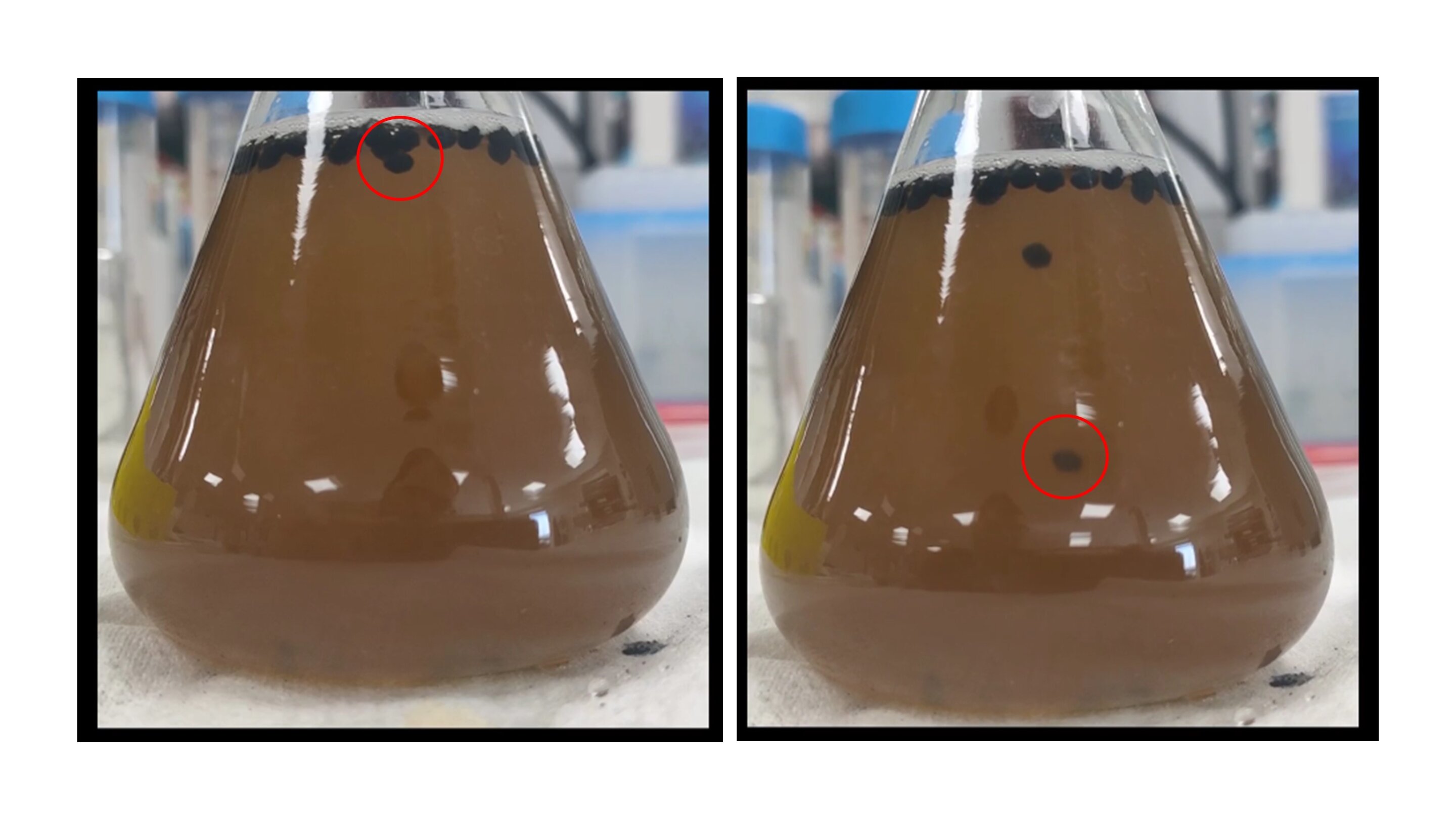
Researchers have developed self-propelled "BeerBots" that can speed up the brewing process by fermenting sugars faster and eliminating the need for filtration. The 2-mm-wide capsules contain active yeast, magnetic iron oxide nanoparticles, and sodium alginate from algae. The BeerBots can be easily separated from the final product with a magnet and can be used for up to three more wort fermentation cycles. The innovation could produce tasty brews faster and simplify the brewing process.
Researchers have created a new type of yeast that can use light as energy by inserting a rhodopsin gene from a marine bacterium into brewer's yeast. This breakthrough is the first step towards engineering artificial photosynthesis and could lead to more complex modes of genetic engineering.
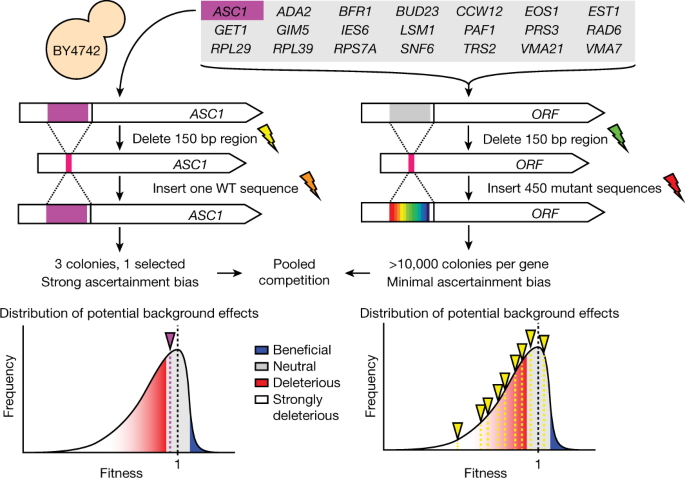
A recent study by Shen et al. claimed that synonymous mutations in yeast genes are mostly non-neutral, meaning they affect protein function. However, a group of researchers led by Andreas Beyer and Joshua S. Bloom argue that the evidence presented in the study is insufficient to support this claim. They suggest that further experiments are needed to confirm the non-neutrality of synonymous mutations.