

Tag

Gene Circuits

All articles tagged with #gene circuits

health2 years ago

Anti-aging breakthrough extends cell lifespan, could increase human longevity.

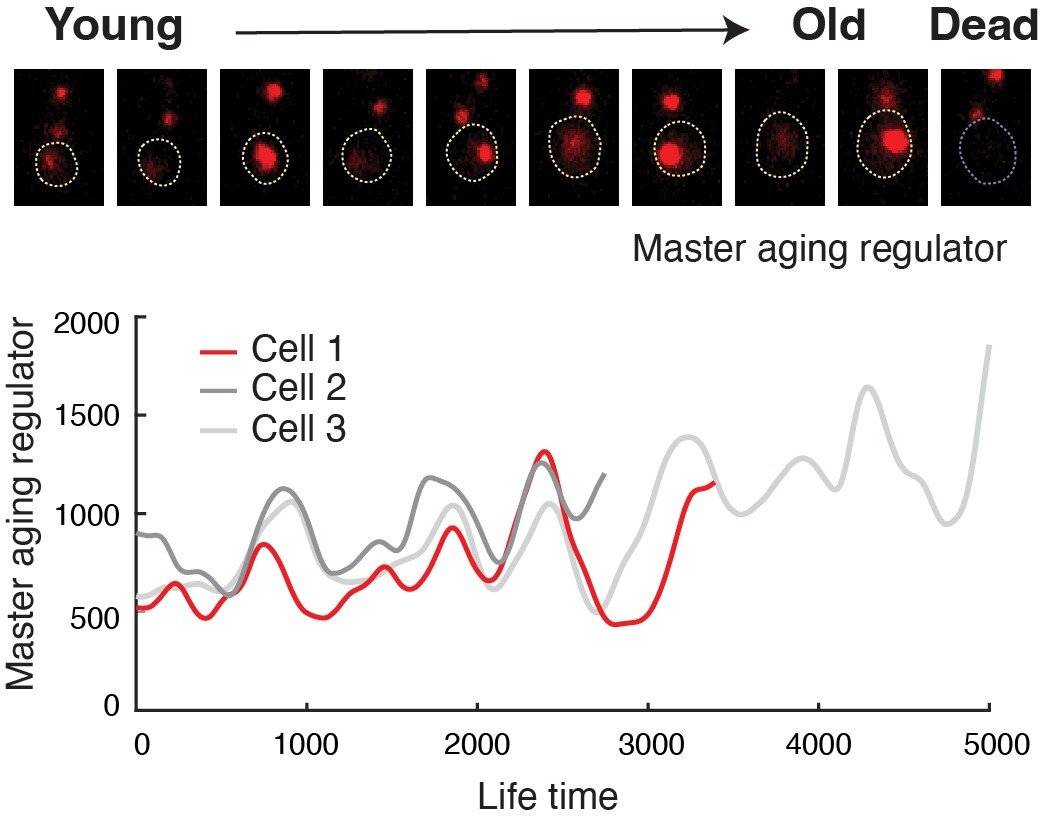
Researchers from the University of California San Diego have reprogrammed the cellular aging process to slow it down, increasing the lifespan of yeast cells by 82%. The study, published in the peer-reviewed journal Science, suggests that the same could be done to human cells. The researchers rewired the transcriptional switch of the cells into a negative-feedback loop, causing the yeast cells to fluctuate between two aging states. The study aligns with the growing movement of scientists who believe that aging can be treated and managed like a disease.

health2 years ago

Breakthrough in Anti-Aging Research: Extending Lifespan by 80%

Scientists have successfully slowed aging in yeast cells by using a biosynthetic "clock" to rewire the circuit controlling normal deterioration. The researchers engineered a negative feedback loop to stall aging, transforming its normal function as a toggle switch. This created a clock-like device, called a gene oscillator, which drives the cell to periodically switch between two detrimental "aged" states, avoiding prolonged commitment to either and thus slowing degeneration. The clock-like gene oscillators could be a universal system for achieving this goal. Meanwhile, sticking to eight simple, heart-healthy habits can help people reach a ripe old age as well, according to a recent study. Dubbed "Life's Essential 8" (LE8), the main healthy tips include eating healthily, not smoking, and getting plenty of exercise and sleep.

science2 years ago

Engineering longevity: Scientists slow aging and unlock the fountain of youth.

Researchers at the University of California San Diego have used synthetic biology to engineer a solution that slows down the aging process in cells. By genetically rewiring the circuit that controls cell aging, they created a negative feedback loop that operates as a clock-like device, called a gene oscillator, that drives the cell to periodically switch between two detrimental "aged" states, avoiding prolonged commitment to either, and thereby slowing the cell's degeneration. This resulted in a dramatically extended cellular lifespan, setting a new record for life extension through genetic and chemical interventions.