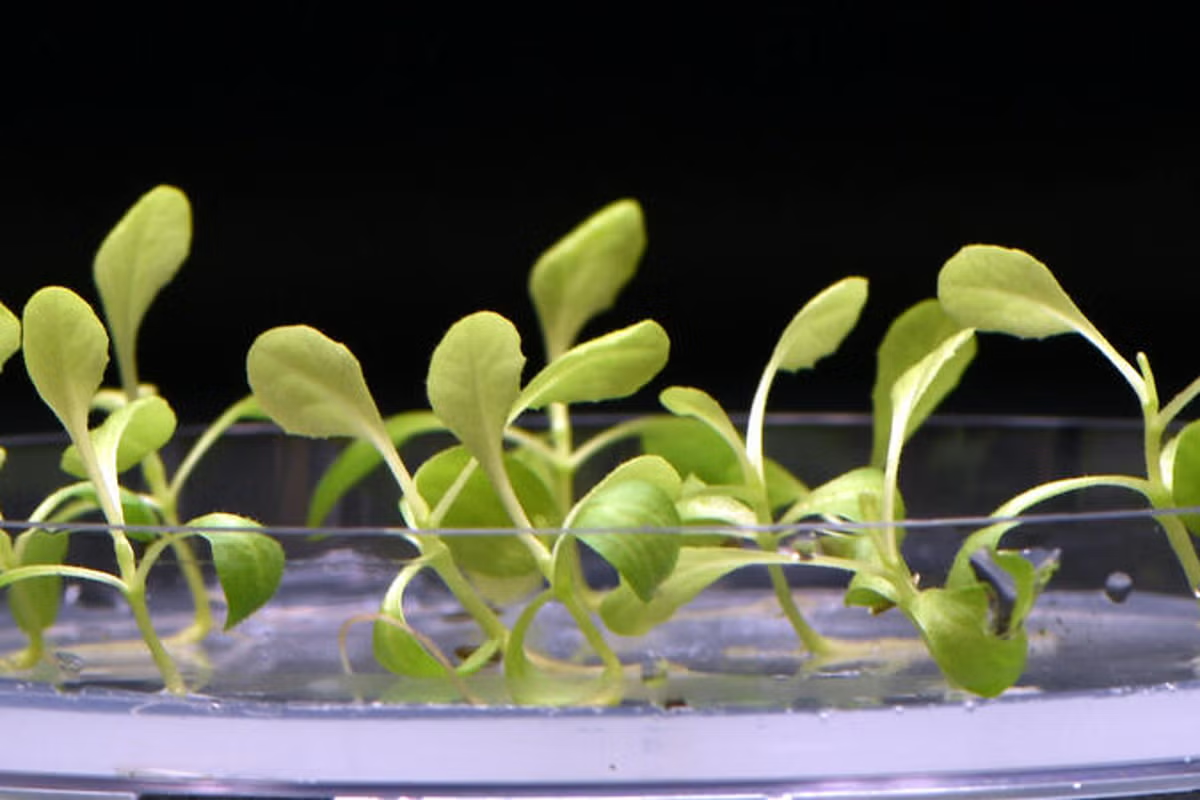
Cambridge researchers have developed a solar-powered semi-artificial leaf that mimics photosynthesis to convert CO2 into useful chemicals like formate, potentially revolutionizing green chemistry and reducing reliance on fossil fuels in the chemical industry.
Scientists from IISc and Caltech have uncovered why electrons in Photosystem II transfer only through the D1 branch, revealing that higher energy barriers in the D2 branch prevent electron flow, a discovery that could inform the development of artificial photosynthetic systems.
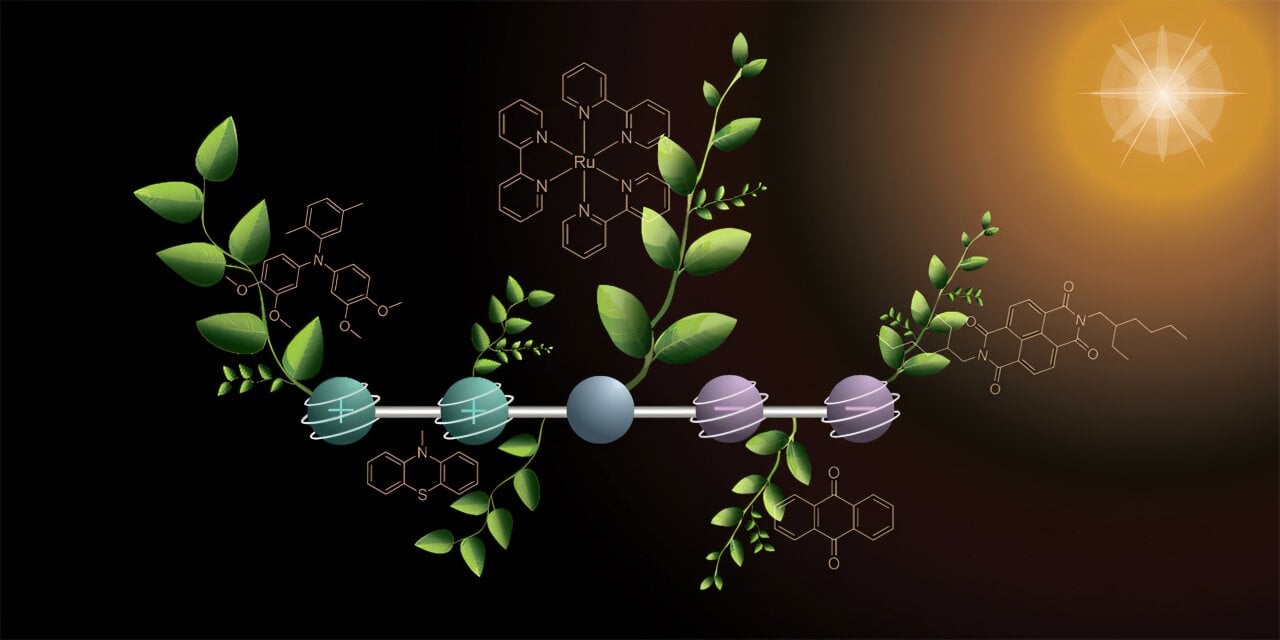
Swiss scientists at the University of Basel have developed a groundbreaking molecule capable of storing multiple charges, mimicking natural photosynthesis to produce carbon-neutral fuels like hydrogen and methanol, advancing sustainable energy technologies and addressing climate change.
Scientists at the University of Basel have developed a molecule capable of storing multiple charges from sunlight under natural conditions, marking a significant step toward artificial photosynthesis, which could produce storable, carbon-neutral fuels for sectors difficult to electrify, such as shipping and aviation.
A Swiss research team has developed a novel molecule capable of storing four charges under light, mimicking natural photosynthesis, which could be a key step toward creating carbon-neutral fuels using sunlight.
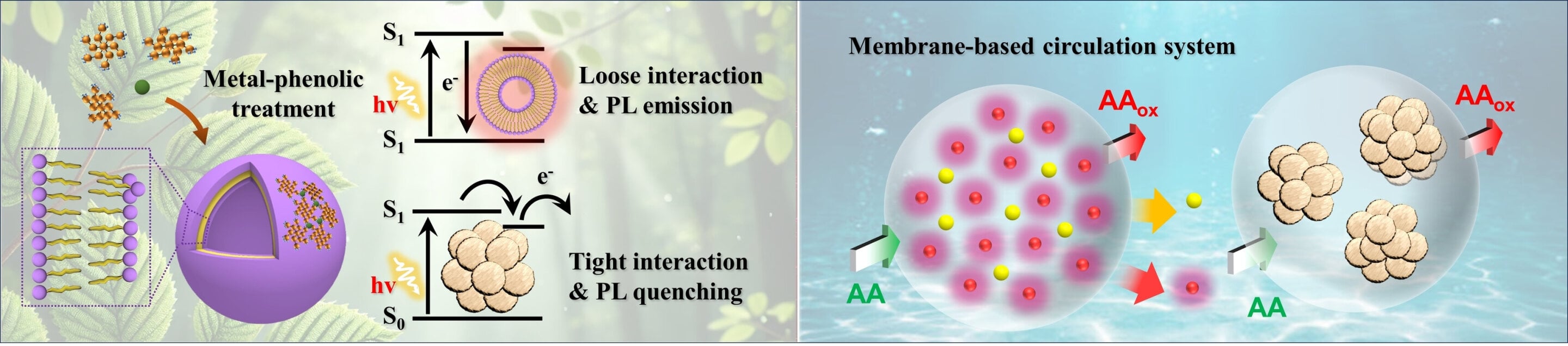
Researchers have developed a new solar hydrogen production technology by creating a supramolecular fluorophore nanocomposite that mimics natural photosynthesis. This system uses tannic acid-based metal-polyphenol polymers to enhance the stability and efficiency of photocatalytic reactions, achieving a hydrogen production rate 5.6 times higher than previous methods. The technology combines modified rhodamine dyes with bacteria to convert sunlight and ascorbic acid into hydrogen, offering a sustainable energy solution.
Researchers have made a breakthrough in artificial photosynthesis by successfully mimicking the natural process to produce methane, a highly energy-dense fuel. By utilizing water, carbon dioxide, and sunlight, this new process could potentially replace solar panels as a primary source of limitless and clean energy. The system aims to replicate the energy generation and storage process of plants, but scaling it up to meet the demands of a city poses challenges that need to be addressed to prevent methane leakage and further contribute to climate change.
Scientists have made a breakthrough in sustainable energy research by mimicking photosynthesis to produce methane, a potent and energy-rich fuel, from carbon dioxide, water, and sunlight. The prototype system, known as artificial photosynthesis, offers a glimpse into the future of renewable energy technologies and could potentially replace nonrenewable fossil fuels. The process involves splitting water into hydrogen and oxygen gas using sunlight, then reacting the hydrogen with CO2 to form methane and water. While the technology shows promise, further improvements in efficiency and scalability are needed for large-scale implementation. The research opens up discussions about the environmental impact and sustainability of utilizing methane as a clean energy source.
Researchers have developed a novel approach to create hybrid solid catalysts for artificial photosynthesis using protein crystals produced through genetically modified bacteria. These catalysts exhibit high activity, stability, and durability, and have the potential to revolutionize enzyme immobilization. By combining in-cell engineering and an in vitro process, the researchers successfully produced highly active EY·H1-FDH@PhC catalysts that can convert carbon dioxide into formate upon exposure to light. This study highlights the potential of bioengineering in synthesizing complex functional materials and offers a promising strategy for nanomaterials and artificial photosynthesis research.
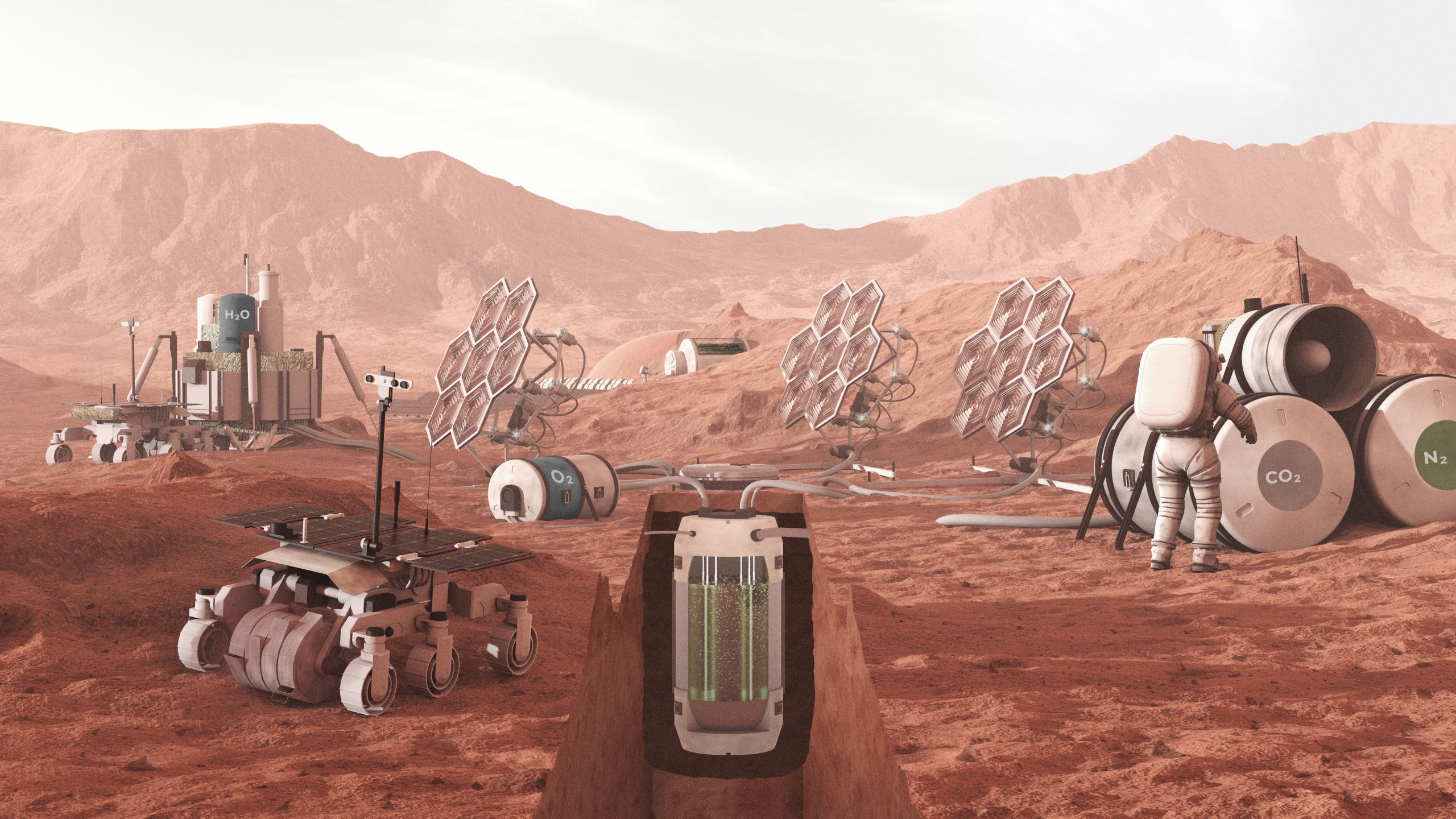
Researchers from the University of Warwick propose using artificial photosynthesis devices, capable of harnessing sunlight to generate oxygen and recycle carbon dioxide, for sustainable energy solutions in space exploration. The devices could potentially be used on the Moon and Mars, improving the efficiency of space travel and informing improvements in Earth-based solar technologies. The technology could provide ample oxygen production and carbon dioxide recycling on both Moon and Mars.
Devices that mimic the process of photosynthesis in plants to turn sunlight and water into oxygen are being developed for space exploration. A recent study sponsored by ESA has shown that artificial photosynthesis devices will work on the Moon and even on Mars. These devices produce oxygen from water and sunlight using semiconductor materials coated with metallic catalysts, bypassing the need for electricity. The research team has calculated that simple solar mirrors to concentrate sunlight would improve the process and could lead to higher oxygen production yields.
Artificial photosynthesis could be the solution to the limited oxygen supply for astronauts during space exploration, especially on long-duration missions like a one-way trip to Mars. Currently, most of the oxygen on the International Space Station is obtained through electrolysis, but the process is limited by the amount of water that can be carried. Artificial photosynthesis could provide a sustainable source of oxygen by using sunlight to convert carbon dioxide into oxygen.
Researchers have proposed using artificial photosynthesis to create a new type of life support system for space exploration. The system would rely on semiconductor materials coated with metallic catalysts to convert CO2 and water into oxygen gas and hydrogen/carbon-based fuels. This would be highly beneficial for long-duration missions since it would combine reduced volume and weight with greater efficiency. Furthermore, the system would be easier to maintain since it would need less complex wiring and mechanical components. The technology is still in its infancy and requires several more years of additional research, but the potential returns would be immense, ranging from lightweight life support systems for long-duration missions to artificial atmospheres for habitats in LEO, on the Moon, and on Mars.
Artificial photosynthesis, using semiconductor materials and metallic catalysts, could be crucial for space exploration and colonization by efficiently producing oxygen and recycling carbon dioxide. These devices could reduce reliance on heavy and unreliable systems currently used on the International Space Station. The devices could operate at room temperature at pressures found on Mars and the Moon, and could be used directly in habitats using water as the main resource. The insights gained from designing and fabricating these devices could also help meet the green energy challenge on Earth.
Artificial photosynthesis may be the key to sustaining life beyond Earth, as it can produce oxygen and recycle carbon dioxide in one device using solar energy and water. This technology could complement existing life support systems and reduce the weight and volume of space exploration equipment. The devices could also be used to produce hydrogen or carbon-based fuels, opening up a green way for the production of energy-rich chemicals. The insights gained from designing and fabricating these devices could also help meet the green energy challenge on Earth.