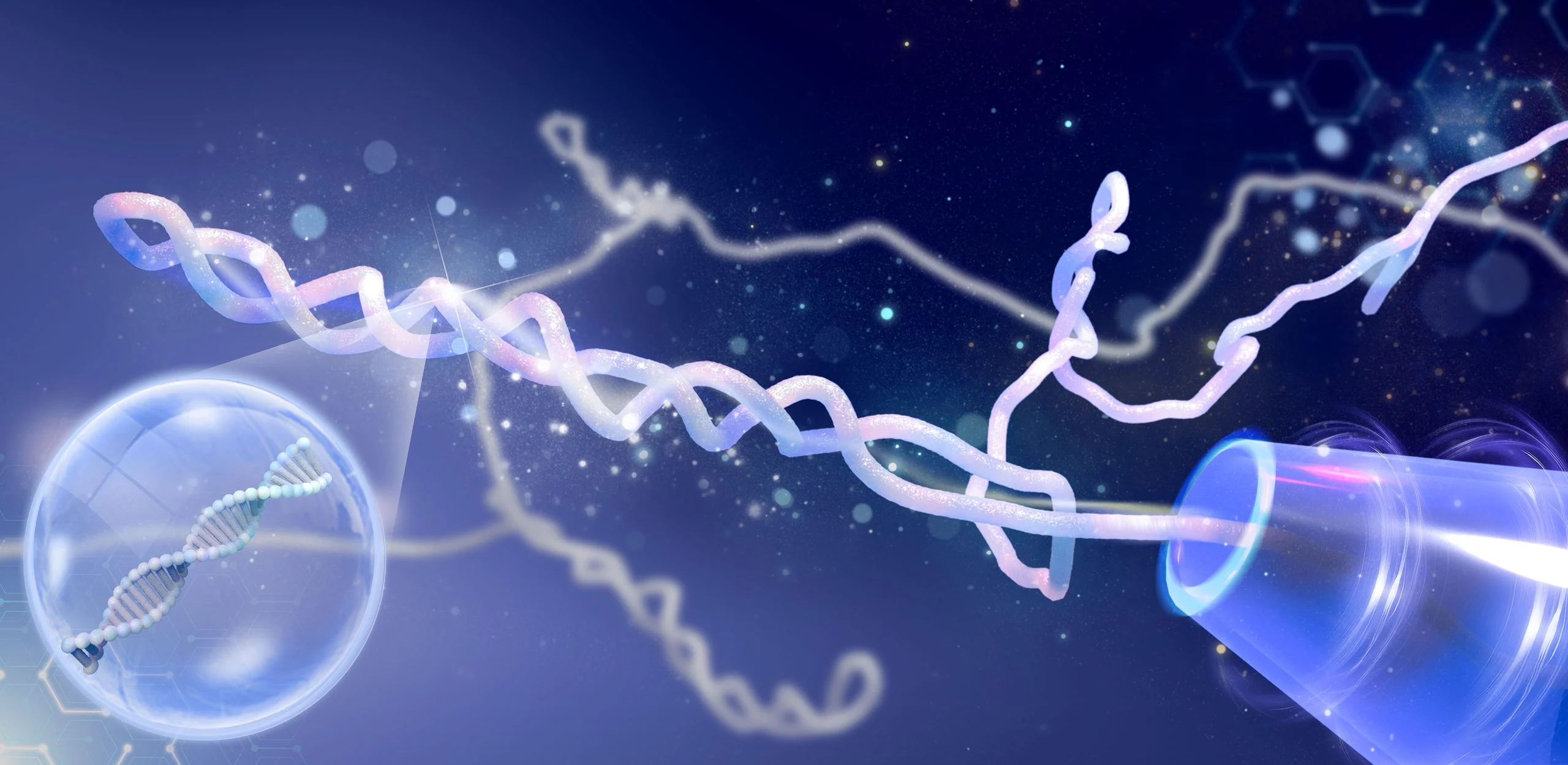
New research reveals that what was previously thought to be knots in DNA during nanopore analysis are actually persistent twists called plectonemes, caused by electroosmotic flow, which has significant implications for understanding DNA behavior and developing advanced biosensors.
Lawrence police arrested David Zimbrick, a suspect linked to child sexual assault cases from 2000 and 2003, using DNA evidence and genetic genealogy technology similar to that used in the Golden State Killer case, after decades of investigation.
A recent study reveals that early modern humans, called the LRJ Group, lived in Europe around 45,000 years ago, sharing the continent with Neanderthals and using distinctive tools. Genetic analysis shows these groups were closely related but left no descendants, highlighting a brief and unique chapter in human history marked by movement, connection, and survival challenges.
A groundbreaking DNA study has identified the world's earliest known plague carrier in a 4,000-year-old domesticated sheep from the Bronze Age, revealing how the plague spread before fleas became its primary vector, and highlighting the complex interactions between humans, livestock, and natural reservoirs in ancient Eurasia.
Scientists from the University of Edinburgh have discovered that a region of Neanderthal DNA enhances the activity of a gene involved in jaw development, providing insights into how facial features like larger jaws evolved in Neanderthals compared to modern humans.
James Watson, Nobel laureate and key figure in discovering the DNA double helix, has died at 97. His groundbreaking work revolutionized biology, but his legacy is marred by controversial racist and sexist comments, leading to his removal from leadership roles at Cold Spring Harbor Laboratory. Despite his scientific achievements, his remarks on race and gender have sparked ongoing debate about his overall impact.
James Watson, Nobel laureate and key figure in discovering the structure of DNA, died at age 97, after a distinguished career overshadowed by later controversies over his racist and sexist writings.
James Watson, co-discoverer of the DNA double helix and a Nobel laureate, has died at age 97. His groundbreaking work revolutionized biology and medicine, but his legacy is also marked by controversial remarks on race. Watson's discovery of DNA's structure in 1953 laid the foundation for modern genetics, gene editing, and forensic science, influencing countless scientific advancements. Despite his achievements, his later life was marred by offensive statements, leading to professional censure and a complex legacy.
James D Watson, co-discoverer of the DNA double helix structure and Nobel laureate, has died at age 97. His groundbreaking work revolutionized biology and medicine, but his later years were marred by controversial remarks on race. Watson's discovery laid the foundation for modern genetics, DNA analysis, and ethical debates in science.
Scientists are using sedimentary DNA (sedaDNA) to uncover detailed information about past environments and extinct species, revealing new insights into history and ecology by analyzing DNA preserved in rocks and sediments, even from ancient ports and cave paintings.
Scientists have discovered large, mysterious DNA segments called 'inocles' in the human mouth's microbiome, which may influence the immune system and could serve as biomarkers for diseases like cancer. These giant extrachromosomal elements were identified using advanced long-read DNA sequencing, revealing new insights into the complex relationship between oral bacteria and human health.
Researchers have discovered that mitochondrial DNA can be expelled into the cell's cytoplasm due to replication errors caused by a lack of DNA building blocks, leading to inflammation associated with aging. This process may contribute to age-related diseases, and understanding it could help develop therapies to improve health in later years.
DNA technology has finally identified Robert Eugene Brashers as the perpetrator of the 1991 yogurt shop quadruple murders in Austin, Texas, solving a case that haunted the city for over three decades and leading to the overturning of wrongful convictions from 1999.
Researchers in Japan have discovered large extrachromosomal DNA elements called Inocles in the human mouth, present in about 74% of people, which may influence oral health, immunity, and disease risk. These structures help bacteria adapt to the oral environment and could serve as markers for serious diseases like cancer.
Research shows that microgravity in space activates the 'dark genome' in human DNA, causing stem cells to age faster and potentially impairing astronauts' health, but new treatments may counteract these effects and benefit Earth-based medicine.