New research indicates that psychedelics may enhance memory-related brain connections, particularly between the claustrum and anterior cingulate cortex, potentially explaining their therapeutic effects in mental health treatment by promoting neural plasticity and strengthening memory encoding.
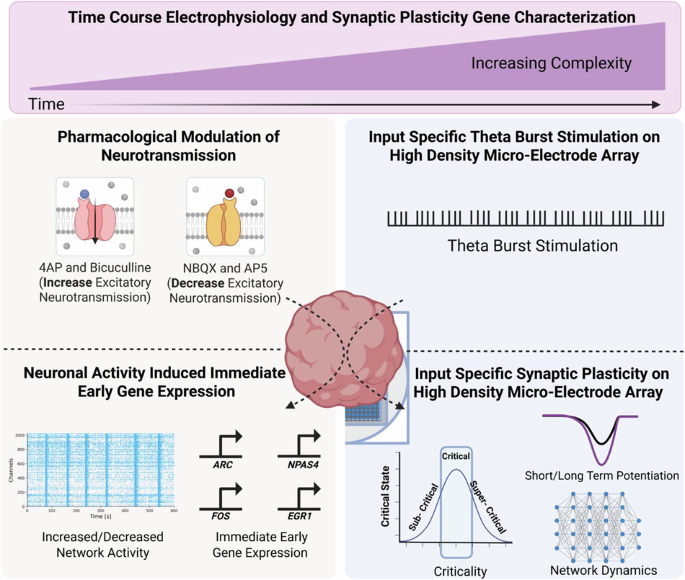
This study demonstrates that human neural organoids develop key features necessary for basic learning and memory, including synaptic plasticity, functional connectivity, and critical neural dynamics, making them promising models for studying brain function and disorders.
Scientists have discovered that the brain uses two distinct types of synaptic sites—silenceable and idle-able—to balance learning and stability, allowing new memories to form without erasing old ones. This finding could lead to targeted therapies for neurological disorders and enhance cognitive function.
Scientists have discovered that the brain protein cypin strengthens neuron connections by promoting proper protein tagging at synapses, slowing protein breakdown, and increasing synaptic proteins, which could lead to new treatments for brain injuries and neurodegenerative diseases like Alzheimer's and Parkinson's.
New research demonstrates that low-intensity repetitive transcranial magnetic stimulation (rTMS) can partially reverse synaptic damage in mouse models of Alzheimer's disease by increasing the turnover of specific synaptic structures, suggesting potential therapeutic benefits for AD patients.
New research demonstrates that synaptic connections in the cerebral cortex can strengthen during sleep under specific neural activity conditions, supporting the possibility of sleep-based learning and offering insights into sleep-related brain disorders and memory improvement strategies.
Researchers at the Salk Institute have discovered that synapses in the brain can store 10 times more information than previously thought, using a new method based on information theory. This breakthrough enhances understanding of learning, memory, and brain disorders, potentially advancing research on conditions like Alzheimer's disease.
Researchers at the Salk Institute have developed a new method using information theory to measure synaptic strength, plasticity, and information storage in the brain, revealing that synapses can store 10 times more information than previously thought. This breakthrough could significantly advance our understanding of learning, memory, and neurological diseases.
Researchers have discovered that mitochondrial fusion dynamics play a crucial role in the maturation of adult-born neurons in the brain, supporting synaptic plasticity in the adult hippocampus. This insight could lead to new strategies for treating neurological disorders like Alzheimer's and Parkinson's by targeting mitochondrial dynamics to enhance brain repair and cognitive functions. The study suggests that altered neurogenesis is linked to these disorders and that understanding the role of mitochondrial fusion in controlling synaptic function could guide specific interventions to restore neuronal plasticity and cognitive functions in disease.
Researchers have developed a new neural model that sheds light on the intricate mechanisms of synaptic plasticity, emphasizing the crucial role of interactions among adjacent synaptic connections in facilitating rapid learning and the consolidation of long-term memories. This breakthrough offers a comprehensive understanding of synaptic co-dependency, challenging the traditional view of isolated synaptic changes and providing novel insights into the dynamics and optimization of neural networks in the brain at the microscale.
A study led by researchers at the Hebrew University of Jerusalem suggests that mushroom extract containing psilocybin may have a more potent and enduring impact on synaptic plasticity compared to chemically synthesized psilocybin. The research, focusing on synaptic plasticity in mice, reveals promising insights into the potential therapeutic benefits of natural psychedelic compounds in addressing psychiatric disorders. The study's findings open up new possibilities for the therapeutic use of natural psychedelic compounds, providing hope for those who have found little relief in conventional psychiatric treatments. Controlled mushroom cultivation offers a promising approach to replicate extracts for medicinal use, highlighting the feasibility of incorporating them into Western medicine.
A study led by Prof. Shira Knafo at Ben-Gurion University has revealed a significant link between anxiety disorders and the brain receptor TACR3, as well as testosterone. The research found that rodents with high anxiety had low TACR3 levels in the hippocampus, and that testosterone deficiency-related anxiety could be addressed by targeting TACR3. The study employed innovative tools to advance understanding of synaptic plasticity and its role in anxiety, offering new therapeutic possibilities for treating anxiety disorders, especially in individuals with hypogonadism.
A new study from Ben-Gurion University of the Negev has found a potential neurological link between anxiety disorders and the TACR3 receptor in the hippocampus, particularly in male rodents with high anxiety levels. The research suggests that deficiencies in TACR3 may be associated with low testosterone levels and anxiety, and that these deficiencies can be rectified through testosterone administration, offering hope for new approaches to managing anxiety related to testosterone deficiency.
Researchers have discovered the pivotal role of RNA in fear-related learning and memory. Noncoding RNA Gas5 influences neuronal excitability, impacting learning and memory processes, while m6A-modified RNAs regulate synaptic plasticity crucial for fear extinction memory, a key factor in PTSD. These findings provide new insights into RNA's role in the brain and potential RNA-based therapies for PTSD and phobias.
Researchers have genetically modified the LIMK1 protein, crucial for memory formation, to be activated by the drug rapamycin. This "chemogenetic" approach showed significant memory improvement in animal models with age-related cognitive decline, offering potential for innovative treatments for neuropsychiatric diseases like dementia. The study represents a breakthrough in memory research and opens new avenues in neurological research and therapy by manipulating synaptic plasticity in the brain.