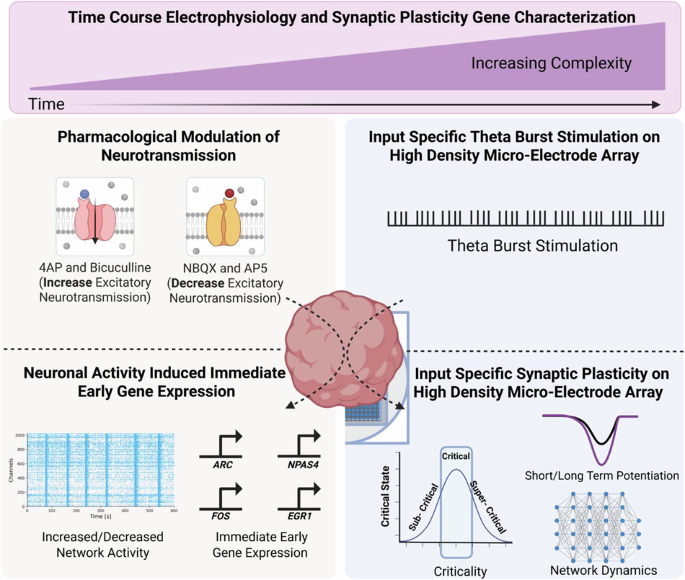
This study demonstrates that human neural organoids develop key features necessary for basic learning and memory, including synaptic plasticity, functional connectivity, and critical neural dynamics, making them promising models for studying brain function and disorders.
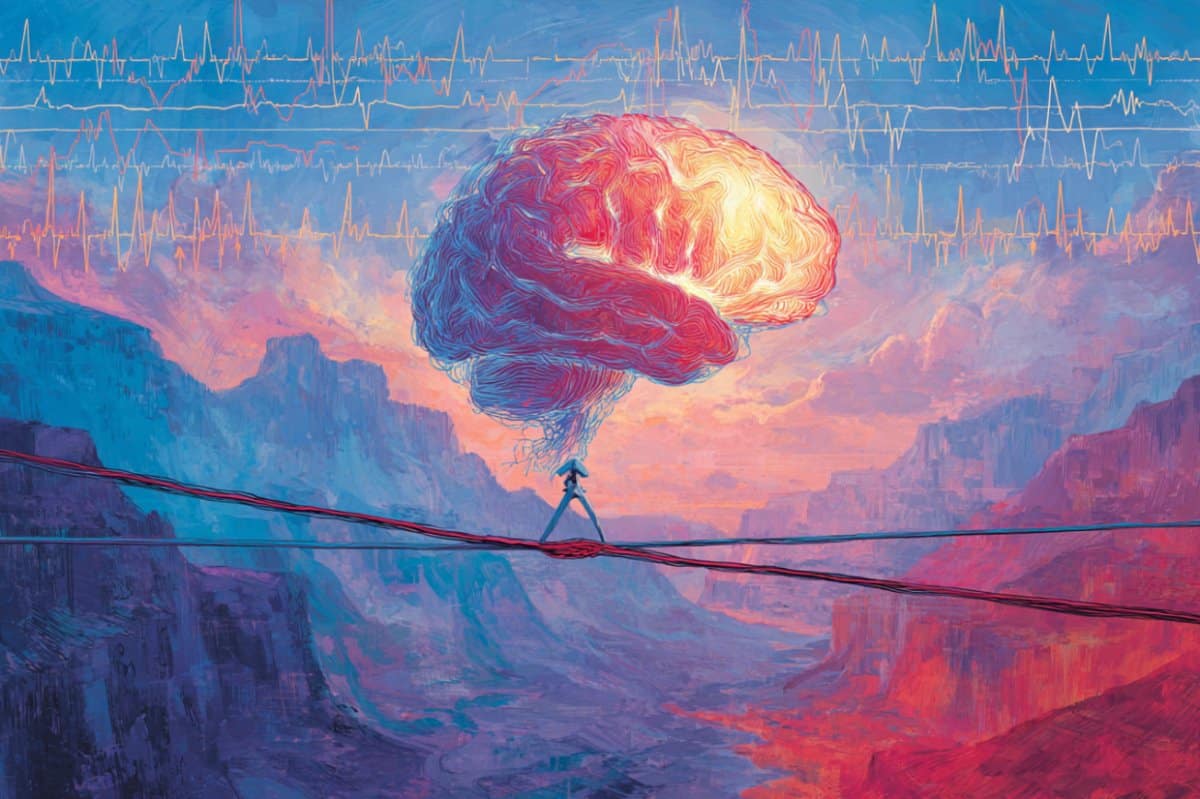
New research proposes that the brain operates optimally at a critical state between order and chaos, which is essential for learning and cognition. Disruption of this criticality, such as by tau protein buildup in Alzheimer's, impairs brain function, but sleep appears to restore it, offering potential for early diagnosis and intervention. The theory unifies physics and biology to better understand brain health and disease.
Criticality incidents, where accidental nuclear chain reactions occur, highlight the dangers of mishandling fissionable materials. Notable incidents include the 1958 Los Alamos accident and the 1999 Tokaimura disaster, both resulting from improper handling and excessive accumulation of nuclear material. These events underscore the importance of strict safety protocols and constant vigilance in nuclear operations to prevent catastrophic outcomes.
Researchers at Northwestern University have found that the structural features of brains from humans, mice, and fruit flies are near a critical point similar to a phase transition, suggesting a universal principle may govern brain structure. This discovery could lead to new computational models that emulate brain complexity, as the brain's structure appears to be in a delicate balance between two phases, exhibiting fractal-like patterns and other hallmarks of criticality.
A new study proposes that the primary function of sleep is to reset the brain's computational state to achieve "criticality," a state that optimizes thinking and information processing by balancing order and chaos in neural activity. This challenges the notion that sleep merely replenishes chemicals and presents a compelling theory for the fundamental role of sleep in our lives. The study, which tracked brain activity in sleeping rats, bridges physics and biology, highlighting the complex, wondrous nature of the brain's neural networks.
New research using DishBrain, a collection of 800,000 human neural cells learning to play Pong, provides strong evidence in support of the critical brain hypothesis. The study shows that when neurons receive task-related sensory input, they enter a near-critical state, where tiny inputs can trigger "avalanches" of brain activity. This state is crucial for complex behaviors and task performance. However, criticality alone is not enough for learning; a feedback loop providing information about the consequences of actions is also necessary. The research has implications for understanding brain diseases, developing brain-computer interfaces, and exploring real brain function.