Researchers have found that certain 'gifted' dogs can learn the names of objects by overhearing conversations, demonstrating advanced social cognitive skills similar to young children, and suggesting that the ability to interpret complex social interactions predates language itself.
Facial disfigurement has historically been used across cultures as a form of punishment and social control, often to humiliate, mark deviance, or signify moral transgressions, with motivations evolving from symbolic hostility in ancient times to revenge and humiliation in modern contexts.
Research suggests that individuals with higher psychopathic traits, specifically meanness, may have a heightened ability to accurately interpret others' thoughts and intentions, challenging previous assumptions that psychopathy impairs social understanding. The study used a movie-based task to assess social cognition and found that meanness was linked to fewer errors in understanding social situations, possibly reflecting a more logical, less emotional approach to social interpretation. These findings highlight the complex relationship between psychopathic traits and social cognition, with implications for understanding manipulation and social behavior.
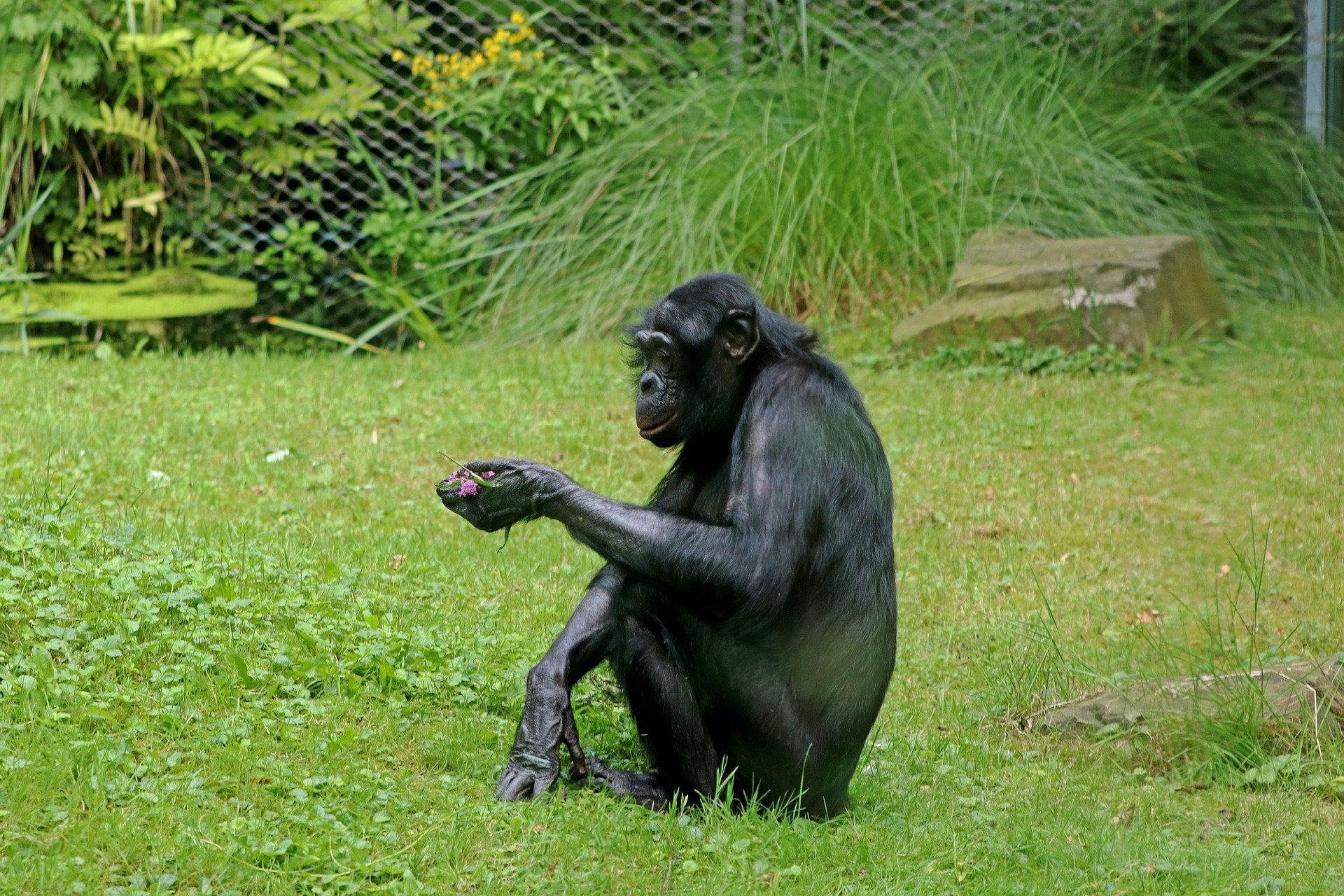
A study with a bonobo named Kanzi demonstrates that apes can mentally track multiple familiar humans out of sight, recognizing them by voice and face, revealing complex social cognition shared with humans.
A new fMRI study shows that the brain encodes both the true emotional intent of others and our own inferences about their feelings, with greater alignment between these patterns leading to better empathic accuracy, even when we misjudge emotions.
New research shows that the dorsal medial prefrontal cortex (DMPFC), previously linked to social reasoning, is more responsive to uncertainty in general, whether about people, bodies, or objects, challenging the idea that it is solely a social brain region. This insight could reshape understanding of social behaviors and conditions like autism, suggesting that differences in handling uncertainty may underlie atypical social cognition.
A study by Northwestern Medicine explores the evolutionary development of human social cognitive abilities, linking them to the amygdala, or "lizard brain," which processes fear and social behaviors. This connection may inform future psychiatric therapies for anxiety and depression, potentially using noninvasive techniques like transcranial magnetic stimulation to target the amygdala indirectly. The research highlights the sophisticated interplay between ancient and advanced brain functions, crucial for human social interaction and survival.
A study from Northwestern University reveals constant communication between the brain's social cognitive network and the amygdala, which processes emotions and fear. This connection helps integrate emotional significance into social interactions, potentially informing non-invasive treatments for anxiety and depression through techniques like transcranial magnetic stimulation (TMS). The findings highlight the evolutionary expansion of brain regions enhancing social understanding while linking them to ancient emotional centers.
A study reveals that by age three, children can understand others' intentions using active mirror neurons, with the mylohyoid muscle activating during goal-directed actions. This early development of the "resonance" system is crucial for social cognition and could aid in early diagnosis of conditions like autism spectrum disorder.
New research published in PLOS Biology reveals that dopamine imbalances directly cause social difficulties, such as understanding others' emotions and mental states, in disorders like Parkinson's disease and schizophrenia. This finding suggests that dopamine-based drugs could potentially treat these social challenges, paving the way for new therapeutic interventions for various conditions affected by dopamine imbalances.
A study from the Singapore University of Technology and Design suggests that early bilingualism leads to beneficial structural changes in the brain, including increased gray matter volume and cortical thickness, which contribute to a stronger cognitive reserve. This reserve is crucial for maintaining social cognitive abilities into older age, highlighting bilingualism’s potential to enhance mental flexibility and attention control. The findings emphasize the importance of bilingualism for healthier aging and encourage early language learning to preserve cognitive function and social cognition in later life.
A study has found that big cats, including tigers and cheetahs, can distinguish between familiar and unfamiliar human voices, indicating that even solitary animals possess social cognition. The research, which involved various exotic cat species in captive settings, revealed that the cats responded more attentively and intensely to familiar human voices compared to unfamiliar ones, regardless of whether they were hand-reared or mother-reared. The findings suggest that the ability to recognize individual human voices is not solely a result of domestication, but rather regular exposure to humans, and could also apply to wild cats if they were regularly exposed to human voices.
Researchers have discovered that neural activity in the left ventral temporoparietal junction (vTPJ) and the lateral anterior temporal lobe (lATL) during sentence processing is associated with social-semantic working memory rather than general language processing. These regions respond to sentences with social meaning and maintain activity even after the linguistic stimulus is gone, challenging previous assumptions about their role in language comprehension. This finding enhances our understanding of the brain's language network and its connection to social cognition.
New research suggests that individuals with lower socioeconomic status (SES) tend to have negative perceptions about how others see them, believing others see them as colder and less competent. The study found that people with lower SES tend to have a more negative perception of themselves and their worth compared to those with higher SES. However, regardless of SES, people were perceived as equally warm and competent by others. The findings have implications for understanding the impact of SES on social cognition and its potential role in perpetuating material inequalities.
A study published in Borderline Personality Disorder and Emotion Dysregulation suggests that borderline symptoms are associated with difficulty detecting irony. Borderline personality disorder is a mental health condition characterized by a pattern of unstable relationships, intense emotions, impulsiveness, and a distorted sense of self. The study found that participants with borderline personality disorder had a more difficult time differentiating ironic and literal statements than the control group. The study took significant steps into better understanding communication in individuals with borderline personality disorder.