Tag

James Webb

All articles tagged with #james webb

NASA's Hubble and Webb Capture Eerie 'Blood-Soaked Eyes' Galaxies

Originally Published 1 year ago — by USA TODAY

Featured image for NASA's Hubble and Webb Capture Eerie 'Blood-Soaked Eyes' Galaxies
Source: USA TODAY

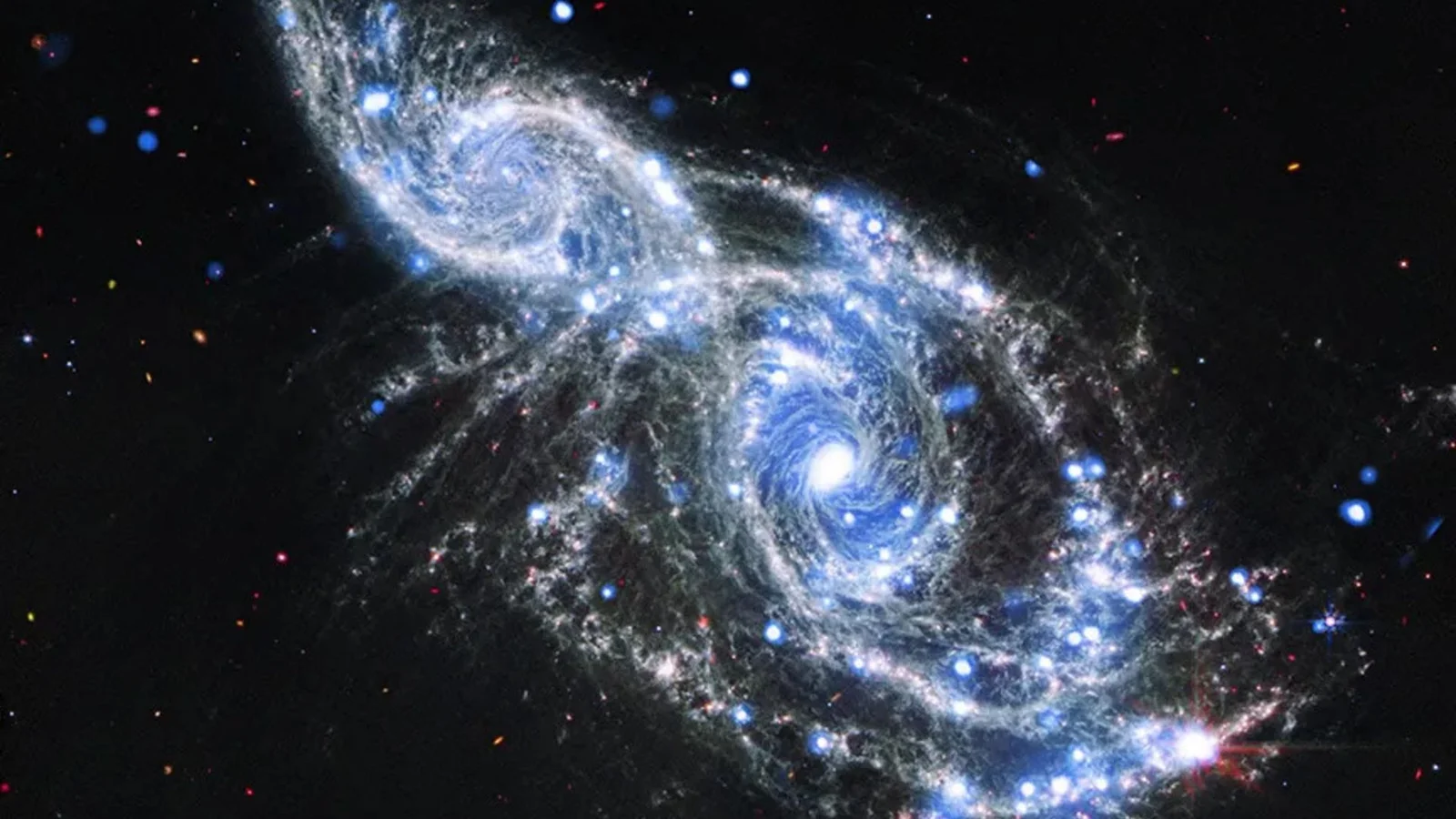
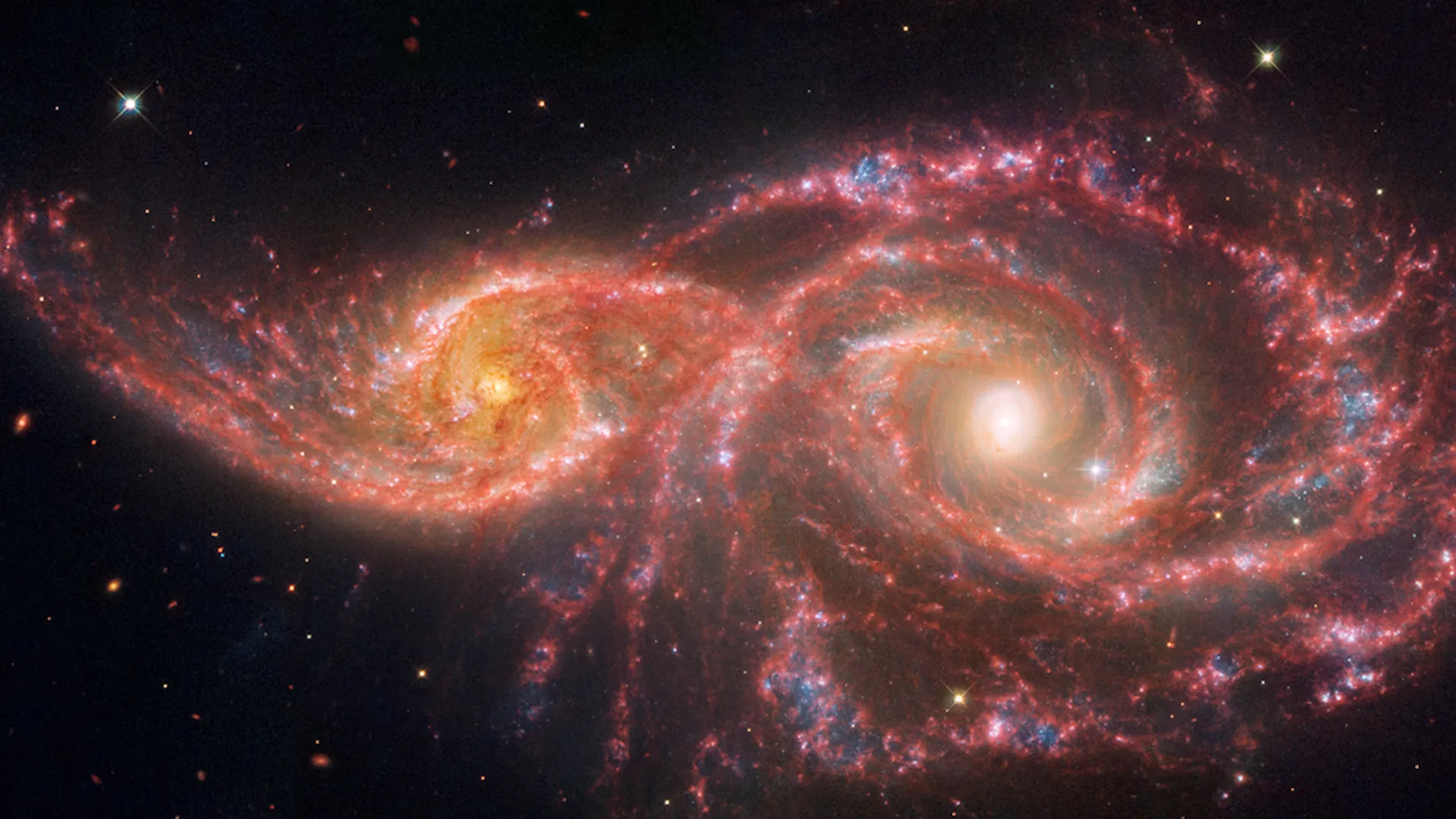
NASA has released a video captured by the Hubble and James Webb Space Telescopes showing two distant galaxies, IC 2163 and NGC 2207, colliding and forming a figure resembling 'blood-soaked eyes.' The galaxies, located about 80 million light-years from Earth, are in the early stages of collision, which is causing rapid star formation. Over millions of years, they are expected to continue interacting, potentially merging into a single galaxy with a central 'cyclops eye.'

"James Webb Telescope Captures Stunning Images of Star Birth"

Originally Published 2 years ago — by BGR

Featured image for "James Webb Telescope Captures Stunning Images of Star Birth"
Source: BGR

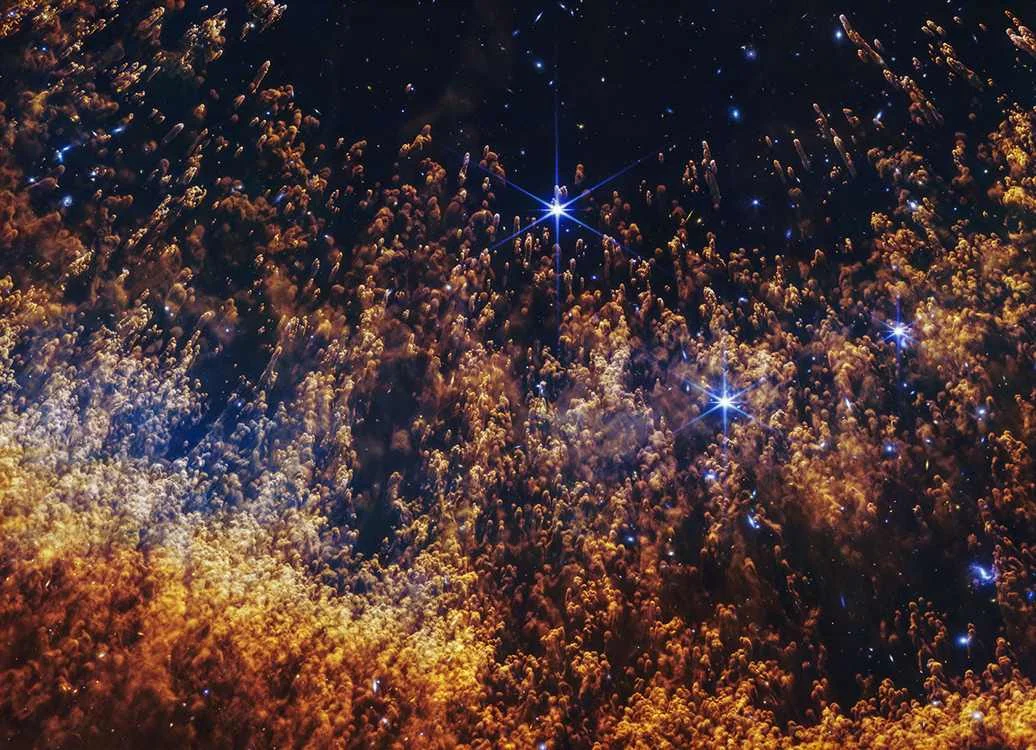
The latest photo captured by the James Webb Space Telescope shows a baby star in the Orion constellation, providing a glimpse into what our Sun may have looked like during its birth. The image reveals powerful shocks and jets of energy, indicating the violent nature of star formation. Scientists believe that the outflows of gas seen in the photo are likely used to regulate the star's birthing process. Although the protostar itself is hidden behind a dense disc of gas and dust, the image offers a breathtaking view and highlights the transformative impact of the James Webb telescope on our understanding of the universe.

Unraveling the Brightness of Webb's Early Galaxy Images

Originally Published 2 years ago — by BGR

Featured image for Unraveling the Brightness of Webb's Early Galaxy Images
Source: BGR

Scientists have finally found an explanation for the unusually bright images of early galaxies captured by the James Webb telescope. A new study published in The Astrophysical Journal Letters suggests that bursts of star formation in these galaxies could have caused the high levels of brightness observed. Computer simulations supported this theory, indicating that the deviations from the standard model of cosmology were associated with these star formation events. This finding reassures astronomers that our model of the universe's evolution is not entirely broken, but rather incomplete.

"Revolutionizing Astronomy: The Moon's Big Telescope"

Originally Published 2 years ago — by Space.com

Featured image for "Revolutionizing Astronomy: The Moon's Big Telescope"
Source: Space.com

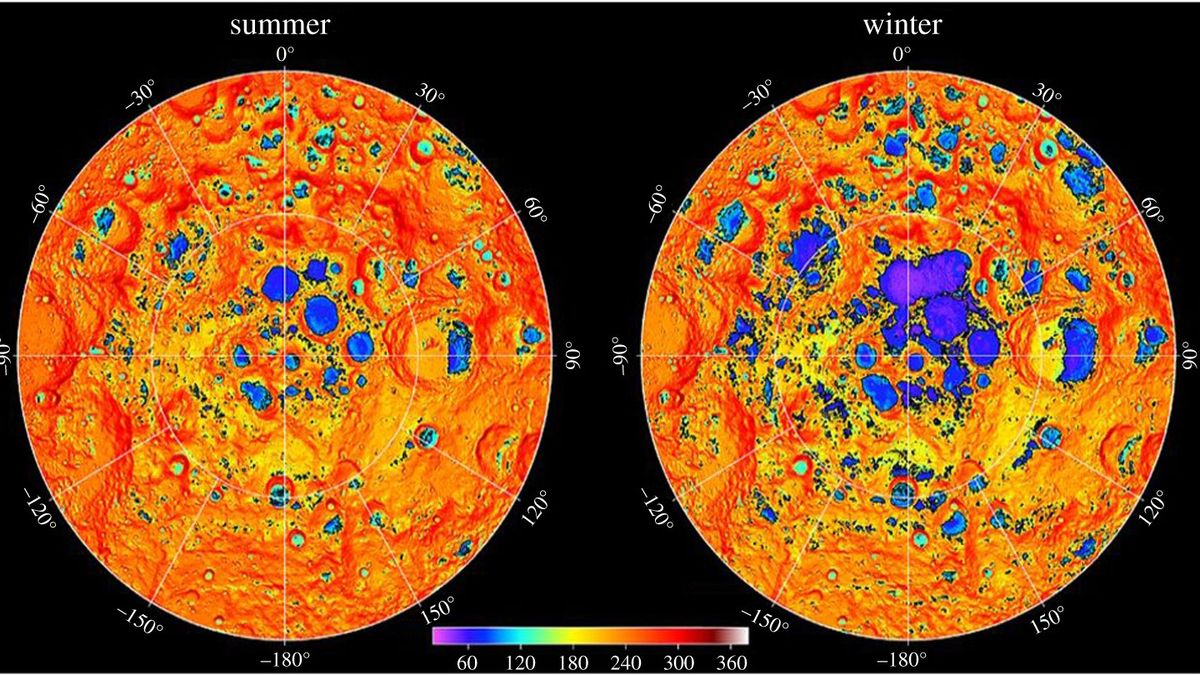
Scientists propose placing a 42-foot-wide infrared telescope inside a permanently shadowed crater near one of the moon's poles, which could be more sensitive than NASA's James Webb Space Telescope and detect parts of the electromagnetic spectrum that are currently invisible to Webb. The lunar telescope could also analyze the atmospheres of exoplanets and potentially help in the search for life beyond Earth. The telescope's location in a cold lunar crater would allow it to detect far infrared wavelengths, which cannot be seen by existing telescopes, and gather valuable data about the distant universe.

"James Webb's Mind-Blowing Discovery: Ancient Quasars Illuminate Cosmic Web and Galaxies"

Originally Published 2 years ago — by BGR

Featured image for "James Webb's Mind-Blowing Discovery: Ancient Quasars Illuminate Cosmic Web and Galaxies"
Source: BGR

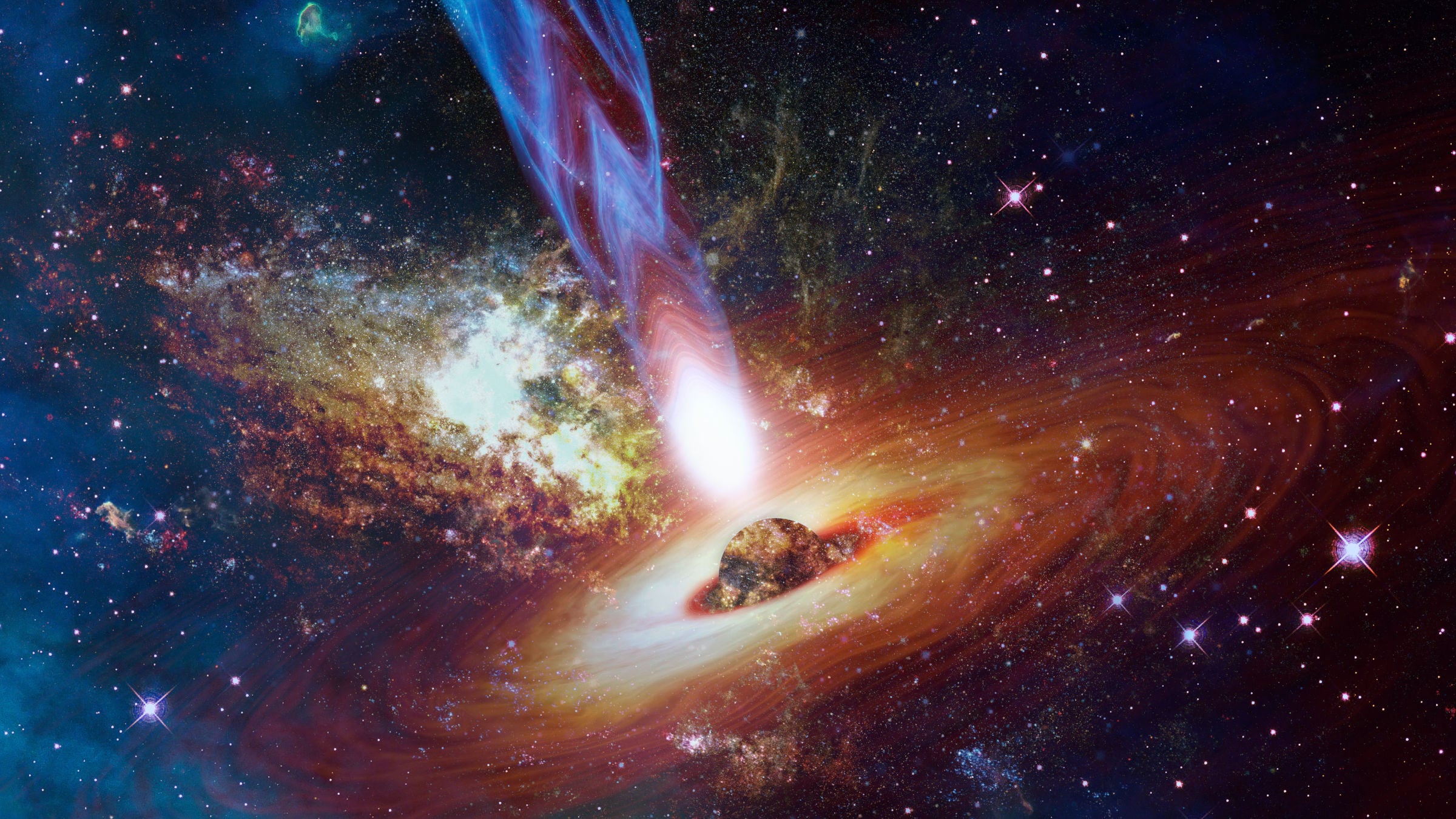
The James Webb Space Telescope has made a groundbreaking discovery by capturing starlight from ancient quasars, allowing astronomers to observe galaxies that existed when the universe was less than one billion years old. The observed galaxies have masses between 30 billion and 130 billion times that of the sun, with black holes weighing 200 million to 1.4 billion solar masses. This finding provides valuable insights into the early universe and supports the theory that quasars are formed through galactic mergers that fuel supermassive black holes.

Donut Devotion: Celebrating Competitive Eating and Local Favorites

Originally Published 2 years ago — by Daily Mail

Featured image for Donut Devotion: Celebrating Competitive Eating and Local Favorites
Source: Daily Mail

Australian competitive eater James Webb set a new world record by devouring 59 and a half donuts in eight minutes at a competition in San Diego, beating the previous record of 55 donuts set by Joey Chestnut. The event was part of National Donut Day World Donut Eating Championship on the USS Midway and a sanctioned Major League Eating event. Webb is currently ranked 10th in the world in competitive eating and also holds the record for demolishing a 5kg burger challenge.

JWST captures breathtaking images of colliding galaxies.

Originally Published 2 years ago — by Daily Mail

Featured image for JWST captures breathtaking images of colliding galaxies.
Source: Daily Mail

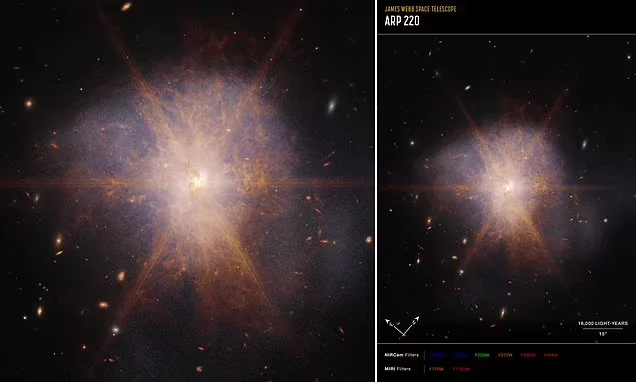
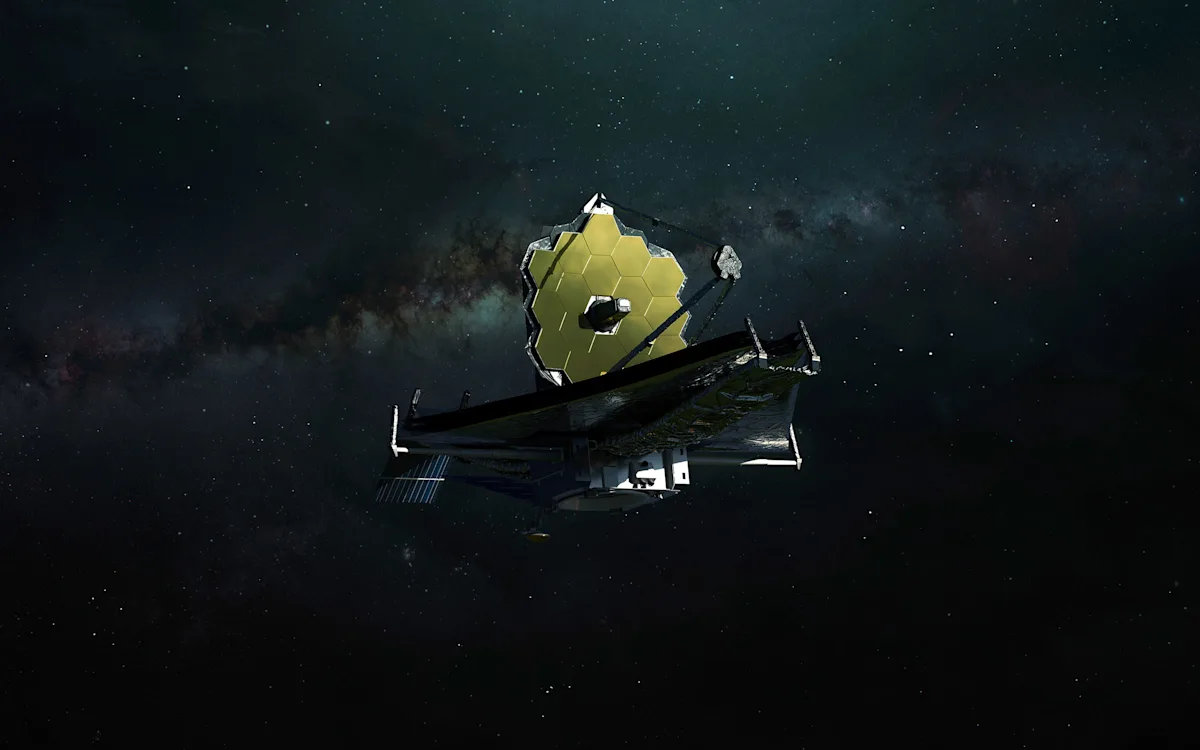
NASA's James Webb Space Telescope has captured a stunning image of the moment two spiral galaxies, collectively called Arp 220, collided 250 million light-years from Earth. The collision began about 700 million years ago and sparked an enormous burst of star formation, emitting more light than one trillion suns. Arp 220 is the nearest example of an ultra-luminous infrared galaxy and glows brightest in infrared light, making it an ideal target for Webb. The $10 billion observatory is designed to detect light from the earliest stars and galaxies and observe the sources of stars, exoplanets, and even the moons and planets of our solar system.

James Webb Telescope Captures Stunning Images of Ultra-Bright Galaxies.

Originally Published 2 years ago — by Yahoo Entertainment

Featured image for James Webb Telescope Captures Stunning Images of Ultra-Bright Galaxies.
Source: Yahoo Entertainment

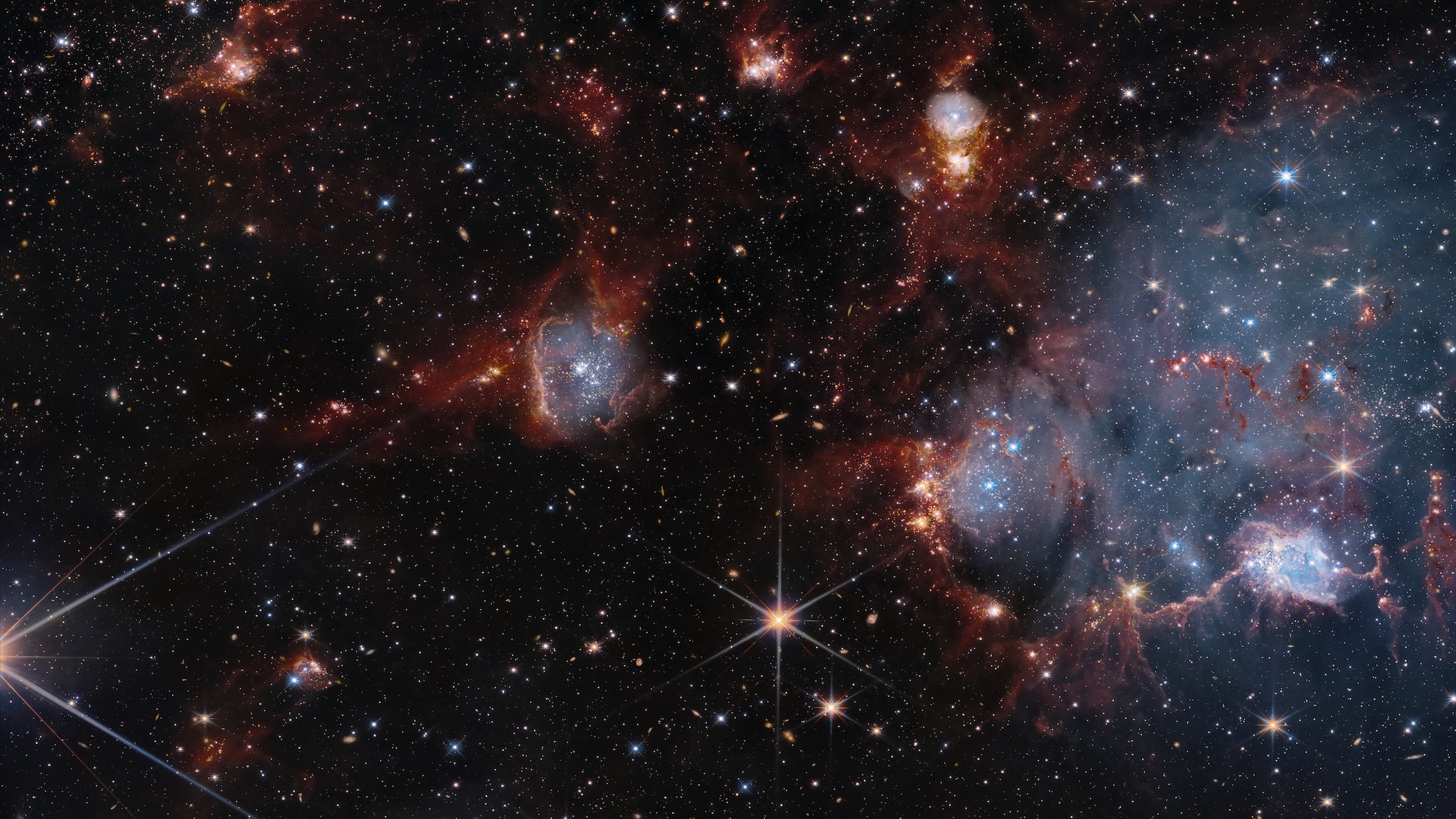
NASA's James Webb space telescope has captured a new photo of the Hubble Ultra Deep Field (HUDF), a region of space found within the Fornax constellation. Webb's view of the HUDF hasn't necessarily led to a huge discovery of new galaxies, as the new telescope viewed the region at a depth similar to that of Hubble. However, it managed to capture the photo of the HUDF in one-tenth of the observing time that Hubble took. Astronomers say that Webb's photo of the HUDF allows us to view hot, ionized gas, which allows us to pinpoint exactly where new star formation is taking place.