The Royal Astronomical Society announced its 2026 award winners, including Professor Shrinivas Kulkarni for astronomy and Professor Andrew Jackson for geophysics, recognizing groundbreaking contributions in their fields, along with other medals honoring achievements in astrophysics, instrumentation, outreach, and history of astronomy.
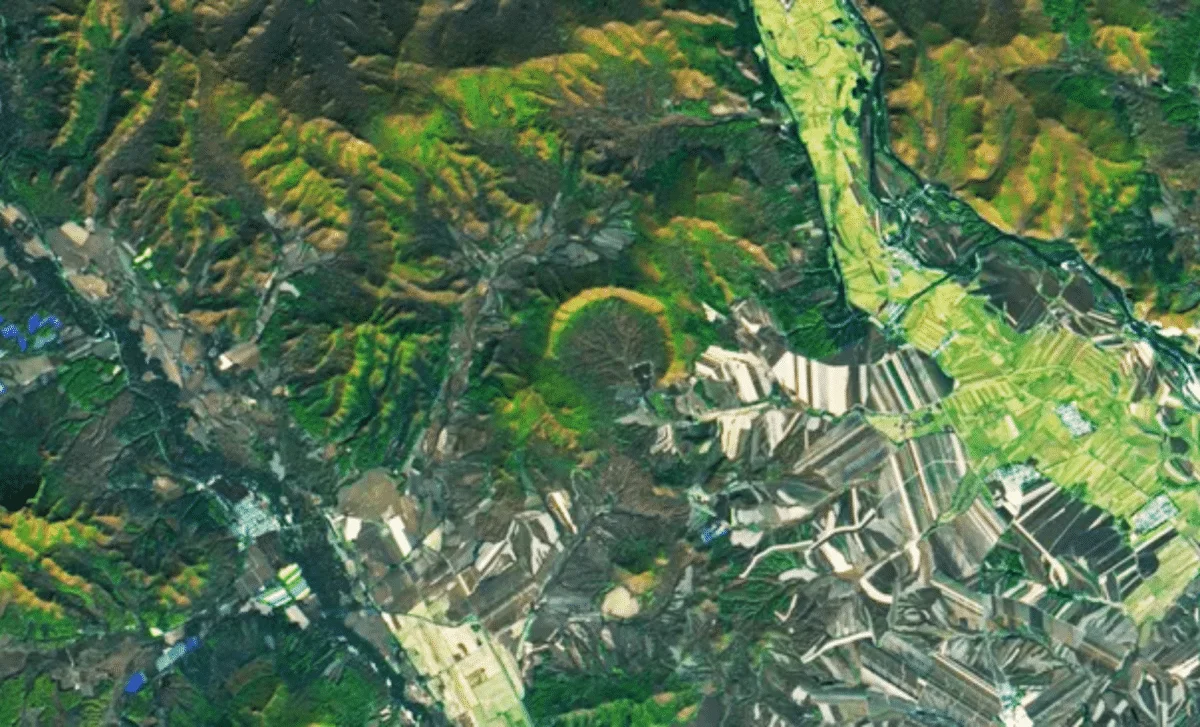
A recent study using satellite radar data detected ground uplift at Iran's Taftan volcano, indicating pressure buildup that could precede an eruption, prompting the need for increased monitoring and preparedness, though no eruption is imminent.
Researchers have used high-harmonic spectroscopy to observe ultrafast electron dynamics in liquids, revealing how specific molecular interactions, like hydrogen bonding, can disrupt electron motion and suppress light emission, with potential implications for chemistry and biology.
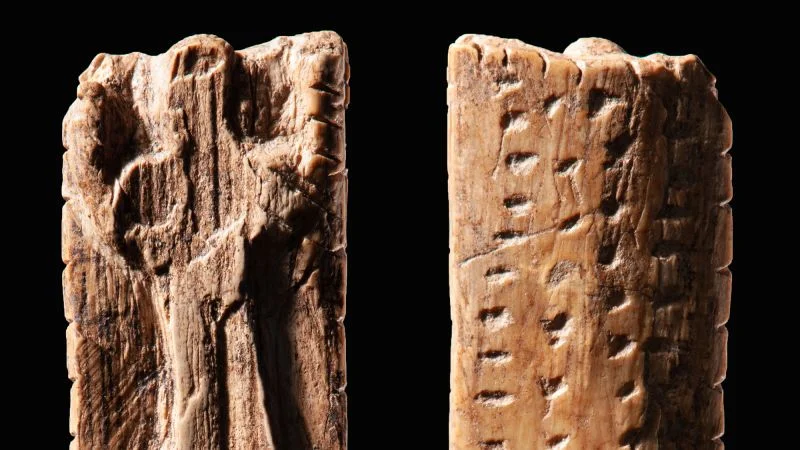
Fossilized bones in an Alaskan museum thought to be the last mammoth turned out to be whale bones, dating from 2,000 to 3,000 years ago, challenging previous assumptions about their age and origin, and highlighting the importance of DNA analysis in accurate species identification.
SpaceX is set to launch NASA's Pandora exoplanet satellite on January 11 from Vandenberg, aiming to study exoplanet atmospheres and star-planet interactions using multiwavelength observations to better understand worlds beyond our solar system.
Scientists have found evidence suggesting that rocks in Canada's Nuvvuagittuq Greenstone Belt could be over 4.3 billion years old, potentially making them the oldest known rocks on Earth and offering insights into Earth's early crust and conditions, though the dating results are still debated among geologists.
A black fungus, Cladosporium sphaerospermum, thriving in Chernobyl's radioactive environment, may be harnessing ionizing radiation as an energy source through a process called radiosynthesis, challenging our understanding of life’s resilience in extreme conditions.
Scientists using the James Webb Space Telescope have discovered nine unusual 'platypus galaxies' that challenge traditional classifications, as they exhibit a mix of features unlike typical galaxies, possibly representing a new type of early universe galaxy or a new stage in galaxy evolution.
The Hubble Space Telescope, launched in 1990, is nearing the end of its operational life due to orbital decay accelerated by solar activity, with potential reentry as early as 2029. NASA has attempted to extend its lifespan, but without intervention, Hubble may soon be lost, creating a gap in space observation. However, the upcoming Lazuli telescope, funded by private sources and planned for launch in 2028, aims to succeed Hubble with advanced capabilities.
Scientists detected a powerful gamma-ray burst from a supernova that exploded when the universe was only 730 million years old, making it the most distant such event ever observed. The discovery, confirmed by multiple telescopes including JWST, challenges previous assumptions about early star formation, showing that even in the universe's infancy, stars could undergo processes similar to those seen today.
This week in science covers a range of discoveries including a fungal compound with potential anti-cancer properties synthesized after 55 years, mosquitoes carrying animal DNA supporting Jurassic Park's premise, a rare golden shark with a pigment condition, studies on intermittent fasting's health benefits, and innovative solutions like bacterial communication disruption to prevent tooth decay and a microplastics filter for laundry wastewater.
Astronaut Kimiya Yui captured a stunning timelapse video from the ISS showing zodiacal light, green auroras, and the Pleiades star cluster, highlighting the beauty of Earth's orbit and celestial phenomena.
SpaceX is launching a Falcon 9 rocket from Vandenberg Space Force Base to deliver the Twilight mission, which includes multiple small payloads such as satellites from Umbra and NASA's Pandora and SPARCS. The launch is scheduled between 5:19 a.m. and 6:19 a.m. with a backup window on Monday, and residents may hear sonic booms. The first-stage booster will land at Landing Zone 4 after the launch, and the event can be watched live online or in person from various locations near Vandenberg.
NASA reports that the massive iceberg A-23A, one of the largest and oldest tracked, is on the verge of complete disintegration after losing significant mass, and could break apart within days or weeks as it drifts in the South Atlantic.
NASA's sensors on the International Space Station detected a previously unknown atmospheric phenomenon, called atmospheric waves, at 55 miles above Earth during Hurricane Helene, revealing new insights into how severe storms can influence the upper atmosphere and potentially impact satellite operations.