Tag

Helix Nebula

All articles tagged with #helix nebula

Your lifetime as a cosmic odometer: how far you've traveled through space
science1 month ago

Your lifetime as a cosmic odometer: how far you've traveled through space

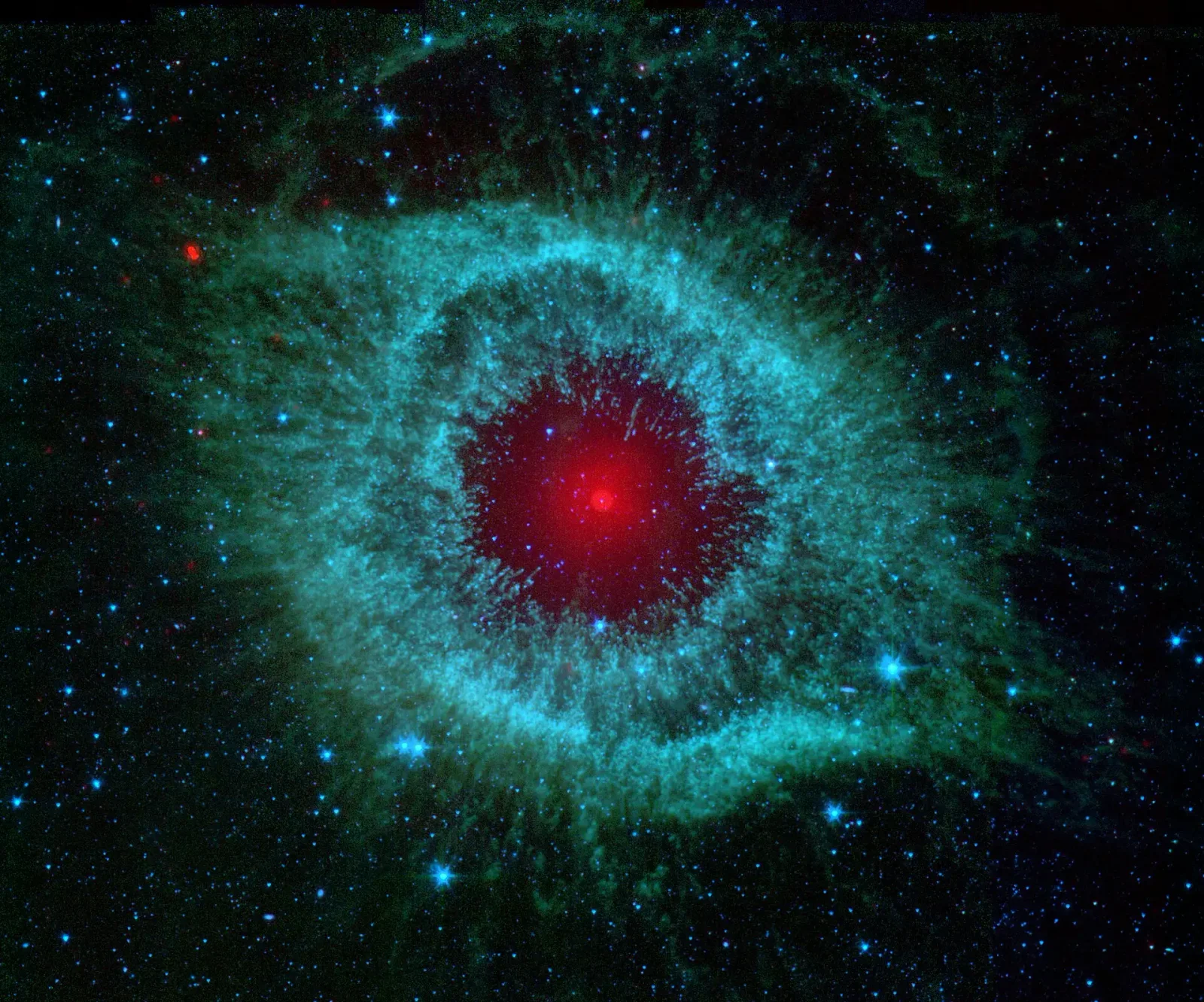
A novelty website called the Cosmic Odometer estimates how far you’ve traveled through space by using your birth date, claiming, for example, that someone born in 1990 has orbited the Sun over 21 billion miles and moved through the solar system about 155 billion miles. The piece also explains the Helix Nebula as a planetary nebula studied by NASA’s Spitzer Space Telescope, illustrating how dying stars shed their outer layers and reveal remnants like a white dwarf and dust disks.
Webb Telescope Captures Star’s Final Breath as Smoky Columns in Helix Nebula
science1 month ago

Webb Telescope Captures Star’s Final Breath as Smoky Columns in Helix Nebula

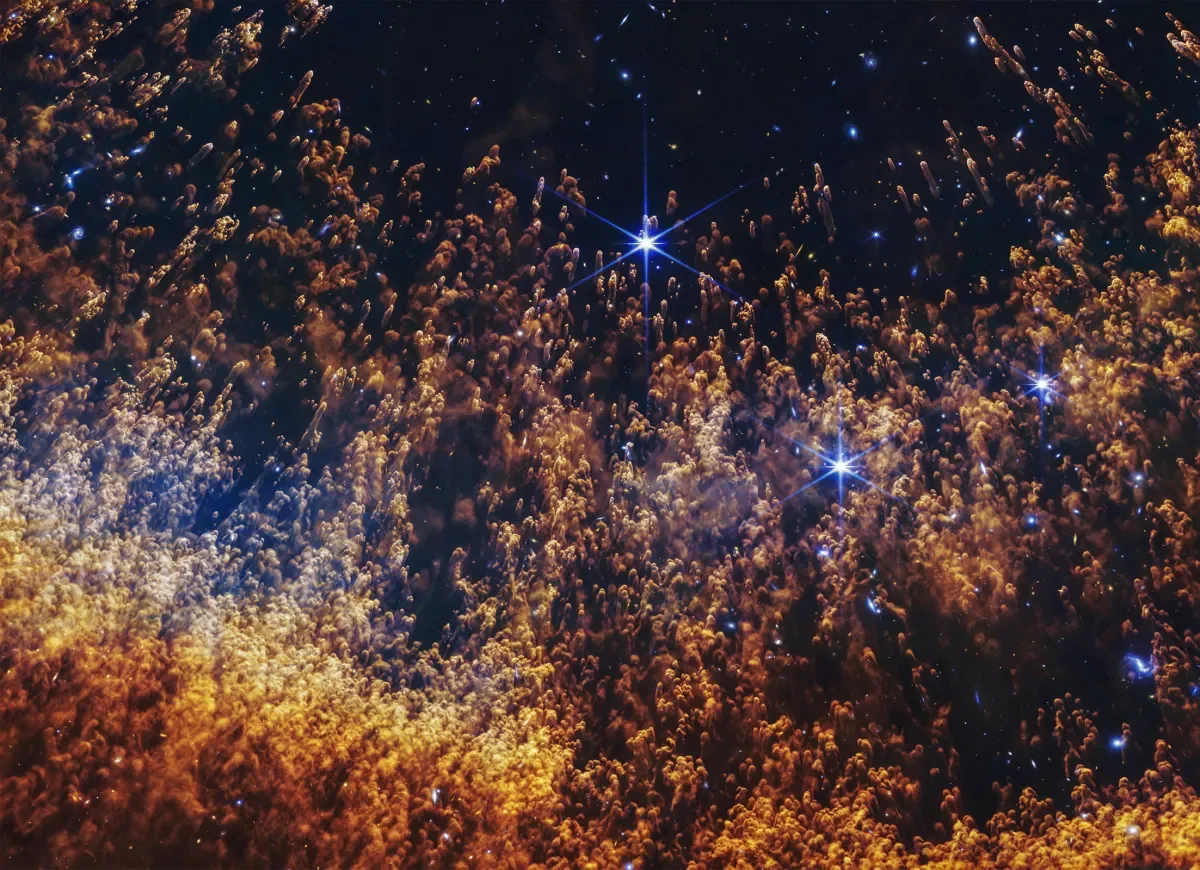
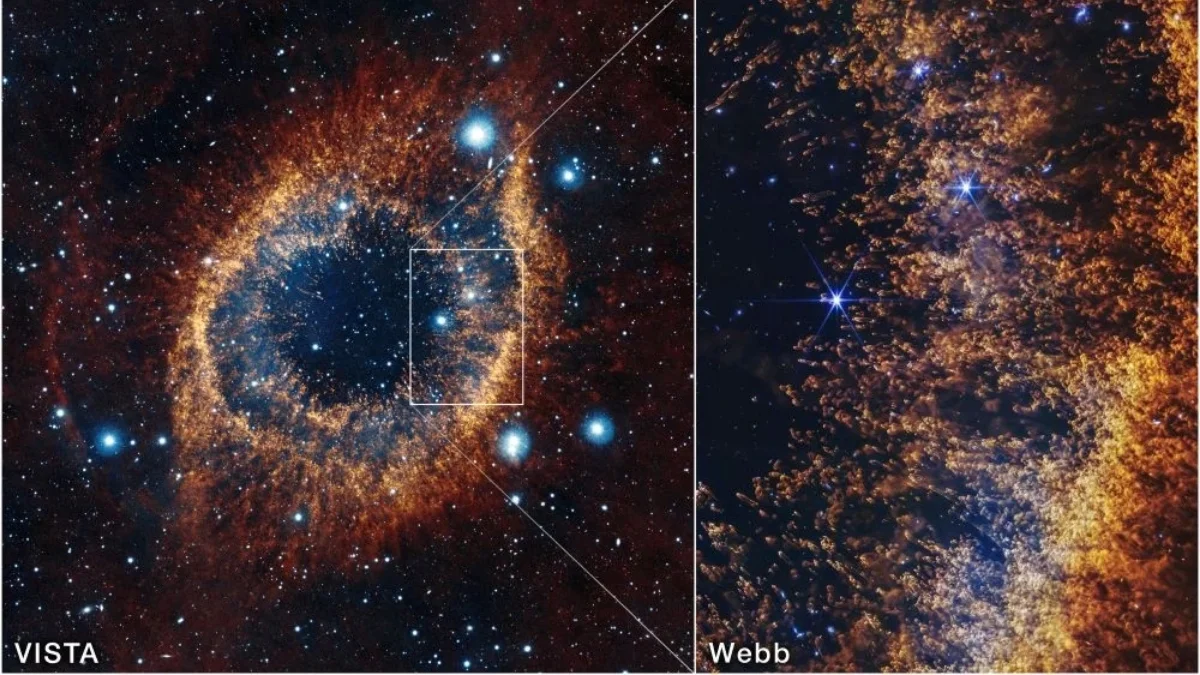
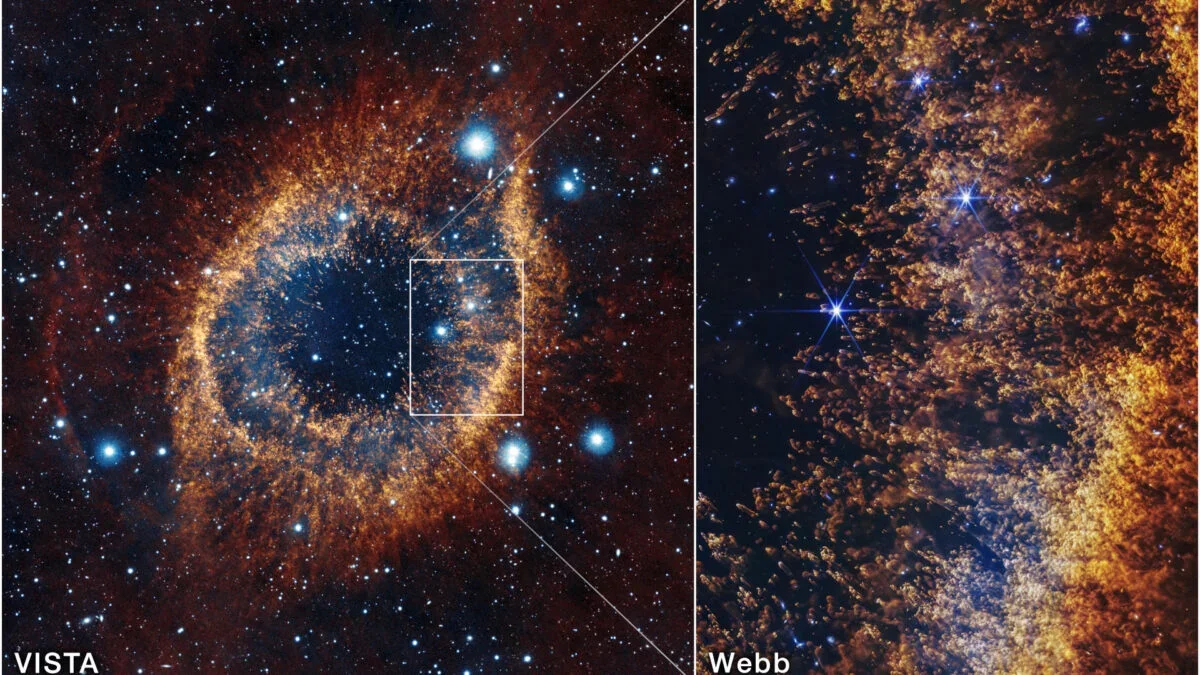
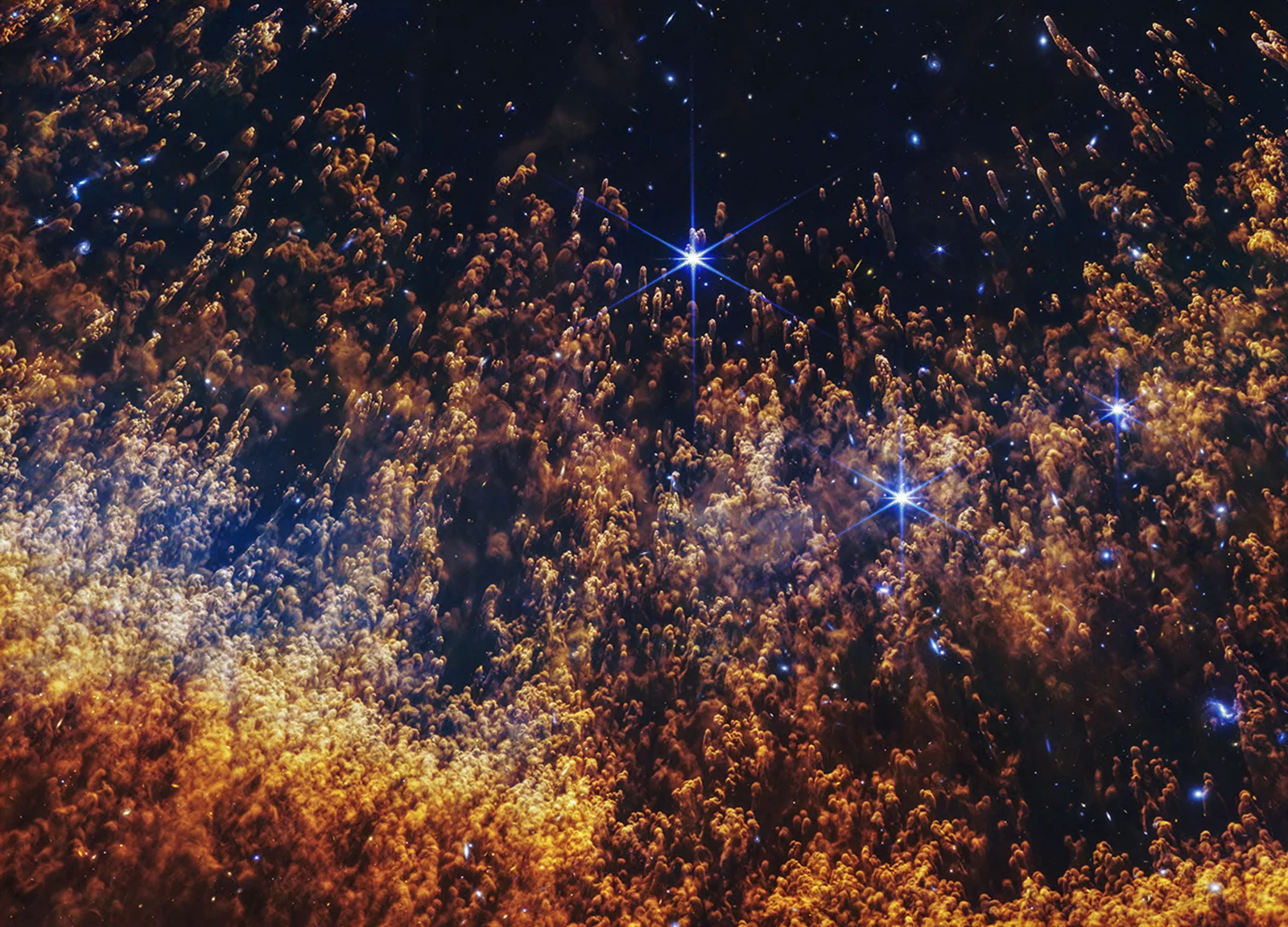
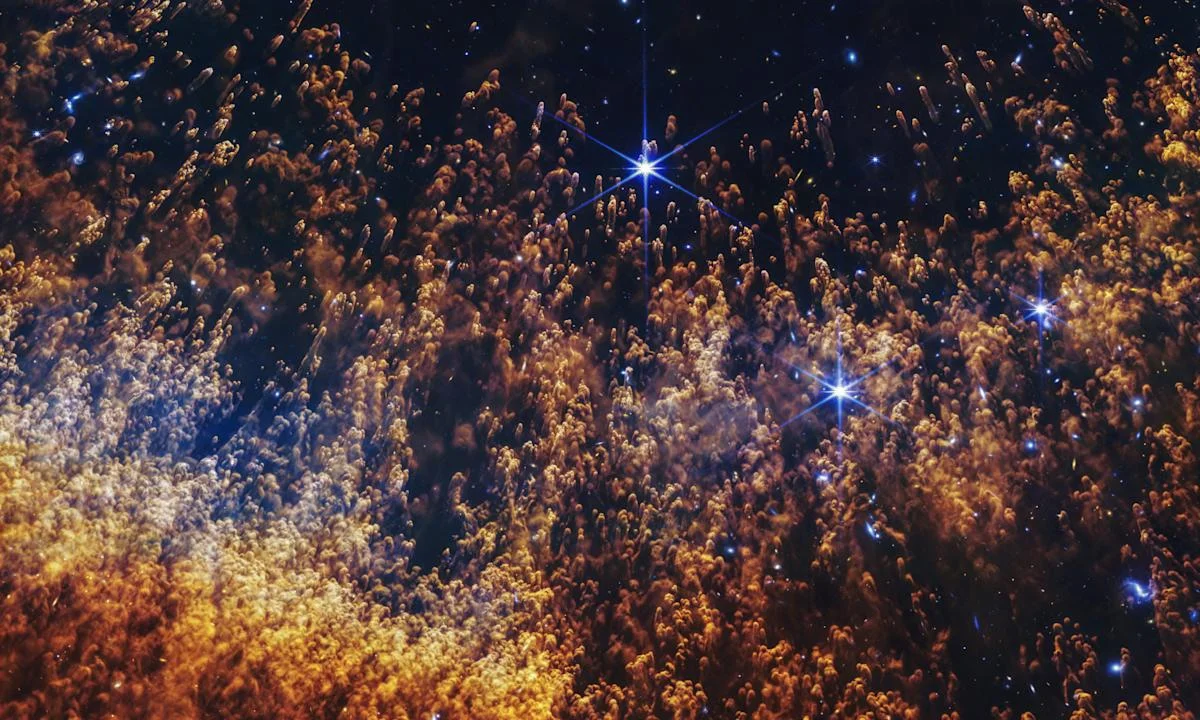
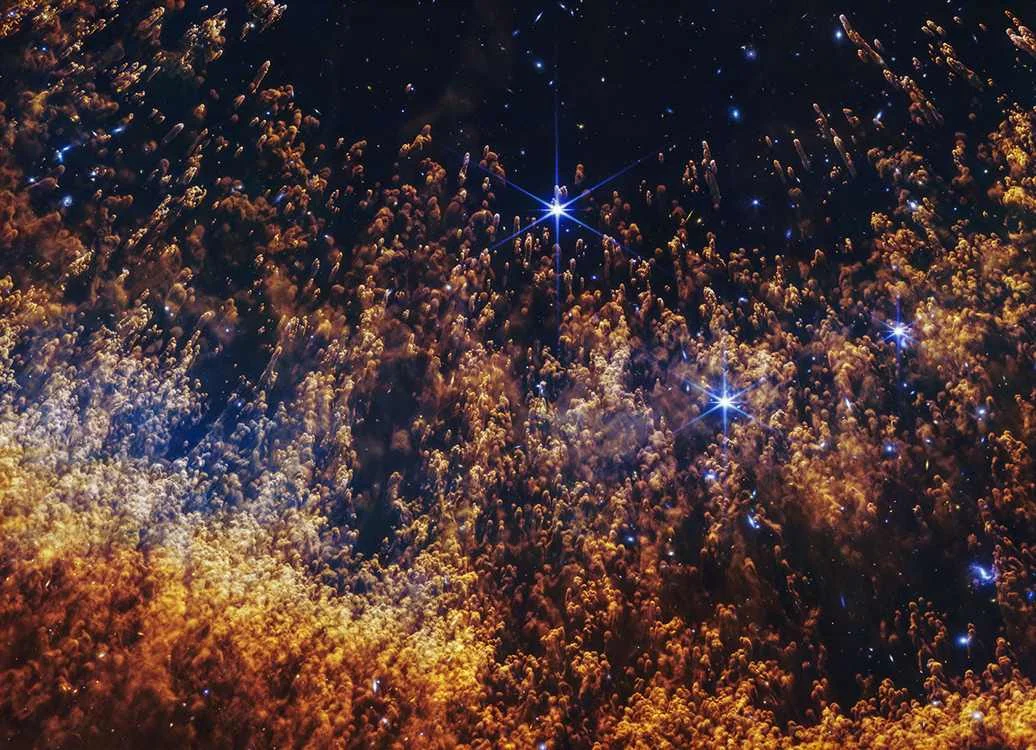
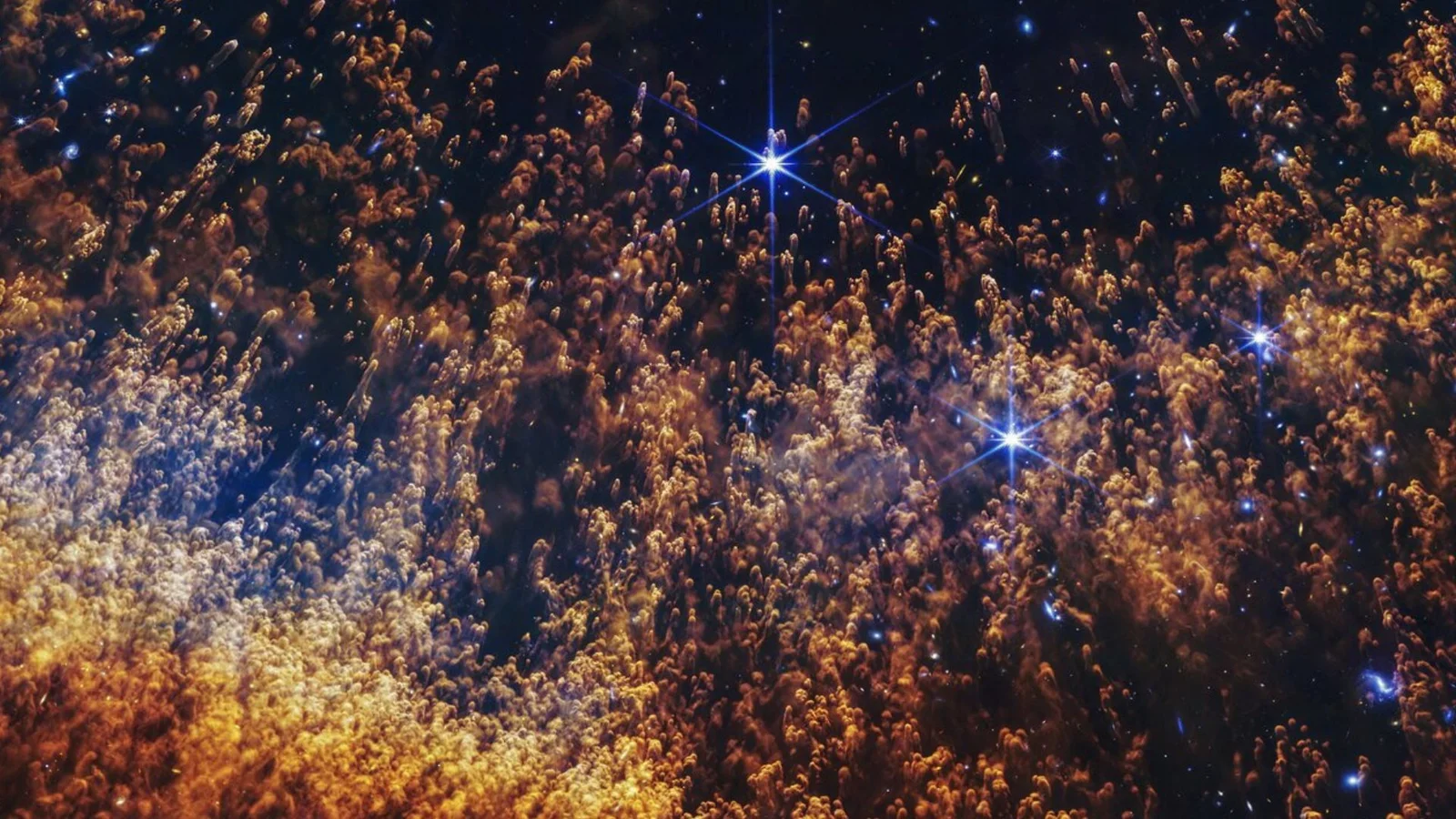
A new James Webb Space Telescope image reveals the dying breath of the star at the heart of the Helix Nebula as blue-hot gas columns colliding with a ring of cooler material, with a second ground-based image offering a reverse perspective. The colorful gas will cool and disperse, seeding future stars and planets, billions of years from now. The Helix Nebula is about 650 light-years away and has been observed for two centuries, with NASA noting the final breath transforms into the raw ingredients for new worlds.

Webb Zooms in on Helix Nebula: A Dying Star’s Dusty Curtain
space1 month ago

Webb Zooms in on Helix Nebula: A Dying Star’s Dusty Curtain

NASA’s James Webb Space Telescope captures a sharp close-up of the Helix Nebula, a planetary nebula about 650 light-years away formed when a Sun-like star shed its outer layers and left a white dwarf at its center; Webb’s infrared view reveals hot gas and cooler dust, illustrating how dying stars recycle heavier elements into the cosmos and seed future planets, with binary interactions potentially triggering novae.

Webb Reveals the Helix Nebula’s Eye and Its Cometary Knots
space1 month ago

Webb Reveals the Helix Nebula’s Eye and Its Cometary Knots

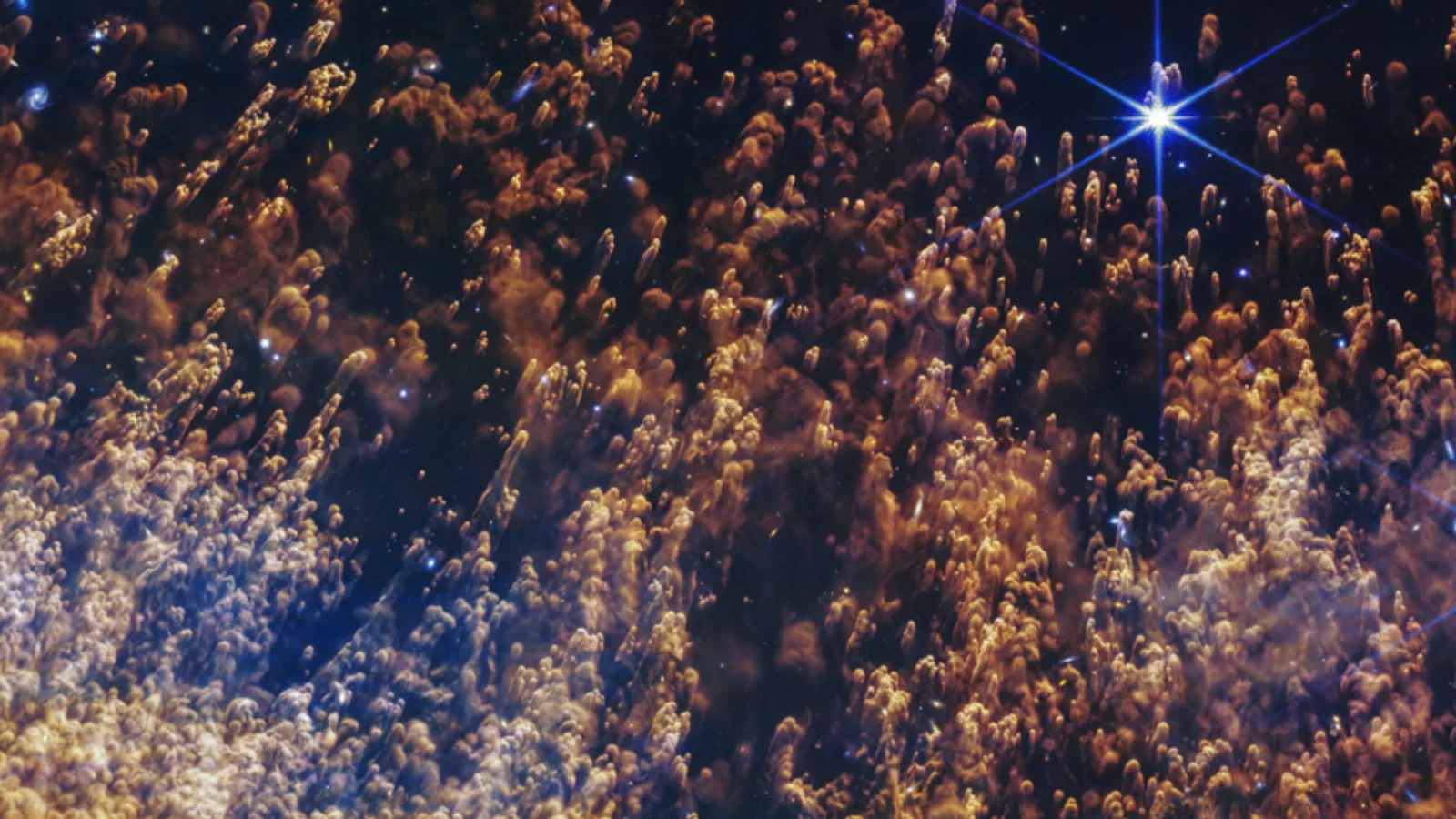
NASA's James Webb Space Telescope delivers a sharper infrared view of the Helix Nebula, the nearby planetary nebula nicknamed the Eye of Sauron, revealing about 40,000 cometary knots as the dying star sheds its outer layers. The image, updating Hubble's famed portrait, shows how the gas glows under the nebula’s radiation and how the knots persist against the expanding wind. The Helix lies ~650 light-years away and will fade over the next 10,000–20,000 years as the gas disperses, offering a glimpse of the Sun's eventual fate as a red giant that becomes a white dwarf.

Webb’s Lava-Lamp View of the Eye of God: Helix Nebula Revealed
space1 month ago

Webb’s Lava-Lamp View of the Eye of God: Helix Nebula Revealed

Astronomers using the James Webb Space Telescope have released a highly detailed infrared image of the Helix Nebula (NGC 7293), a nearby planetary nebula nicknamed the Eye of God. The image shows hot gas winds from a dying star colliding with older shells of gas and dust, revealing comet-like knots and layered structures, and offering a glimpse of our Sun’s distant future as well as the potential for planet formation in the surrounding dust.

Webb Zooms In on Helix Nebula, Unveiling Fiery Pillars Around a Dying Star
space-and-spaceflight1 month ago

Webb Zooms In on Helix Nebula, Unveiling Fiery Pillars Around a Dying Star

NASA's James Webb Space Telescope’s NIRCam zooms in on the Helix Nebula (the “Eye of God”), revealing fiery pillars, comet-like knots, and layered gas shed by a dying star colliding with cooler material outward. The high‑resolution view shows hot ionized gas near the center transitioning to cooler hydrogen-rich gas farther out, illustrating how such nebulae recycle stellar material to form new stars and planets and offering a glimpse of the Sun’s distant fate about 650 light-years away in Aquarius.

Webb captures the Helix Nebula in stunning detail, revealing a star's final breath
space1 month ago

Webb captures the Helix Nebula in stunning detail, revealing a star's final breath

NASA's James Webb Space Telescope released a high‑resolution image of the Helix Nebula, a nearby planetary nebula about 655 light-years away, showing vivid gas pillars around a white dwarf core. The colors map temperature and chemistry, illustrating the dying star's final breath and the raw material that could seed new planets, building on Hubble’s iconic views with sharper detail and new insights into how planetary systems may form from stellar death.

Webb telescope exposes Helix Nebula’s comet-like knots in sharp relief
space1 month ago

Webb telescope exposes Helix Nebula’s comet-like knots in sharp relief

NASA's JWST has released a high-resolution image of the Helix Nebula, revealing its comet-like knots formed as a dying star sheds its outer layers. The new NIRCam view shows hotter blue gas near the core and cooler dust at the edges, offering our closest, sharpest look at this ~655-light-year-away planetary nebula and illustrating how stellar death seeds new star formation.

Mysterious Observers: NASA's Space Telescopes Detect Unidentified Presence Near Earth
astronomy2 years ago

Mysterious Observers: NASA's Space Telescopes Detect Unidentified Presence Near Earth

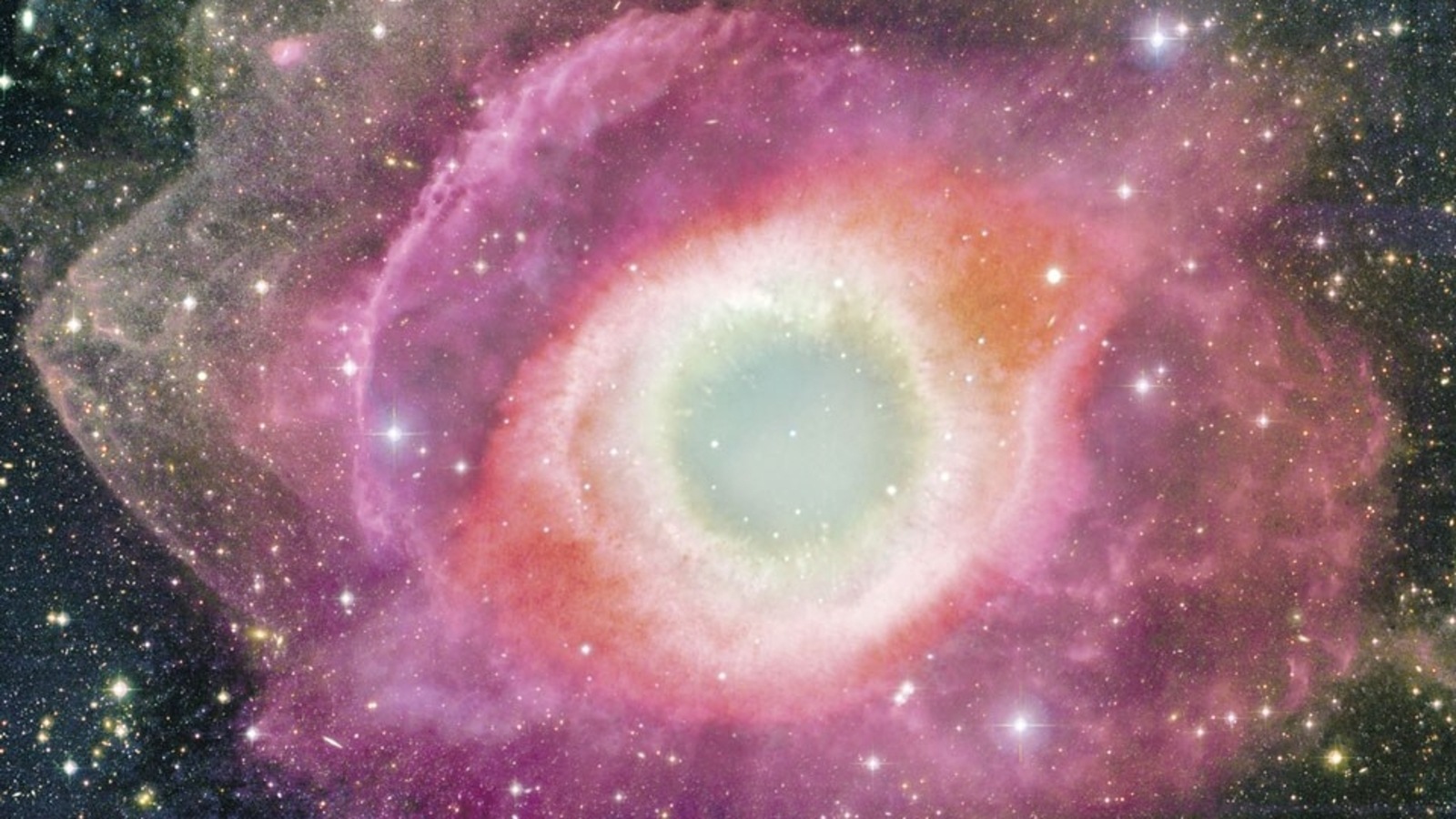
NASA's telescopes captured an image of the Helix Nebula, a dying star located 700 light-years away, which appears to be "watching" Earth. The image, taken in various wavelengths of light, shows the nebula in infrared, optical, ultraviolet, and X-ray. The Helix Nebula is in the phase of a star's life known as a planetary nebula, where the outer layers expand while the core shrinks. The image highlights the white dwarf at the center, which is the remains of the star.

"NASA's Daily Astronomy Pictures Showcase Stunning Cosmic Wonders"
astronomy2 years ago

"NASA's Daily Astronomy Pictures Showcase Stunning Cosmic Wonders"

NASA shared a picture of the Helix Nebula, one of the brightest and closest examples of a planetary nebula, and asked if our Sun will look like this one day. The Helix Nebula is a gas cloud created at the end of the life of a Sun-like star, and it is located approximately 700 light-years away in the constellation Aquarius. When the Sun exhausts its fuel in about five billion years, it will transform into a planetary nebula.