
"James Webb's Mind-Blowing Discovery: Ancient Quasars Illuminate Cosmic Web and Galaxies"
TL;DR Summary
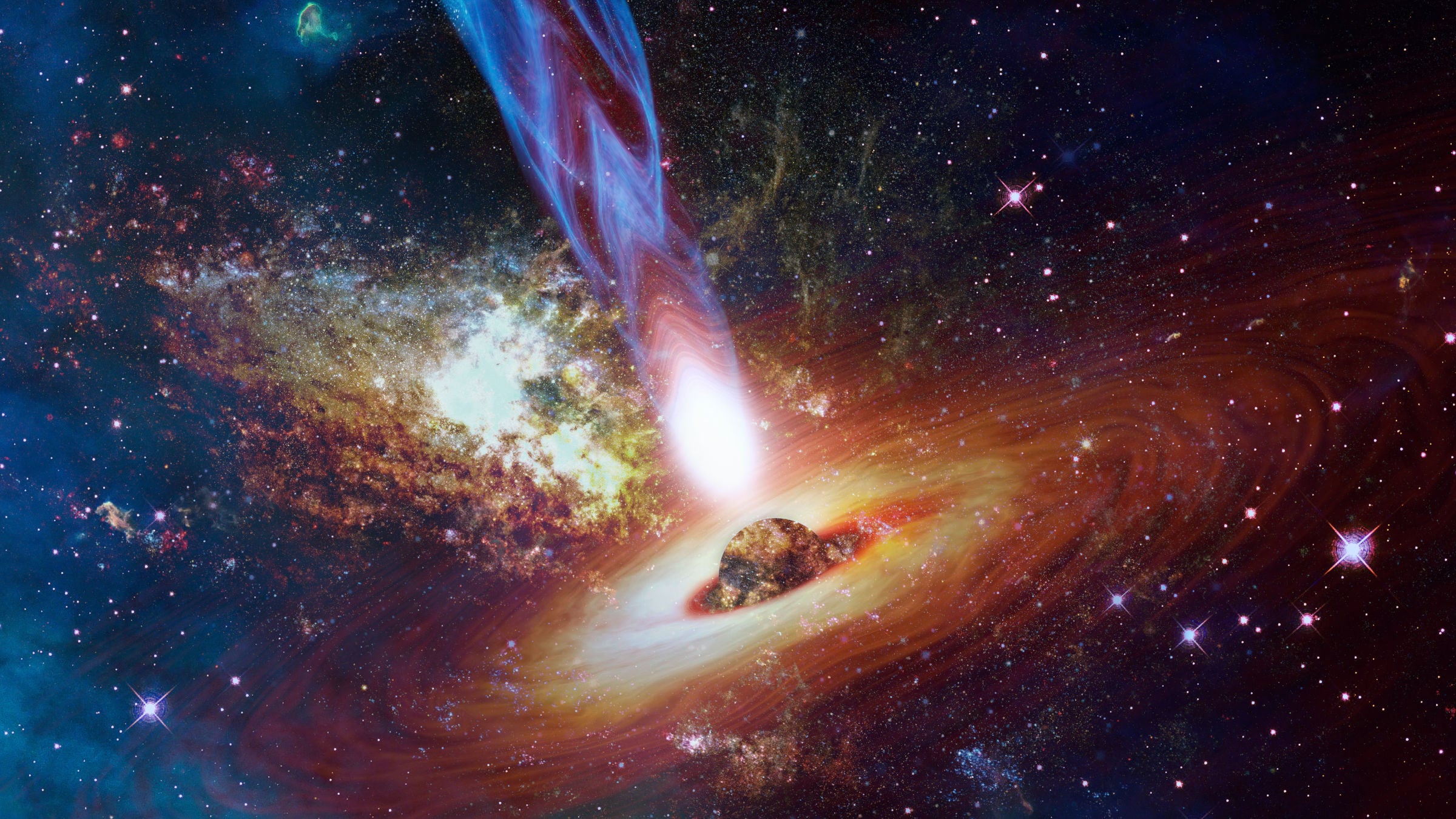
The James Webb Space Telescope has made a groundbreaking discovery by capturing starlight from ancient quasars, allowing astronomers to observe galaxies that existed when the universe was less than one billion years old. The observed galaxies have masses between 30 billion and 130 billion times that of the sun, with black holes weighing 200 million to 1.4 billion solar masses. This finding provides valuable insights into the early universe and supports the theory that quasars are formed through galactic mergers that fuel supermassive black holes.
Topics:science#ancient-quasars#astronomy#early-universe#galactic-mergers#james-webb#supermassive-black-holes
- James Webb spots first starlight from ancient quasars in mind-blowing discovery BGR
- Unveiling the cosmic web: Galaxies, filaments and early supermassive black holes ZME Science
- These six distant galaxies captured by JWST are wowing astronomers Nature.com
- Webb Image Reveals Numerous Galaxies Strung in a Line Along the Ancient Cosmic Web Inverse
- Carnegie Mellon Scientists Unearth Dual Quasars Aided by TACC's Frontera Supercomputer HPCwire
Reading Insights
Total Reads
0
Unique Readers
1
Time Saved
2 min
vs 3 min read
Condensed
81%
439 → 85 words
Want the full story? Read the original article
Read on BGR