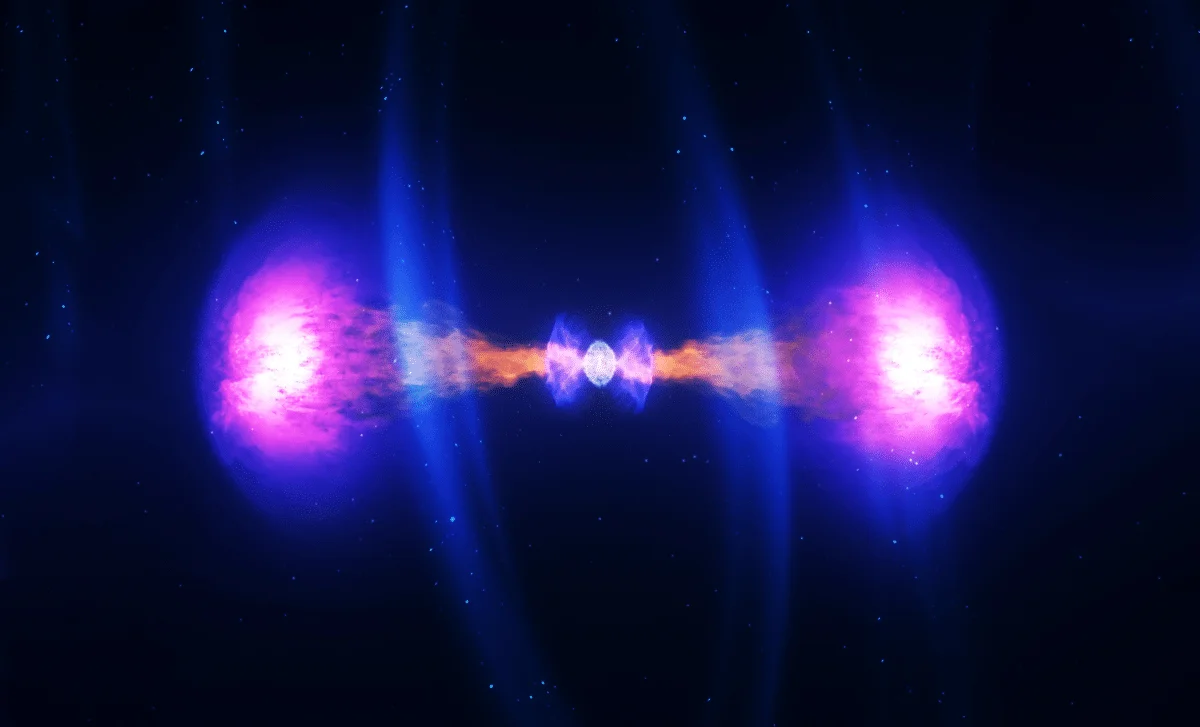
Scientists detected a powerful gamma-ray burst from a supernova that exploded when the universe was only 730 million years old, making it the most distant such event ever observed. The discovery, confirmed by multiple telescopes including JWST, challenges previous assumptions about early star formation, showing that even in the universe's infancy, stars could undergo processes similar to those seen today.
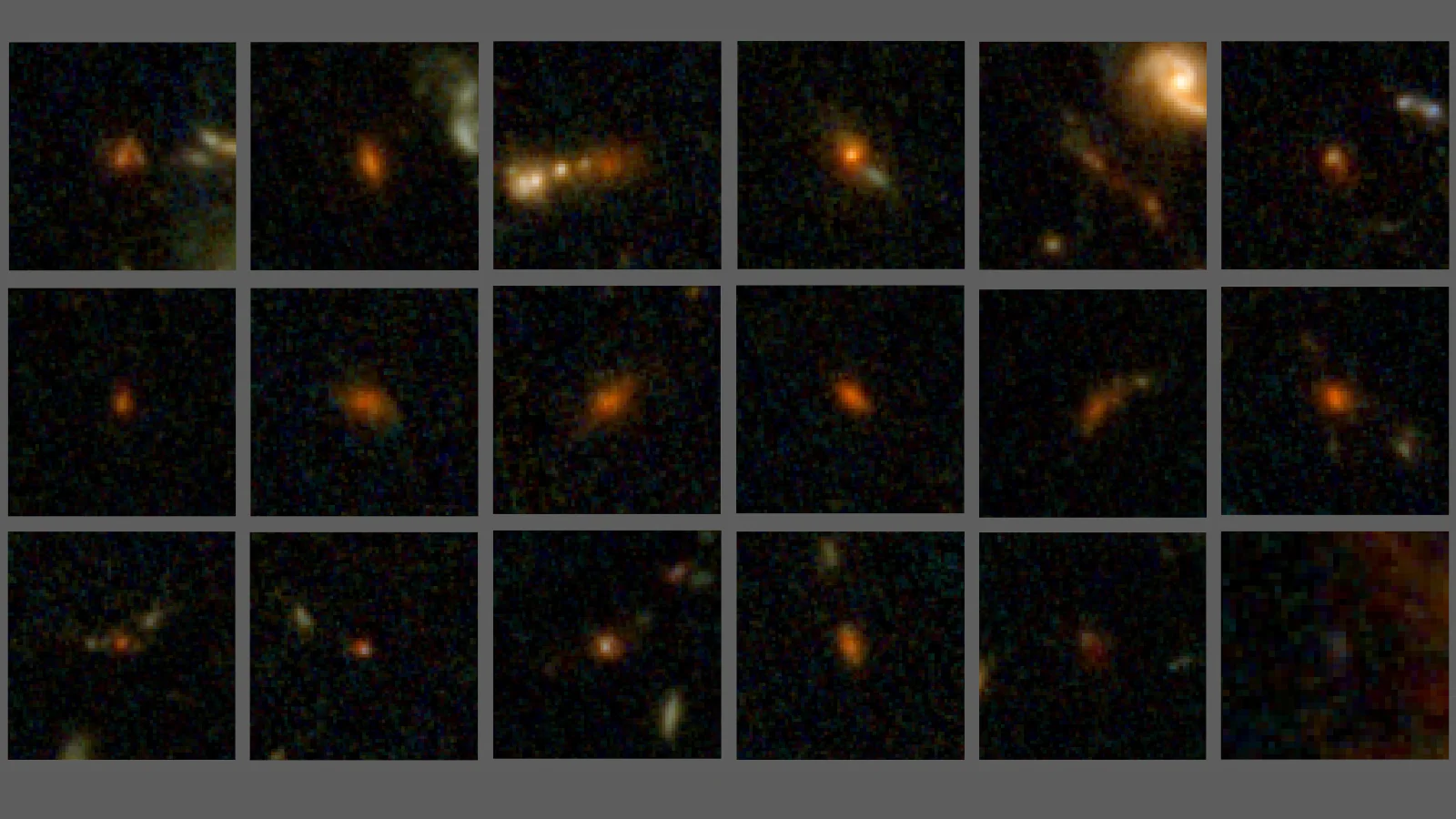
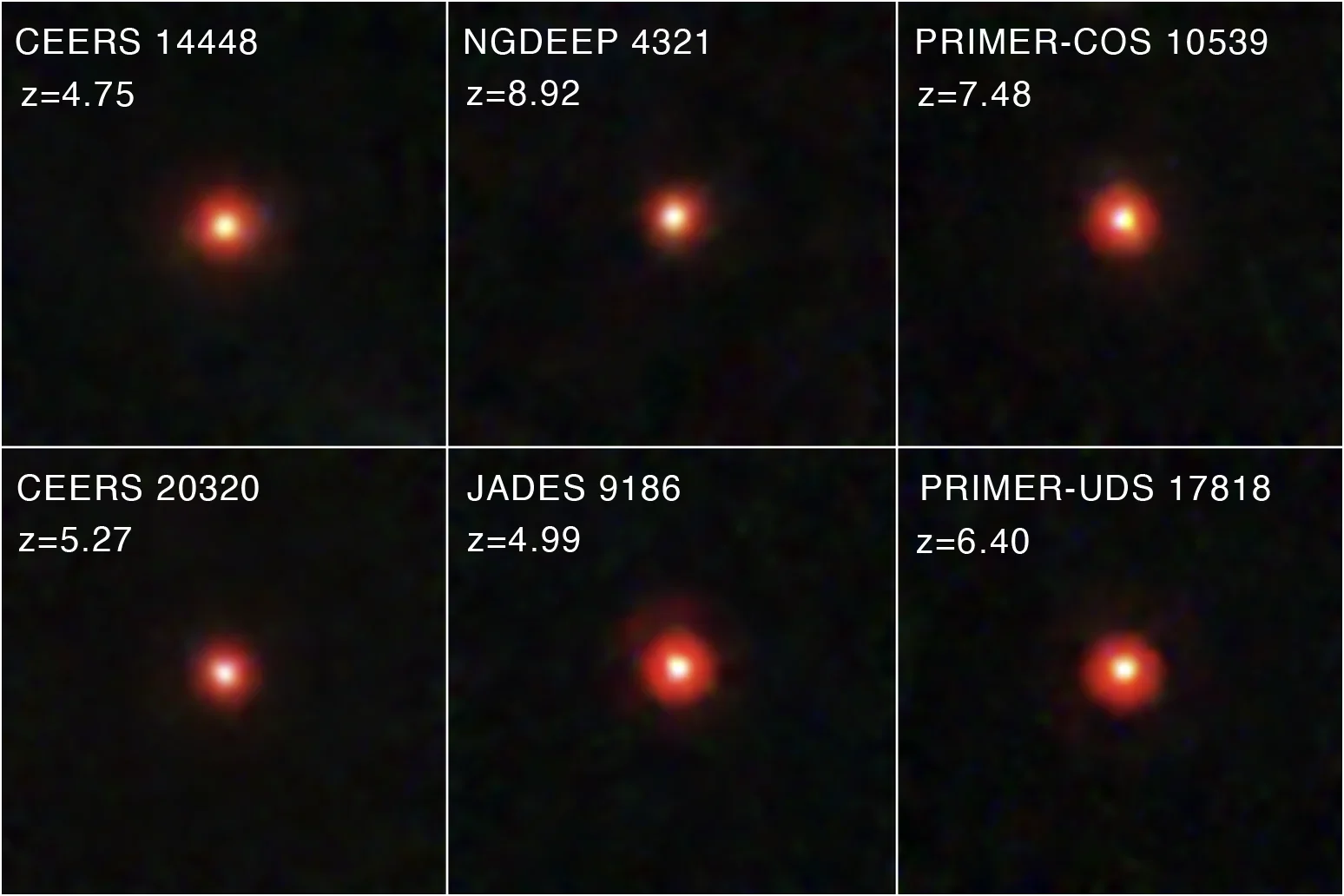
Strange cosmic objects observed by the James Webb Space Telescope may be young 'platypus' galaxies or a new class of active galactic nuclei, providing insights into galaxy formation in the early universe. These objects exhibit mixed features of stars and galaxies, challenging existing classifications and hinting at unique formation processes.
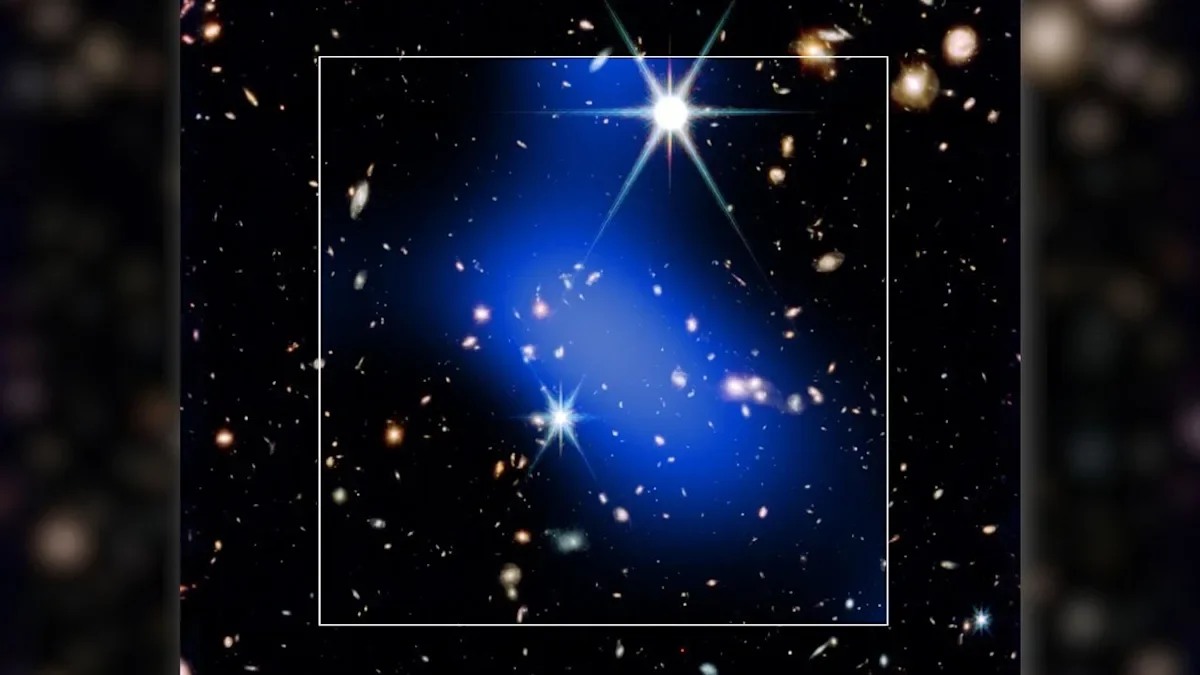
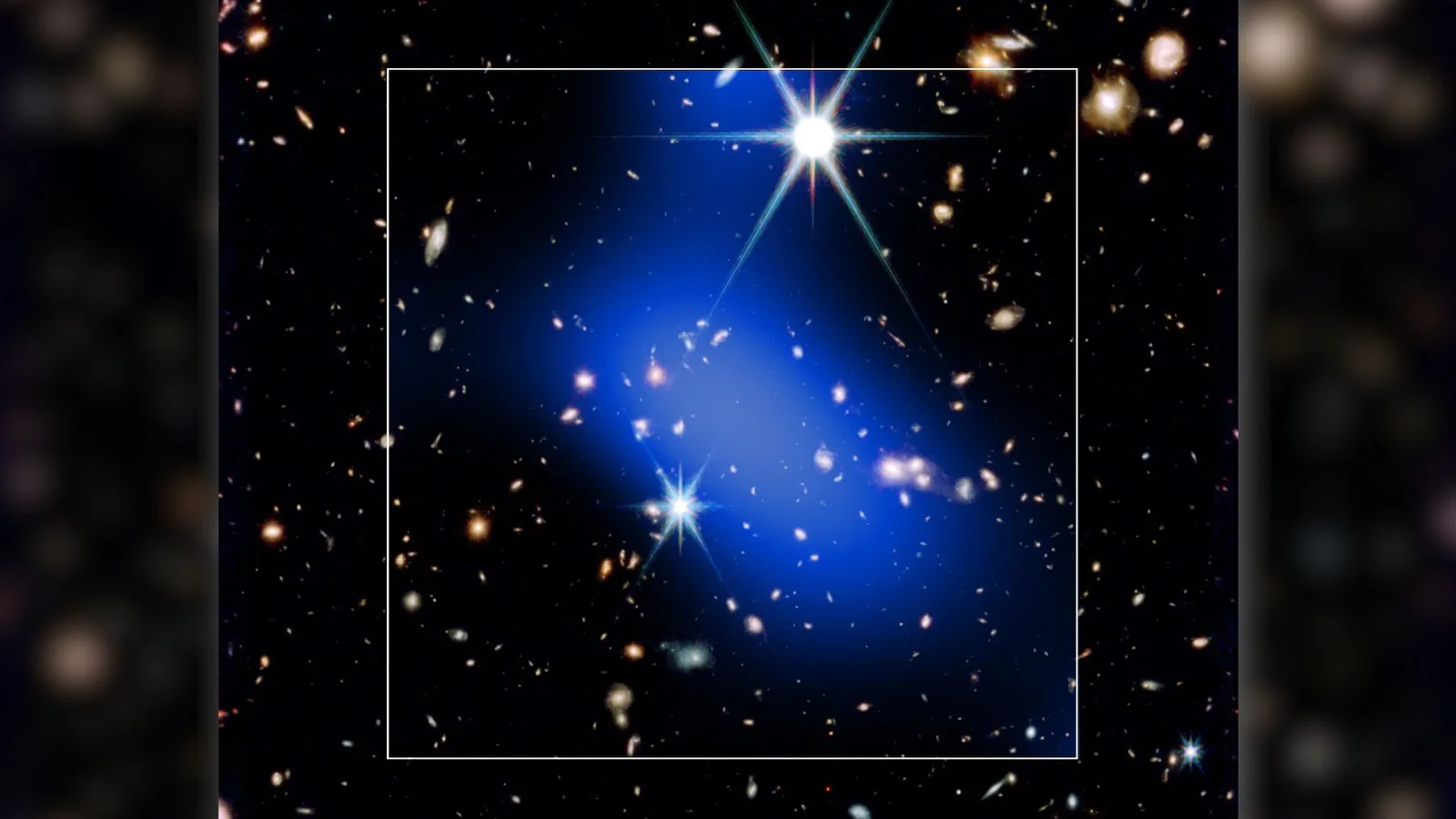
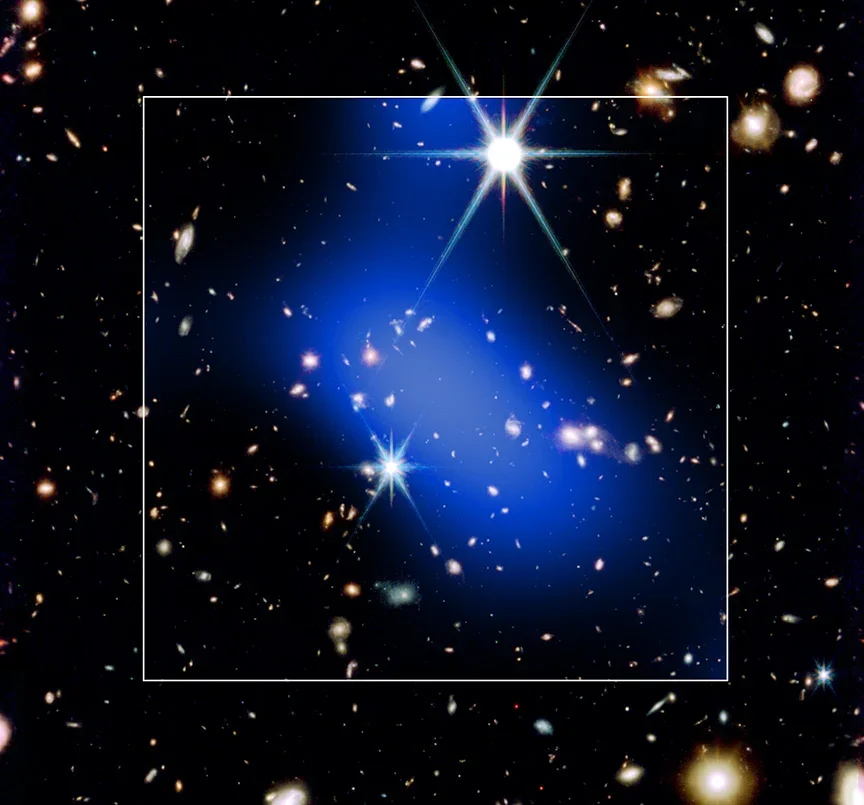
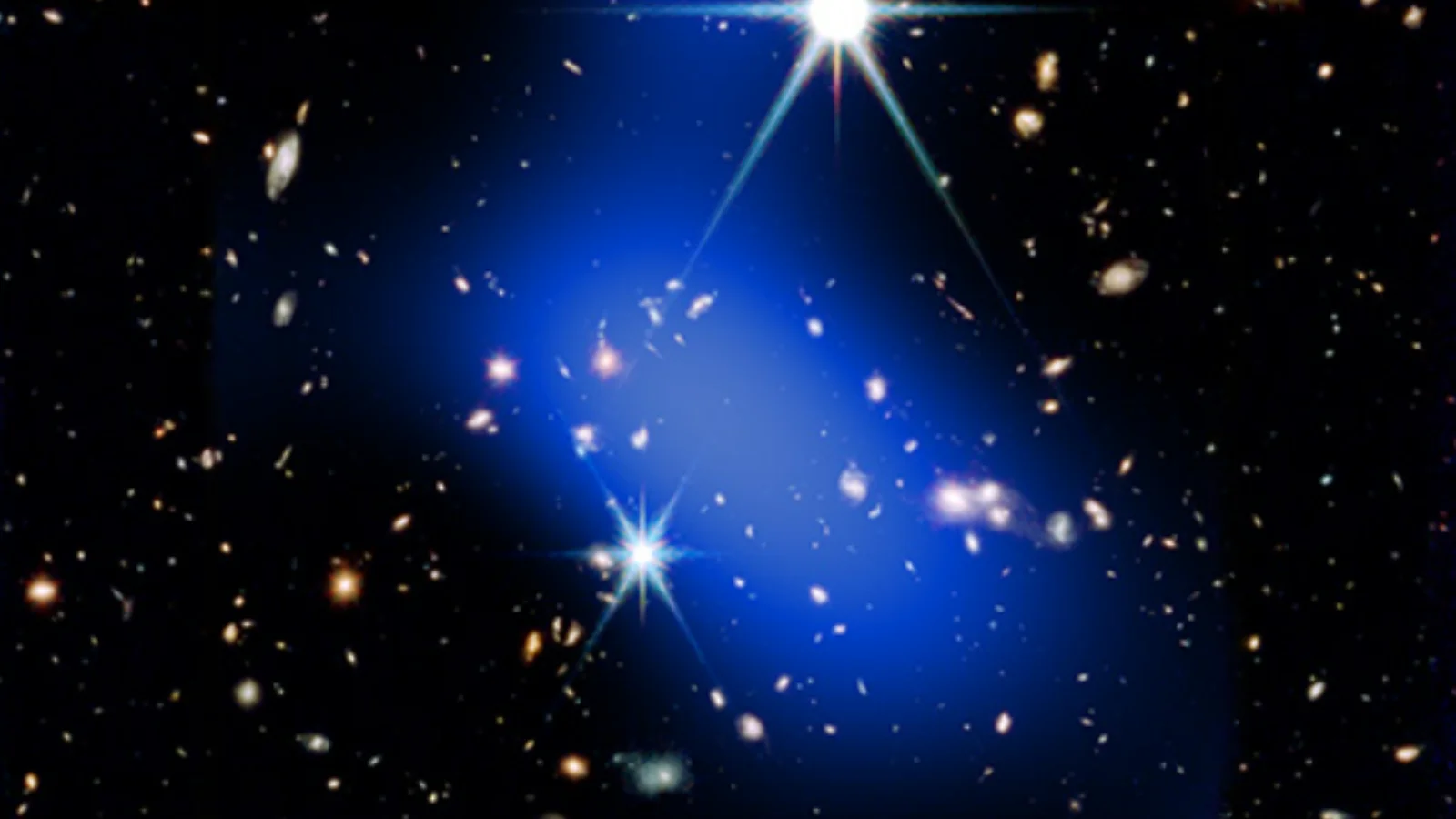
Astronomers using ALMA have discovered a galaxy cluster from just 1.4 billion years after the Big Bang that is unexpectedly hot, challenging current models of galaxy formation and suggesting that such structures may form more rapidly than previously thought.
NASA's James Webb Space Telescope discovered unexpected dust production in the primitive galaxy Sextans A, revealing that stars can forge solid dust grains, including iron and silicon carbide, even with minimal heavy elements, reshaping our understanding of early galaxy evolution and dust formation pathways.
Scientists discovered a galaxy cluster called SPT2349-56, just 1.4 billion years after the Big Bang, with gas temperatures far exceeding predictions, likely due to energy from supermassive black holes, challenging current models of galaxy cluster evolution.
Astronomers have discovered SDSS J0715-7334, the most pristine star ever found, composed almost entirely of hydrogen and helium with extremely low levels of heavier elements, challenging previous assumptions about the survival of early stars from the universe's infancy.
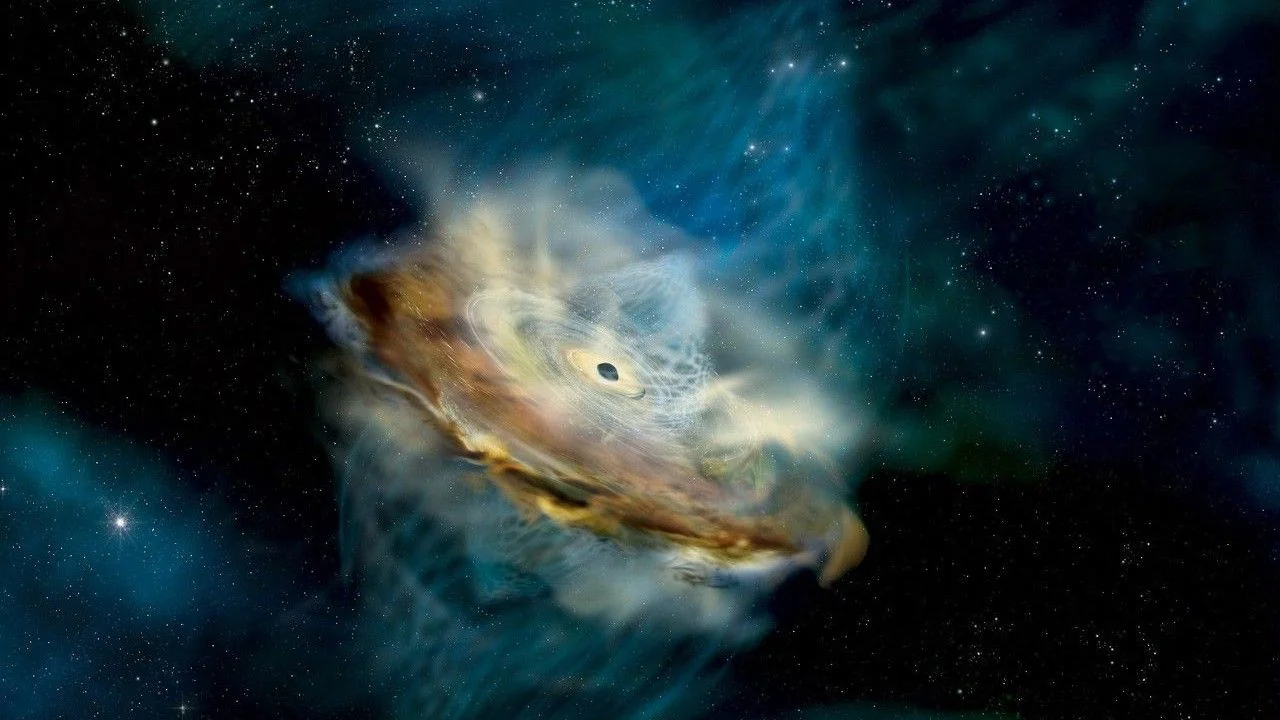
Astronomers using the James Webb Space Telescope discovered a massive black hole in a young galaxy from just 700 million years after the Big Bang, challenging traditional theories of galaxy and black hole formation. The black hole's size and the lack of surrounding stars suggest it may have originated as a primordial black hole, formed directly from density fluctuations in the early universe, rather than from star collapse. This finding opens new possibilities about the origins of supermassive black holes and the early universe, though further research is needed to confirm these theories.
NASA's James Webb Space Telescope has observed the oldest supernova, GRB 250314A, dating back to when the universe was only 730 million years old, providing new insights into early star deaths and galaxy formation.
Astronomers have discovered the largest and most distant water reservoir in the cosmos within a quasar called APM 08279+5255, containing enough water to fill trillions of Earth oceans, and its brightness is likely amplified by gravitational lensing, providing insights into galaxy and black hole growth in the early universe.
The James Webb Space Telescope has released a stunning image revealing a dense cluster of galaxies and cosmic filaments in the early universe, providing new insights into galaxy formation, the structure of the cosmic web, and the influence of dark matter and dark energy, with observations reaching back over 13 billion years.
Using the JWST, scientists found evidence supporting the existence of 'monster stars' in the early universe, which could have been the seeds for supermassive black holes, by analyzing chemical signatures in a distant galaxy that indicate the presence of extremely massive primordial stars.
Astronomers using the JWST have found evidence supporting the existence of 'monster stars' of 1,000 to 10,000 solar masses in the early universe, which likely served as seeds for supermassive black holes, explaining their rapid formation less than a billion years after the Big Bang.
NASA's JWST discovered a supermassive black hole hidden in the 'Jekyll and Hyde' galaxy Virgil, which appears as a normal star-forming galaxy in optical light but reveals a black hole in infrared, challenging previous ideas about black hole and galaxy formation in the early universe.
Scientists using the James Webb Space Telescope may have discovered the most distant supernova to date, occurring when the universe was only 730 million years old, providing new insights into early star and galaxy evolution and confirming predictions about high-energy cosmic events.
Scientists using the James Webb Space Telescope may have discovered the earliest supernova in the universe, occurring just 730 million years after the Big Bang, providing new insights into early star and galaxy evolution, and potentially marking the most distant supernova observed to date.