SpaceX is set to launch NASA's Pandora exoplanet satellite on January 11 from Vandenberg, aiming to study exoplanet atmospheres and star-planet interactions using multiwavelength observations to better understand worlds beyond our solar system.
A comprehensive survey of over 2,000 nearby K-type stars reveals many are stable, long-lived, and prime candidates for hosting habitable planets, making them key targets for future exoplanet studies despite current observational biases.
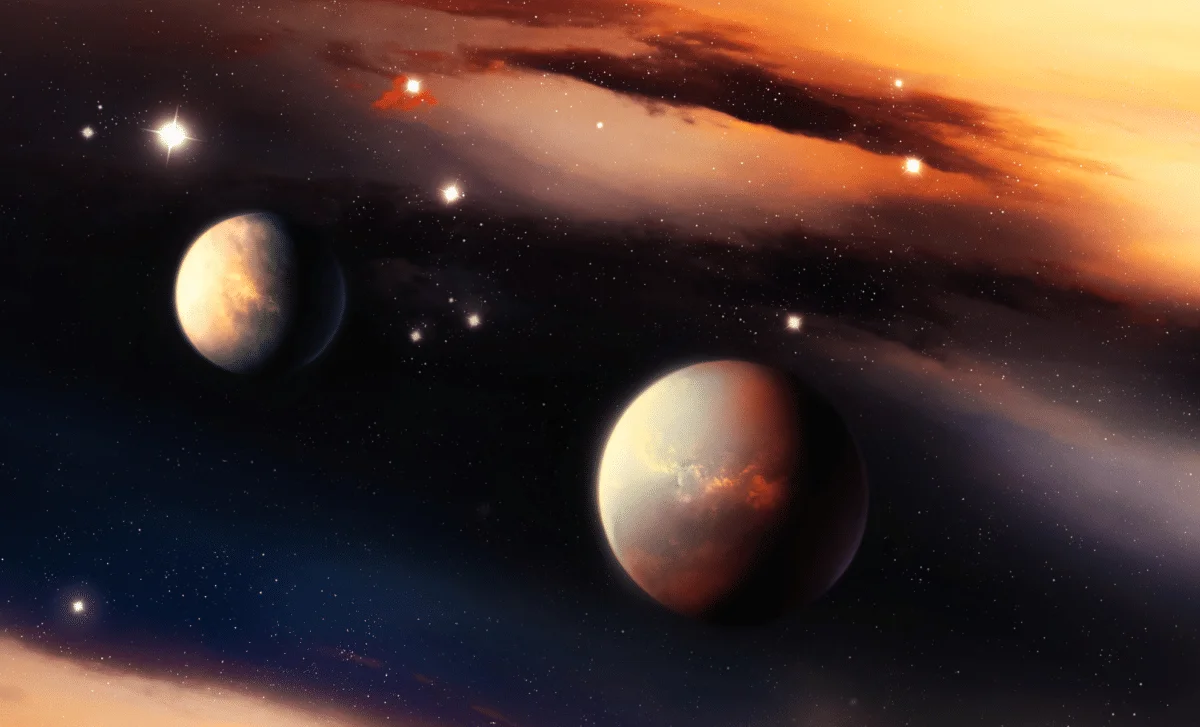
A rare planetary alignment involving two exoplanets crossing their star, known as an exosyzygy, is expected in 2026, but it may go unobserved due to scheduling conflicts with telescopes, highlighting challenges in astronomical observation infrastructure.
The article highlights six major space events in 2026, including NASA's Artemis II moon mission, India's Gaganyaan-1 crew capsule, the Pandora exoplanet hunter, the Haven-1 space station, the Boeing Starliner return to flight, and lunar rover missions, marking significant advancements in human space exploration and scientific discovery.
Astronomers have confirmed the existence of a rogue planet, roughly the size of Saturn, located about 10,000 light-years from Earth, using gravitational microlensing techniques that also allowed them to determine its distance and mass, providing new insights into these starless worlds.
The article discusses the possibility and debate surrounding human colonization of other planets, highlighting ongoing efforts by NASA and SpaceX, potential benefits like safeguarding humanity, and ethical considerations about whether we should pursue such endeavors.
2025 was a landmark year in astronomy with discoveries including the interstellar comet 3I/ATLAS, evidence of supermassive black hole formation, weakening dark energy, potential signs of past life on Mars and exoplanets, and the first light of the Vera C. Rubin Observatory, promising a new era of cosmic exploration.
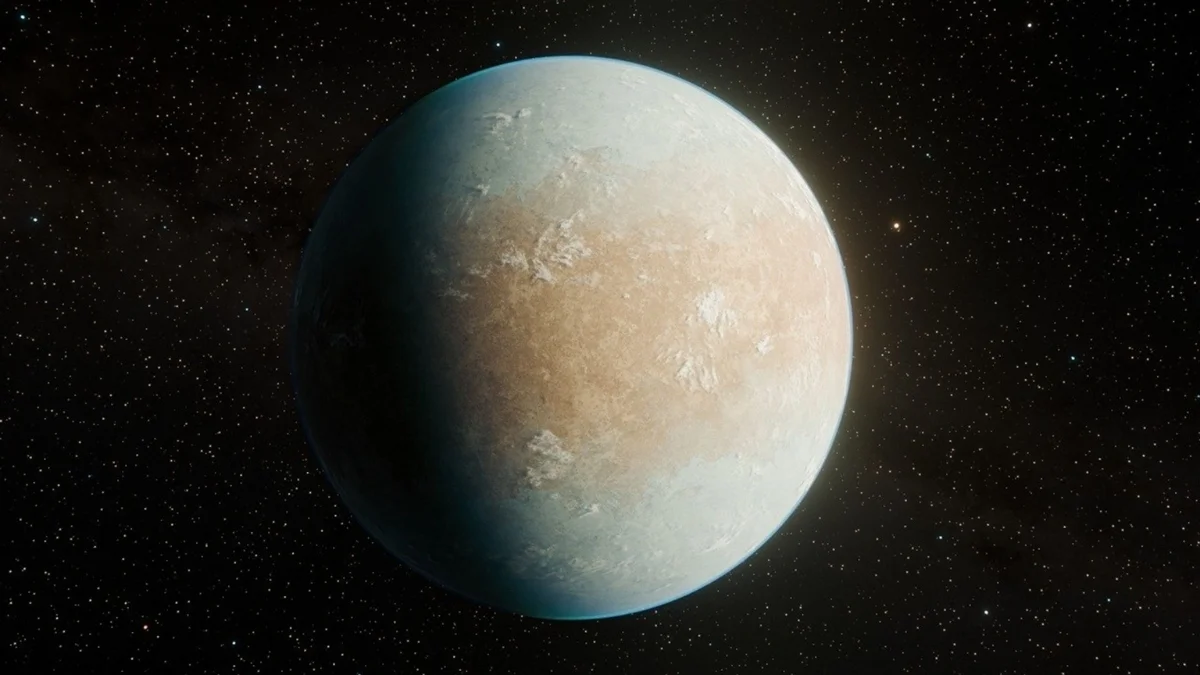
Recent research suggests that truly Earth-like planets with the right atmospheric conditions for complex life are extremely rare, especially around red dwarf stars, and the likelihood of discovering intelligent extraterrestrial civilizations may be much lower than previously thought, possibly even nonexistent in our galaxy.
In 2025, over 6,000 exoplanets have been confirmed by NASA, showcasing diverse worlds including twin-star planets, disintegrating planets, and potential signs of life, highlighting the rapid progress and ongoing mysteries in exoplanet research.
Launched on December 25, 2021, the James Webb Space Telescope has significantly advanced our understanding of the universe by capturing detailed images of the early cosmos, confirming existing theories, and raising new questions about cosmic evolution, exoplanets, and black holes, despite initial delays and budget overruns.
Chemist John Sutherland explains that life's origins are plausible through natural chemistry involving simple molecules like hydrogen cyanide, challenging the idea that life requires a miracle, and suggests that life could be common in the universe if the right chemical conditions are met.
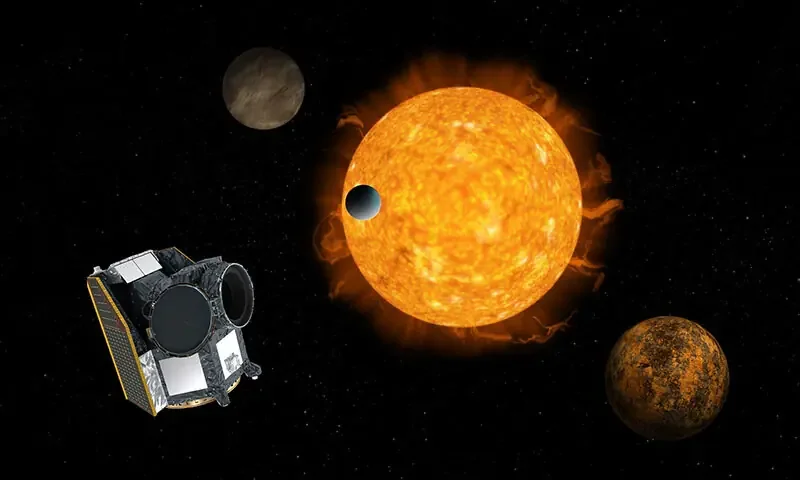
Scientists using TESS data have observed that planets are becoming rarer around aging stars, likely due to the stars' expansion and tidal forces that cause planets to decay or be engulfed, providing insights into the future fate of our solar system.
Astronomers have identified a promising exomoon candidate orbiting the exoplanet HD 206893 B using a novel astrometry-based method, potentially marking the first confirmed exomoon, though further verification is needed. This new approach could revolutionize exomoon detection and enhance our understanding of moons beyond our solar system.
NASA's TESS spacecraft has detected a red giant star in a binary system with a black hole, revealing its turbulent history and unusual properties such as being younger than expected and spinning rapidly, likely due to past mergers or interactions. This discovery provides insights into stellar evolution and binary systems involving black holes.
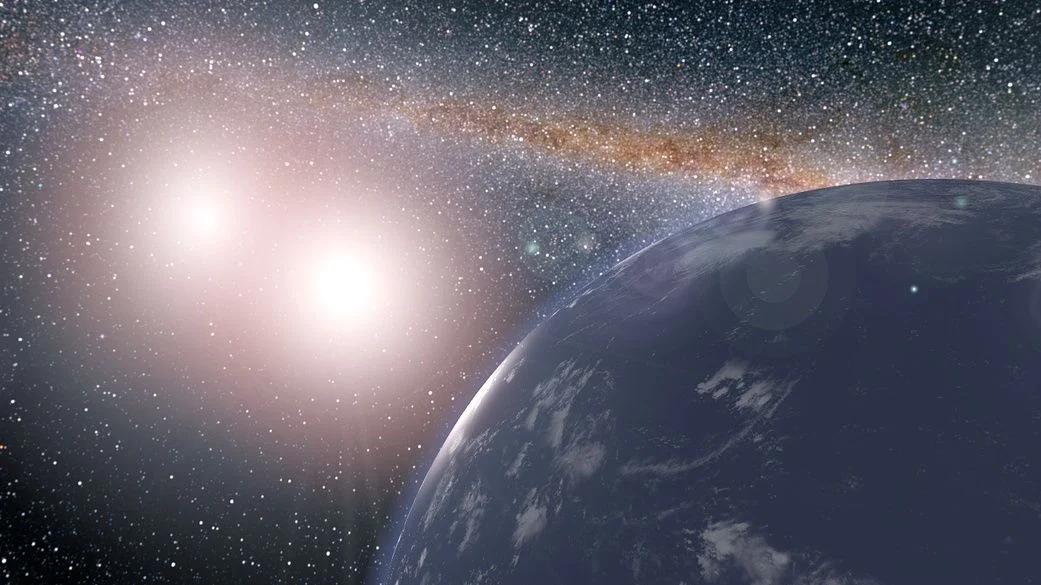
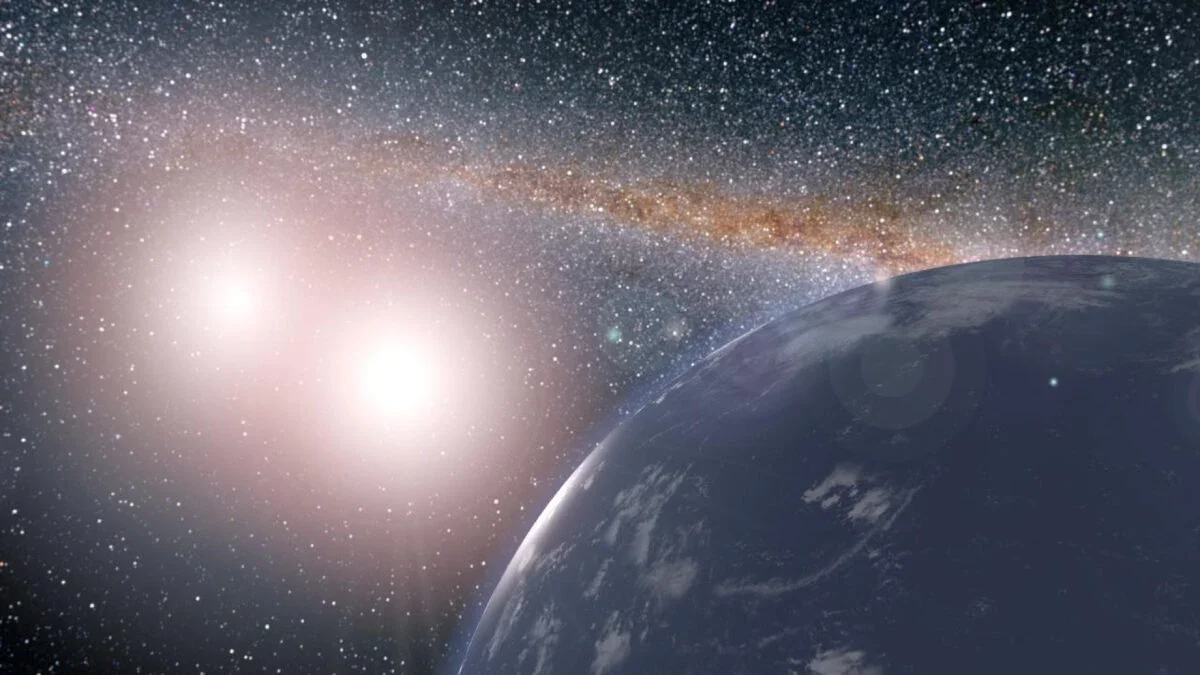
Astronomers have discovered three Earth-sized planets orbiting two stars in the TOI-2267 binary system, marking the first confirmed case of planets transiting both stars in such a system, challenging existing theories of planetary formation and demonstrating the potential for rocky worlds to exist in complex gravitational environments.