Tag

Galaxies

All articles tagged with #galaxies

Webb spots runaway black holes carving stellar contrails across galaxies
space13 days ago

Webb spots runaway black holes carving stellar contrails across galaxies

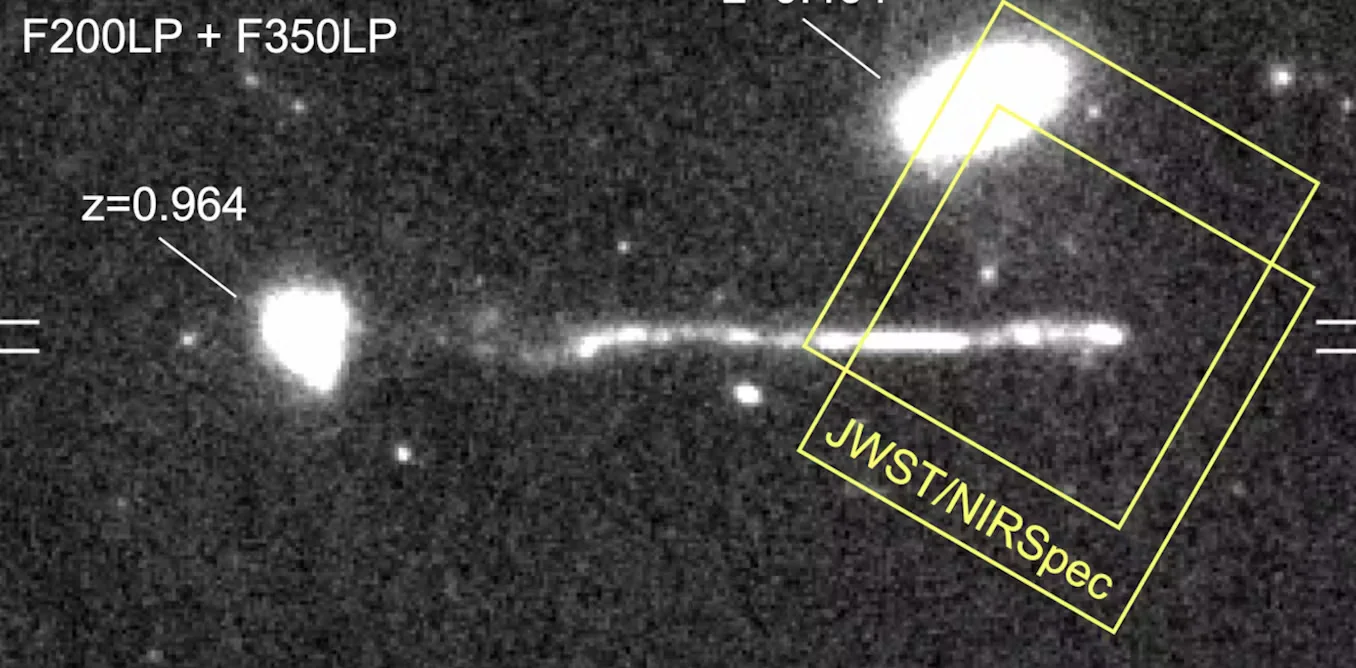
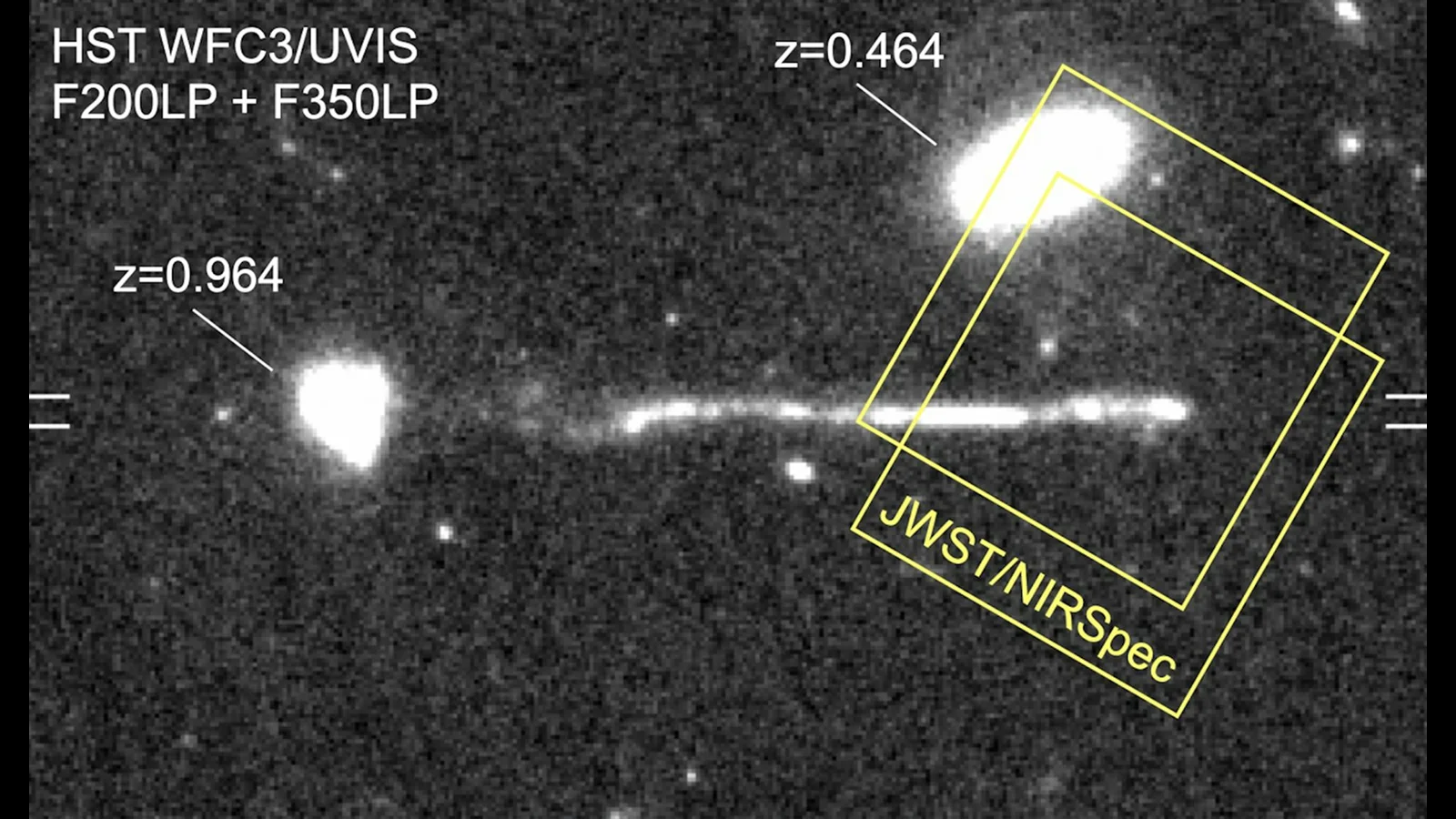
James Webb Space Telescope observations provide strong evidence for runaway black holes being kicked through galaxies by gravitational-wave recoil, leaving long wakes of star formation (contrails) in their path. Webb images show supermassive black holes of millions of solar masses traveling at hundreds to roughly a thousand kilometers per second, producing straight trails that can extend tens to hundreds of thousands of light-years. The phenomenon fits with theories of rotating black holes releasing spin energy and with gravitational-wave mergers, and while such runaways could theoretically traverse between galaxies, their occurrence in our region would be exceedingly rare. The discovery adds a striking new chapter to our understanding of the universe.
JWST Spots Nine Cosmic Platypuses That Defy Classification
astronomy1 month ago

JWST Spots Nine Cosmic Platypuses That Defy Classification

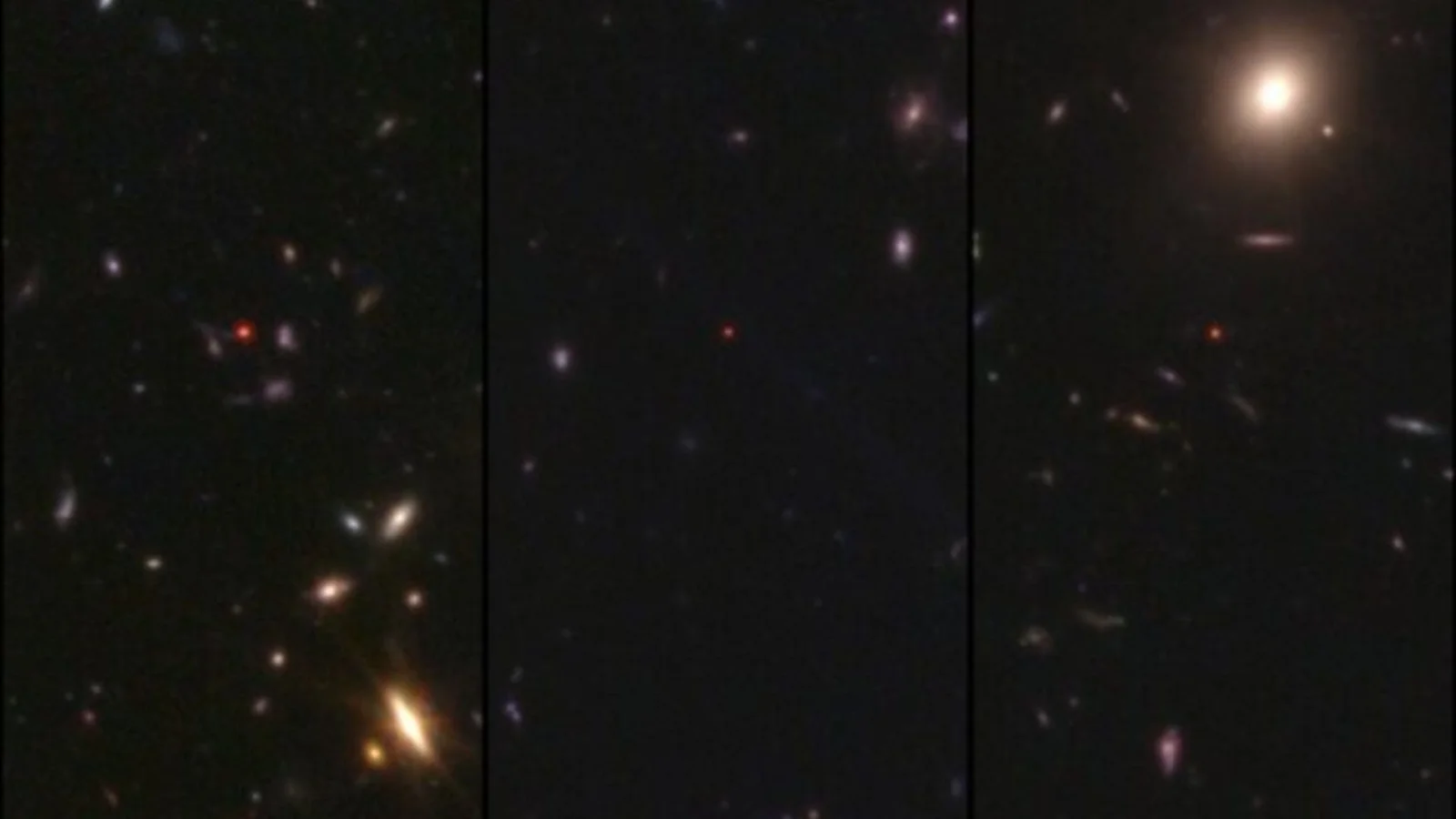
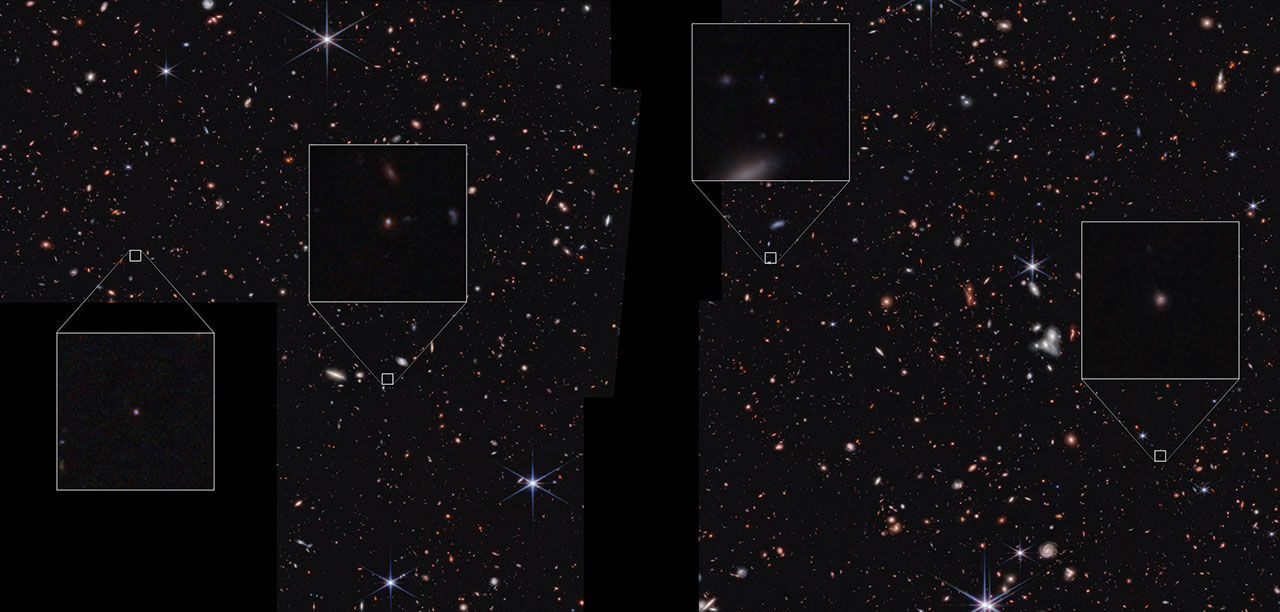
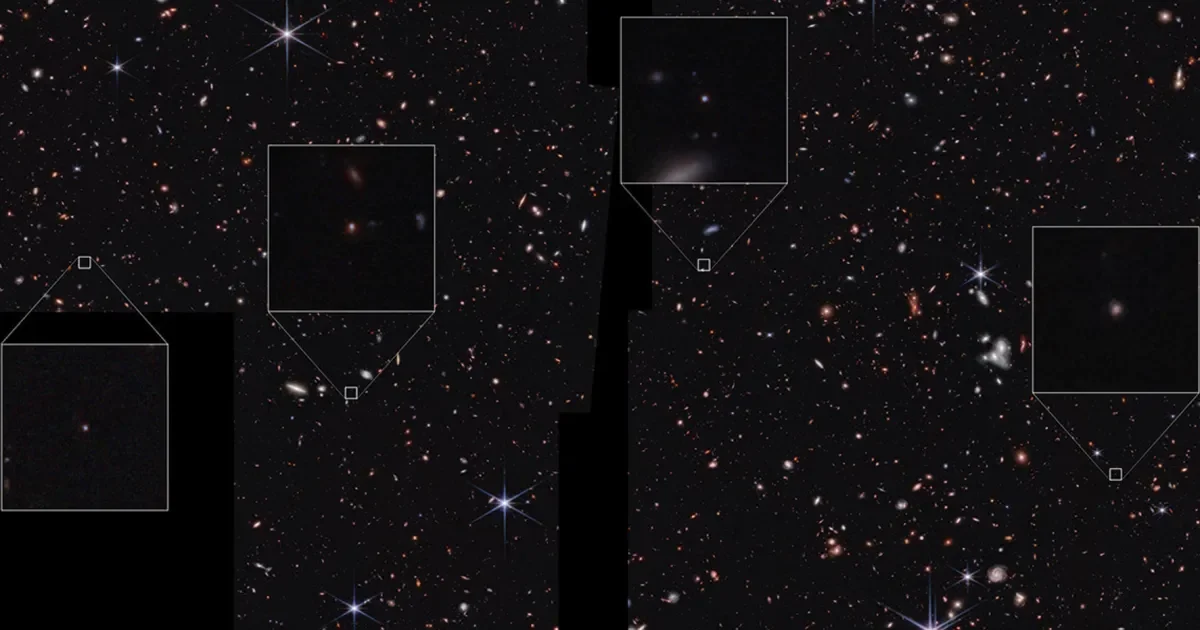
Astronomers using the James Webb Space Telescope have identified nine compact, point-like objects at redshifts 3.6–5.4 whose properties don’t fit neatly into stars, galaxies, quasars, or standard AGNs. They display narrow emission lines, lack resolvable host galaxies, and their light profiles differ from a true point source by about 10–20%, raising the possibility of a new class of objects—perhaps low-luminosity, hostless AGNs or unusual young galaxies—though their exact nature remains unclear pending deeper imaging and broader wavelength data. The discovery is framed as the cosmic equivalent of a platypus.

AI Sifts Hubble Archives to Reveal 1,400 Cosmic Anomalies
science1 month ago

AI Sifts Hubble Archives to Reveal 1,400 Cosmic Anomalies

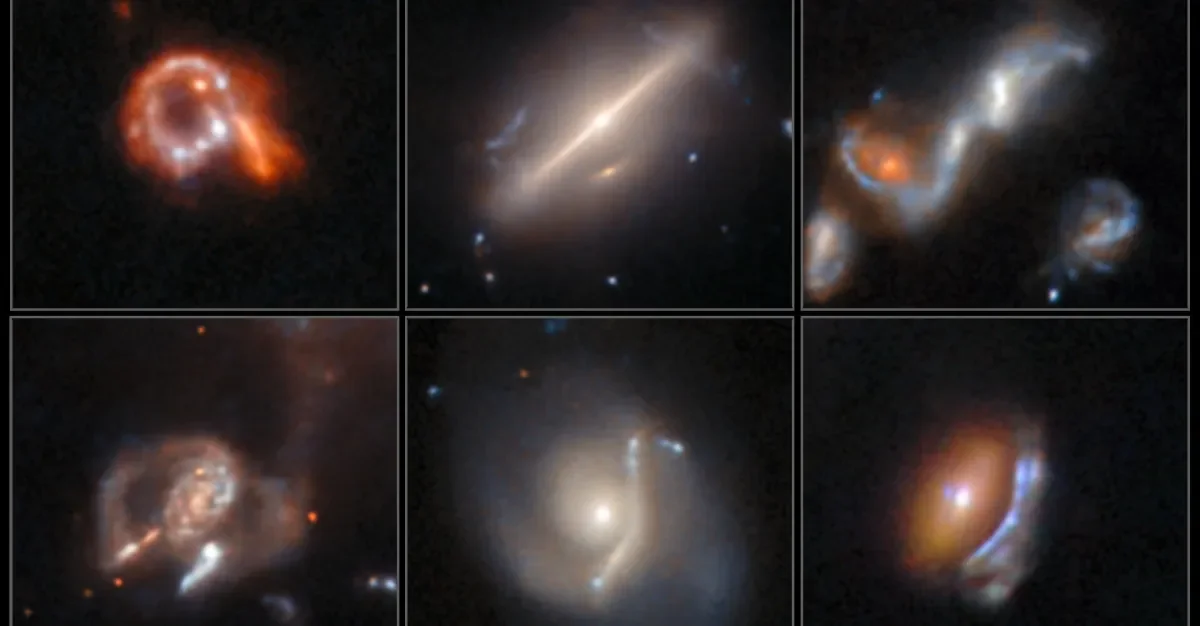
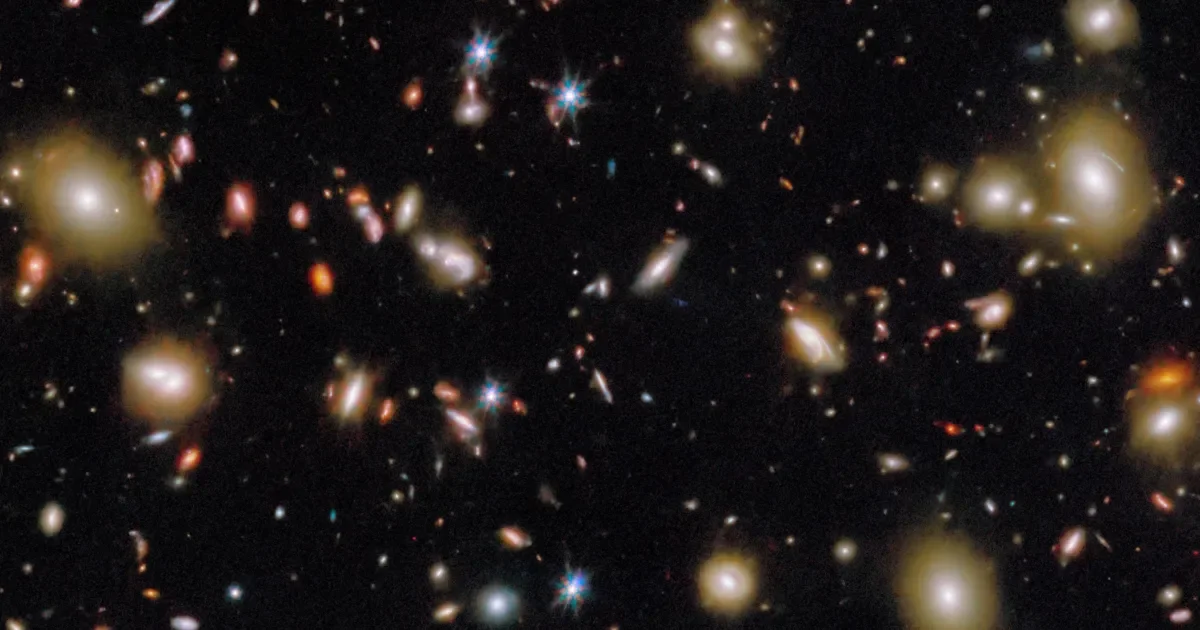
ESA researchers trained an AI model called AnomalyMatch to scan nearly 100 million images in the Hubble Legacy Archive, flagging 1,400 anomalous objects in about 2.5 days. The findings include merging/interacting galaxies, gravitational lenses, jellyfish galaxies, and galaxies with large star-clump concentrations, with several dozen objects defying classification. The work shows AI can boost the scientific output of large astronomical datasets and could aid analyses of other big archives.

Runaway Black Holes: Cosmic Rockets Leaving Galactic Trails
science1 month ago

Runaway Black Holes: Cosmic Rockets Leaving Galactic Trails

Astronomers say runaway black holes—spun up by mergers—can be ejected at thousands of km/s, leaving straight contrails of stars as they zip through galaxies. Recent JWST observations in 2025 show potential evidence: a ~10-million-solar-mass hole moving ~1,000 km/s with a ~200,000-light-year contrail and another ~2-million-solar-mass hole in NGC3627 at ~300 km/s with a ~25,000-light-year trail. While these events are rare, such runaways could travel between galaxies, and, in theory, even pass through our Solar System, though the odds are extremely small.

Cosmic teens grow up fast: JWST reveals rapid maturity of early galaxies
astronomy1 month ago

Cosmic teens grow up fast: JWST reveals rapid maturity of early galaxies

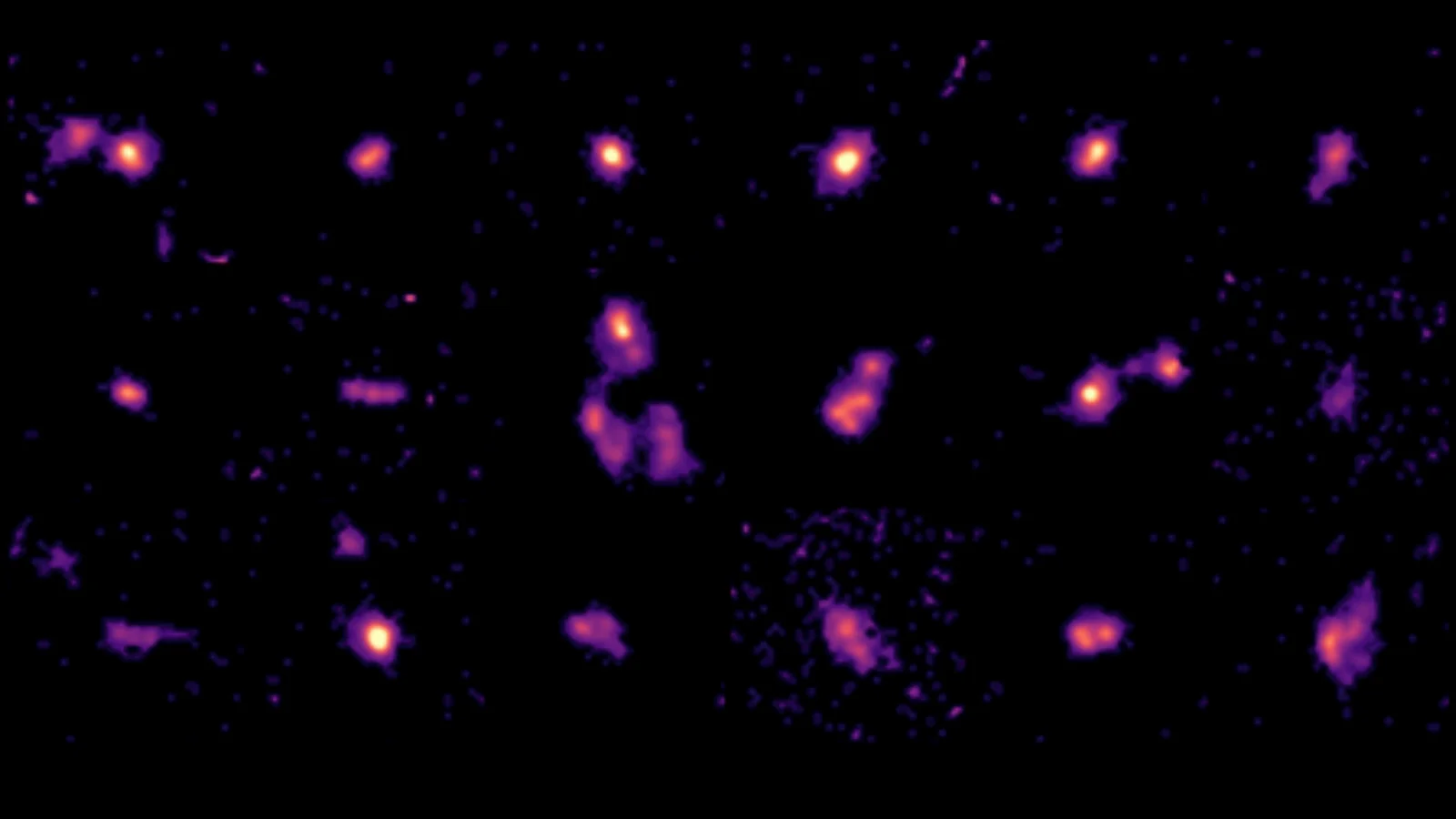
Astronomers using the James Webb Space Telescope (with Hubble and ALMA) observed 18 galaxies about 12.5 billion light-years away and found they were rapidly forming stars and already metal-rich (carbon, oxygen), with rotating disks and vigorously accreting supermassive black holes—indicating structural and chemical maturity far earlier than models had predicted.

Webb’s Tiny Red Dots Might Be Early-Phase Supermassive Black Holes
astronomy1 month ago

Webb’s Tiny Red Dots Might Be Early-Phase Supermassive Black Holes

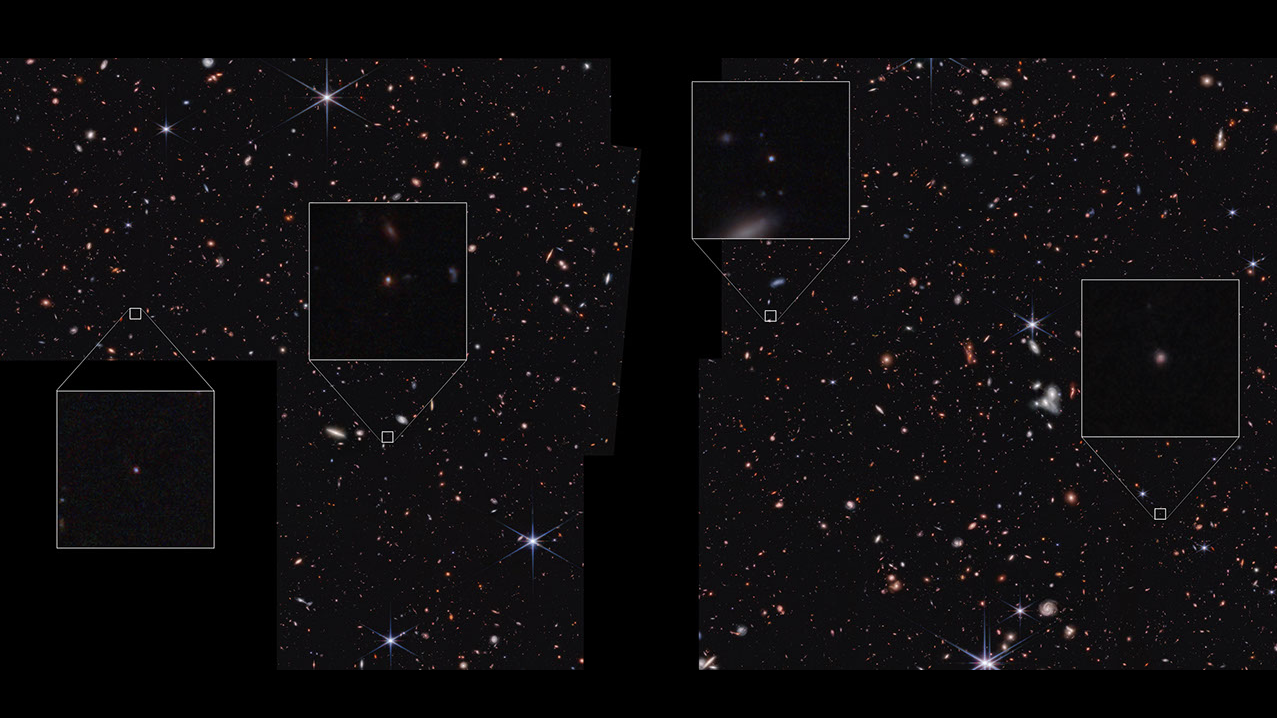
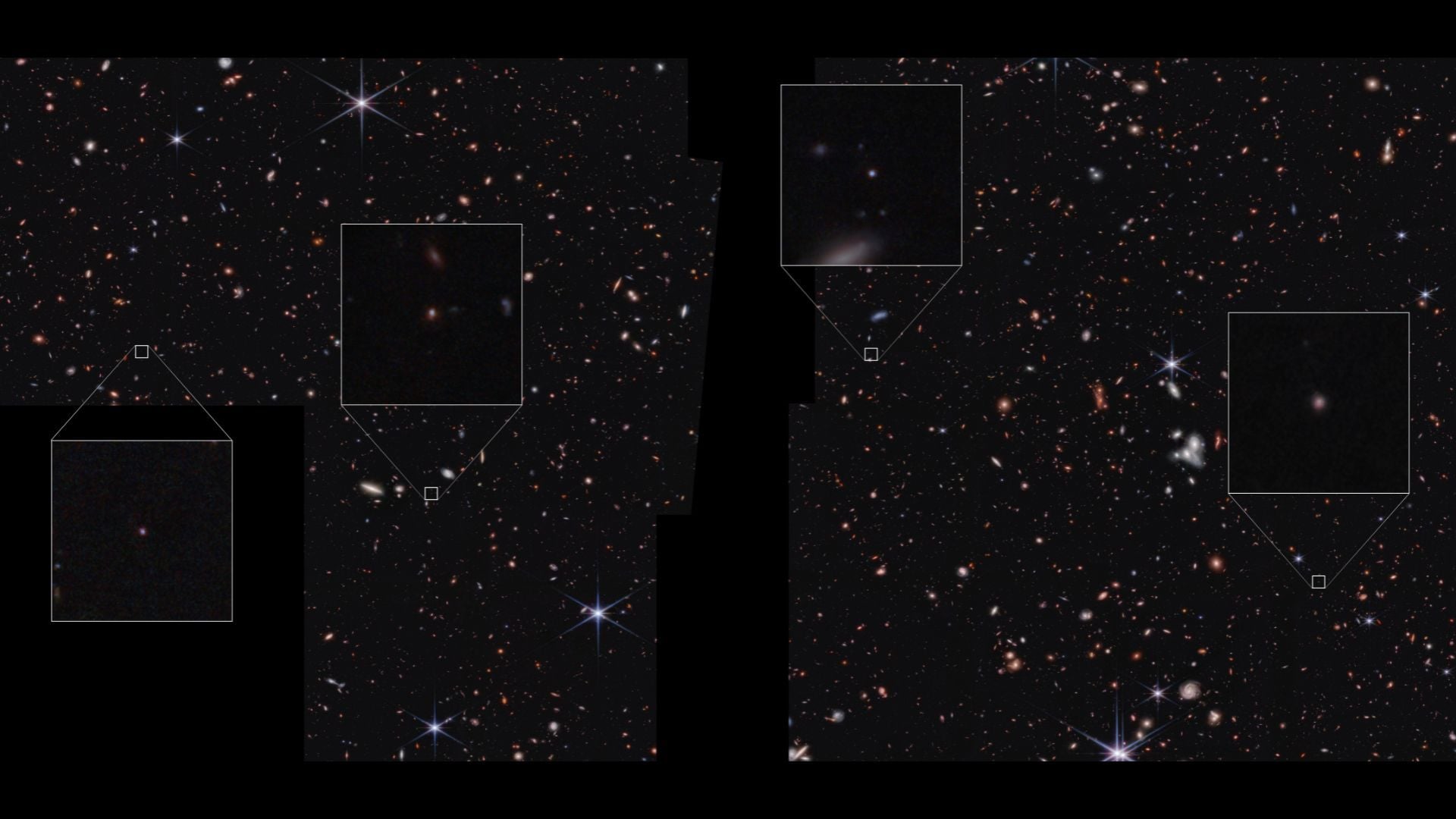
NASA’s James Webb Space Telescope studied 12 ancient galaxies and found that the mysterious “little red dots” are likely supermassive black holes in their youth, not star-rich galaxies. They are extremely luminous yet incredibly compact (more than 250 billion suns in brightness but less than a third of a light-year across), implying black holes roughly 100,000 to 10 million solar masses. Their absence of X-ray/radio emission is explained by surrounding dense gas cocoons that scatter light. If confirmed, these objects could shed light on how massive black holes form in the early universe; the study appears in Nature.

James Webb Telescope Uncovers Mysterious 'Platypus' Galaxies in the Early Universe
science1 month ago

James Webb Telescope Uncovers Mysterious 'Platypus' Galaxies in the Early Universe

Strange cosmic objects observed by the James Webb Space Telescope may be young 'platypus' galaxies or a new class of active galactic nuclei, providing insights into galaxy formation in the early universe. These objects exhibit mixed features of stars and galaxies, challenging existing classifications and hinting at unique formation processes.