The James Webb Space Telescope can see billions of years into the past by capturing faint infrared light from distant galaxies using a massive gold-coated mirror and highly sensitive instruments, allowing it to observe the early universe and uncover cosmic secrets.
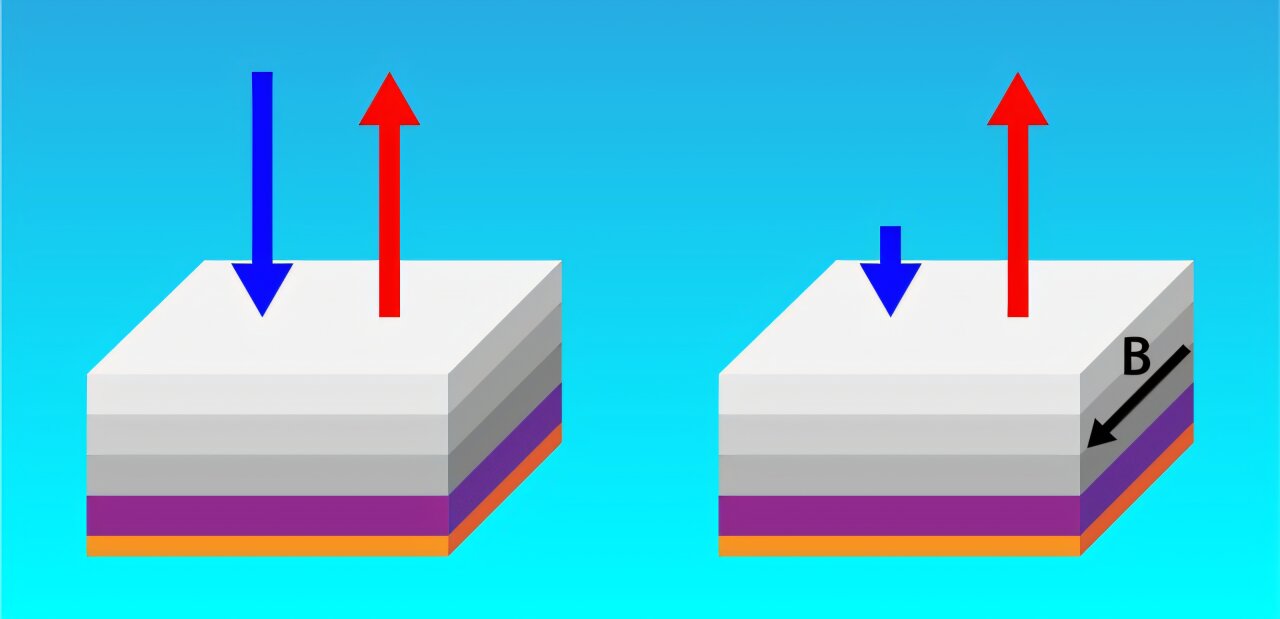
Researchers developed a multilayer metamaterial that exhibits stronger infrared emission than absorption under a magnetic field, breaking traditional reciprocity laws and opening new possibilities for heat management and energy technologies.
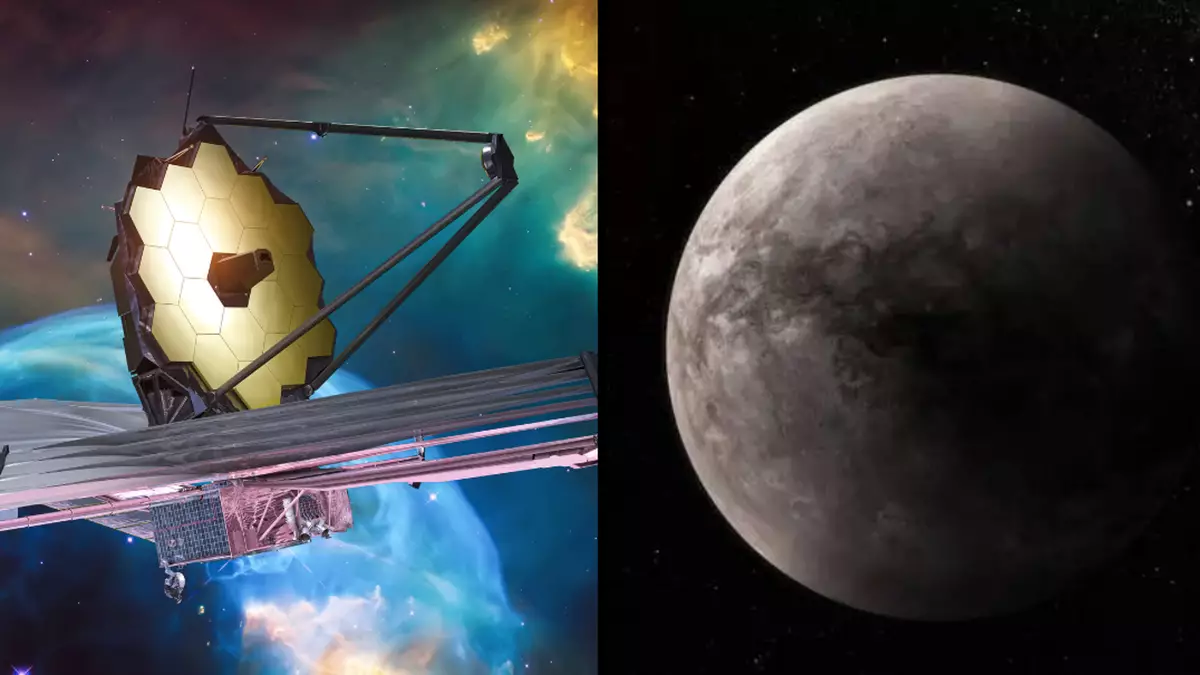
The James Webb Space Telescope can see far into space by using a giant gold-coated mirror to collect faint infrared light from distant galaxies, which has traveled billions of years to reach it. Its advanced cameras, NIRCam and MIRI, detect this heat and light, allowing scientists to study the early universe and objects hidden by dust, all while being kept extremely cold by a sun shield and cryocooler.
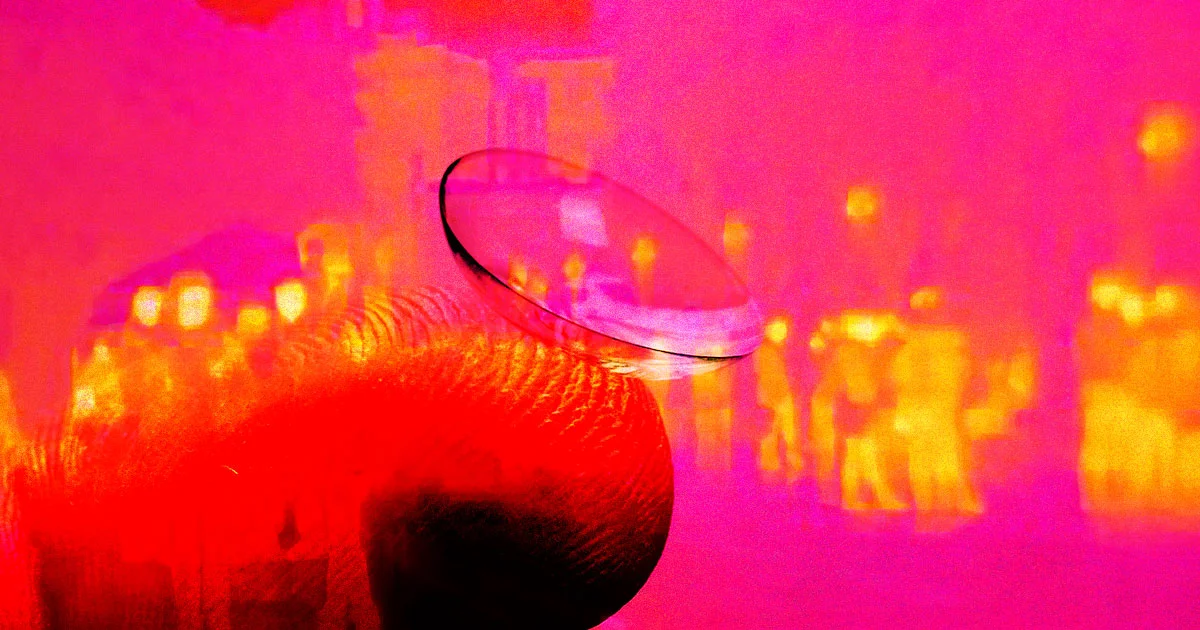
Researchers at the University of Science and Technology of China have developed contact lenses containing upconversion nanoparticles that enable humans to see infrared light without external power, potentially revolutionizing vision and applications in security, medicine, and beyond.
Scientists have developed contact lenses that enable users to see in the dark by converting infrared light into visible light, with potential applications including aiding colorblind individuals and transmitting wireless data, though the technology is still in development and not yet perfect.
Artist Scott Kildall uses a microcontroller to capture infrared light from Joshua trees and convert it into music, creating a unique sound installation called Infrared Reflections. This project, developed during his residency at Joshua Tree National Park, highlights the interplay between art and technology, and aims to engage people with nature and ecological issues through an innovative auditory experience.
NASA's James Webb Space Telescope has made a groundbreaking discovery by detecting infrared light emitted from an Earth-like planet, TRAPPIST-1 b, located 40.7 light-years away. This marks the first time light has been detected from a planet outside our solar system. While the planet's Earth-like composition is promising, it lacks an atmosphere and has extreme temperatures, making it unsuitable for life. However, the discovery paves the way for further exploration of exoplanets and the search for conditions conducive to supporting life.
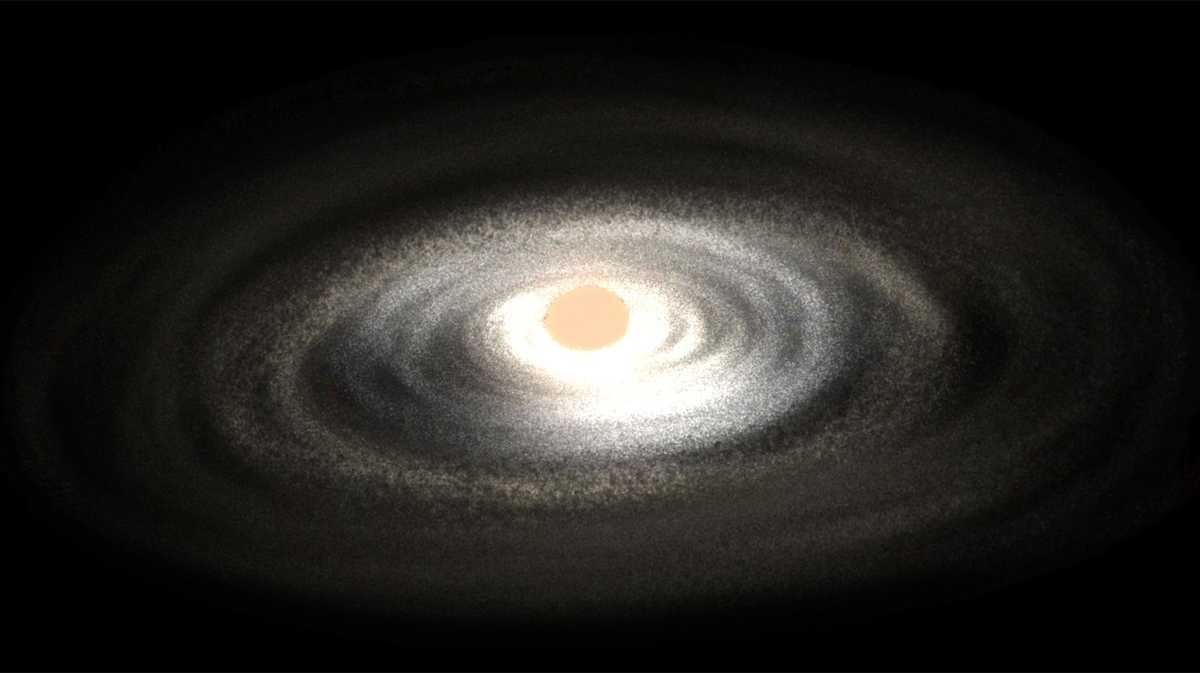
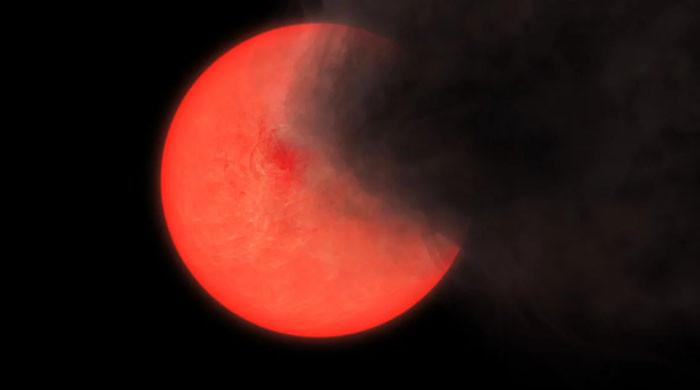
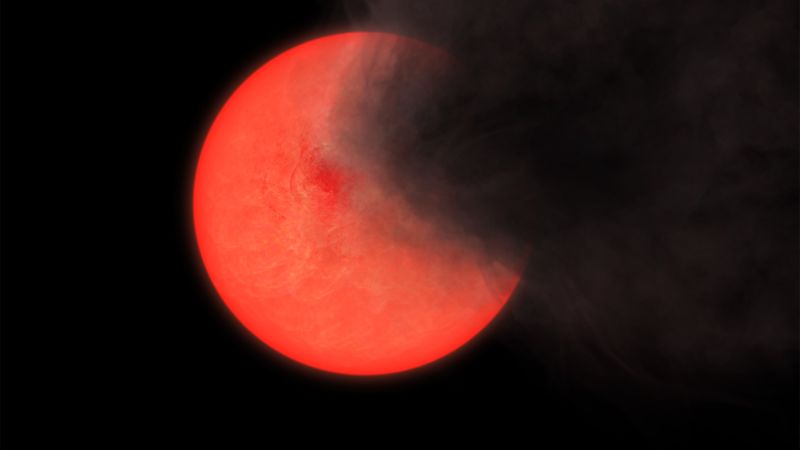
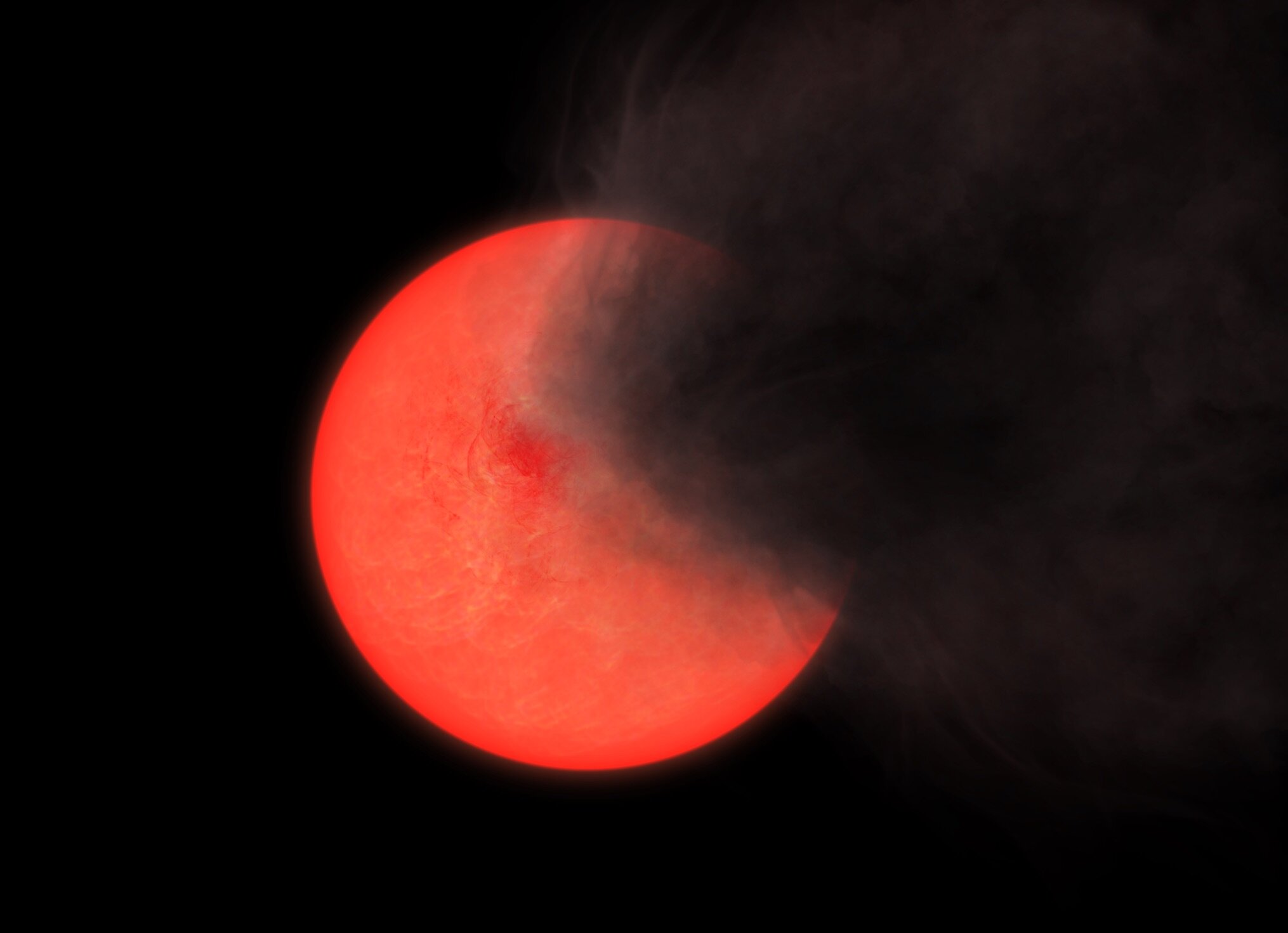
Astronomers have discovered a new type of star, dubbed "old smokers," near the center of the Milky Way galaxy. These aging, giant stars remain inactive for decades before emitting clouds of smoke and dust, potentially playing a role in distributing elements across the universe. The discovery was made during a decade-long survey involving the monitoring of nearly a billion stars in infrared light, revealing not only the old smokers but also newborn stars undergoing outbursts. The old smokers, found in the innermost nuclear disc of the Milky Way, are shedding light on the process of element release from aging stars and its impact on the formation of new stars and planets.
Scientists from Ewha Womens University in Seoul have developed a potent antitumor drug by manipulating calcium levels in cells, leading to a "calcium storm" that destroys tumor cells when exposed to infrared light. Tested in mice, the drug successfully eradicated tumors within days. The research team is optimistic about its potential for biomedical research and its role in cancer treatment.
Astronomers have discovered a new type of star, known as "old smokers," near the center of the Milky Way galaxy after a 10-year study. These stars, which were once hidden, go dormant for decades before ejecting clouds of dust and smoke. Using infrared light, astronomers observed these stars for the first time, with 222 showing discernible variations in brightness, 32 of which were young stars. The discovery may provide insights into the distribution of elements throughout the cosmos.
Astronomers have discovered a new type of aging, giant stars near the heart of the Milky Way galaxy, dubbed "old smoker" stars, which remain inactive for decades before emitting clouds of smoke and dust. These stars were identified during a decade-long survey involving the monitoring of nearly a billion stars in infrared light, revealing their unexpected behavior and potential role in distributing elements across the universe. The discovery could have wider implications for understanding the spread of heavy elements in the Milky Way's Nuclear Disc and metal-rich regions of other galaxies.
Astronomers have discovered hidden stars, including a new type of elderly giant nicknamed "old smokers," at the heart of the Milky Way galaxy, using infrared light to see through the dust and gas that obscures them in visible light. The team also found rarely-seen newborn stars, known as protostars, undergoing extreme outbursts, shedding light on the formation of new solar systems. Additionally, they detected a new type of red giant star that remains dim and red for years before puffing out clouds of smoke, challenging previous understanding of stellar matter ejection and the distribution of heavy elements in the galaxy.
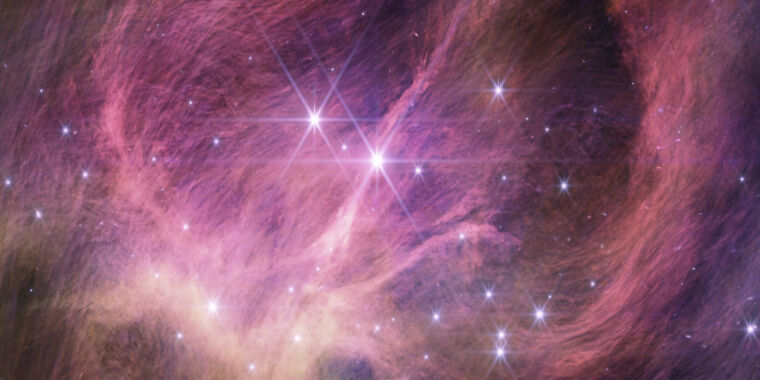
Astronomers using the James Webb Space Telescope have studied a star cluster in the constellation Perseus to determine the smallest possible size for a star. The cluster, IC 348, was chosen because it is young and likely to have new brown dwarfs, which emit light from the fusion of deuterium. Using Webb and ground-based telescopes, astronomers identified three targets weighing between three to eight times Jupiter, with surface temperatures ranging from 830° to 1,500° degrees Celsius. The study of these small brown dwarfs has raised questions about their formation and the discovery of mysterious hydrocarbons.
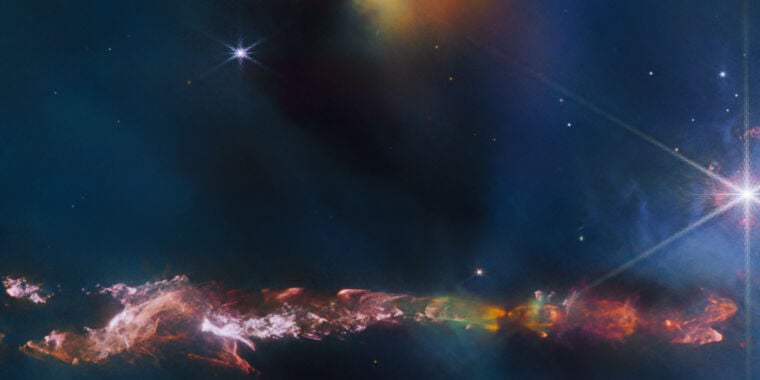
The James Webb Space Telescope has captured a stunning image of Herbig Haro object number 797, a luminous region surrounding newborn stars located about 1,000 light-years from Earth. The image reveals the previously unknown source of the spectacular jets as two stars, along with other outflows from a protostar. The Webb telescope's infrared capabilities allow it to visualize the structure of the outflows by collecting the infrared light emitted by molecules excited by the turbulent conditions.
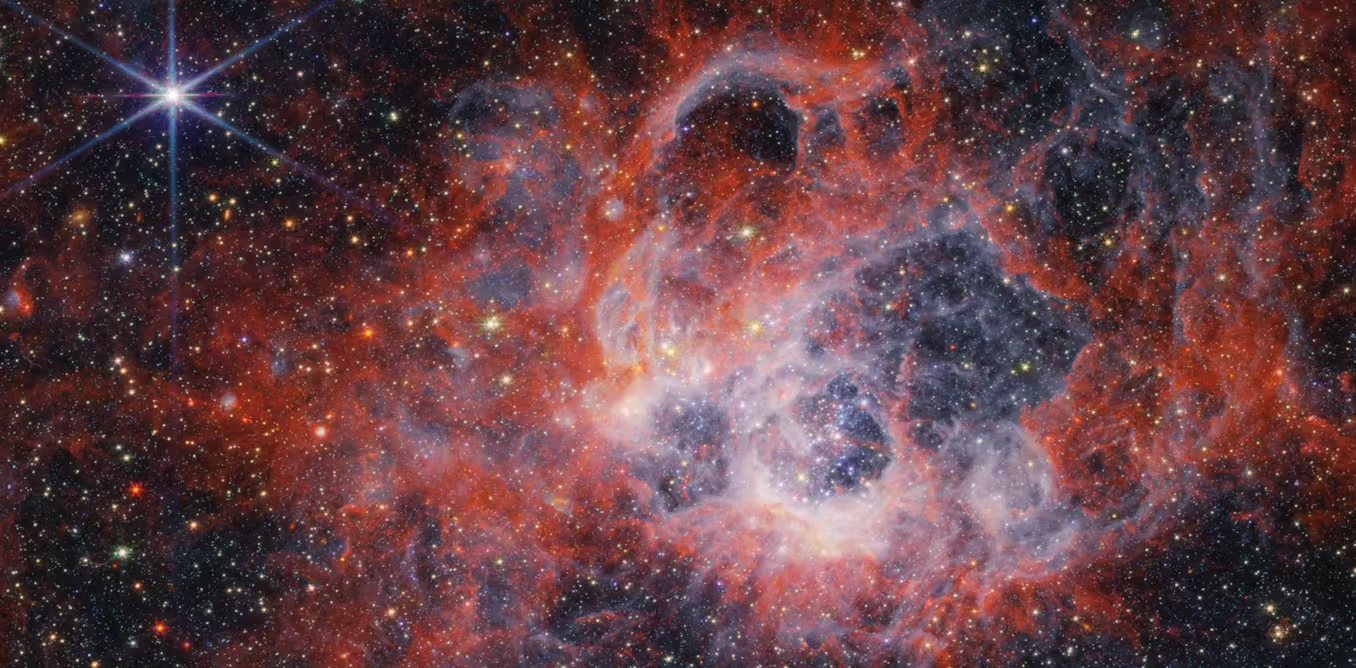
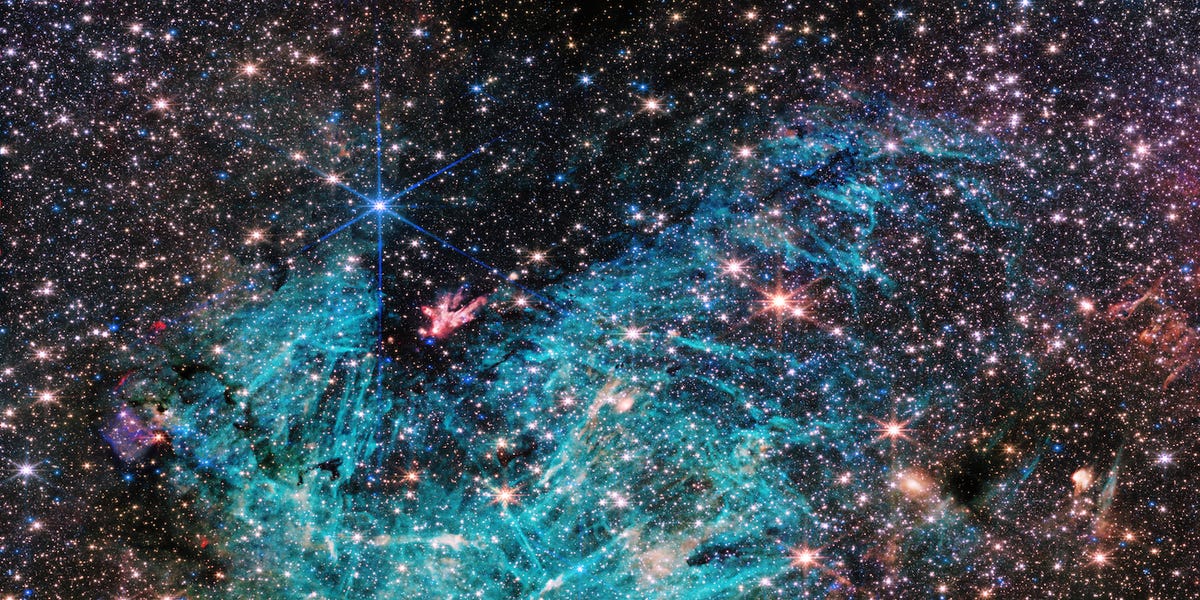
NASA's James Webb Space Telescope has captured a stunning image of the chaotic center of the Milky Way galaxy, revealing never-before-seen details. The image shows a star-forming region called Sagittarius C, located about 25,000 light-years away from Earth. By capturing infrared light, the telescope allows scientists to observe features that were previously unseen. The image showcases a fiery cluster of still-forming protostars, ionized hydrogen emissions, and needle-like structures shooting out in all directions. The data collected by the telescope will provide valuable insights into the origin of the universe and the processes occurring in the galactic center.