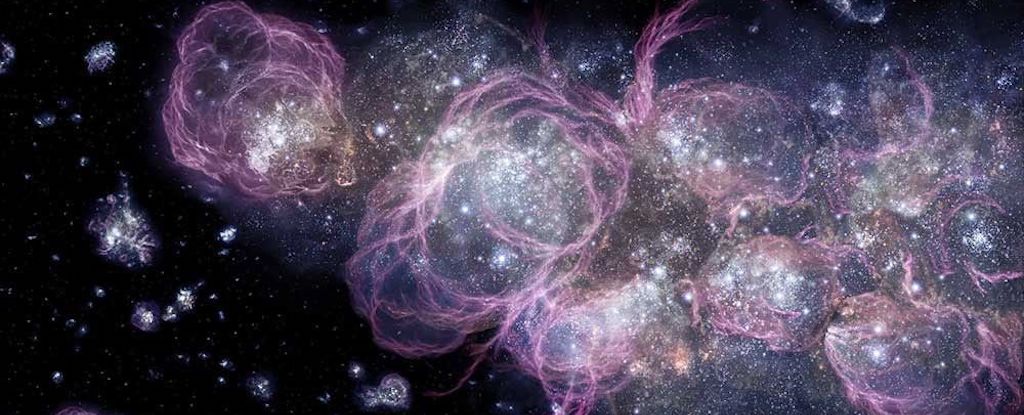
A new study suggests the early universe was 'pre-heated' before the Epoch of Reionization, challenging previous assumptions of an ultracold beginning, likely due to X-ray emissions from early black holes and stellar remnants, with ongoing radio telescope efforts to detect signals from this era.
A recent study suggests that a red light source observed by JWST, named QSO1, may be the first direct evidence of a primordial black hole formed shortly after the Big Bang, potentially shedding light on early black hole and galaxy formation processes.
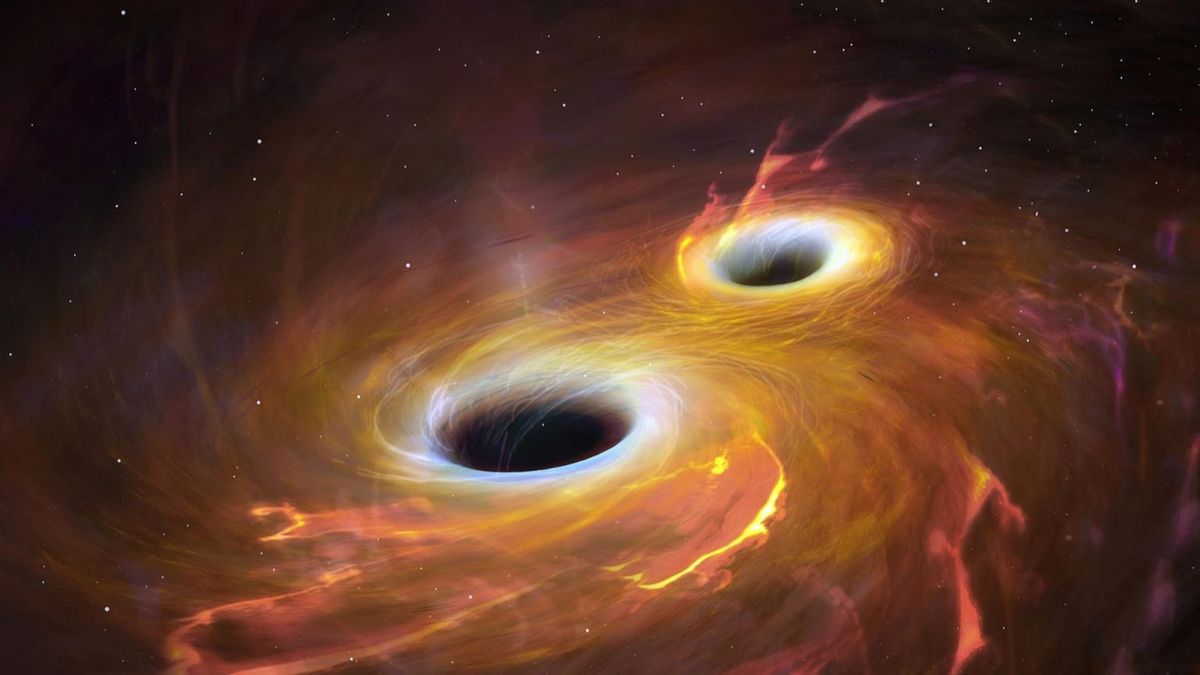
Astronomers have discovered the first-ever merging galaxy cores containing two supermassive black holes from the cosmic dawn, just 900 million years after the Big Bang. This finding, confirmed using the Subaru Telescope's Hyper Suprime-Cam, provides new insights into the formation of supermassive black holes and the evolution of galaxies during the Epoch of Reionization.
Astronomers have confirmed the existence of the faintest galaxy known in the early universe using the James Webb Space Telescope and gravitational lensing. The galaxy, called JD1, was observed as it was when the universe was only 480 million years old. This discovery provides insights into the epoch of reionization and allows astronomers to study the structure and formation of early galaxies.
Astronomers using the James Webb Space Telescope have confirmed the existence of the faintest galaxy known in the early universe. The galaxy, called JD1, was observed when the universe was only 480 million years old. The intense ultraviolet light from the first generations of stars and galaxies is believed to have burned through the hydrogen fog that obscured the early universe, transforming it into the transparent universe we see today. By studying these faint galaxies, astronomers can gain insights into the epoch of reionization and the building blocks that shaped the universe.
New research suggests that the strange radiation signal emitted when the first stars appeared in the universe may be evidence of an evolving, dynamic kind of dark energy. Astrophysicist Lu Yin has explored a model called interacting Chevallier-Polarski-Linder dark energy, or ICPL, which allows for dark energy to interact with dark matter, resulting in changes in the acceleration rate of expansion. Yin found that this ICPL model caused stars and galaxies to appear earlier than in standard cosmological models, which made the ICPL model better at accounting for the strange observed 21-cm signal compared with traditional cosmological models.
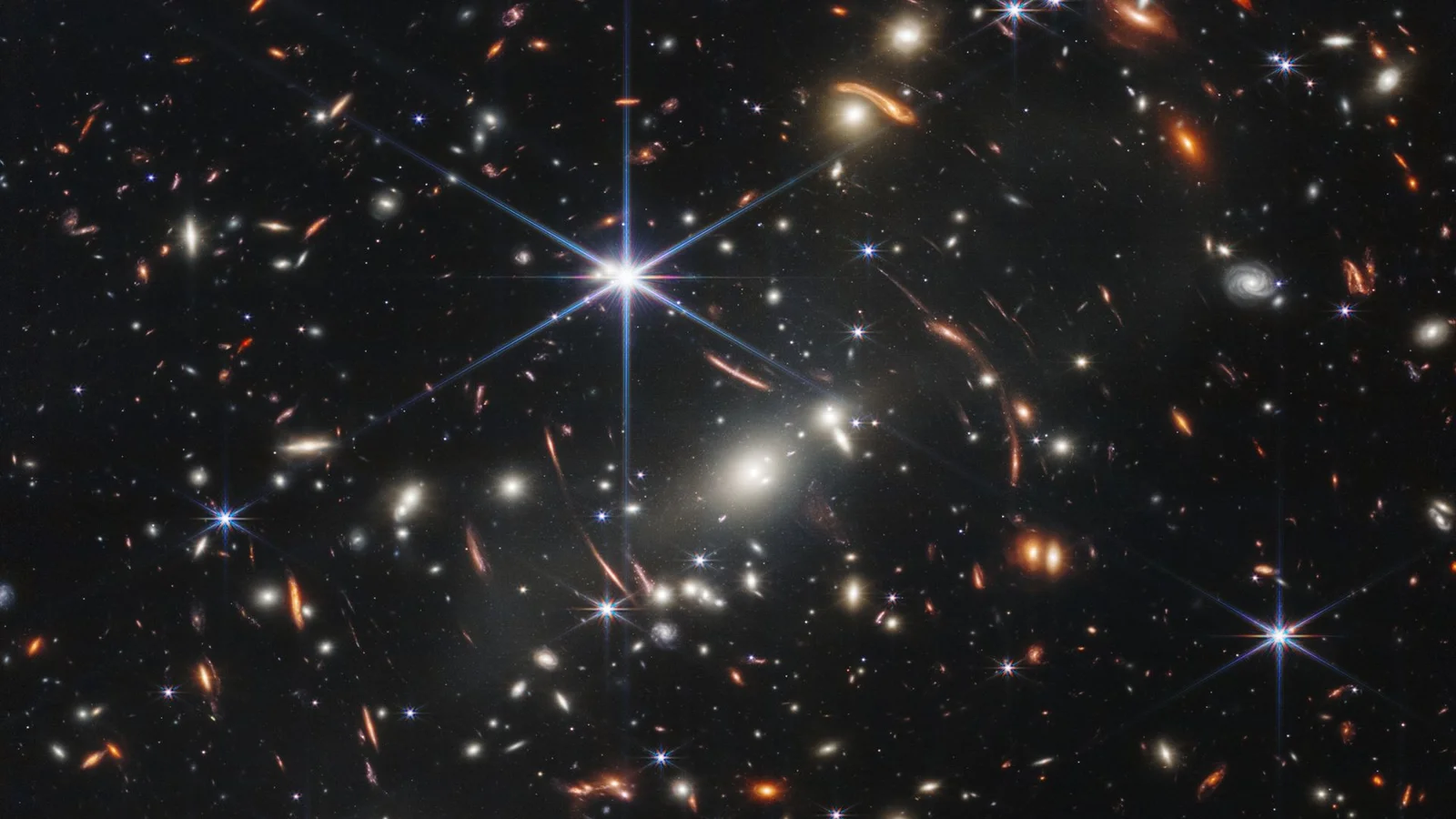
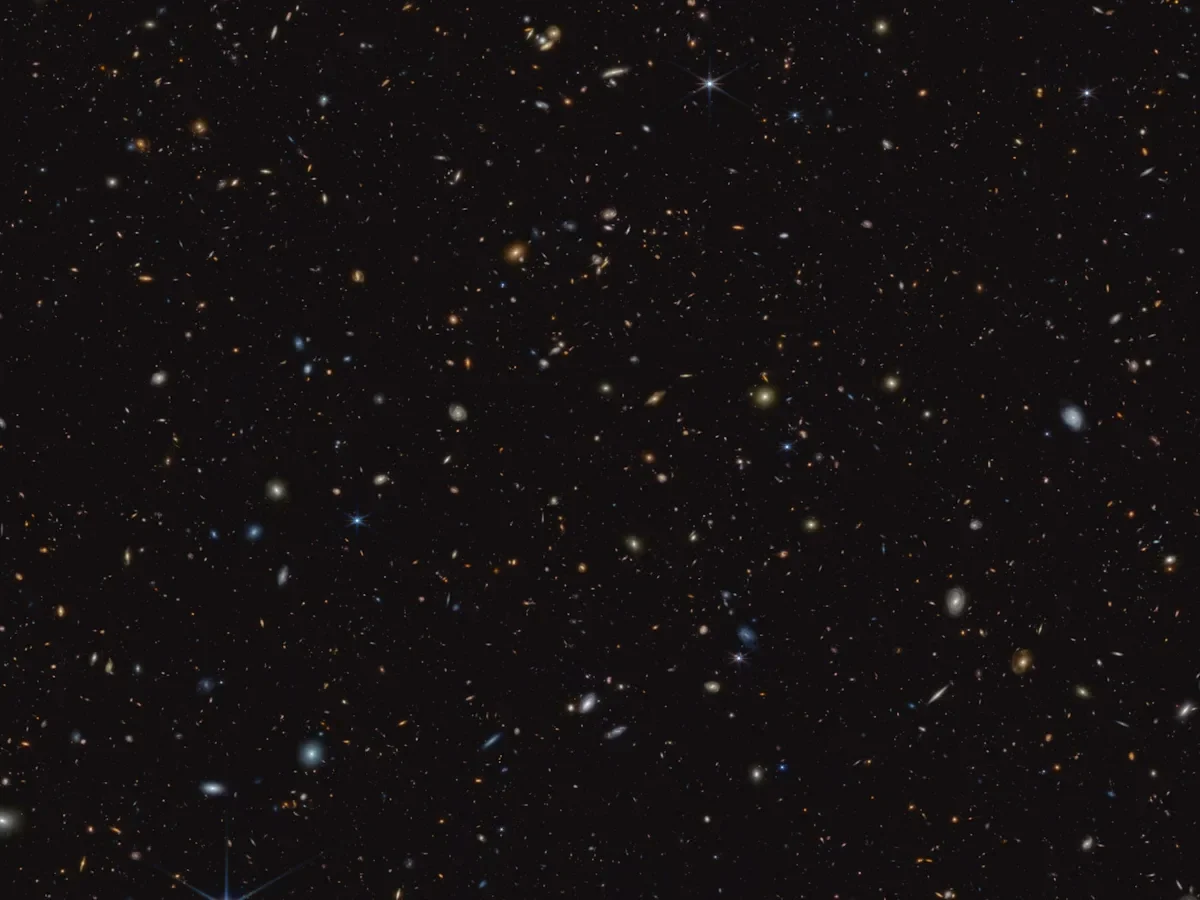
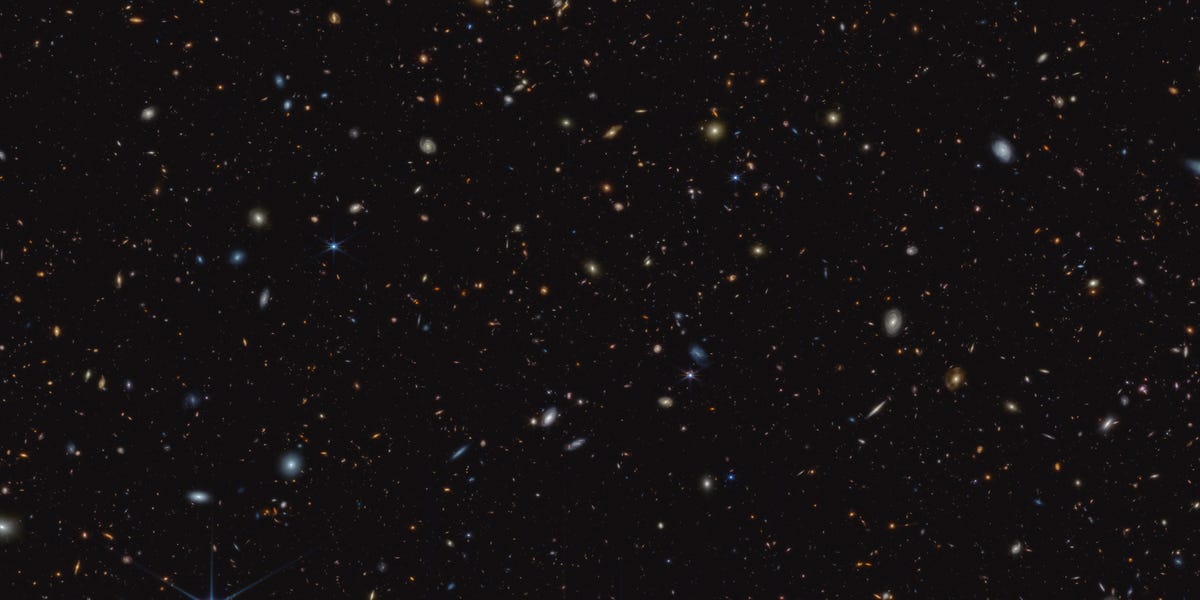
The James Webb Space Telescope has captured an image of 45,000 galaxies, including 700 new discoveries, some of which are the youngest ever observed. The telescope's unprecedented detail is helping scientists understand the secrets of our early universe, including the Epoch of Reionization. The discovery of strong emission lines in the young galaxies suggests that hot, massive star formation could have been a key driver of the epoch. Webb's observation of the Great Observatories Origins Deep Survey is part of its JWST Advanced Deep Extragalactic Survey program.
The James Webb Space Telescope has captured an image of 45,000 galaxies, including 700 new discoveries, some of which are the youngest ever observed. The telescope's unprecedented detail is helping scientists unveil the secrets of our early universe, including the Epoch of Reionization. By studying the light signatures of these young galaxies, astronomers have spotted strong emission lines indicating intense recent star formation, suggesting that the burst of hot, massive star formation in young galaxies could have been a key driver of the Epoch of Reionization.