A new study using CRISPR technology on zebrafish embryos suggests that the evolution of hands and feet involved repurposing ancient genetic programs, particularly those related to our posterior regions, rather than developing entirely new genes.
Scientists discovered how serotonergic neurons in larval zebrafish process visual feedback related to movement, using a gating mechanism that opens after swimming to help the brain learn which actions lead to successful outcomes, providing insights into neuromodulation and potential implications for understanding mood disorders.
A study published in Science Immunology reveals that exposure to daylight enhances the immune response by regulating the circadian clock in neutrophils, the body's first responders to infection, with potential implications for treating inflammatory conditions.
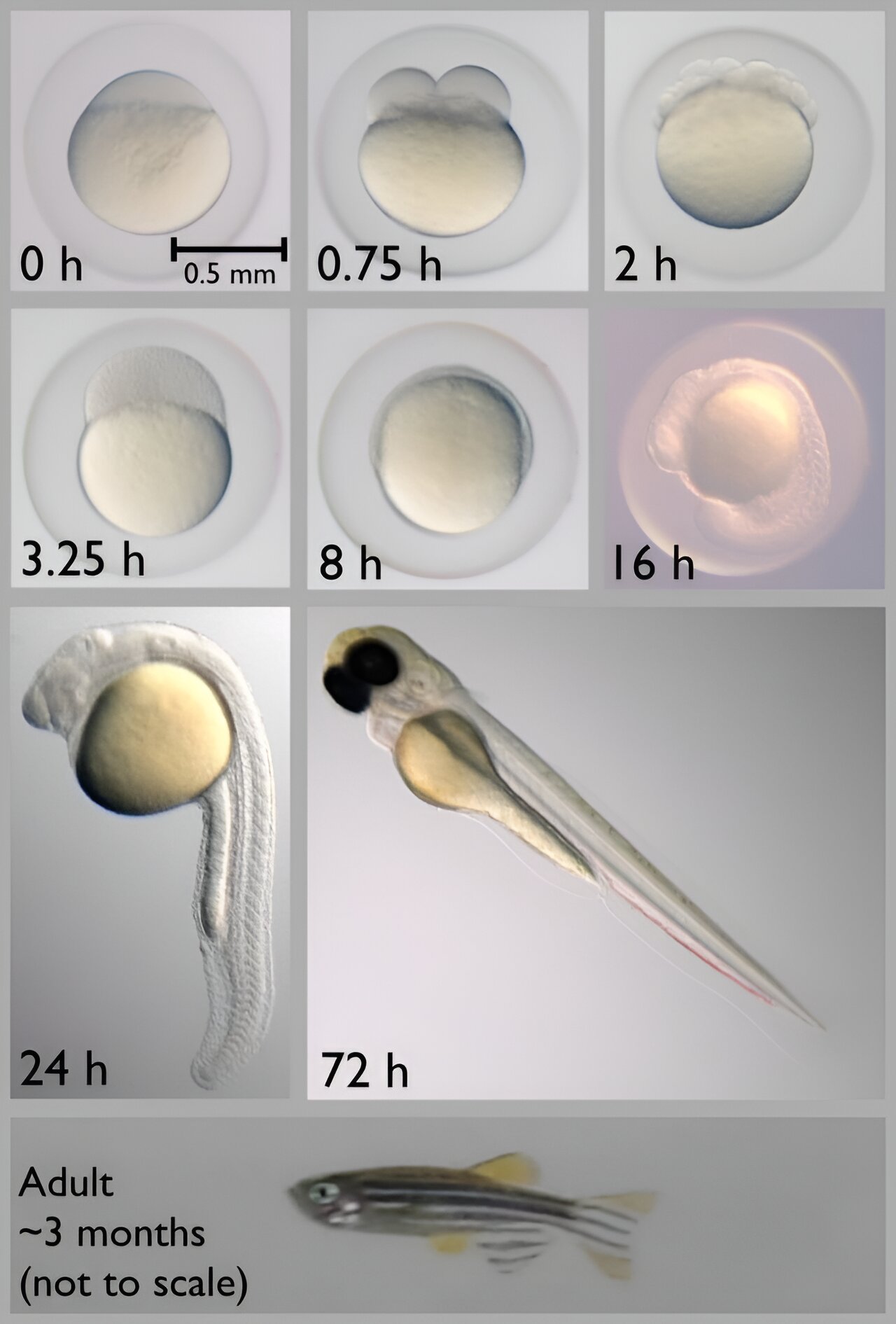
Israeli scientists have discovered the biological mechanism behind the 'hatching decision' in zebrafish, revealing that a transient brain structure releases a hormone, TRH, to trigger hatching. This hormone, known for thyroid regulation in humans, plays a different role in fish, controlling the timing of hatching based on environmental and developmental cues. The discovery could have implications for improving fish survival rates in aquaculture and understanding similar mechanisms in other species.
New research from Karolinska Institutet and Columbia University reveals that the heart has its own complex nervous system, or "mini-brain," capable of independently regulating the heartbeat. This discovery, made through studies on zebrafish, challenges traditional views and could lead to new treatments for heart diseases like arrhythmias. The study highlights the heart's neural network's complexity and its potential interaction with the brain during stress or disease, offering new therapeutic targets.
Researchers at Weill Cornell Medicine used zebrafish larvae to study how brainstem neurons guide gaze and maintain short-term memory. By mapping neuronal circuits, they developed a computational model that accurately predicted network activity, offering insights into visual-motor systems and potential treatments for eye movement disorders. The study highlights the zebrafish's simple neural anatomy as a valuable model for understanding complex brain functions.
A study on zebrafish reveals that during the first half of sleep, the brain weakens new synaptic connections formed while awake, supporting the Synaptic Homeostasis Hypothesis. This process does not continue into the second half of the night, leaving questions about its purpose. The research highlights the importance of sleep in synaptic pruning, essential for cognitive performance and learning. Further studies are needed to understand the functions of different sleep stages and their impact on brain function.
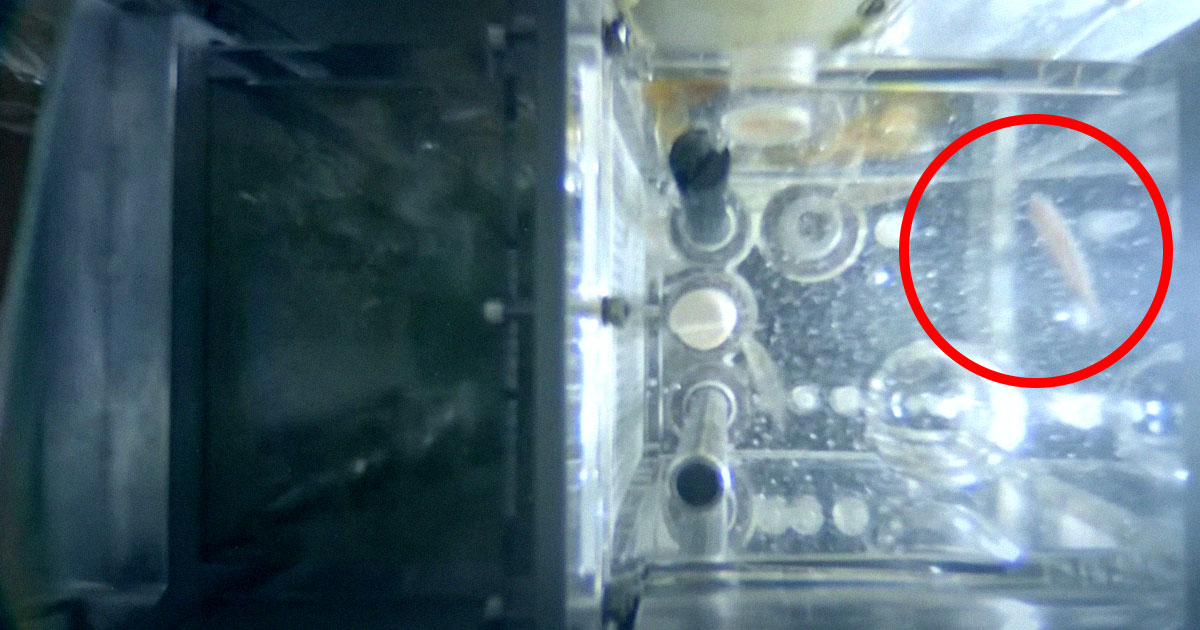
Zebrafish sent to China's Tiangong space station are exhibiting unusual swimming behaviors in microgravity, such as inverted and rotary movements. These observations are part of a study to understand the impact of microgravity on vertebrates, which could provide insights into human health during space travel.
Four zebrafish sent to China's Tiangong space station are thriving after nearly a month in orbit, as part of a research project by the Chinese Academy of Sciences to study the effects of microgravity on vertebrates. The zebrafish, along with goldfish algae, are in good condition and are being observed for unusual behaviors and developmental changes. This research aims to understand the impact of space conditions on biological systems and has implications for long-duration space missions.
Zebrafish sent to China's Tiangong space station are thriving in a self-sustaining aquatic ecosystem, part of a research project by the Chinese Academy of Sciences to study the effects of microgravity on vertebrates. This experiment, the first of its kind, aims to understand biological responses to space conditions and has implications for long-duration space missions.
Four zebrafish aboard China's Tiangong space station are showing signs of disorientation after nearly a month in microgravity, swimming upside down and in circles. This experiment aims to study the effects of microgravity and radiation on vertebrate development, contributing to research on the biological implications of long-term space travel.
The Shenzhou-18 crew has been conducting various scientific experiments aboard the China Space Station since April 26, including life science and ecological studies with zebrafish and hornwort, and combustion research. They have observed abnormal behaviors in zebrafish due to microgravity and completed several technical tasks related to combustion and material experiments. The astronauts also perform regular exercises to counteract the physiological effects of microgravity.
New research from University College London reveals that during the first few hours of sleep, neural connections in the brain are partially weakened, rested, and reset, supporting the synaptic homeostasis hypothesis. This process, observed in zebrafish, is crucial for learning and memory, suggesting that sleep is essential for brain health and capacity to absorb new information. The study, published in Nature, also raises questions about the functions of sleep in the latter half of the night.
Chinese scientists are exploring the potential of using astronomy and zebrafish to advance brain-computer interfaces, which could revolutionize human interaction with technology by imaging and analyzing zebrafish neurons using techniques borrowed from astronomy.
Harvard researchers discovered that the neural circuitry responsible for behaviors in zebrafish can form without sensory experiences, challenging the belief that sensory-driven activity shapes brain wiring. The study suggests that genetic programming alone is sufficient to establish functional neural connections, highlighting the innate capabilities of the brain. Using zebrafish, the researchers inhibited neural activity during development and found that the fish were still capable of complex behaviors, indicating that genetic and molecular mechanisms play a significant role in brain development.