Israeli scientists used CRISPR technology to identify hundreds of genes crucial for early brain development, uncovering new insights into the genetic basis of autism and discovering a new neurodevelopmental disorder linked to the PEDS1 gene, with findings published in Nature Neuroscience.
A study from Northwestern University found that gut bacteria from different primates can influence mouse brain activity to resemble that of humans and other primates, suggesting microbes play a role in brain evolution and development, and may impact neurodevelopmental disorders.
Research indicates that in utero exposure to COVID-19 may lead to brain changes, developmental delays, and increased risk of anxiety and depression in children, highlighting the need for ongoing monitoring and early intervention.
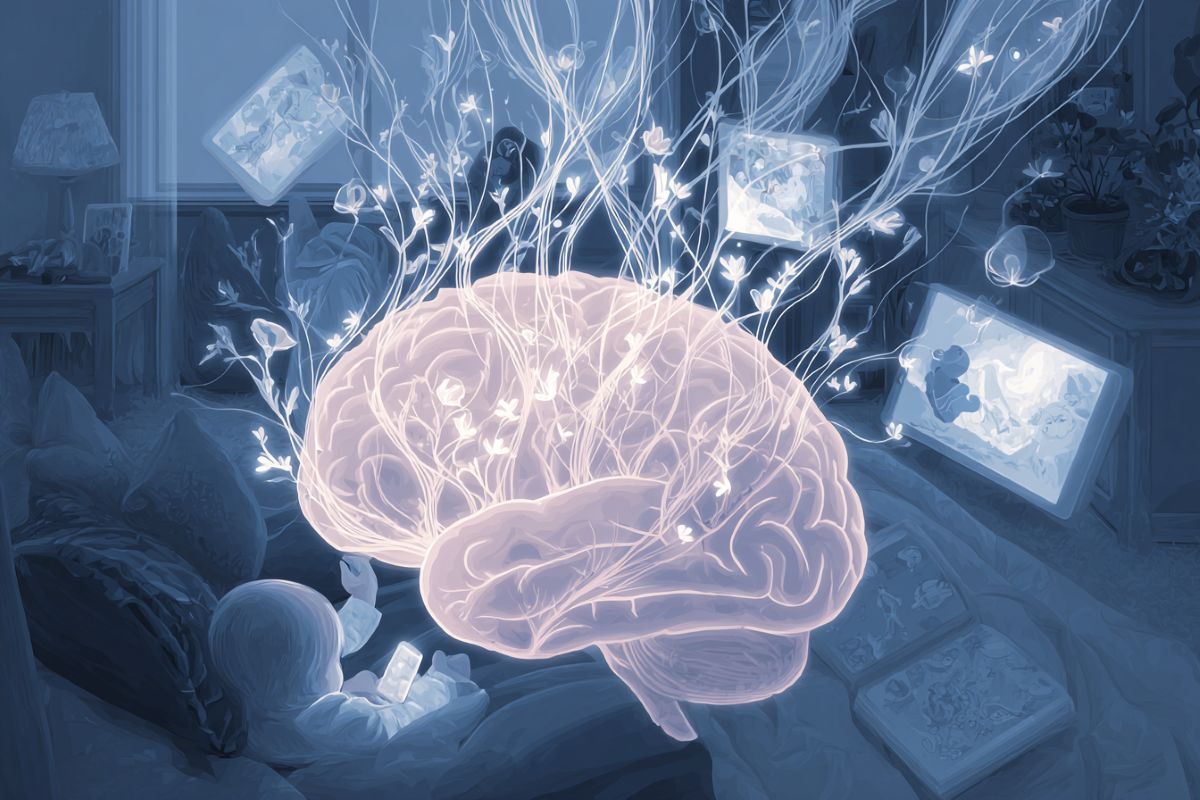
New research shows that high screen exposure before age two accelerates brain maturation in visual and cognitive networks, leading to slower decision-making and increased anxiety in adolescence, highlighting infancy as a critical period for screen exposure and the potential benefits of parental engagement like reading.
Recent research identifies four distinct autism phenotypes based on genetic and behavioral differences, challenging the traditional view of autism as a single spectrum and suggesting varied developmental pathways and timelines, which could lead to more tailored diagnoses and treatments.
Excessive alone time during adolescence can negatively impact brain development, particularly in areas related to social cognition and emotional processing, emphasizing the importance of meaningful social interactions for healthy teen development.
A recent study published in Nature Communications reveals that the human brain reaches full adulthood at around age 32, with distinct phases of development and aging occurring throughout the lifespan, highlighting the importance of healthy habits for maintaining cognitive health.
A recent study identifies five distinct 'eras' in human brain development across the lifespan, with key topological changes occurring at ages 9, 32, 66, and 83, and peak efficiency around age 30, highlighting the complex, non-linear nature of brain maturation.
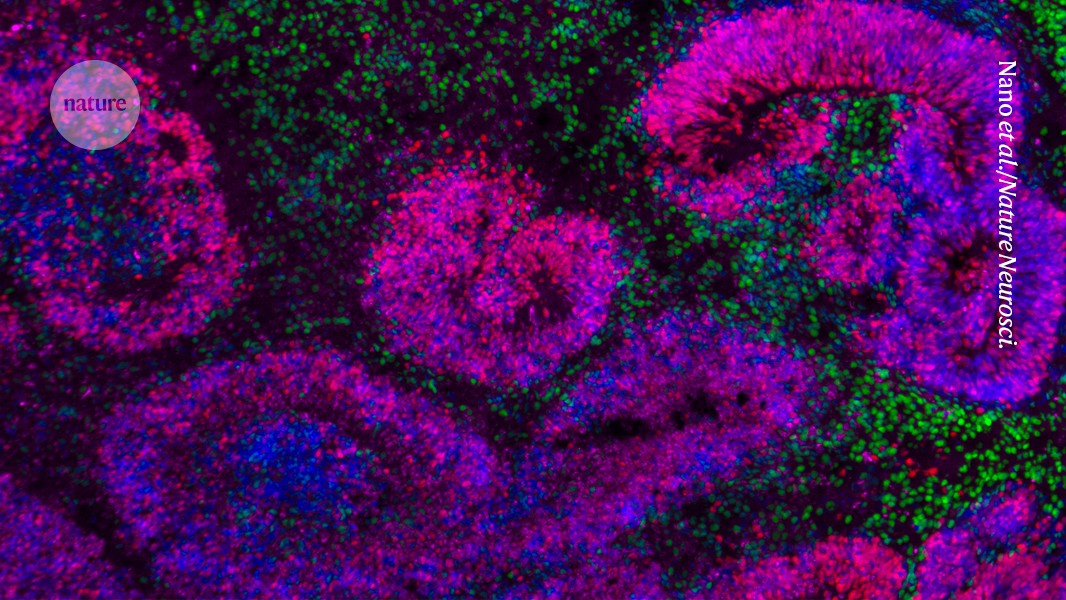
Scientists found that human brain circuits produce ordered electrical patterns even before sensory experiences, suggesting that our brains are prewired with internal timing rules for understanding the world, as demonstrated through experiments on brain organoids and neonatal mouse slices.
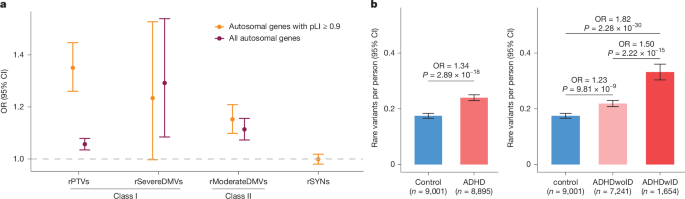
A study identified three rare genetic variants significantly associated with ADHD, linking them to neuronal functions and brain development, and showed that these variants, along with common variants, contribute additively to the disorder's risk and impact socioeconomic outcomes.
A study published in Neuropsychologia found that children exposed to trauma, even without behavioral symptoms, show subtle differences in brain activity related to attention and impulse control, with variations by sex, highlighting the importance of neural markers in understanding trauma's impact on development.
Scientists have created the most detailed maps of how human and mouse brains develop from stem cells into neurons, providing new insights into brain differentiation and potential implications for neurological conditions, as part of the BRAIN Initiative.
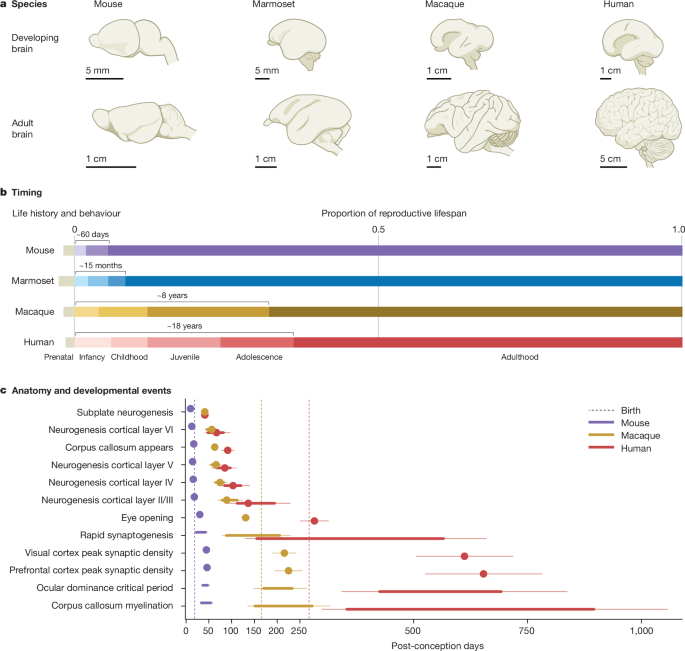
This article reviews recent advances in understanding human and mammalian brain development through genetic, cellular, and molecular studies, highlighting the use of single-cell genomics, spatial transcriptomics, and organoid models to elucidate neurodevelopmental processes and disorders.
A study suggests that natural lead exposure over two million years ago may have influenced brain and language development in early humans and Neanderthals, with modern humans potentially evolving genetic adaptations that protected against lead's toxic effects, thereby enhancing communication and survival.
Research shows that Neanderthals were more susceptible to lead poisoning than modern humans, which may have influenced our species' communication abilities and provided an evolutionary advantage. The study suggests that exposure to lead, a toxin present for millions of years, impacted brain development and language skills, with modern humans developing gene variants that offered better protection against lead's toxic effects.