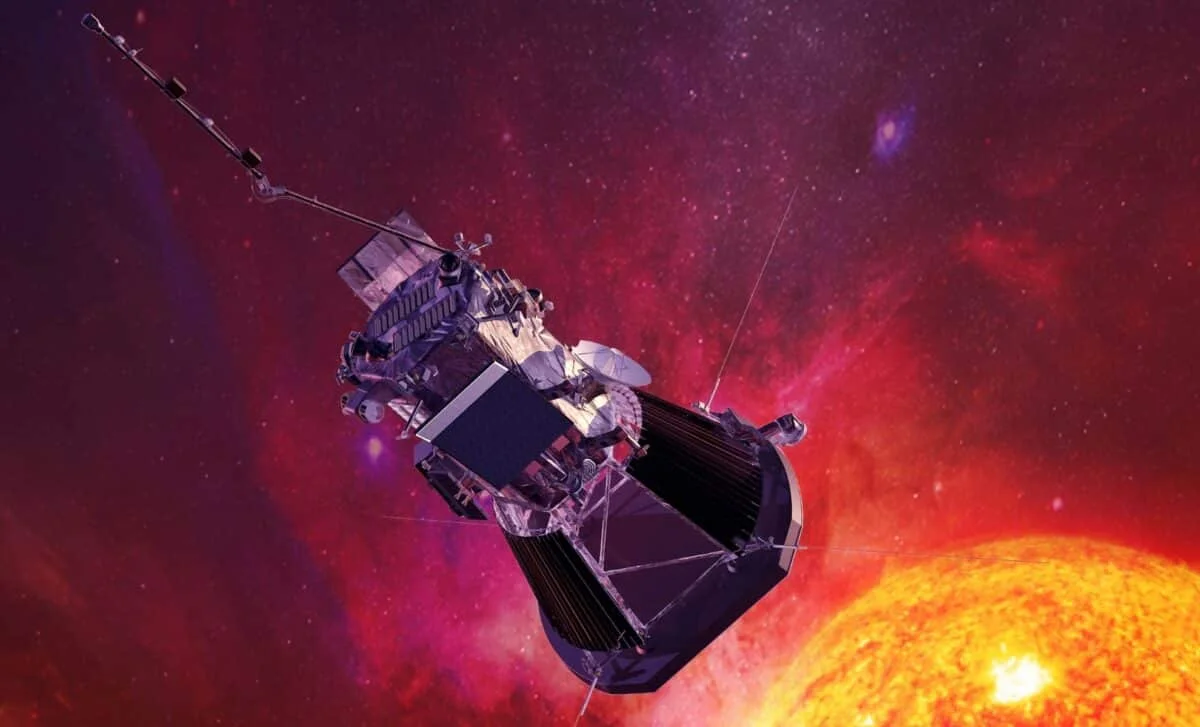
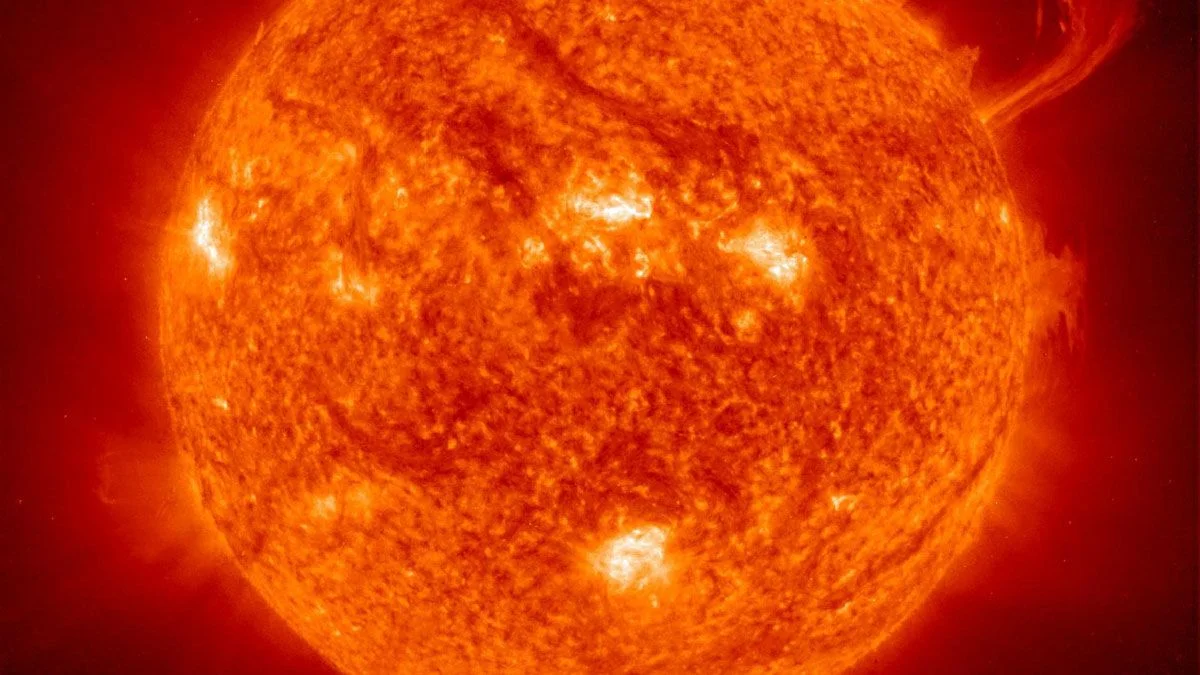
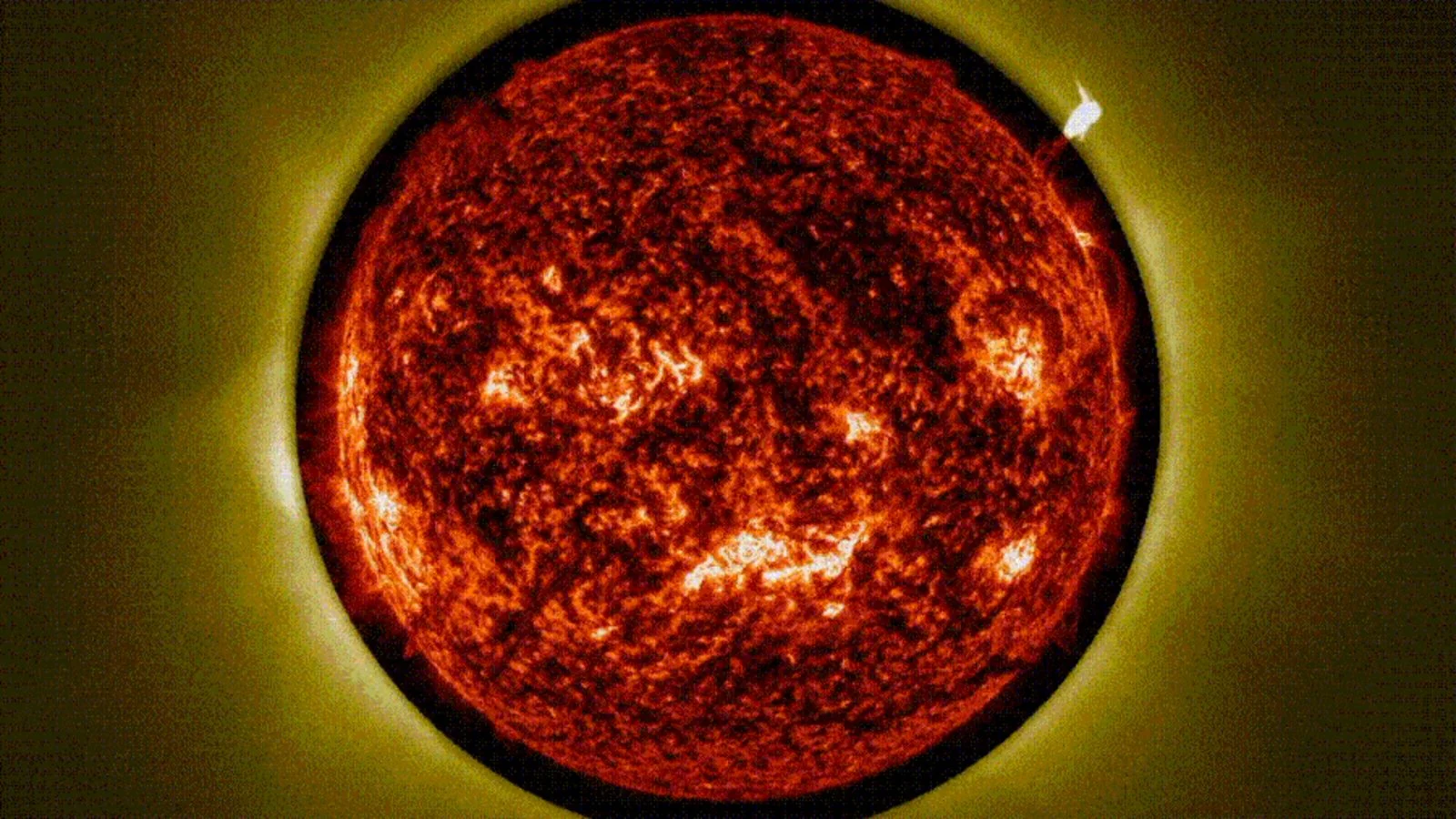
NASA's Parker Solar Probe flew closer to the Sun than any spacecraft before, reaching about 3.8 million miles from the surface, and gathered detailed data on the solar wind and the Sun’s outer atmosphere to help explain solar heating and improve space weather forecasting.
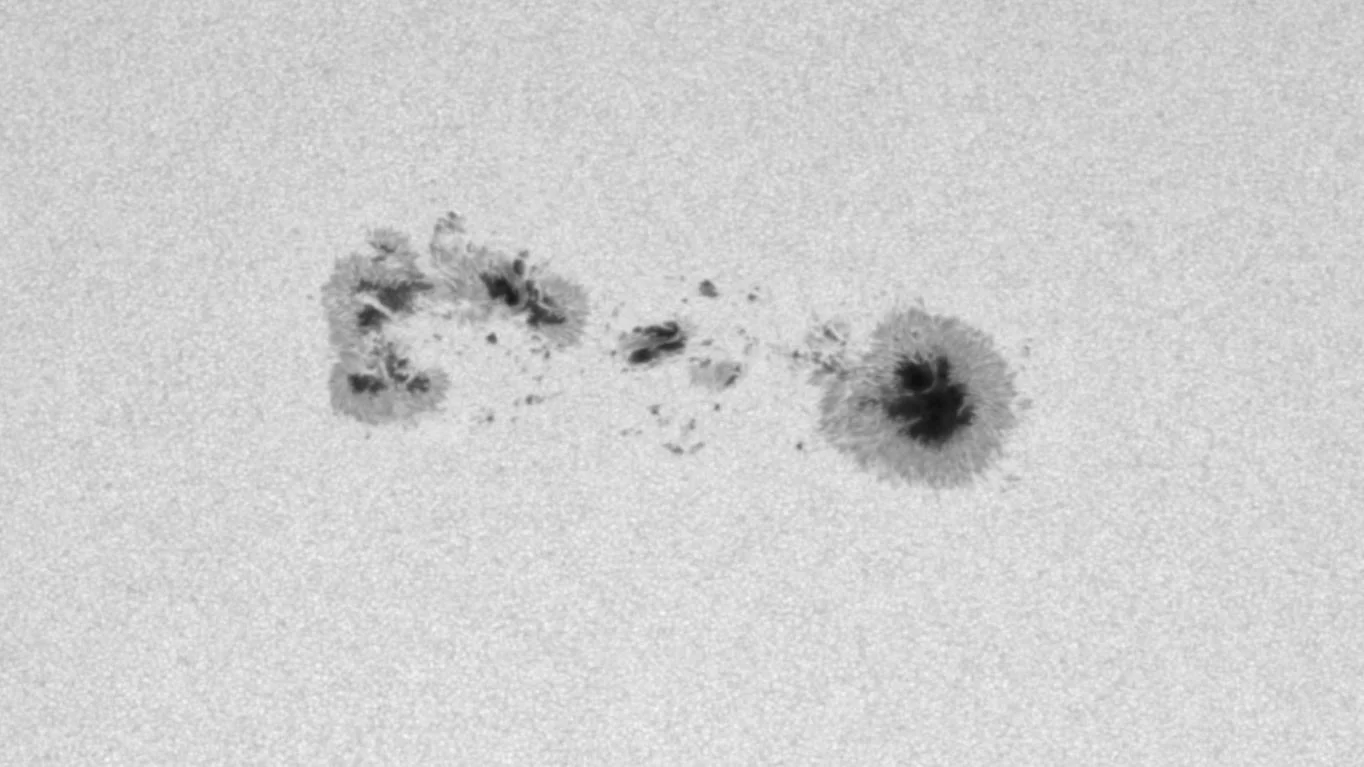
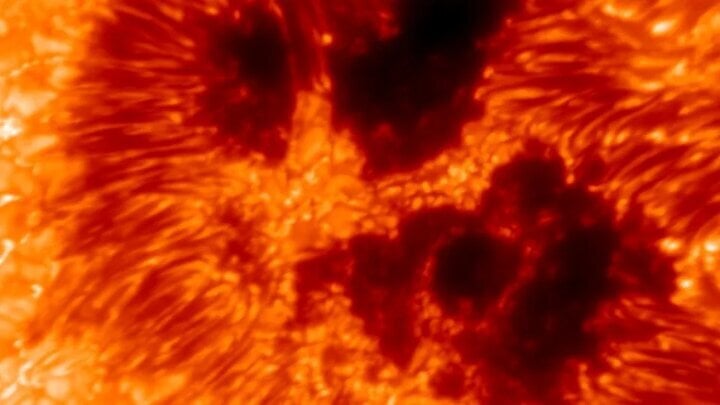
Astronomers report sunspot AR4366, about 15 times the width of Earth, is facing our planet and has already produced multiple strong M- and X-class solar flares that can disrupt radio signals. The piece explains how to view the sunspot safely with proper solar eclipse glasses or filtered optics, noting AR4366 will remain visible for several days and could spawn more flares and geomagnetic activity.
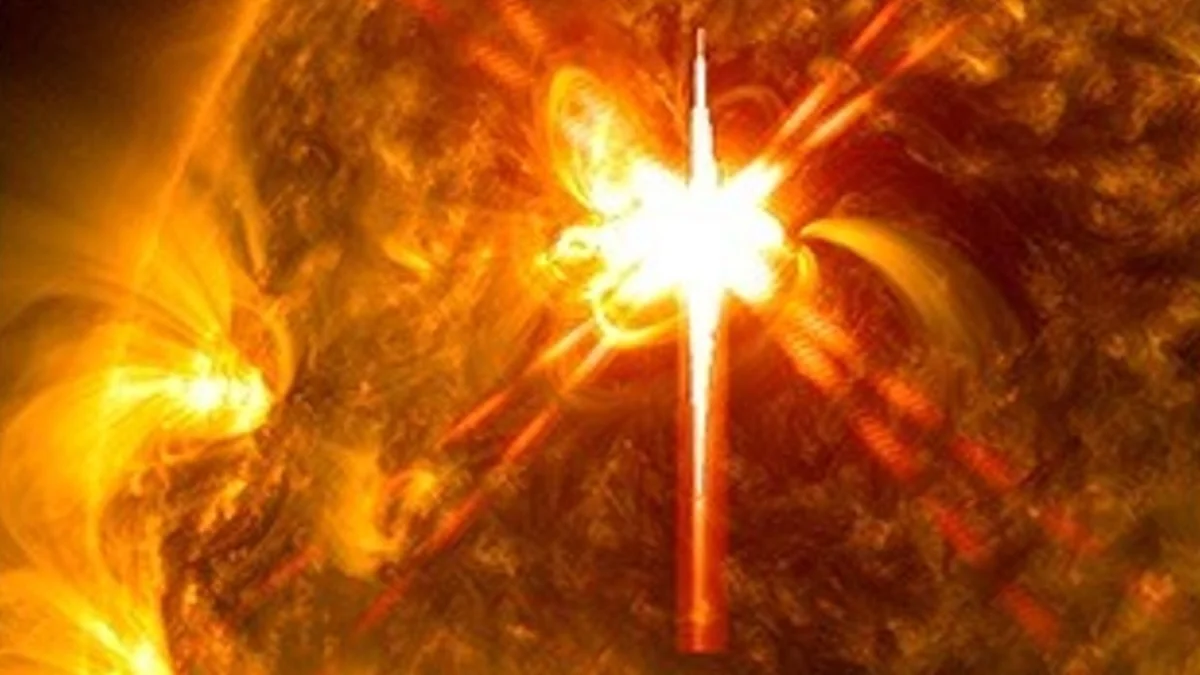
A powerful X4.2 class solar flare erupted from the Sun, causing radio signal outages across parts of Africa and Europe, with video coverage of the flare; space weather observers will monitor any geomagnetic disturbances and potential impacts on Earth’s technology.
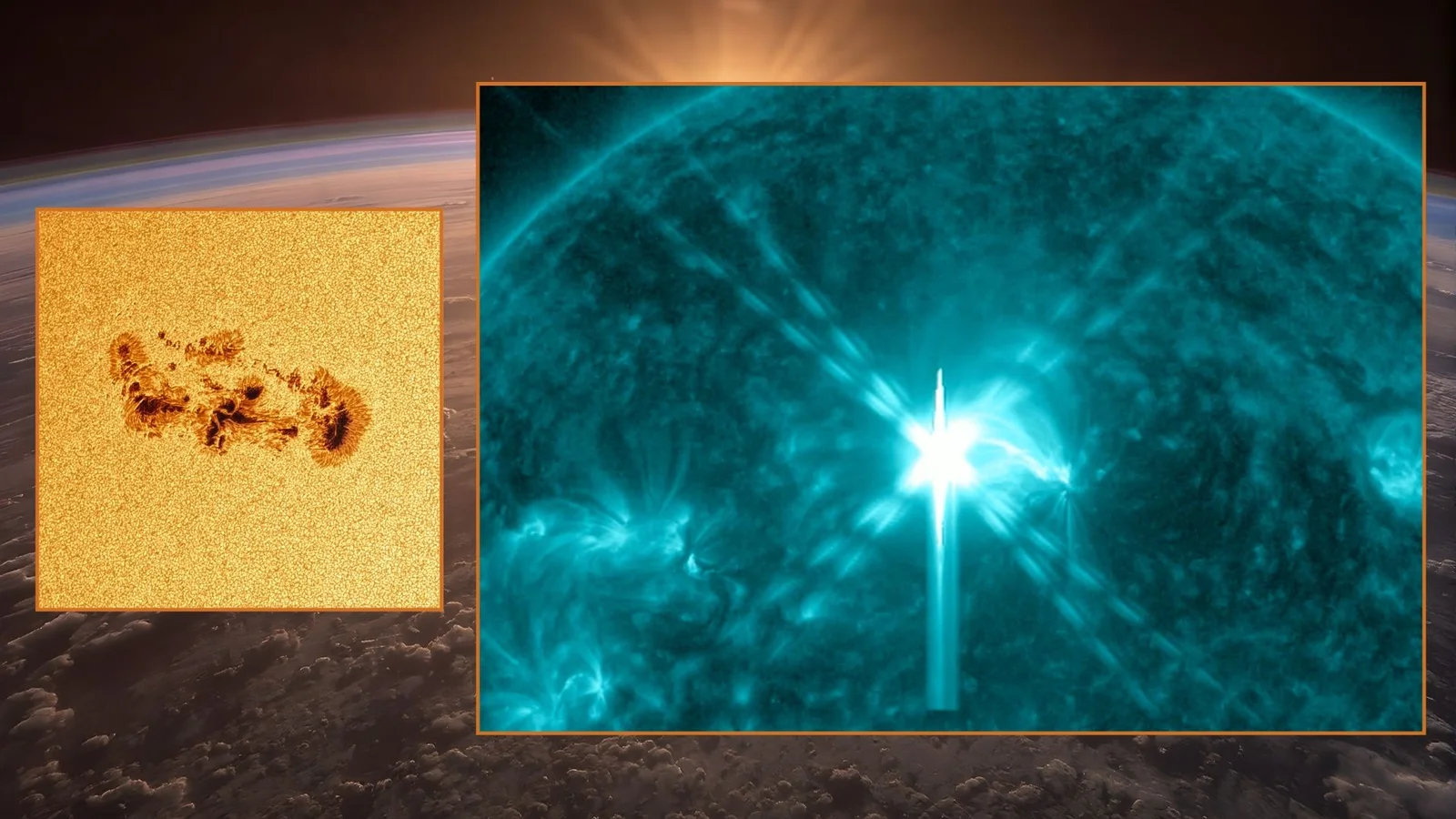
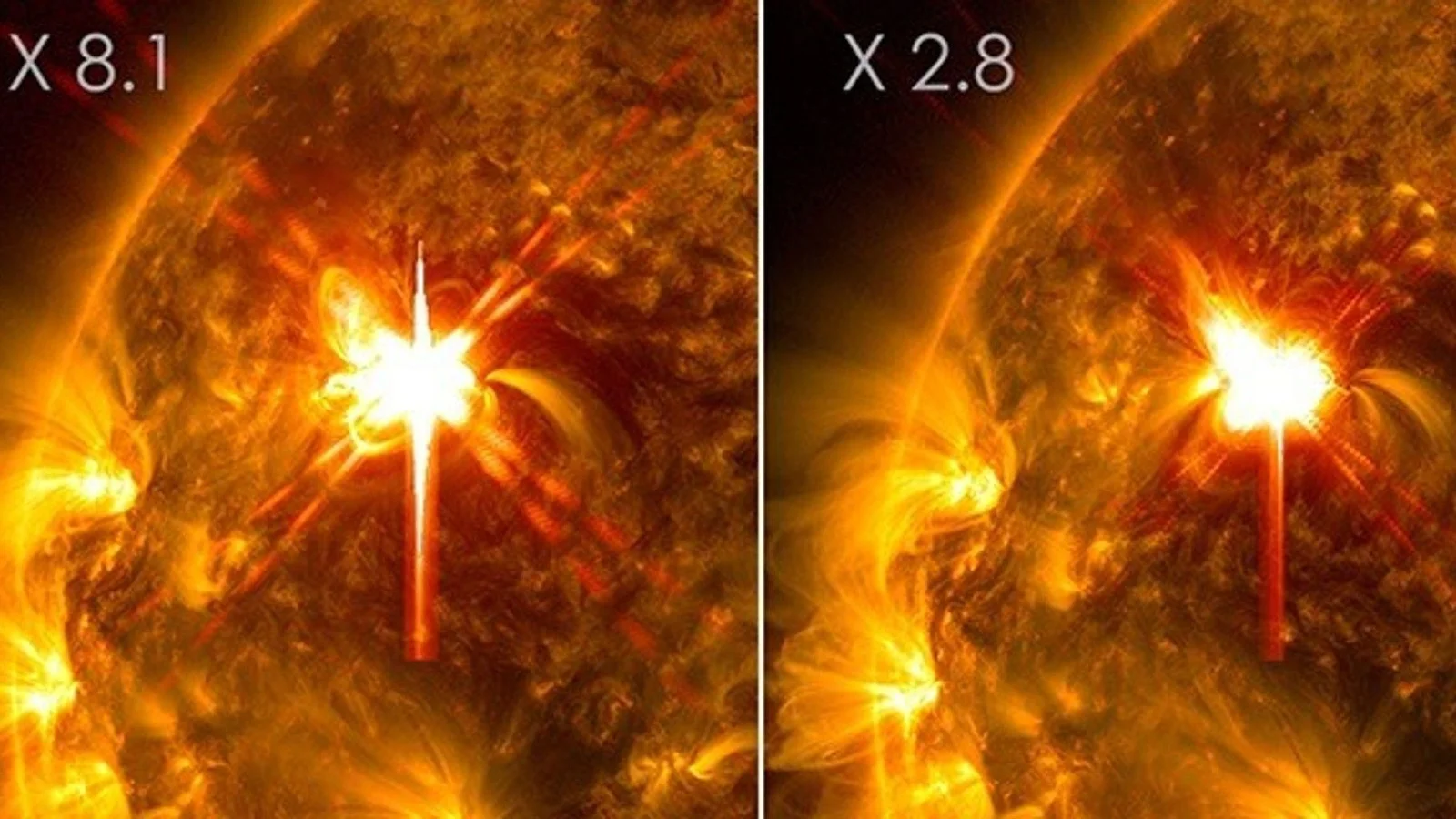
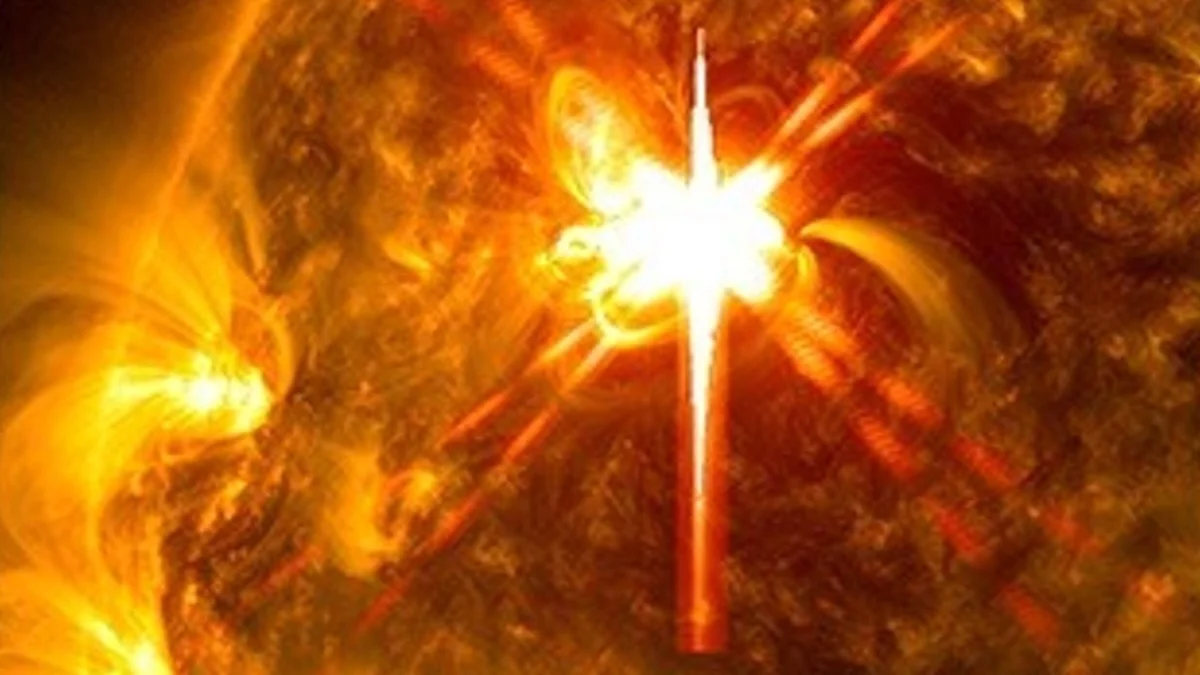
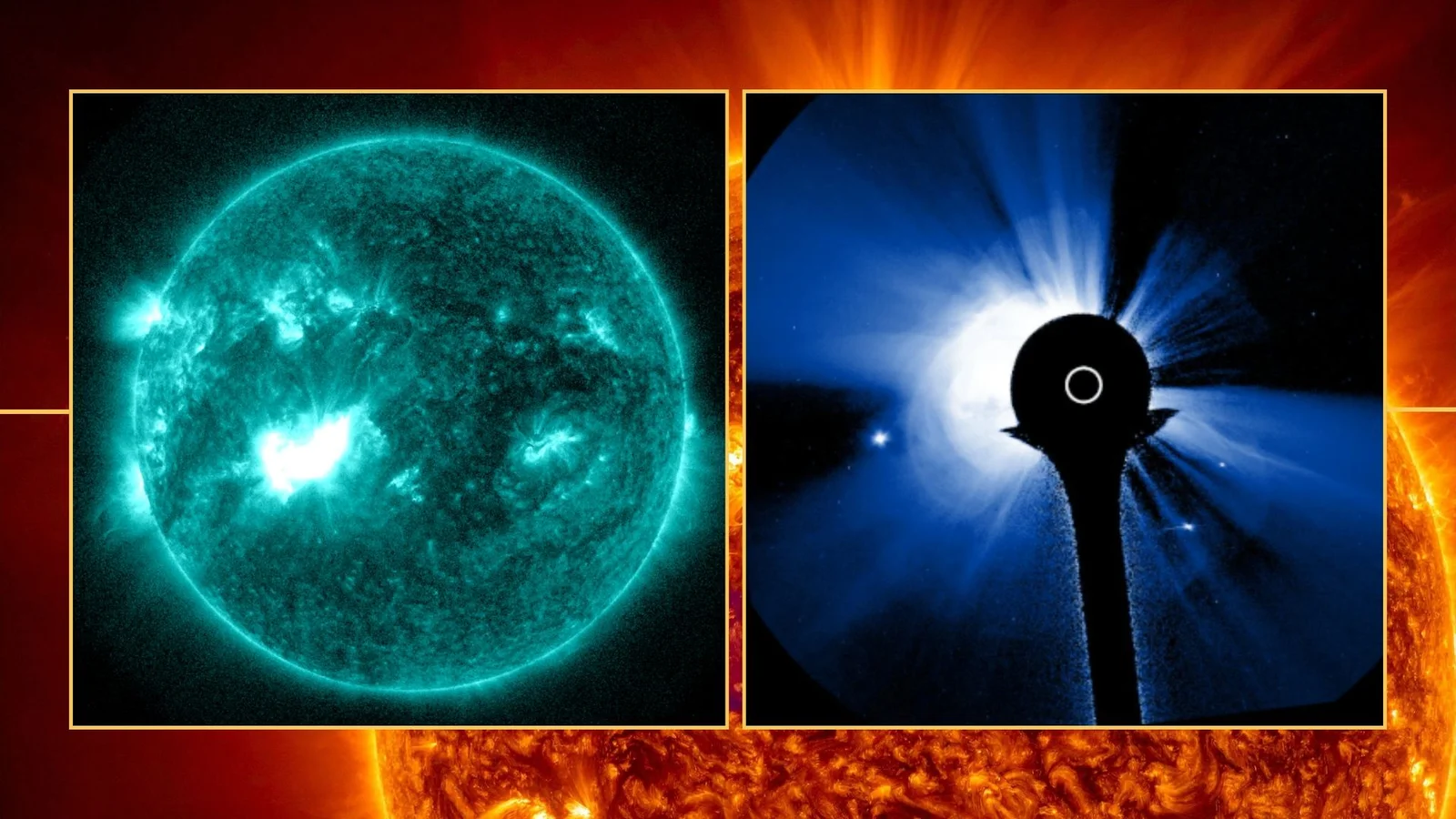
The Sun erupted four strong X-class flares from sunspot cluster RGN 4366, including an X8.1—the most powerful since October 2024—potentially boosting energetic particle events and coronal mass ejections. CMEs can illuminate auroras but also disrupt satellites, power grids, and communications. Forecasters say more “exciting activity” could be on the way as the Sun remains unusually active during its 11‑year cycle, even though overall activity is expected to wind down later this decade.
Sunspot region 4366 has unleashed dozens of solar flares in 24 hours, including multiple M-class and X-class eruptions—the strongest since 2024—making it the most active sunspot in years. NOAA's SWPC says a coronal mass ejection is headed toward Earth but is likely to miss or only graze it, potentially sparking auroras at unusually low latitudes later this week.
Four X-class solar flares (X1.0, X8.1, X2.8, X1.6) erupted from sunspot group RGN 4366 on Feb 1–2, 2026, signaling lively space weather with potential energetic particle events and possible coronal mass ejections. Forecasters say more activity could follow as the active region evolves, with potential impacts on satellites, communications, and power grids if Earth-directed CMEs occur.
Over a 24-hour period the Sun released a barrage of flares from sunspot AR4366, including at least 18 M-class and three X-class events (peaking at X8.3), triggering radio blackouts in parts of the South Pacific and eastern Australia/New Zealand. AR4366 is rapidly growing and could produce more eruptions; a CME is expected but likely to miss Earth or only glance Earth around Feb. 5, potentially elevating high-latitude aurora activity. Forecasters warn conditions remain uncertain as activity continues.
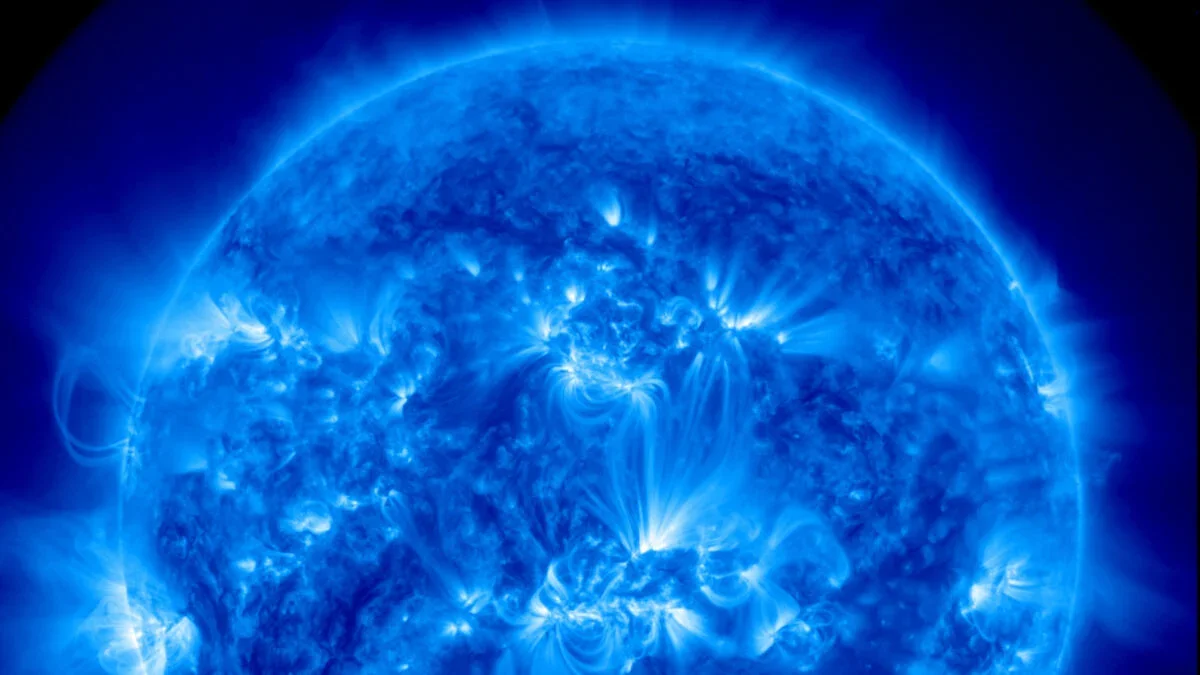
ESA’s Solar Orbiter watched an avalanche of smaller magnetic disturbances cascade into a mid‑class solar flare, revealing how energy is released in the sun’s corona through a sequence of reconnection events. The multi‑instrument observations (EUI, SPICE, STIX, PHI) tracked rapid changes over about 40 minutes, with the findings published in Astronomy & Astrophysics. This work advances understanding of flare triggers and could improve forecasting of Earth‑impacting solar activity.
ESA's Proba-3 mission captured a five-hour artificial eclipse, producing a time-lapse of three solar prominences erupting from the Sun's corona. By aligning the coronagraph with an occulter, scientists can study the sun’s faint outer atmosphere in unprecedented detail, combining Proba-3 data with NASA's Solar Dynamics Observatory imagery. The prominences appear to erupt without the bright flares typical of solar explosions and are cooler than the million-degree corona, offering clues to why the corona is so hot and how these plasma eruptions contribute to solar activity.
NOAA’s Space Weather Prediction Center says Earth is being hit by an S4 solar radiation storm—the largest in more than 20 years—driven by high-speed charged particles from the Sun that could affect satellites, space launches, and polar aviation. Astronauts aboard the ISS are advised to stay in shielded areas, while geomagnetic activity has sparked auroras worldwide.
Earth has been hit by the strongest solar radiation storm in more than two decades, driven by activity from the Sun. The resulting geomagnetic disturbance could affect radio communications, satellite operations, and power/stability of certain technologies, while also lighting up spectacular auroras at lower latitudes. Space weather agencies are monitoring the event and the potential cascading effects over the coming hours to days, offering updates and guidance for affected systems.
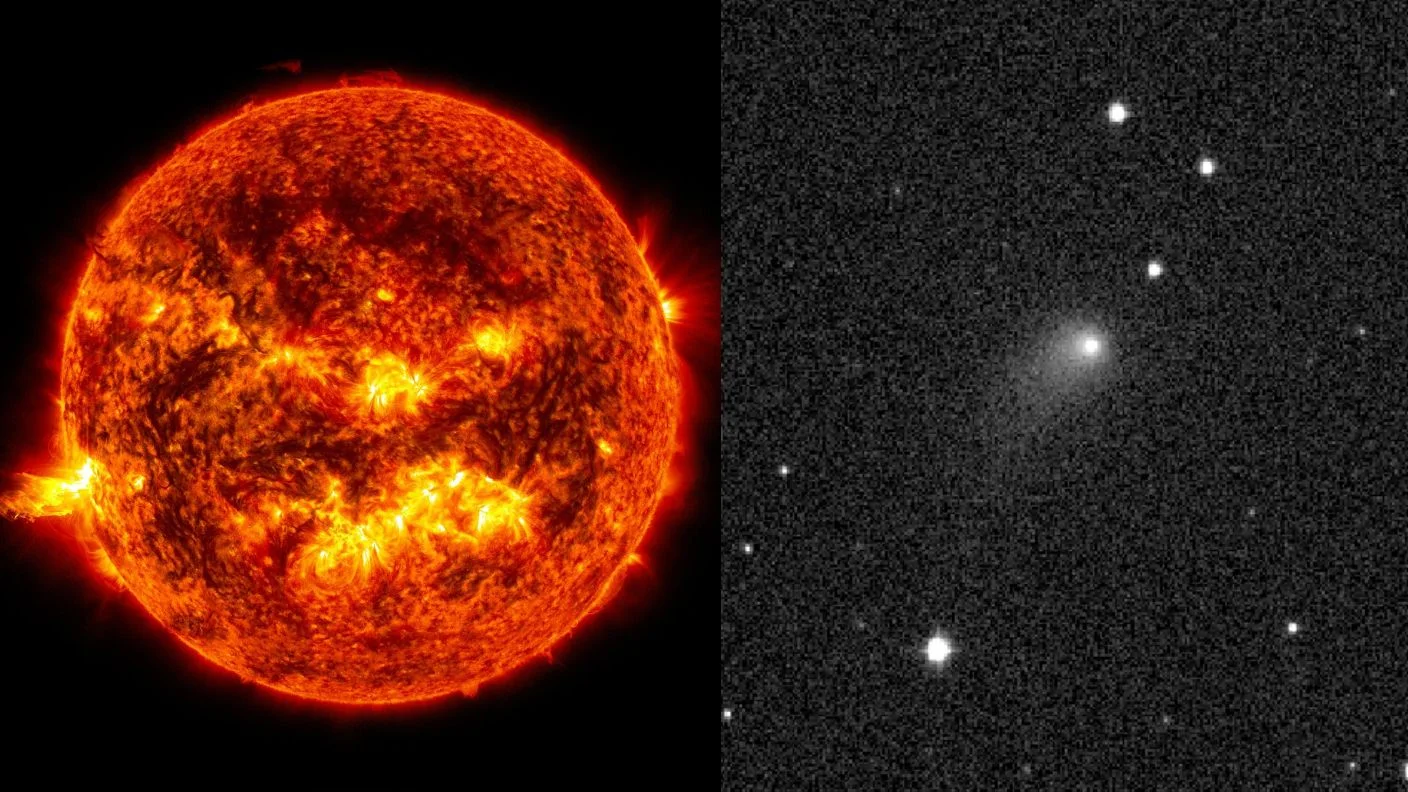
Comet C/2024 E1 (Wierzchos) is near perihelion today, Jan 20, skimming about 52.6 million miles from the Sun at 1:24 p.m. EST, which should brighten it but likely won’t be visible to the naked eye (peak magnitude around +8.1). It will require a small telescope or good skies, and observers in the U.S. may have limited viewing as the comet travels through Microscopium and dips below the horizon at night. After Earth’s closer approach on Feb. 17 (about 93 million miles away), it will still be faint and best seen near sunset from favorable southern skies, fading as it moves away. The object was discovered in 2024 by the Catalina Sky Survey and is tracked by space observers like NASA/JWST, with visibility depending on local conditions.
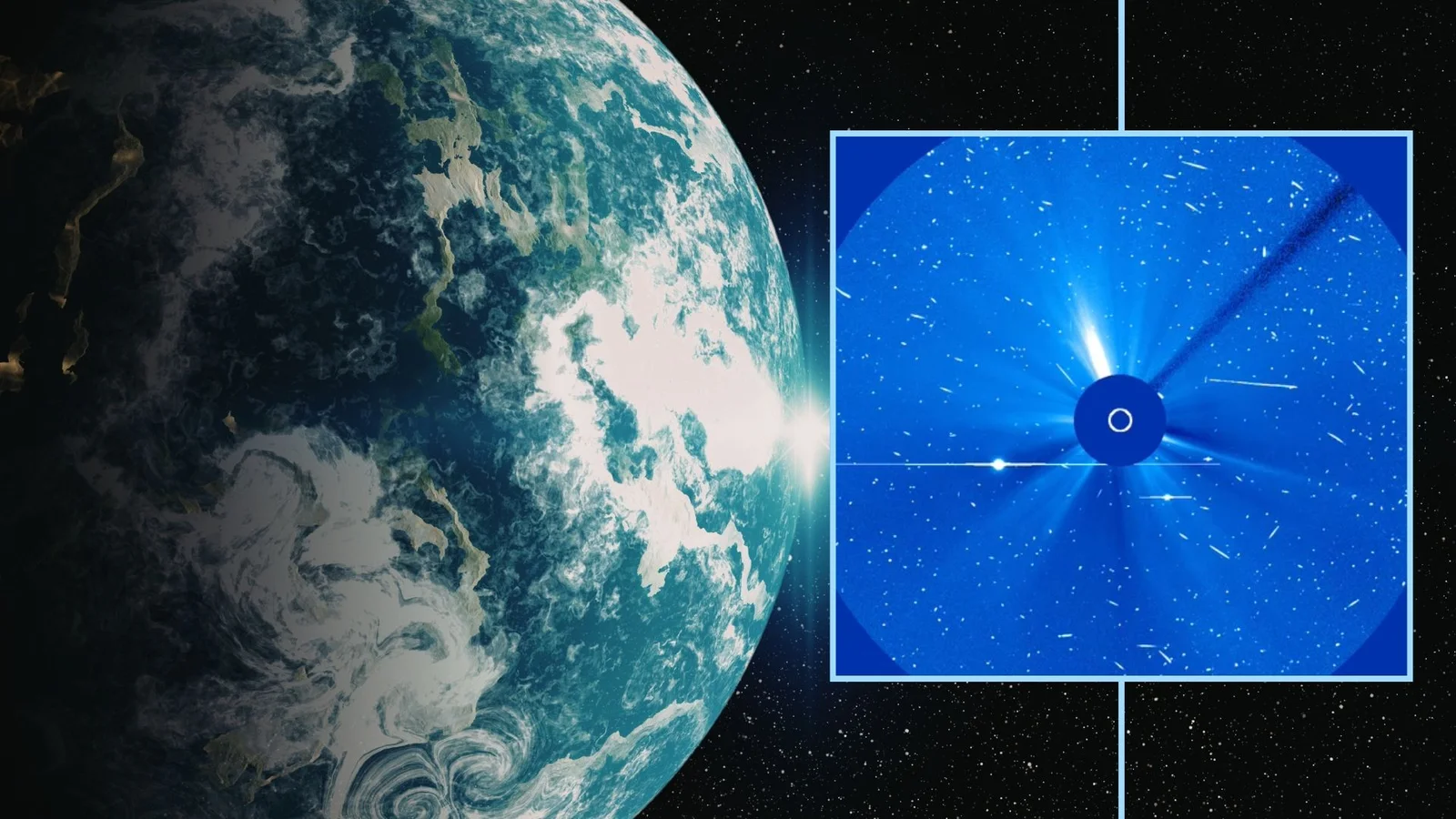
An X1.9 solar flare from the Sun triggered a fast Earth-directed coronal mass ejection (CME) forecast to reach Earth within about 24 hours. If the CME’s magnetic orientation (Bz) is southward, it could couple with Earth’s magnetosphere and drive strong (G3) to severe (G4) geomagnetic storm conditions, potentially lighting up auroras as far south as parts of the U.S. (e.g., Northern California to Alabama). Forecasters caution that CME arrivals are hard to pin down and depend on magnetic orientation; disruptions to satellites, GPS, and radio signals and increased atmospheric drag on spacecraft are possible alongside spectacular auroral displays depending on the event’s exact geometry and timing.
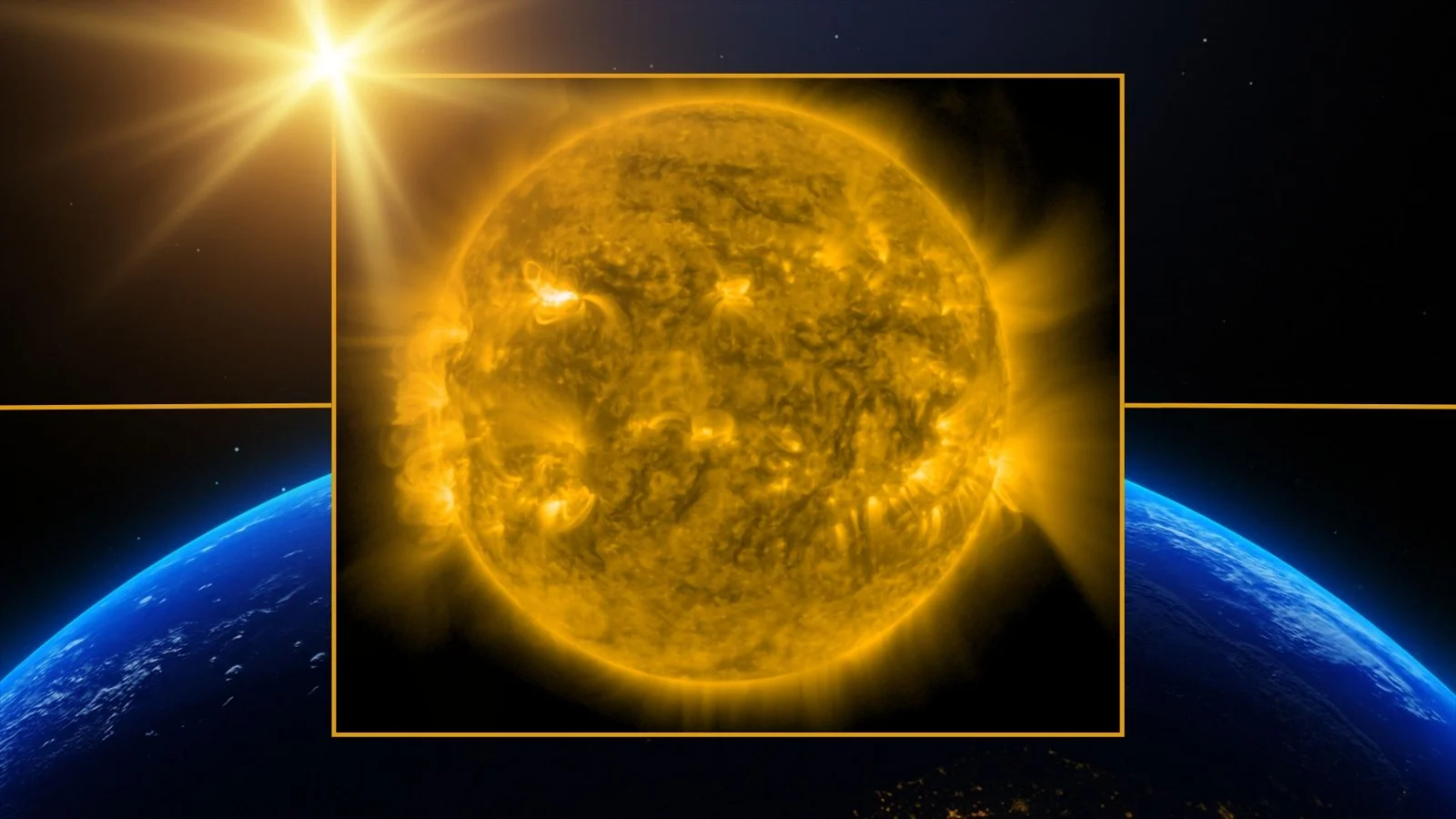
The sun appears largest in the sky on January 3, 2026, during Earth's closest approach to the star, known as perihelion, but the difference is minimal and has no significant effect on Earth's climate or seasons.
On January 3, 2026, Earth will reach its closest point to the Sun, called perihelion, making the Sun appear slightly larger in the sky and in photographs, with the smallest distance of about 147.1 million km. Astronomers warn about the risks of observing the Sun without proper filters, despite January not being ideal for solar viewing.