Tag

Solar Dynamics Observatory

All articles tagged with #solar dynamics observatory

Sun Unleashes Quartet of Flares, Foreshadowing a Wild Week for Space Weather
science25 days ago

Sun Unleashes Quartet of Flares, Foreshadowing a Wild Week for Space Weather

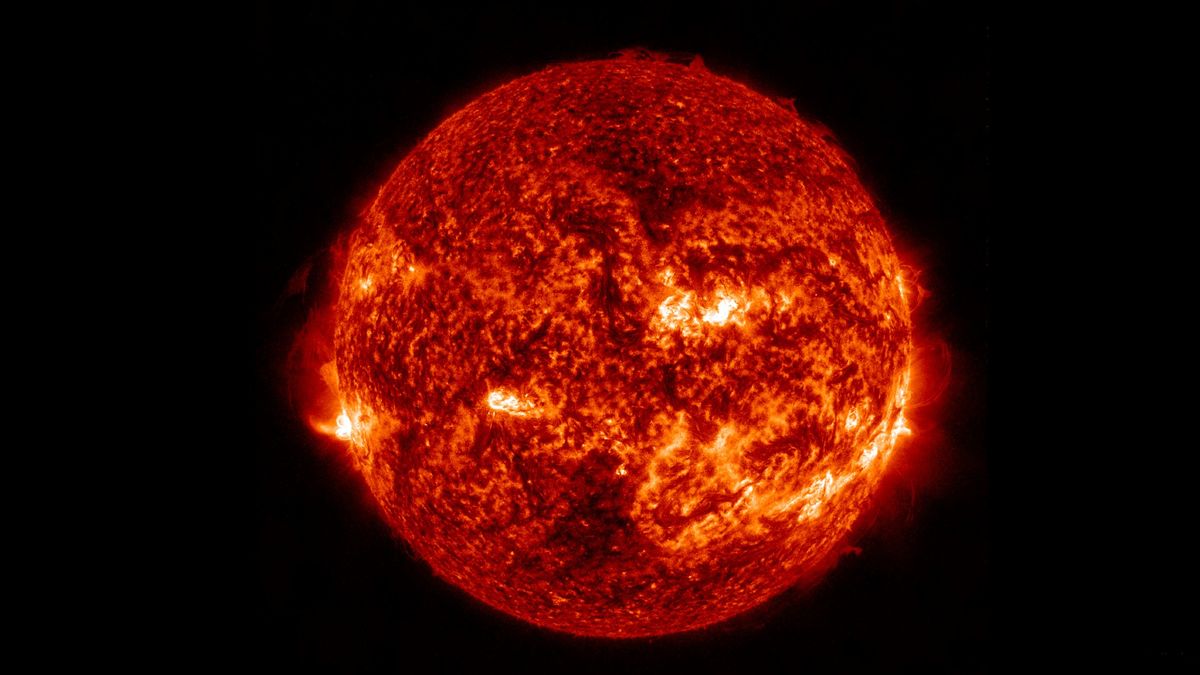
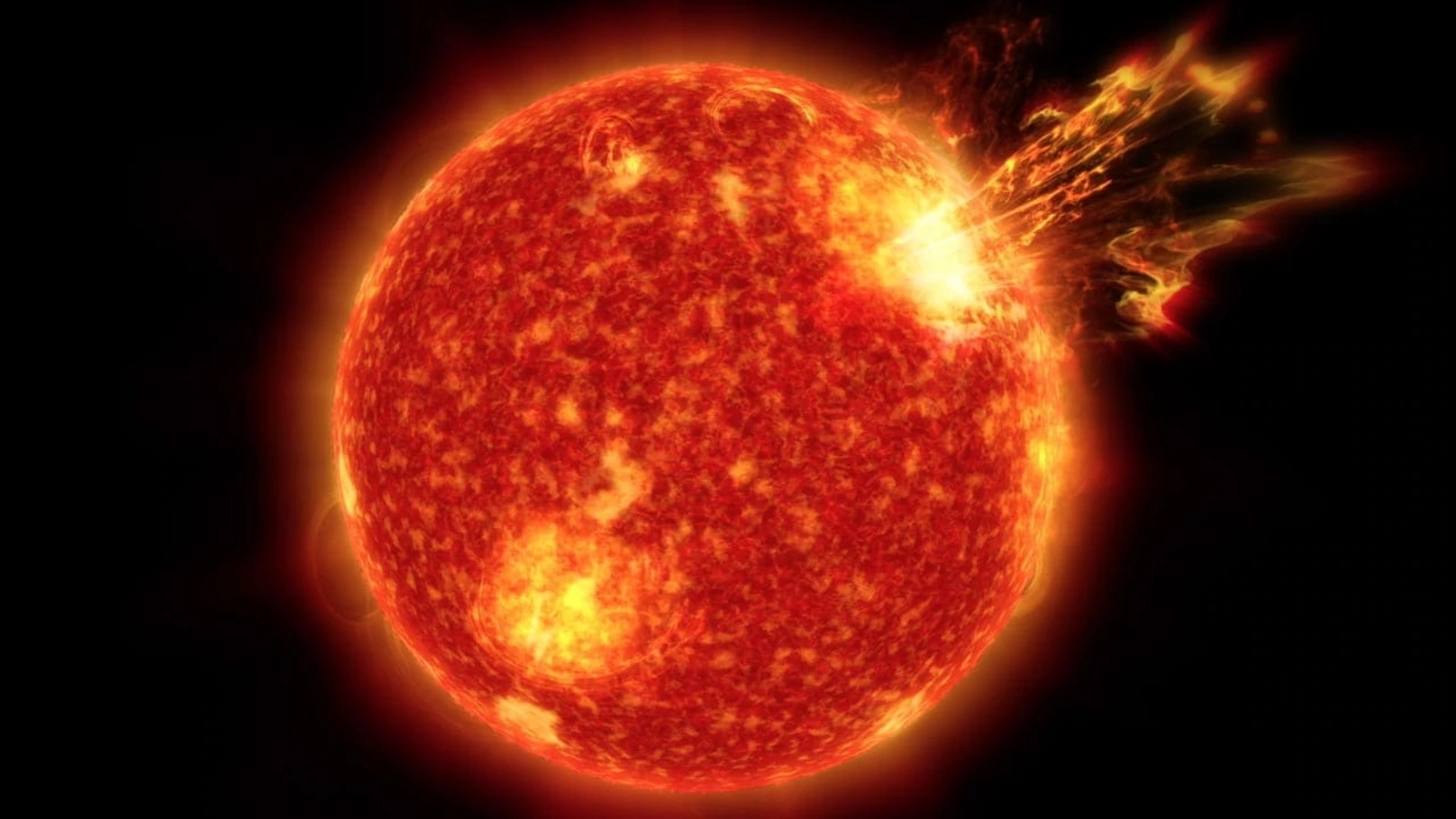
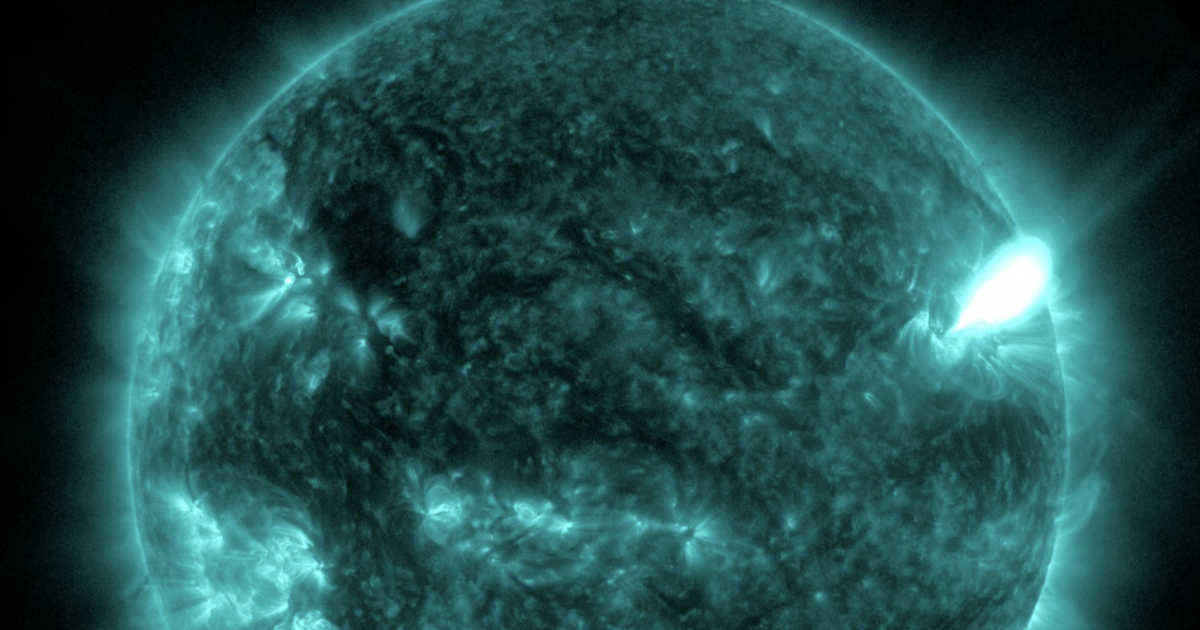
The Sun erupted four strong X-class flares from sunspot cluster RGN 4366, including an X8.1—the most powerful since October 2024—potentially boosting energetic particle events and coronal mass ejections. CMEs can illuminate auroras but also disrupt satellites, power grids, and communications. Forecasters say more “exciting activity” could be on the way as the Sun remains unusually active during its 11‑year cycle, even though overall activity is expected to wind down later this decade.
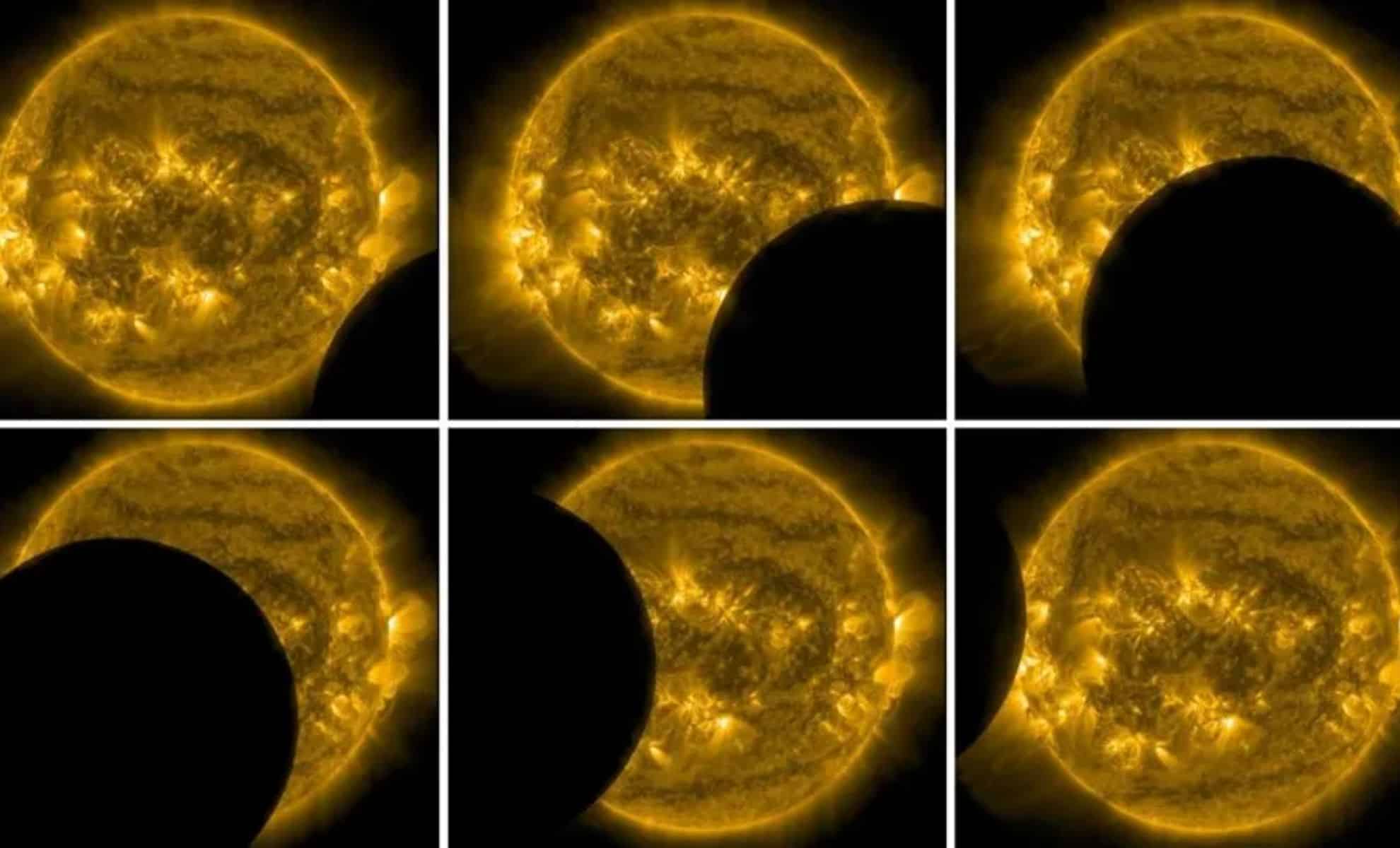

NASA Records Spectacular Solar Eclipse from Space
science7 months ago

NASA Records Spectacular Solar Eclipse from Space

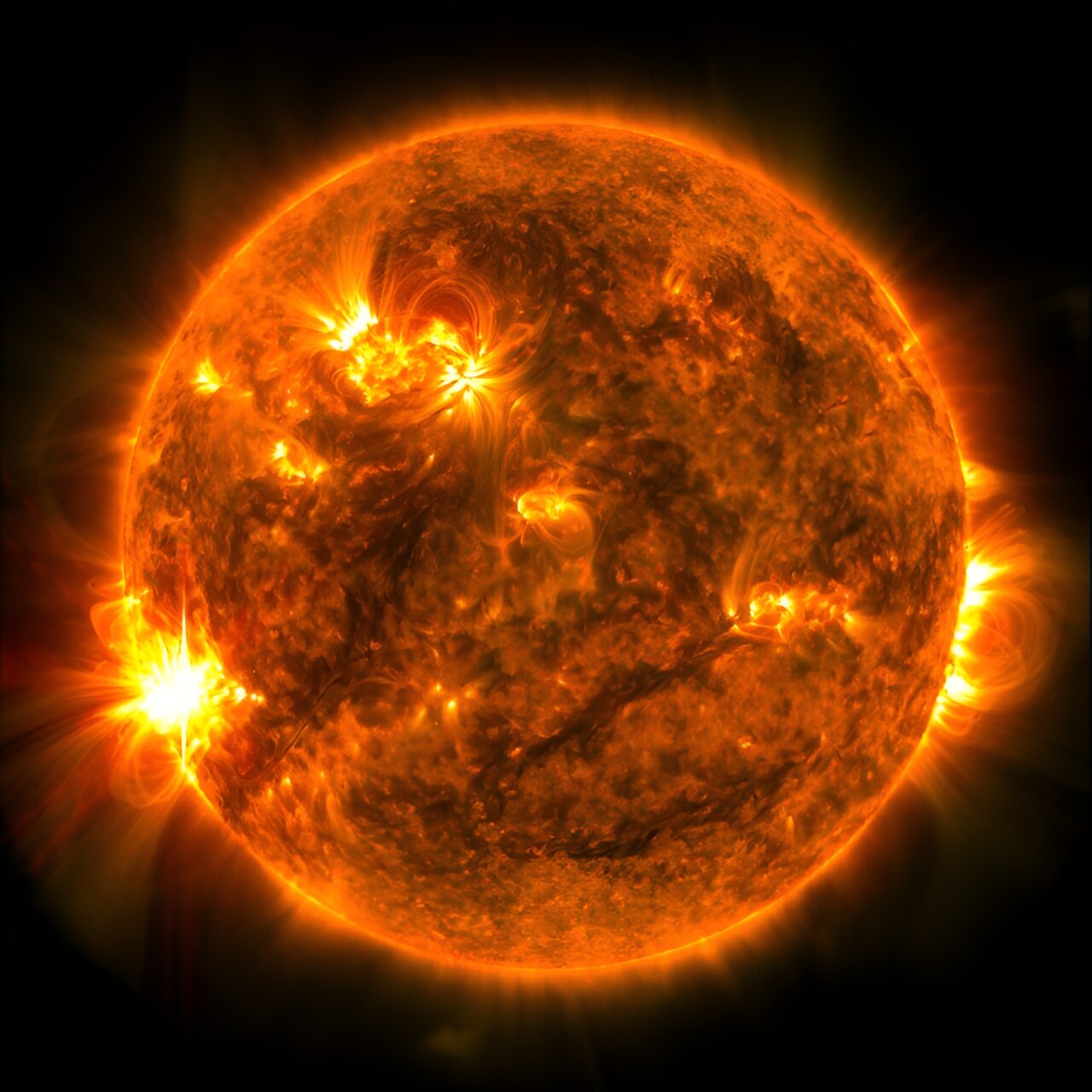
NASA's Solar Dynamics Observatory captured a rare partial solar eclipse from space on July 25, 2025, providing unique insights into solar behavior and the sun's corona, with the spacecraft maintaining full operation despite the eclipse thanks to pre-charged batteries. Future eclipses are also highlighted, including a partial eclipse on September 21, 2025, and a total eclipse on August 12, 2026.

NASA's Solar Observatory Offline Until 2025 Due to Flooding
science-and-technology1 year ago

NASA's Solar Observatory Offline Until 2025 Due to Flooding

NASA's Solar Dynamics Observatory data center at Stanford's Joint Science Operations Center is offline until 2025 due to a burst water pipe that caused severe damage. The center processes data from the Solar Dynamics Observatory and the Region Imaging Spectrograph, crucial for studying the Sun's magnetic field and activity. While data collection continues, processing and access to archived data are halted. Meanwhile, Japan has launched a new astronomical supercomputer, ATERUI III, to aid theoretical astronomy.

NASA Sun Probe Halted by Water Pipe Malfunction
science1 year ago

NASA Sun Probe Halted by Water Pipe Malfunction

A burst water pipe at Stanford University's server room has halted data processing for NASA's Solar Dynamics Observatory (SDO) and IRIS spacecraft. The flooding caused extensive damage to equipment used for processing data from SDO's Helioseismic and Magnetic Imager and Atmospheric Imaging Array instruments. While the spacecraft continue to operate normally, data processing is delayed until repairs are completed, expected in 2025. The Extreme Ultraviolet Variability Experiment instrument's data remains unaffected.

"Sun's Plasma Plume Reels Back in 'Failed Eruption'"
space-news1 year ago

"Sun's Plasma Plume Reels Back in 'Failed Eruption'"

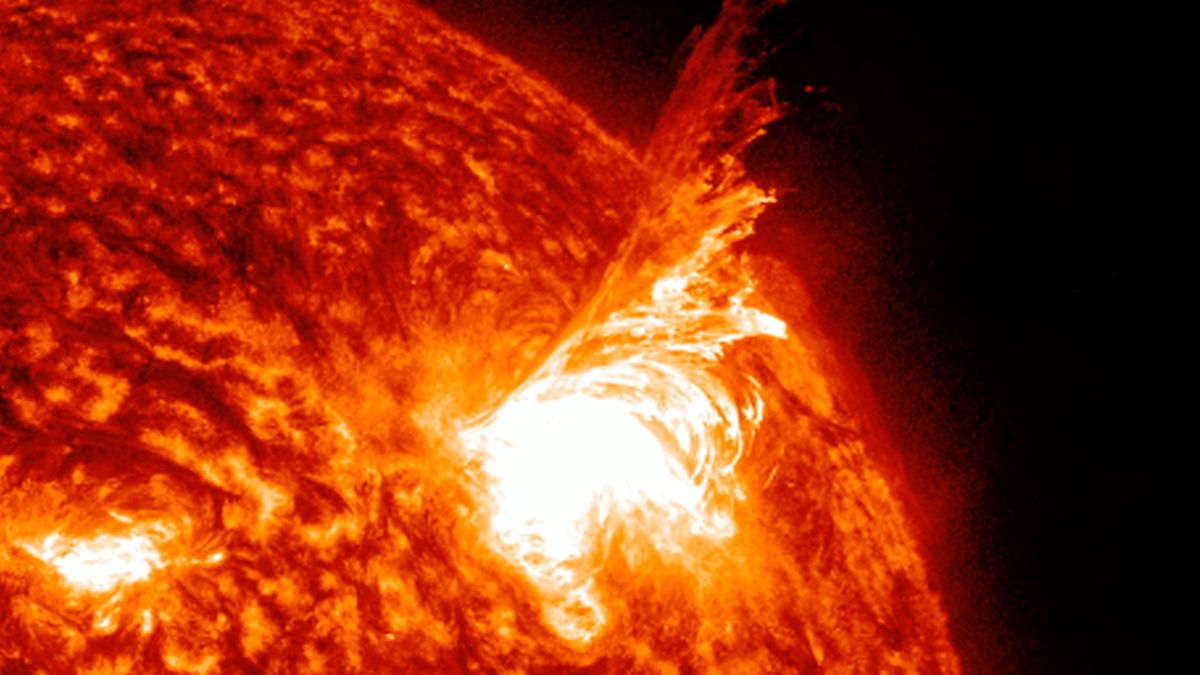
On June 3, the Sun experienced an M-class solar flare that resulted in a "failed eruption," where a large plasma plume was pulled back into the Sun instead of escaping. Captured by NASA's Solar Dynamics Observatory, the event was described by solar astrophysicist Ryan French and space weather forecaster Sara Housseal, noting that nearly all the plasma was reabsorbed, leading to minimal impact on Earth and no significant aurora displays.

"Sun's Differential Rotation Controlled by Long-Period Oscillations"
astronomy1 year ago

"Sun's Differential Rotation Controlled by Long-Period Oscillations"

Scientists have discovered that long-period high-latitude oscillations in the sun's convection zone play a crucial role in controlling the sun's differential rotation. These oscillations, observed through helioseismology, carry heat from the solar poles to the equator, limiting the temperature difference between the two to less than seven degrees. This small temperature difference influences the sun's global dynamics and is an important feedback mechanism. The study, published in Science Advances, sheds light on the physics of these oscillations and their role in the sun's workings, providing valuable insights for future research.

"Sun's Monumental X6.3 Flare Sparks Unexpected Magnetic Storm on Earth"
space-and-astronomy2 years ago

"Sun's Monumental X6.3 Flare Sparks Unexpected Magnetic Storm on Earth"

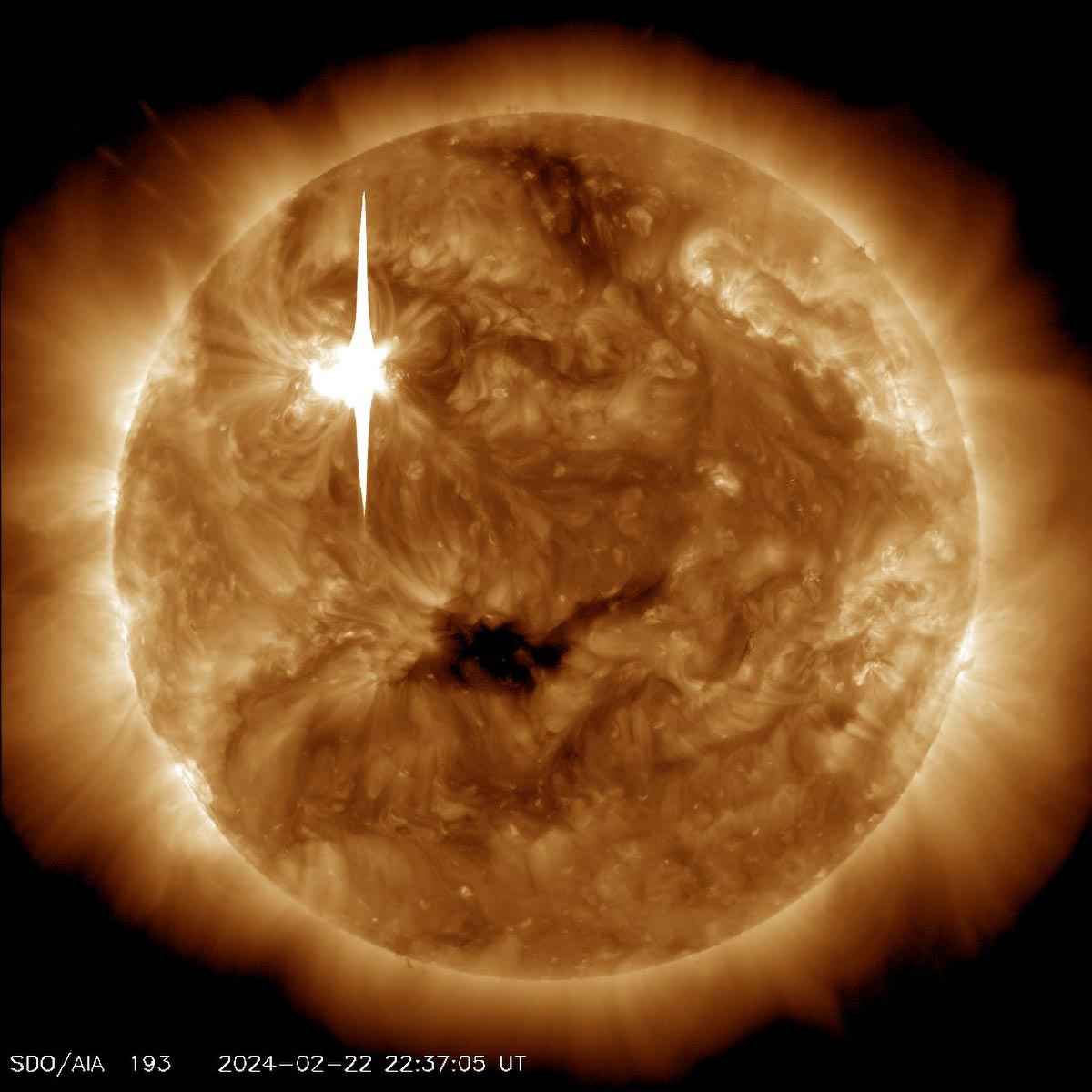
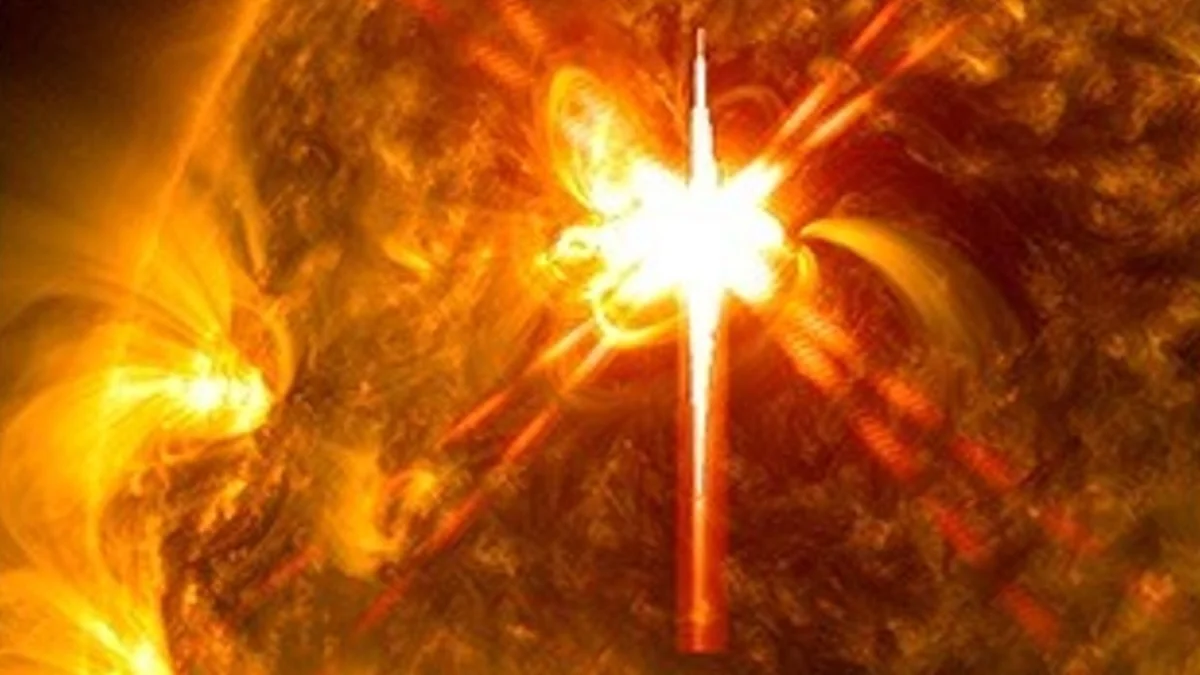
On February 22, 2024, the Sun emitted an X6.3 solar flare, the strongest in six years, captured by NASA's Solar Dynamics Observatory. This event marked the third significant solar flare within 24 hours, following an X1.8 and X1.7 flare. Solar flares are intense bursts of radiation resulting from magnetic energy release on the Sun's surface, with X-class flares being the most intense and capable of causing disturbances in Earth's atmosphere. NASA's Solar Dynamics Observatory plays a crucial role in monitoring and understanding solar activities to forecast and mitigate potential impacts on space weather.

"NASA Detects Gigantic Sunspot Cluster Posing Risk of Powerful Solar Flares"
space-and-science2 years ago

"NASA Detects Gigantic Sunspot Cluster Posing Risk of Powerful Solar Flares"

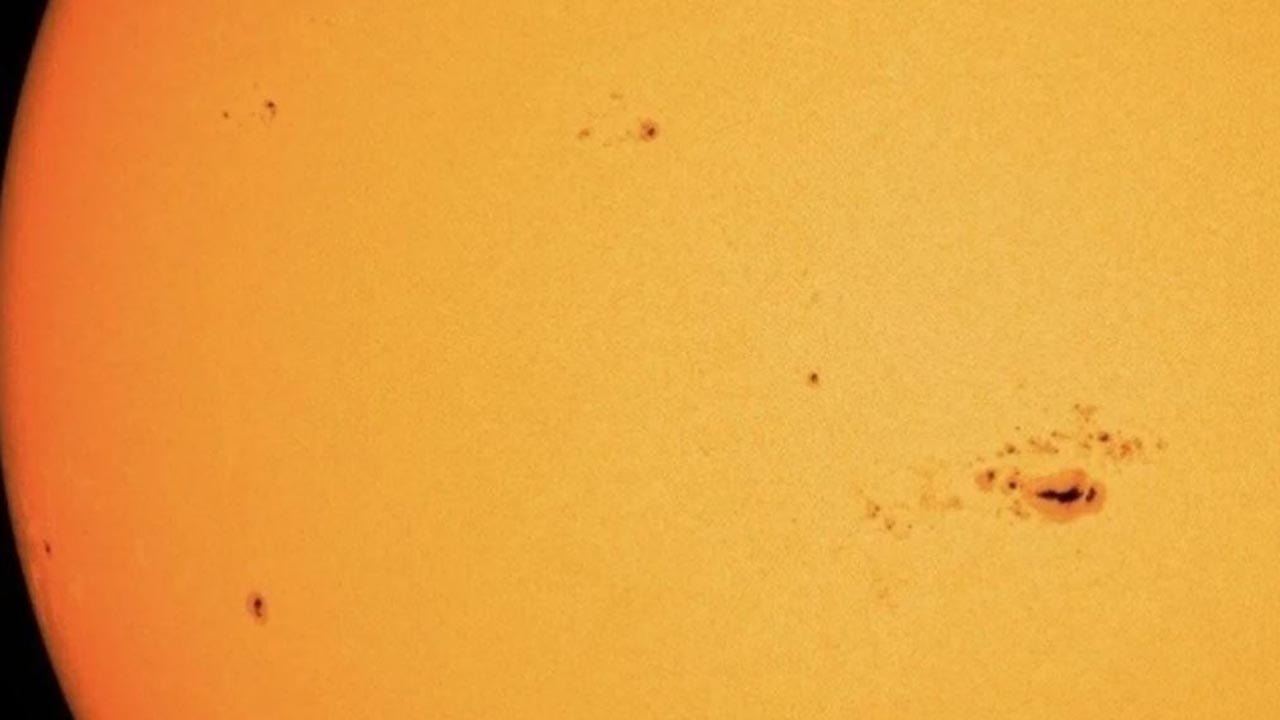
NASA has detected a large cluster of sunspots, known as AR3576, which has increased in size and could cause strong solar flares, posing risks to spacecraft, astronauts, radio communications, power grids, and navigation signals. The sunspots, larger than Earth, were first discovered at the end of last month and are now facing Earth. NASA's Solar Dynamics Observatory captured a massive solar flare on Friday, and the sunspot group is around 93,200 miles long, nearly four times the circumference of Earth.

Solar Flares: Unleashing Power and Spectacular Phenomena
space2 years ago

Solar Flares: Unleashing Power and Spectacular Phenomena

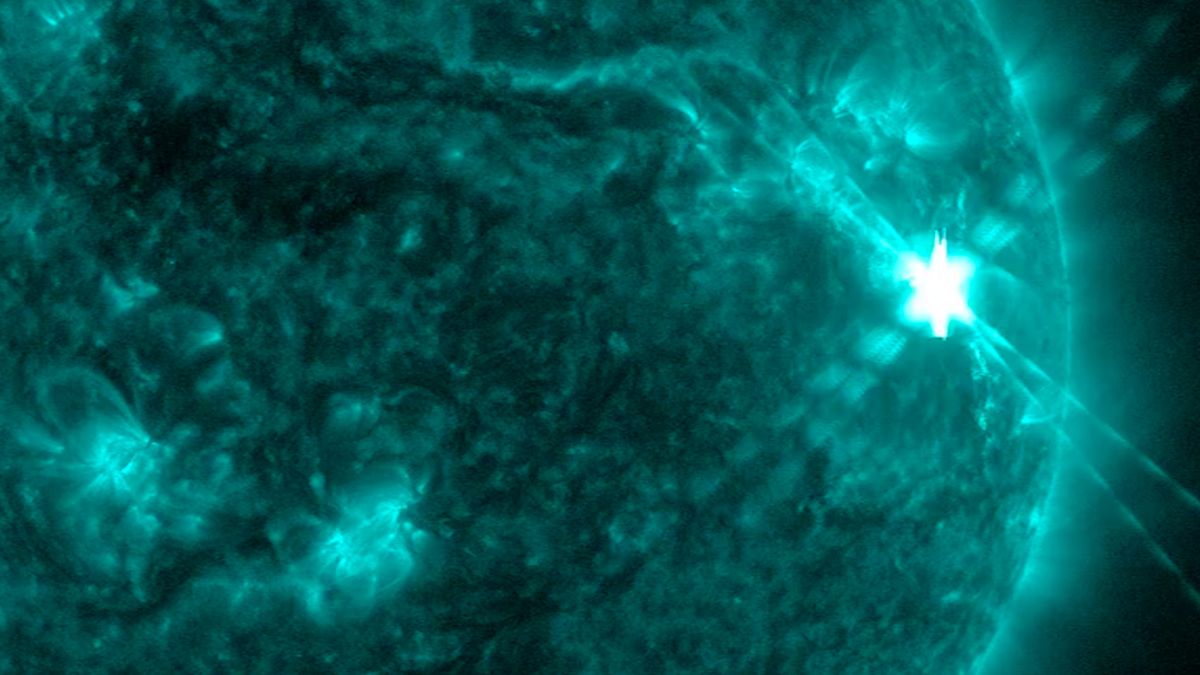
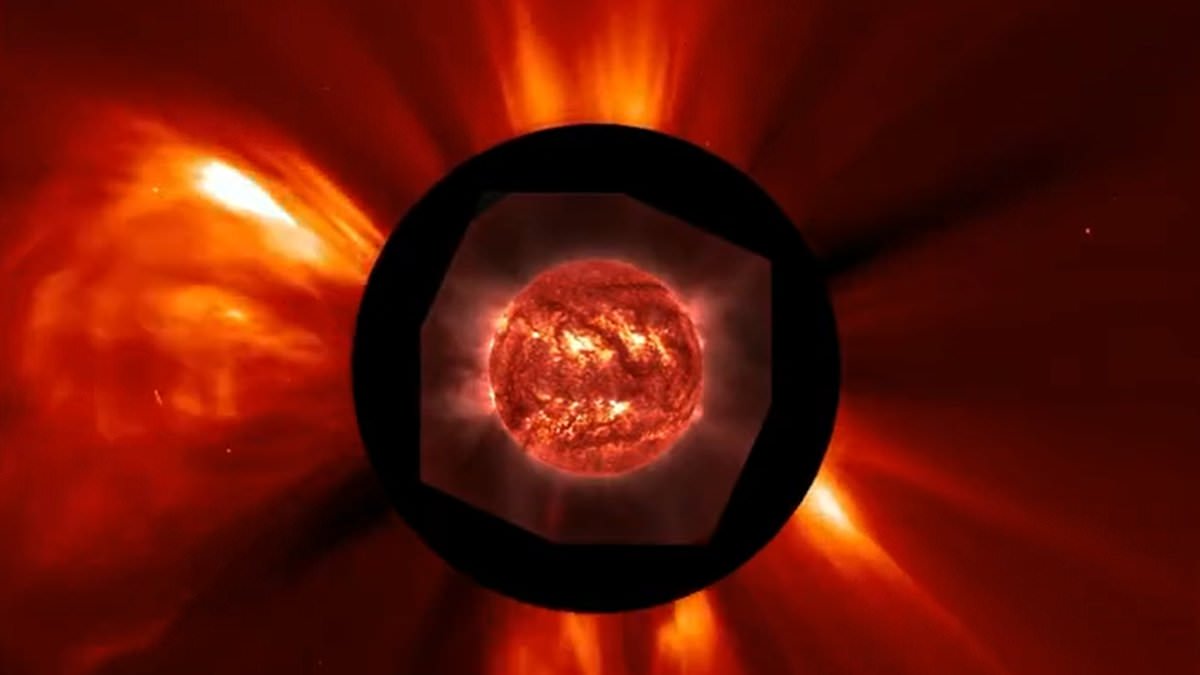
The sun unleashed a powerful X-class solar flare, the most potent since 2017, which was captured on video by NASA's Solar Dynamics Observatory spacecraft. The flare, classified as X2.8, was accompanied by a coronal mass ejection (CME) that may have an Earth-directed component. CMEs can cause geomagnetic storms that disrupt power grids and enhance auroras. While Earth's atmosphere protects us from harmful radiation, the flare caused a deep shortwave radio blackout over the Americas. Solar activity is expected to increase as the sun becomes more active during its 11-year cycle, with the current Solar Cycle 25 predicted to peak between January and October of next year.

"Enormous Sun Hole Threatens Earth with Solar Blast"
science2 years ago

"Enormous Sun Hole Threatens Earth with Solar Blast"

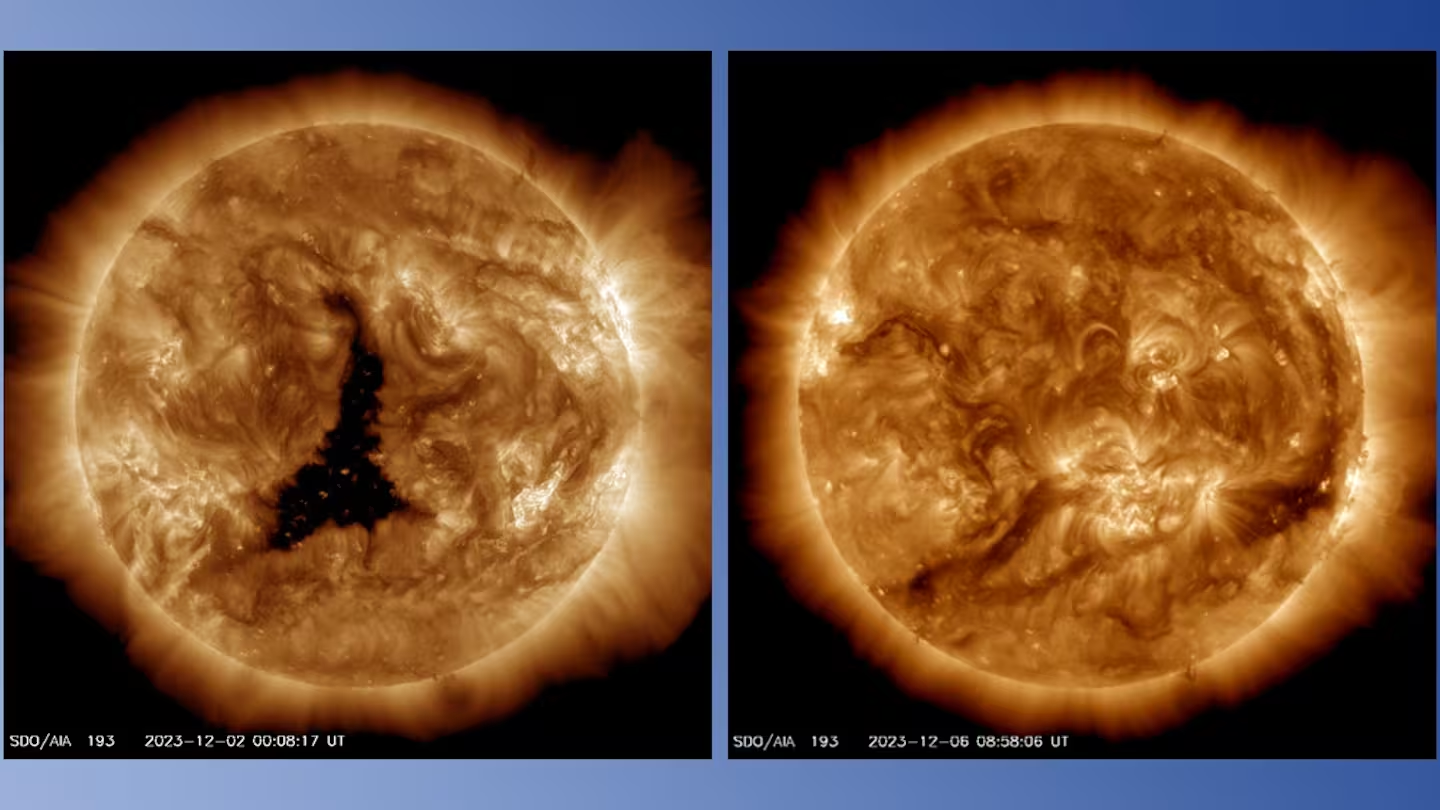
Scientists have discovered a massive coronal hole on the sun's surface, equivalent to about 60 Earths in size. The hole, which started forming on December 2, reached its maximum width of about 497,000 miles in just 24 hours. Although temporary, the hole could have caused disruptions such as geomagnetic storms and radio signal interference. The duration of the hole is uncertain, but most coronal holes last for more than a full solar rotation of about 27 days.

"NASA Captures Spectacular Halloween Solar Fireworks: 600,000-Mile-Long 'Canyon of Fire' Unveiled"
space2 years ago

"NASA Captures Spectacular Halloween Solar Fireworks: 600,000-Mile-Long 'Canyon of Fire' Unveiled"

NASA has released footage captured by its Solar Dynamics Observatory (SDO) showing a massive 'canyon of fire' shooting out from the sun on Halloween day. The explosion of radiation measured 6,200 miles wide and 62,000 miles long, making it about twice the size of the United States. The feature was visible from Mars, which is 145.59 million miles away. The video shows the filament forming on the sun's southeastern limb and accelerating until it bursts, releasing electrified gas towards the 'Earth-strike-zone'. The sunspot responsible for the event, AR3477, has also released several flares, with potential impacts on Earth. The SDO probe, recently named the fastest artificial object in history, has been studying the sun since its launch in 2018 and has provided valuable insights into solar storms and their potential risks.

Solar Flare Triggers Intense Geomagnetic Storm on Earth
science-and-technology2 years ago

Solar Flare Triggers Intense Geomagnetic Storm on Earth

A massive M6-class solar flare erupted on the Sun, accompanied by a high-speed coronal mass ejection (CME) cloud. The flare, detected by NASA's Solar Dynamics Observatory, is more dangerous than X-class flares due to its long duration. There is a possibility that the CME cloud could hit Earth, potentially causing a major solar storm. Such storms can damage satellites, impact mobile networks and GPS, and pose a threat to ground-based electronics and power grids. The NASA Solar Dynamics Observatory plays a crucial role in monitoring solar activities and collecting data.

Solar Flares: Threats and Impacts on Earth
space2 years ago

Solar Flares: Threats and Impacts on Earth

NASA's Solar Dynamics Observatory captured a powerful X1.0 solar flare emitted by the sun, causing radio blackouts on Earth. The flare, which erupted from a sunspot seven times the width of Earth, disrupted radio signals and ionized the top of Earth's atmosphere, resulting in a 30-minute deep shortwave radio blackout over western parts of the U.S. and the Pacific Ocean. Solar flares are formed when magnetic fields around sunspots become tangled and reconnect, and recent solar activity has been increasing, potentially impacting radio and internet communications as well as satellite and radio navigation systems.