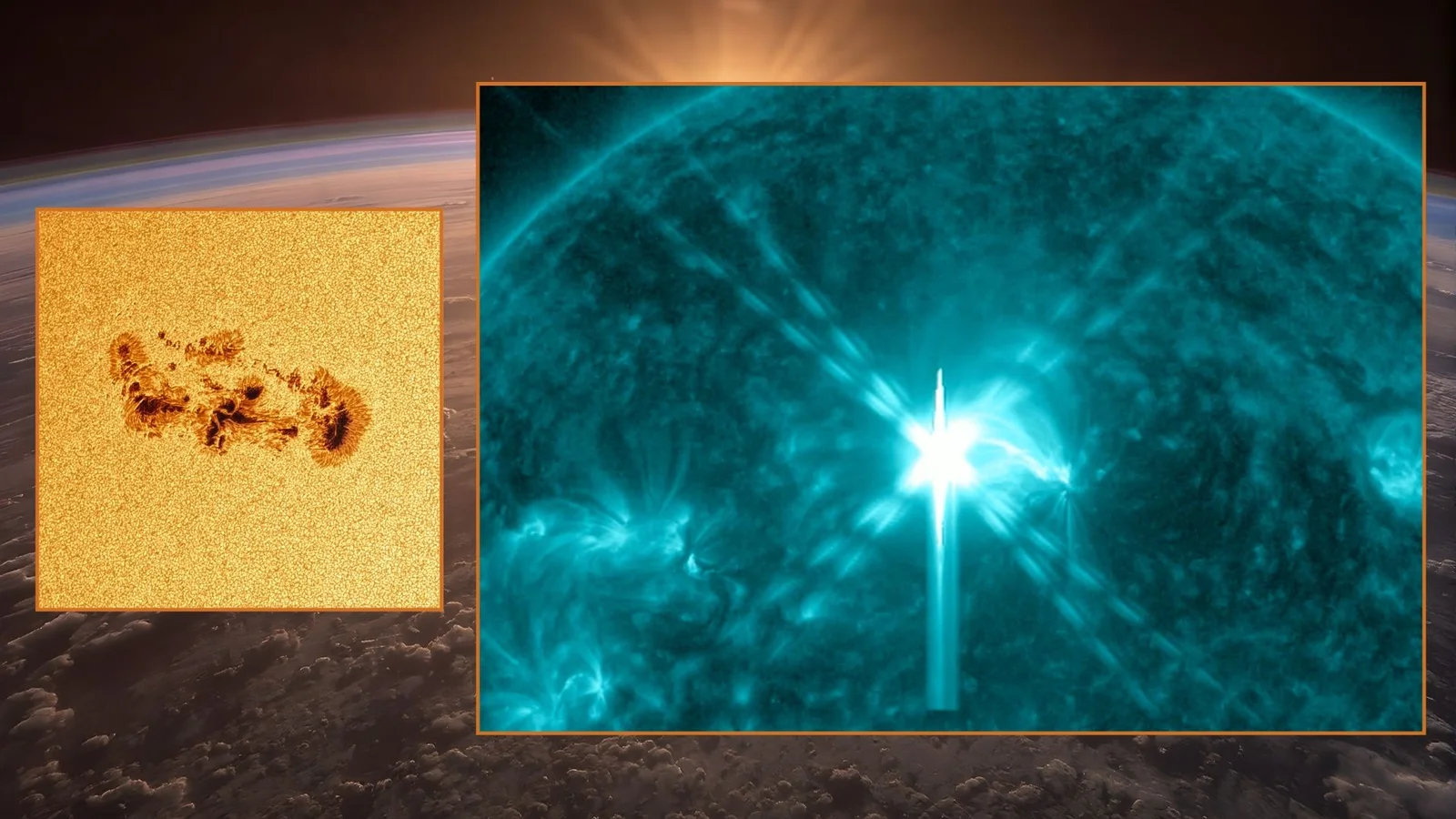
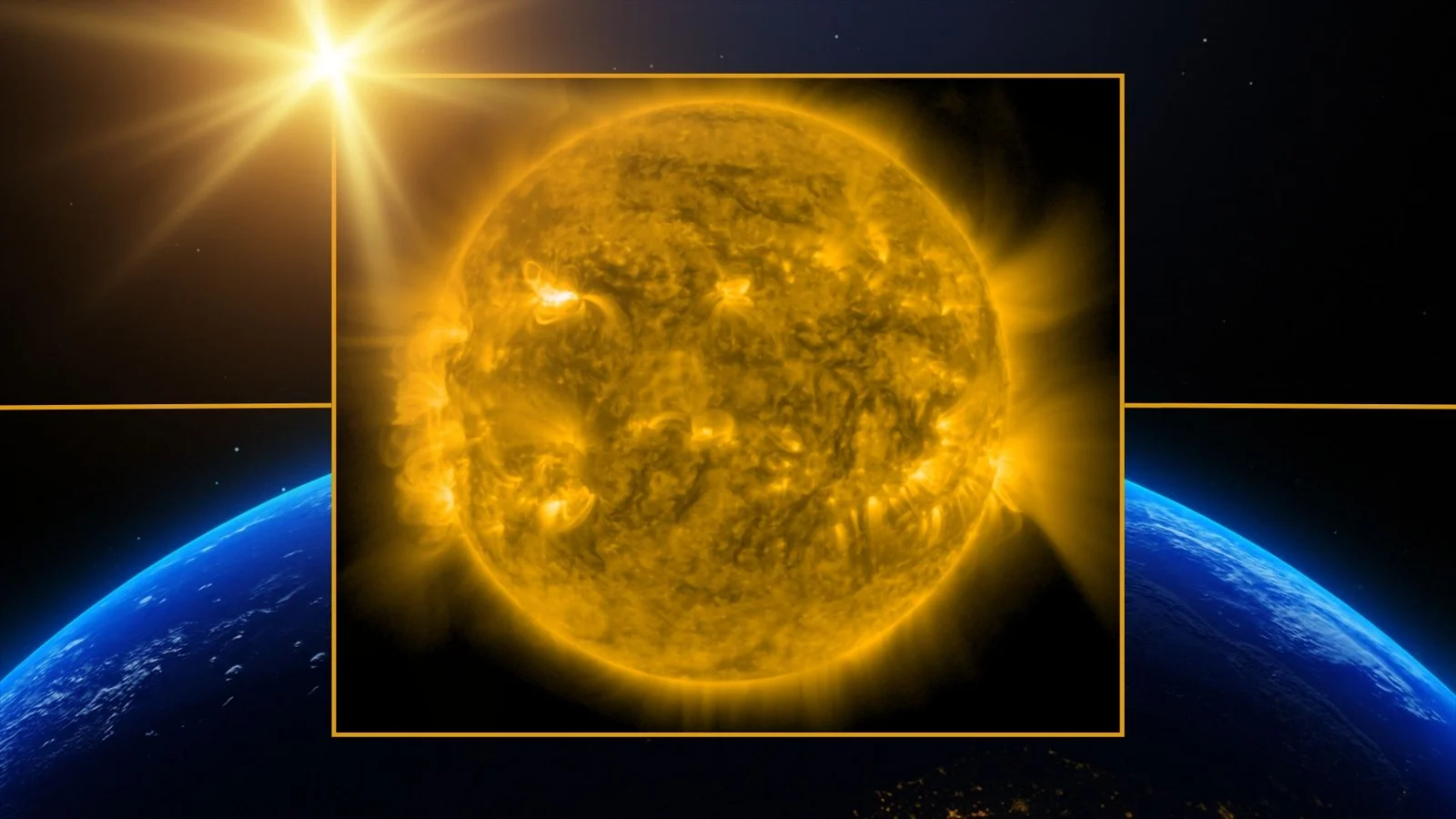
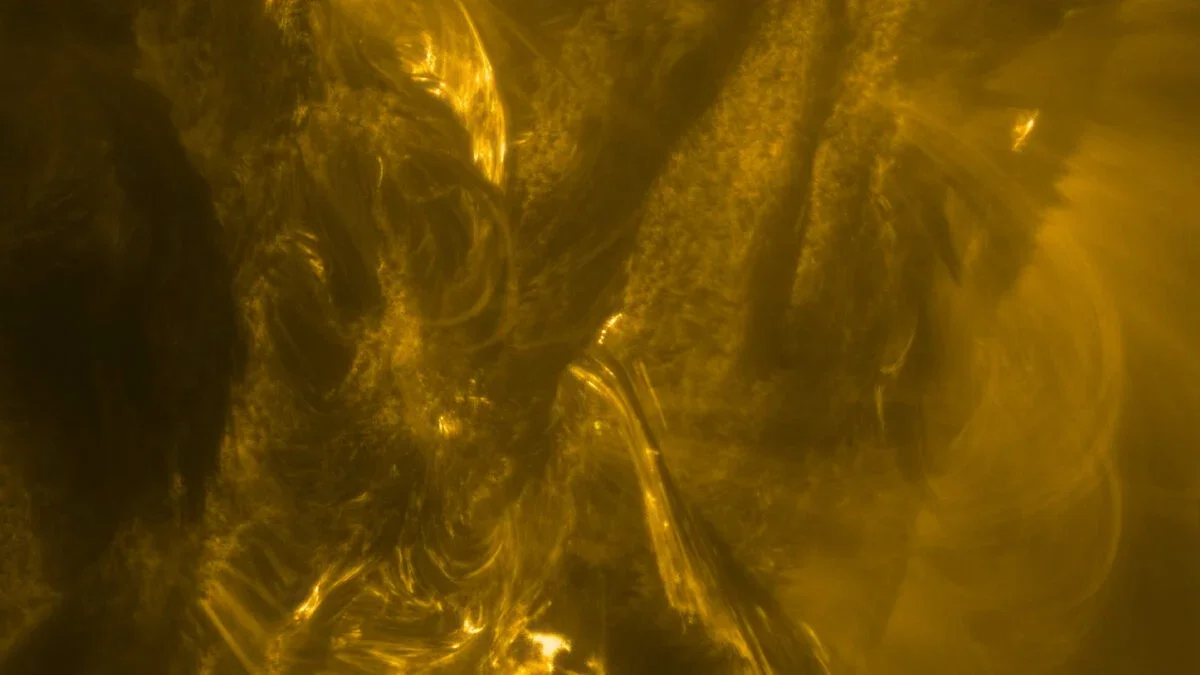
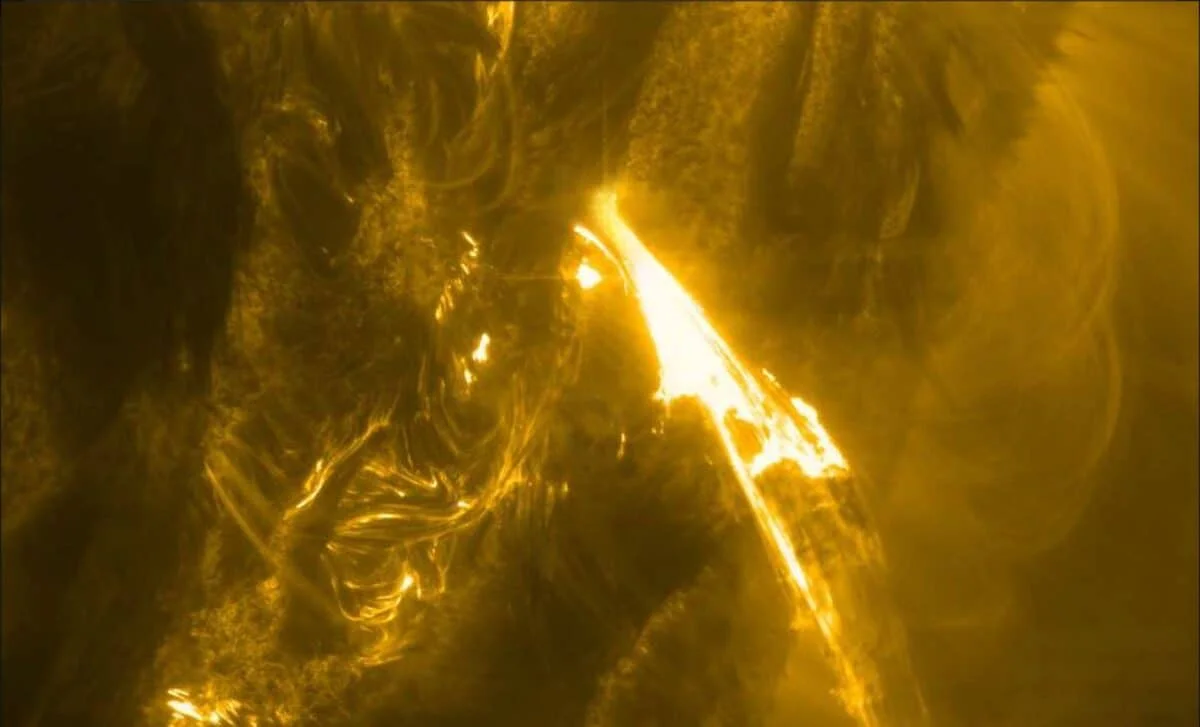
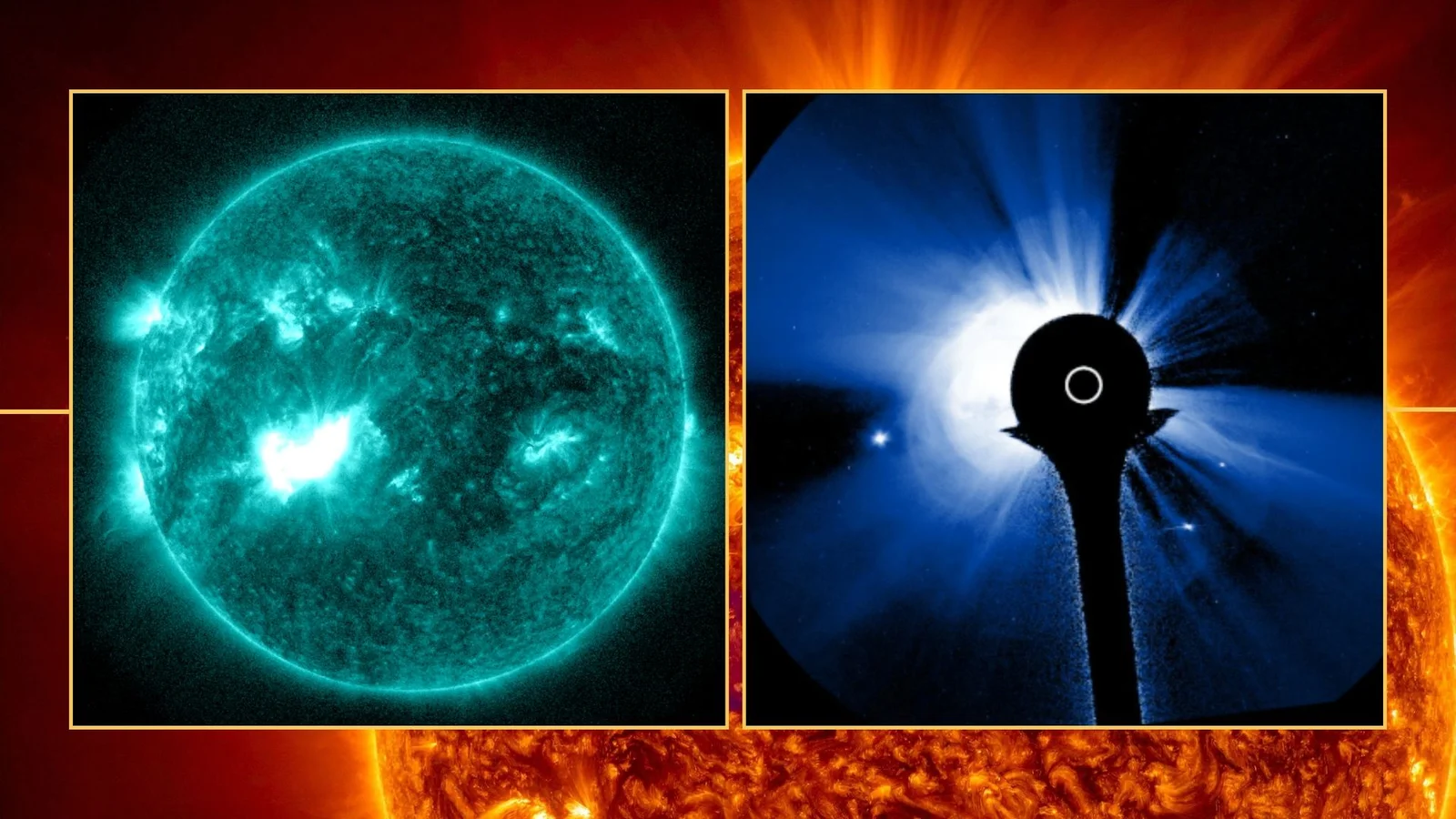
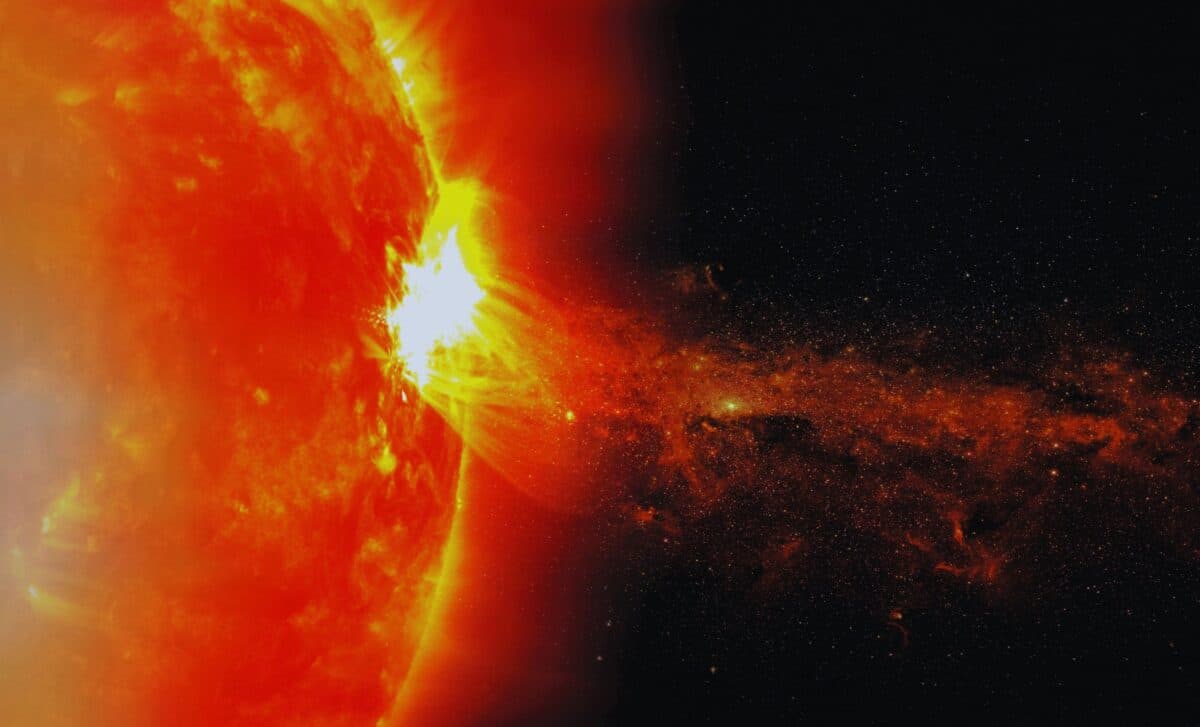
A powerful X4.2 class solar flare erupted from the Sun, causing radio signal outages across parts of Africa and Europe, with video coverage of the flare; space weather observers will monitor any geomagnetic disturbances and potential impacts on Earth’s technology.
Sunspot region 4366 has unleashed dozens of solar flares in 24 hours, including multiple M-class and X-class eruptions—the strongest since 2024—making it the most active sunspot in years. NOAA's SWPC says a coronal mass ejection is headed toward Earth but is likely to miss or only graze it, potentially sparking auroras at unusually low latitudes later this week.
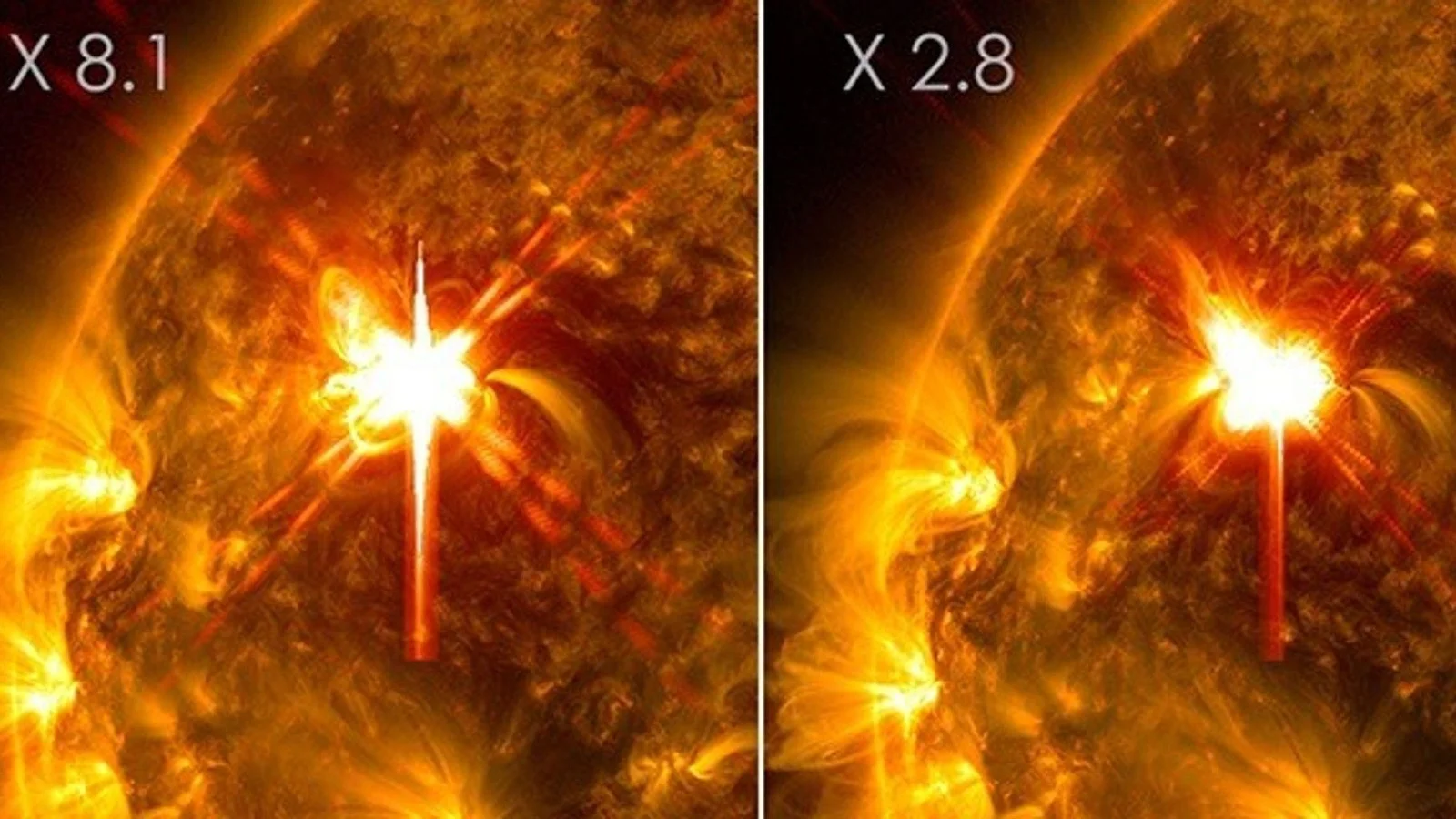
NOAA reports an X8.1 flare from active region 4366, with CME modeling indicating much of the ejected material will pass by Earth to the north and east late Feb 5 UTC, potentially delivering glancing effects. The region remains highly active with ongoing M and X-class flares, and forecasters expect more activity in the coming days.
Over a 24-hour period the Sun released a barrage of flares from sunspot AR4366, including at least 18 M-class and three X-class events (peaking at X8.3), triggering radio blackouts in parts of the South Pacific and eastern Australia/New Zealand. AR4366 is rapidly growing and could produce more eruptions; a CME is expected but likely to miss Earth or only glance Earth around Feb. 5, potentially elevating high-latitude aurora activity. Forecasters warn conditions remain uncertain as activity continues.
NOAA reports an X8.1 solar flare from Region 4366; the associated CME is expected to pass by Earth to the north and east with possible glancing impacts around Feb 5 UTC; forecasters anticipate continued activity from this region in the coming days.
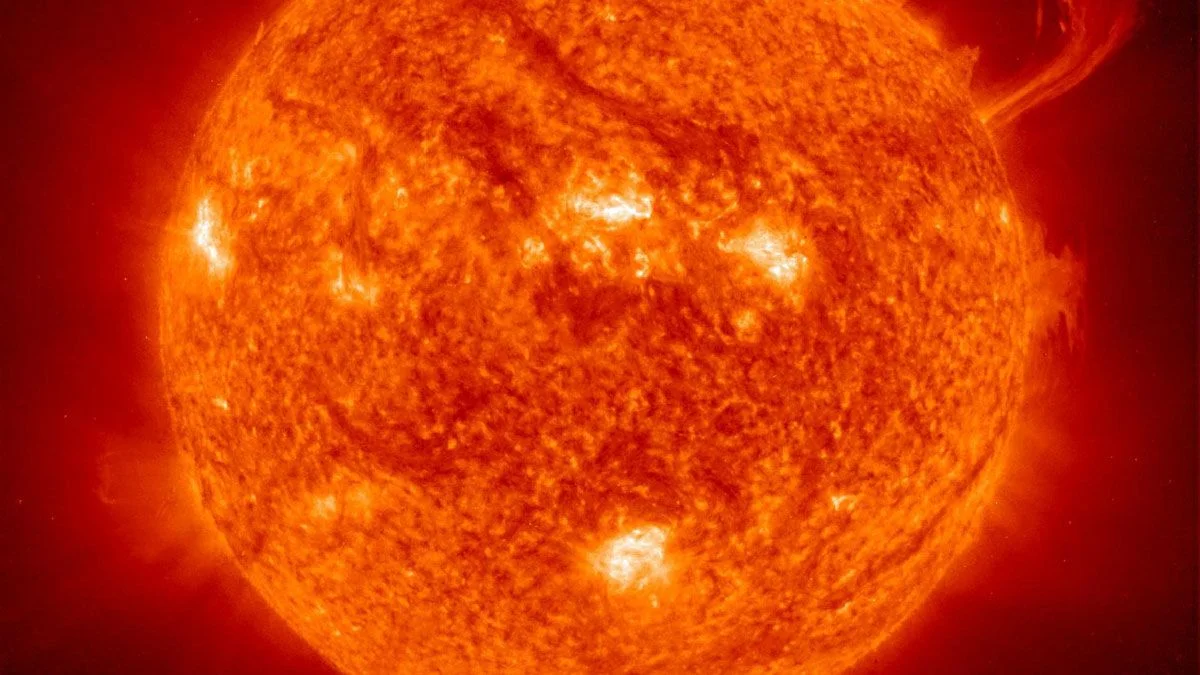
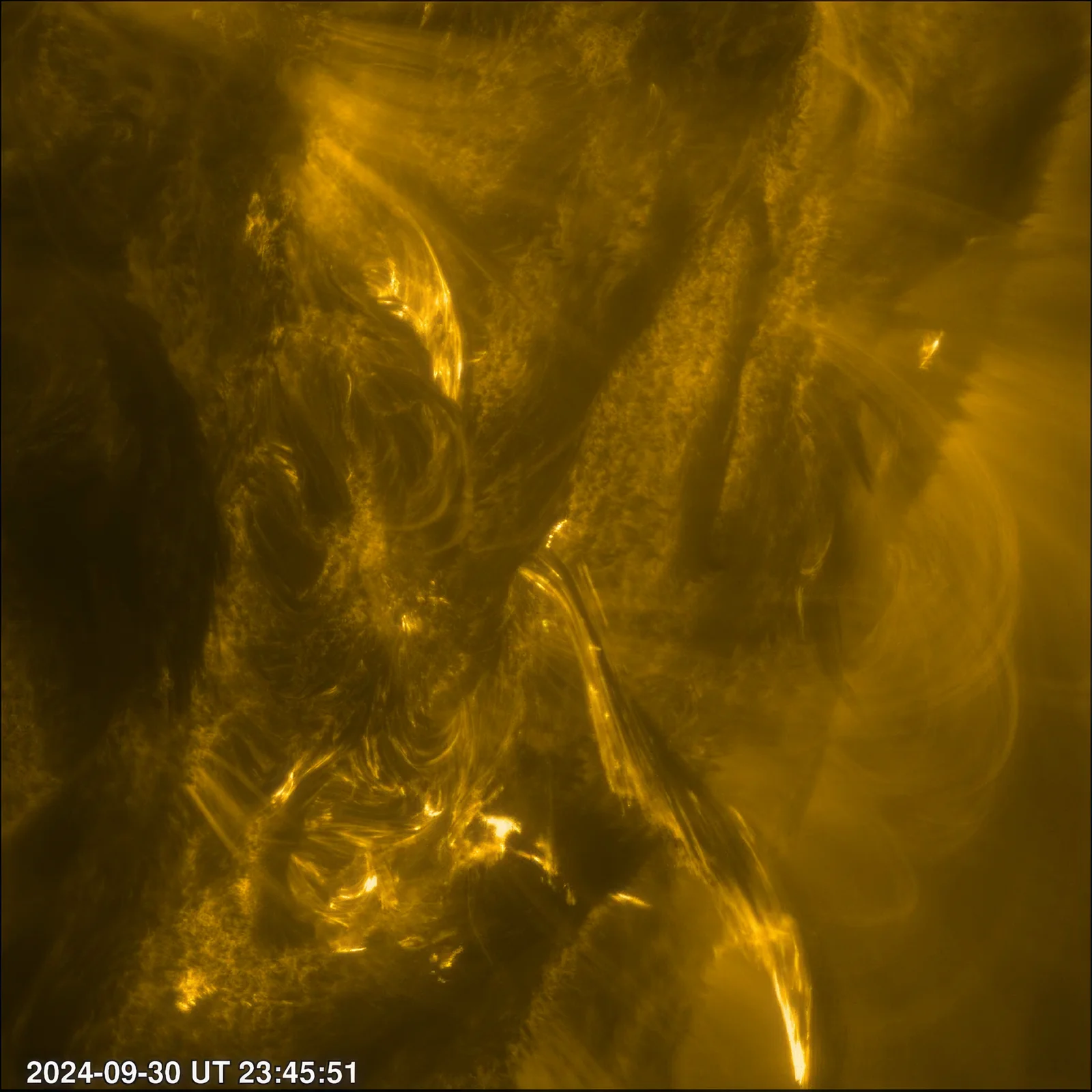
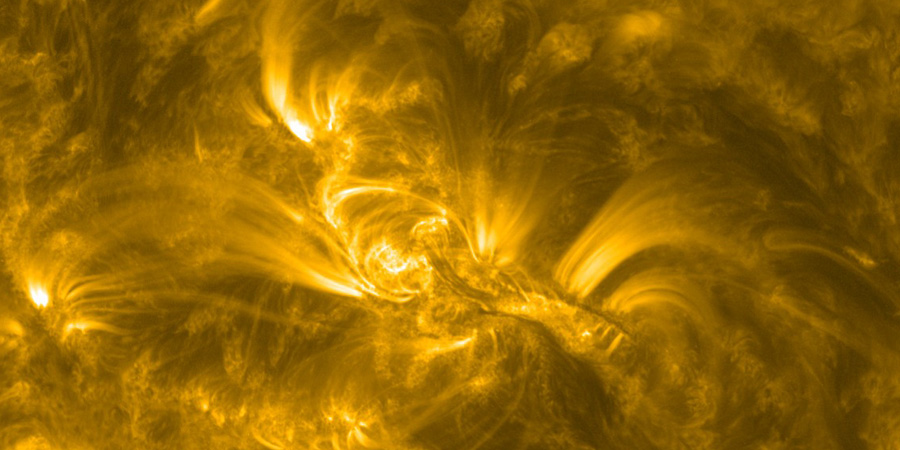
ESA’s Solar Orbiter watched an avalanche of smaller magnetic disturbances cascade into a mid‑class solar flare, revealing how energy is released in the sun’s corona through a sequence of reconnection events. The multi‑instrument observations (EUI, SPICE, STIX, PHI) tracked rapid changes over about 40 minutes, with the findings published in Astronomy & Astrophysics. This work advances understanding of flare triggers and could improve forecasting of Earth‑impacting solar activity.
ESA's Solar Orbiter captured high-cadence observations showing solar flares arise from avalanche-like magnetic reconnection: a weak disturbance spawns a cascade of twisted field strands that rapidly reconnect, creating bright ribbons, fast plasma outflows up to ~400 km/s, and continued plasma rain after the flare, implying energy moves from magnetic fields to solar plasma and this avalanche mechanism may be common across flares.
ESA's Solar Orbiter captured real-time footage showing a solar flare igniting through a rapid cascade of magnetic reconnection events inside a twisted flux rope, producing high-speed plasma rain and energy transfer that redefines flares as magnetic avalanches rather than a single eruption.
ESA's Solar Orbiter captured a large solar flare as a cascade of rapid reconnection events—an avalanche that builds from weak disturbances to a full eruption—producing rain-like plasma blobs and high-energy X-rays; four instruments provided a detailed, multi-instrument view, supporting avalanche models and improving understanding of energy transfer from magnetic fields to plasma and particles, with implications for space weather forecasting.
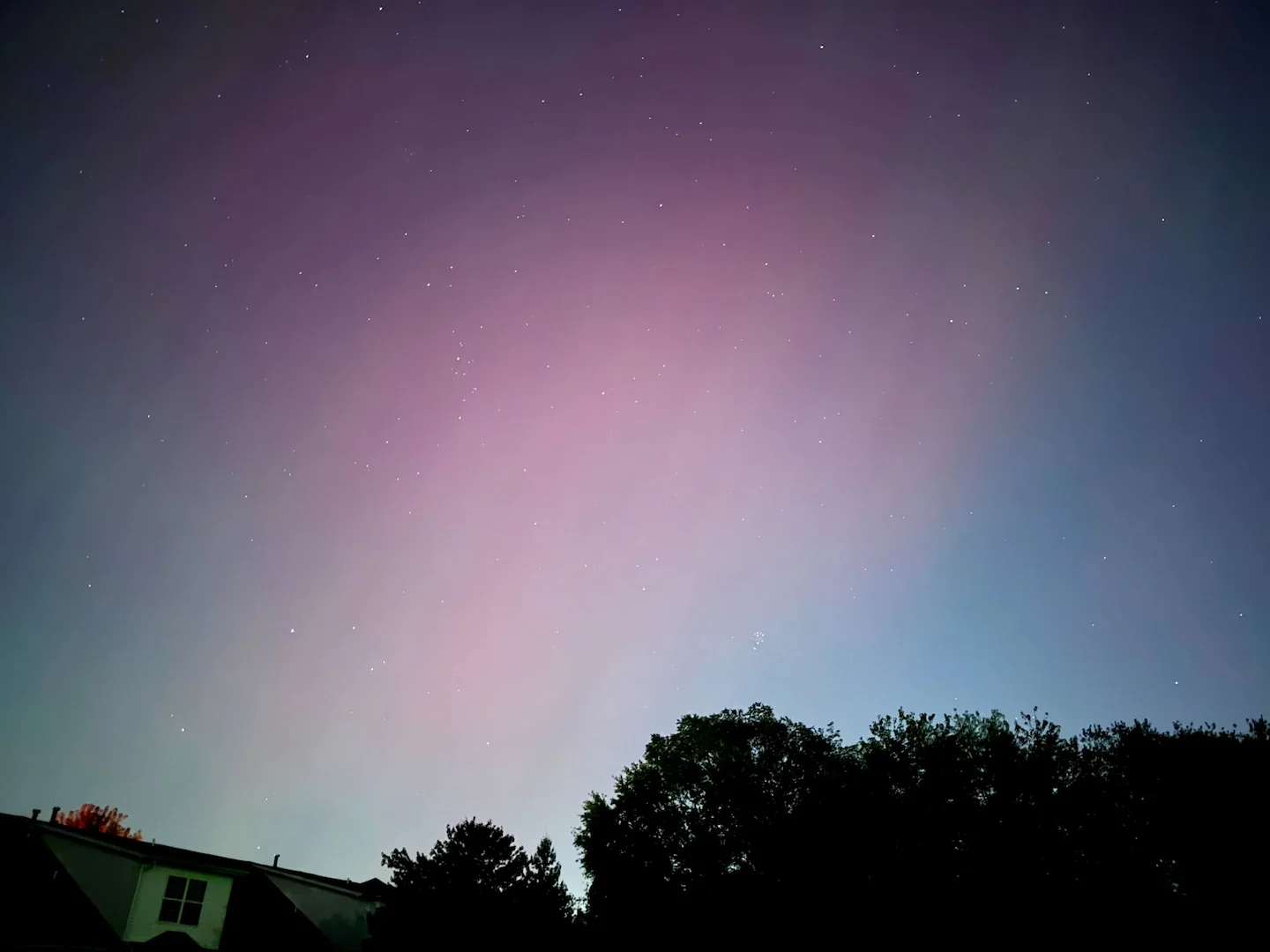
A powerful X-class solar flare and a fast coronal mass ejection could spark auroral displays much farther south than usual tonight—potentially visible from parts of California, the central Plains, and the Mid-Atlantic, with even deeper-south areas possible. NOAA has issued a rare G4 geomagnetic storm potential, though whether the CME hits Earth head-on remains uncertain. For best viewing, find a dark, clear sky along the northern horizon after sunset.
NOAA’s Space Weather Prediction Center has issued a G4 (Severe) Geomagnetic Storm Watch for January 20 due to a coronal mass ejection released January 18 in association with an energetic solar flare; the CME is expected to reach Earth from late January 19 to early January 20, with storm levels potentially ranging from G1 to G3 upon arrival and the passage likely continuing through January 20, with residual effects possible on January 21. Forecasters have a fair degree of confidence in the timing and will provide updates as conditions evolve.
A major solar flare has prompted officials to upgrade a Severe Northern Lights alert to cover 24 states for Monday, signaling intensified auroral activity that could be visible in broader areas if skies are clear.
An X1.9 solar flare from the Sun triggered a fast Earth-directed coronal mass ejection (CME) forecast to reach Earth within about 24 hours. If the CME’s magnetic orientation (Bz) is southward, it could couple with Earth’s magnetosphere and drive strong (G3) to severe (G4) geomagnetic storm conditions, potentially lighting up auroras as far south as parts of the U.S. (e.g., Northern California to Alabama). Forecasters caution that CME arrivals are hard to pin down and depend on magnetic orientation; disruptions to satellites, GPS, and radio signals and increased atmospheric drag on spacecraft are possible alongside spectacular auroral displays depending on the event’s exact geometry and timing.
A significant M7.1 solar flare occurred on December 31, 2025, originating from sunspot region 4324, accompanied by a coronal mass ejection (CME) that is expected to cause minor G1 geomagnetic storm conditions on Earth by January 2, 2026, with the majority of the CME heading away from Earth.
A powerful X1.9 solar flare from sunspot AR4299 caused radio blackouts in Australia and Southeast Asia, with further solar activity expected from the larger, more complex sunspot AR4294, potentially leading to additional flares and minor geomagnetic storms in the coming days.