Tag

Magnetic Reconnection

All articles tagged with #magnetic reconnection

Sun’s Flares Revealed as Magnetic Avalanches, Solar Orbiter Finds
space1 month ago

Sun’s Flares Revealed as Magnetic Avalanches, Solar Orbiter Finds

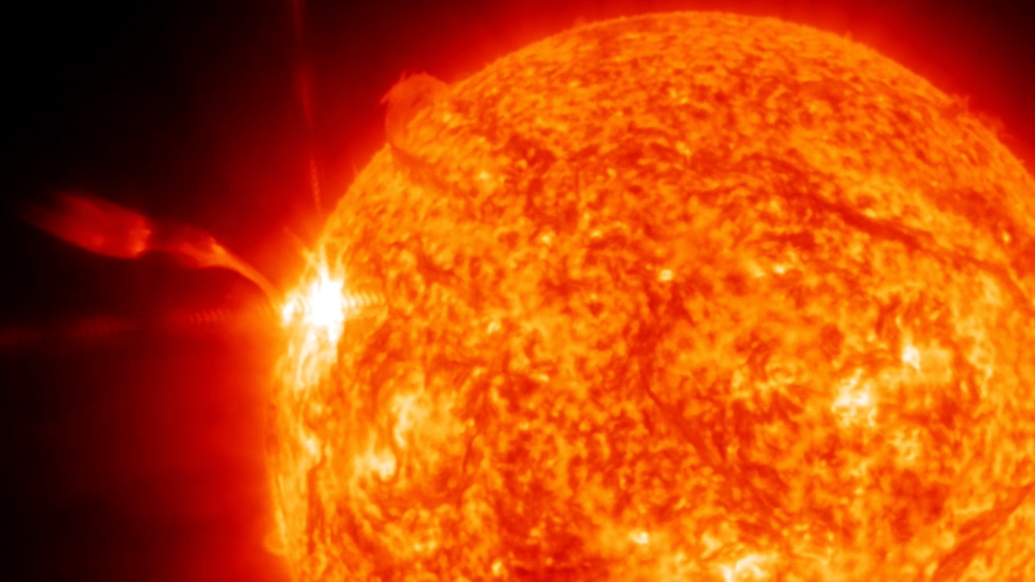
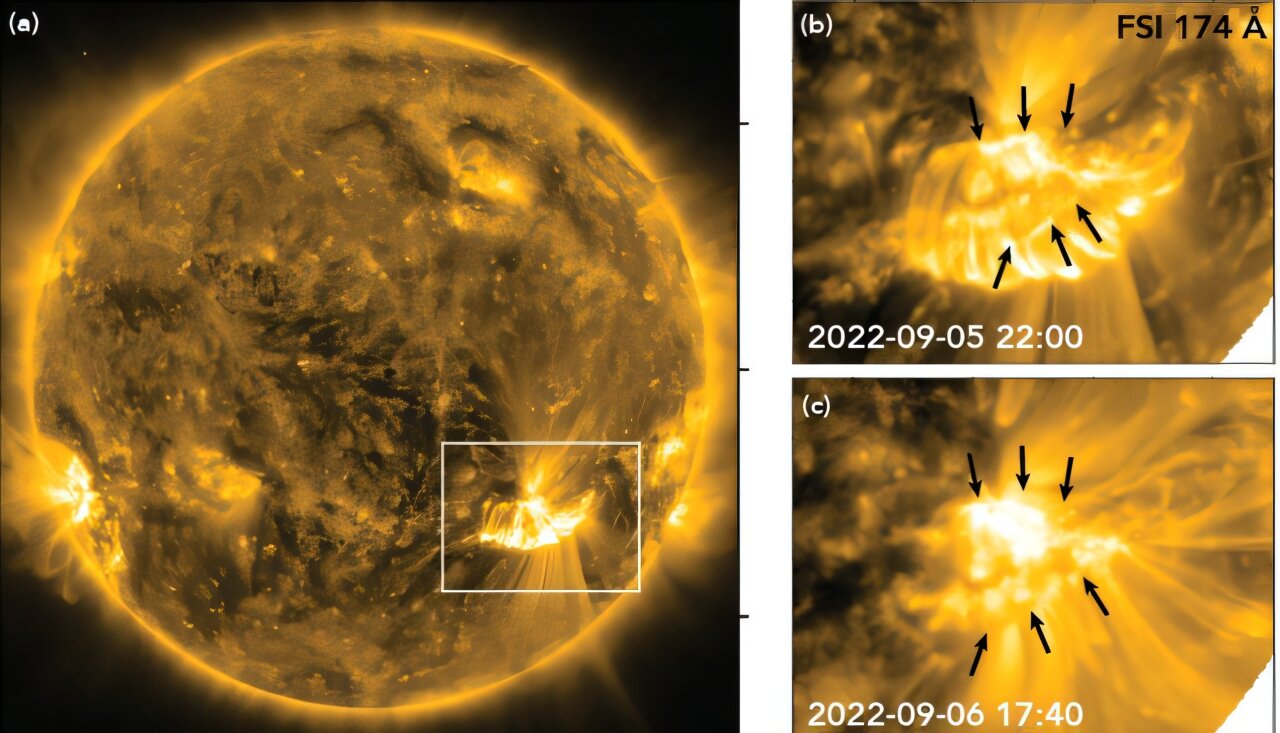
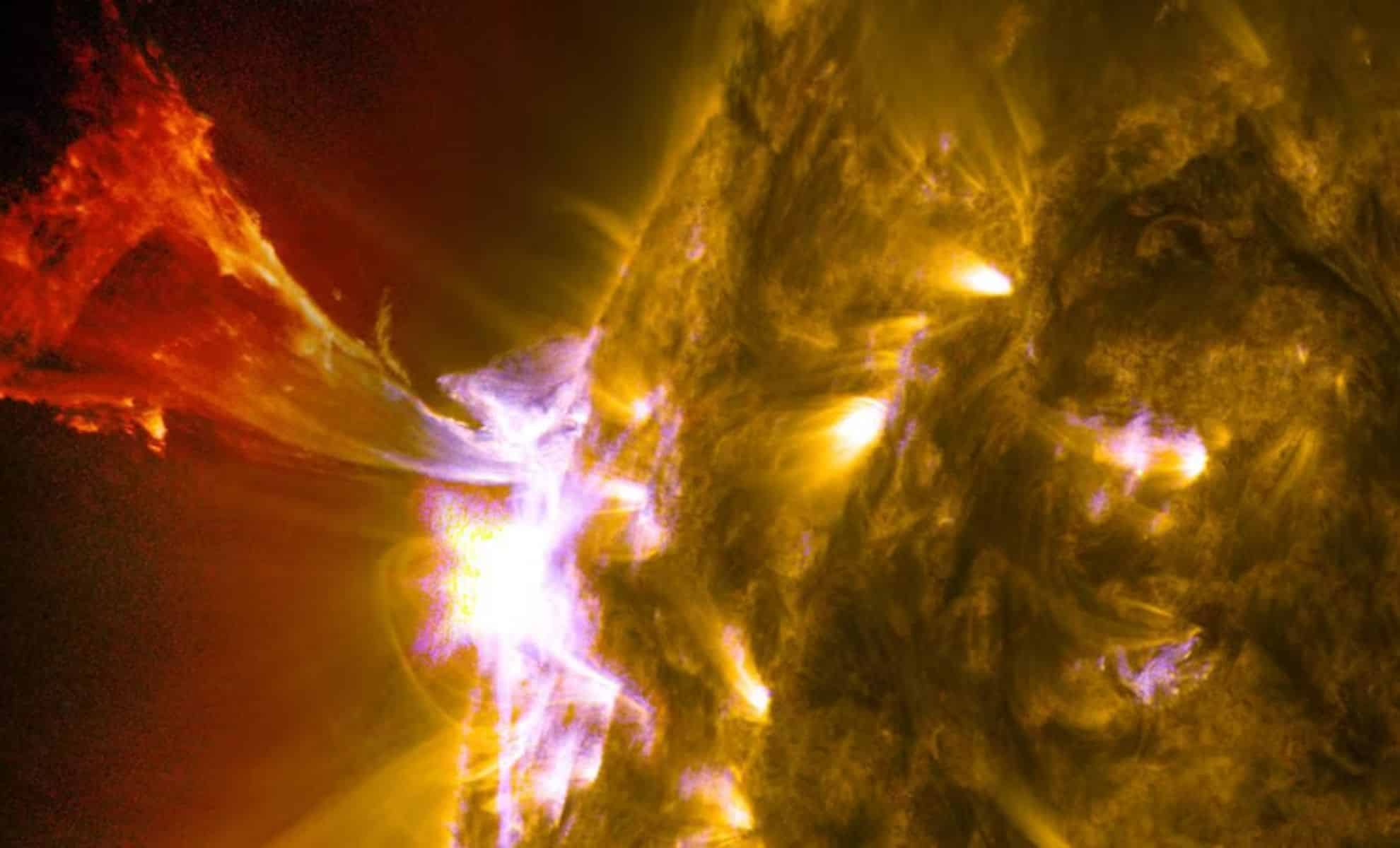
ESA’s Solar Orbiter watched an avalanche of smaller magnetic disturbances cascade into a mid‑class solar flare, revealing how energy is released in the sun’s corona through a sequence of reconnection events. The multi‑instrument observations (EUI, SPICE, STIX, PHI) tracked rapid changes over about 40 minutes, with the findings published in Astronomy & Astrophysics. This work advances understanding of flare triggers and could improve forecasting of Earth‑impacting solar activity.
Magnetic Avalanches Trigger Solar Flares, New Solar Orbiter View Reveals
science1 month ago

Magnetic Avalanches Trigger Solar Flares, New Solar Orbiter View Reveals

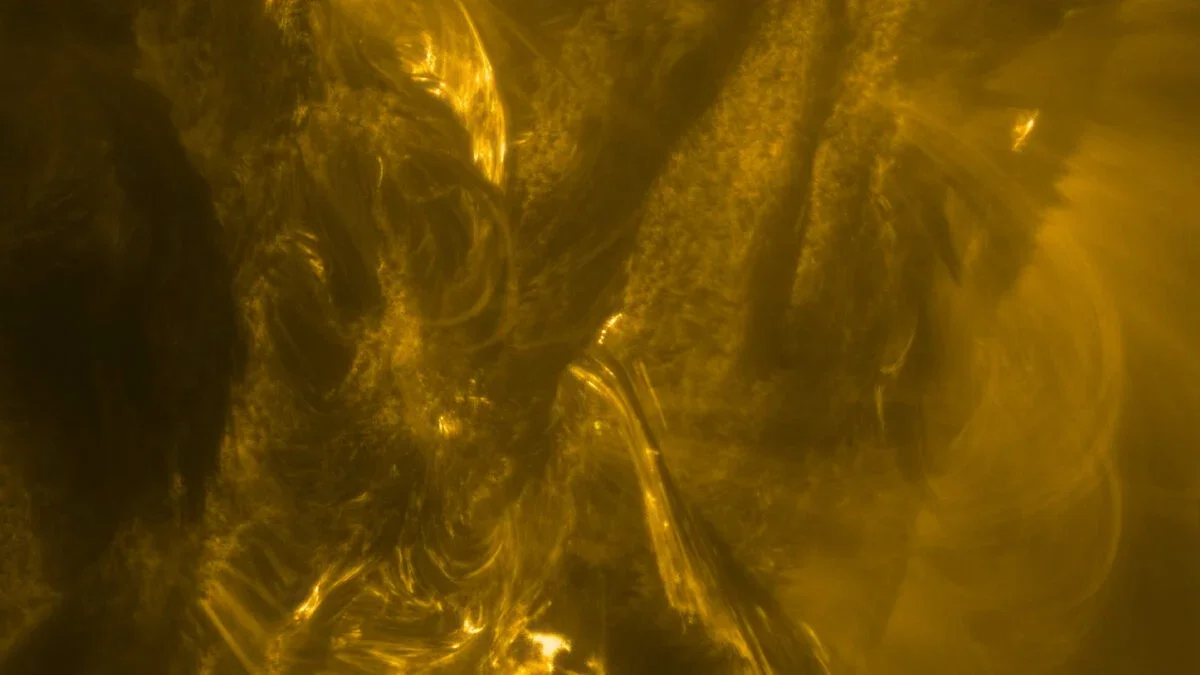
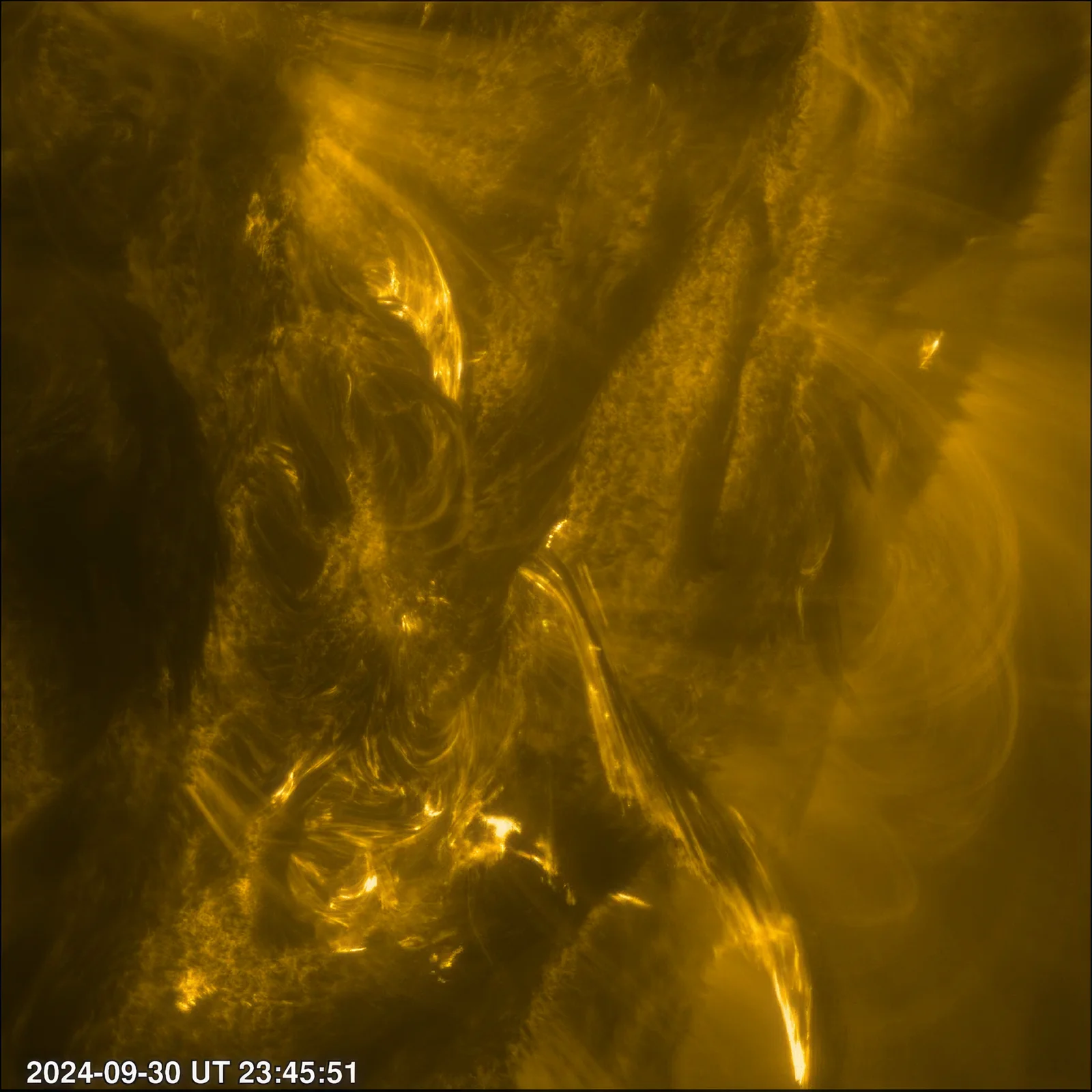
ESA's Solar Orbiter captured high-cadence observations showing solar flares arise from avalanche-like magnetic reconnection: a weak disturbance spawns a cascade of twisted field strands that rapidly reconnect, creating bright ribbons, fast plasma outflows up to ~400 km/s, and continued plasma rain after the flare, implying energy moves from magnetic fields to solar plasma and this avalanche mechanism may be common across flares.

Avalanche of magnetic reconnection powers solar flare, Solar Orbiter reveals
space-science1 month ago

Avalanche of magnetic reconnection powers solar flare, Solar Orbiter reveals

ESA's Solar Orbiter captured a large solar flare as a cascade of rapid reconnection events—an avalanche that builds from weak disturbances to a full eruption—producing rain-like plasma blobs and high-energy X-rays; four instruments provided a detailed, multi-instrument view, supporting avalanche models and improving understanding of energy transfer from magnetic fields to plasma and particles, with implications for space weather forecasting.

Scientists Observe First 'Switchback' Phenomenon in Earth's Magnetosphere
science3 months ago

Scientists Observe First 'Switchback' Phenomenon in Earth's Magnetosphere

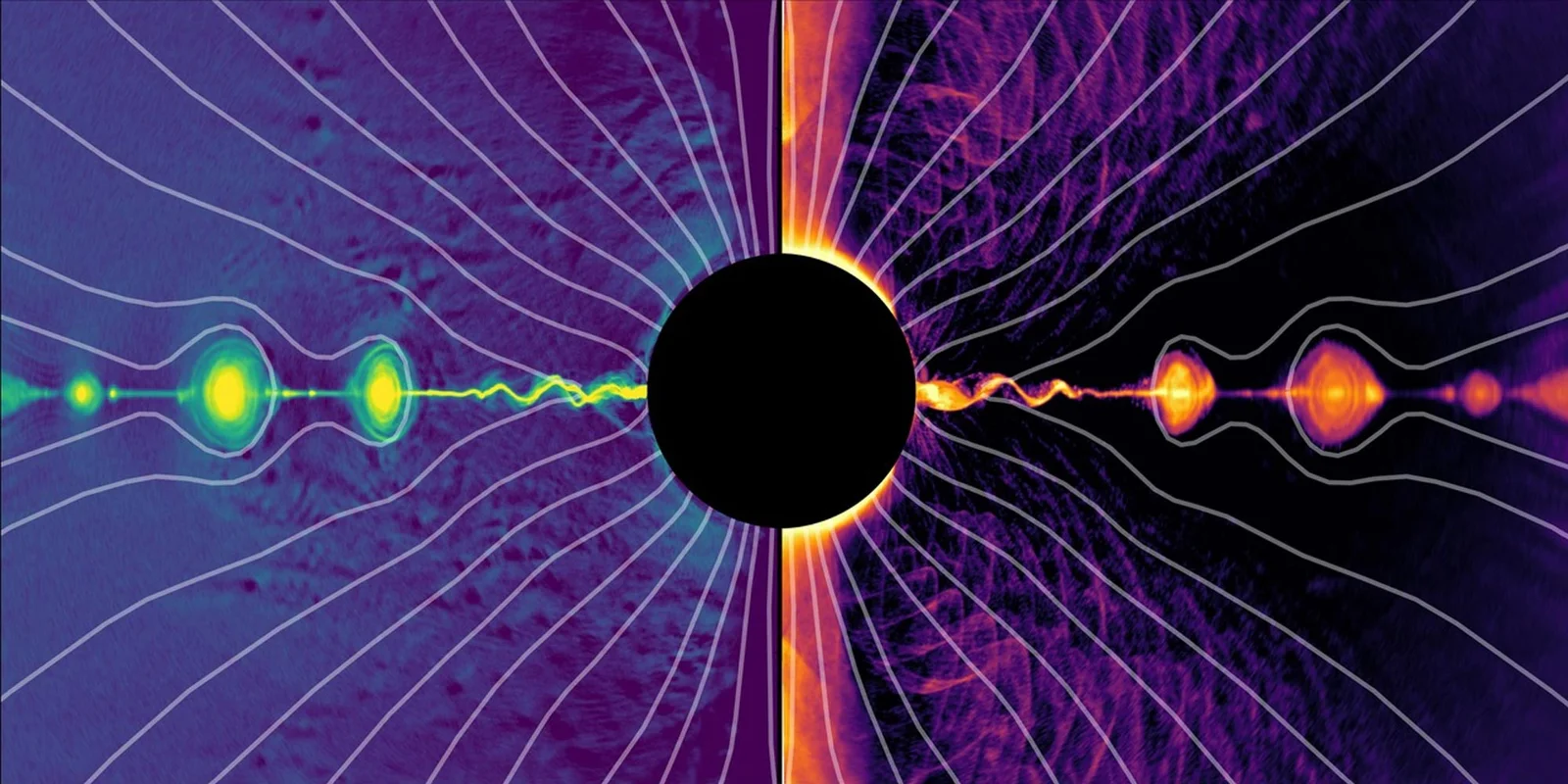
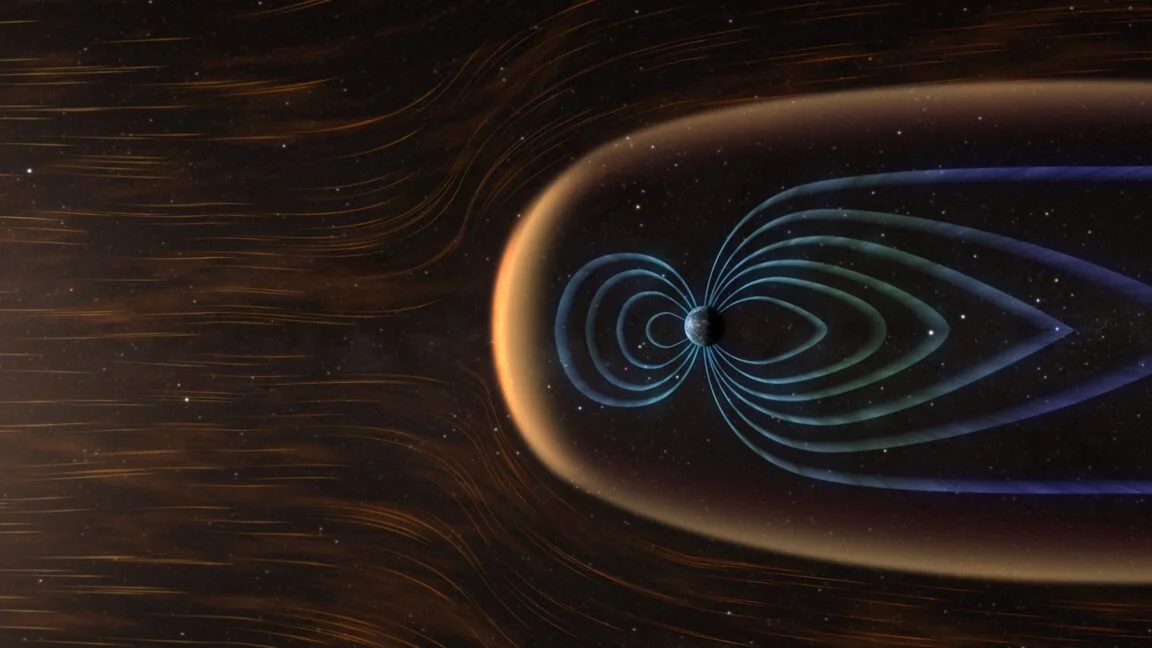
Scientists have for the first time detected a zigzag-like 'switchback' phenomenon in Earth's magnetosphere, a plasma structure associated with magnetic reconnection events that can influence space weather and potentially disrupt Earth's technological systems. The discovery was made by NASA's MMS spacecraft near the magnetosheath, providing new insights into how solar wind interacts with Earth's magnetic field and improving the ability to predict geomagnetic storms.

New Research Reveals Solar Flares Are Significantly Hotter Than Previously Believed
science5 months ago

New Research Reveals Solar Flares Are Significantly Hotter Than Previously Believed

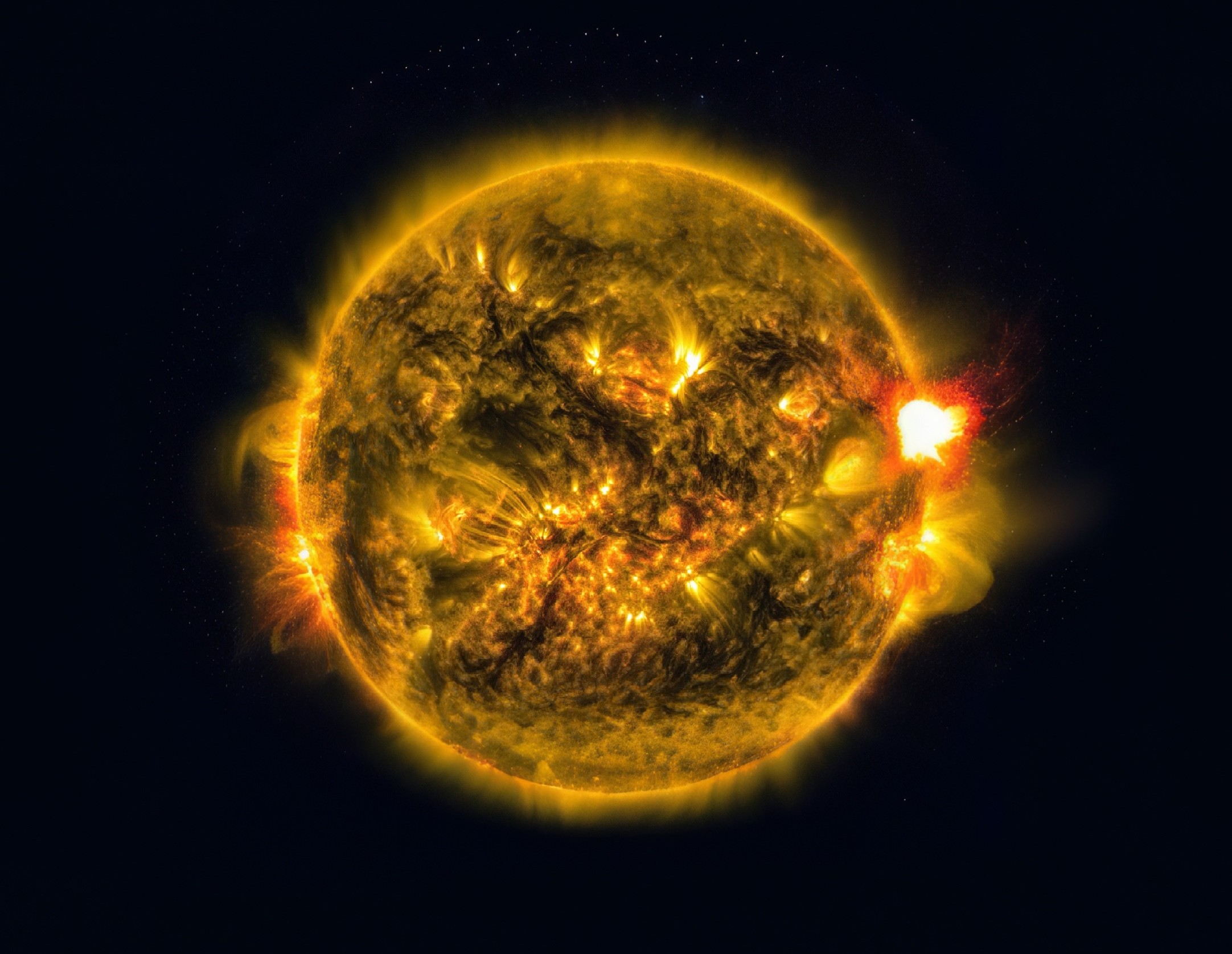
A new study reveals that during solar flares, ions are significantly hotter than electrons—about 6.5 times hotter—explaining long-standing spectral line broadening mysteries and impacting space weather understanding. This insight suggests that ions' higher temperatures, especially during the flare's early stages, play a crucial role in flare dynamics and observations.

Scientists Unveil New Techniques to Detect and Predict Violent Solar Winds Threatening Earth
science-and-technology7 months ago

Scientists Unveil New Techniques to Detect and Predict Violent Solar Winds Threatening Earth

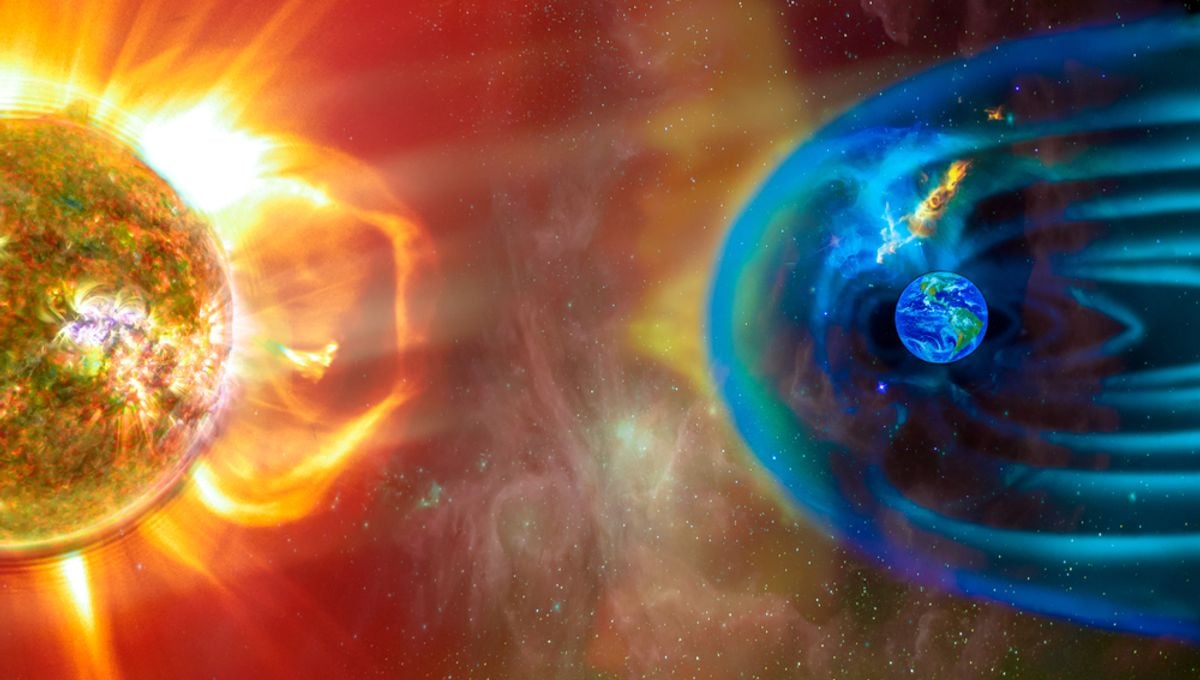
Researchers have developed a new method using soft X-rays and supercomputer simulations to measure the magnetic reconnection rate of solar wind energy into Earth's magnetosphere, which could improve space weather forecasting and protect space infrastructure as human activity expands beyond Earth.

NASA's Parker Probe Detects Magnetic Explosion and Particle Energization Near the Sun
science8 months ago

NASA's Parker Probe Detects Magnetic Explosion and Particle Energization Near the Sun

NASA's Parker Solar Probe has captured detailed measurements of a powerful magnetic explosion, or magnetic reconnection, on the sun's surface, revealing that such events can accelerate particles to much higher energies than previously thought. These findings improve understanding of space weather phenomena that can impact Earth and other planets, especially during active solar cycles.