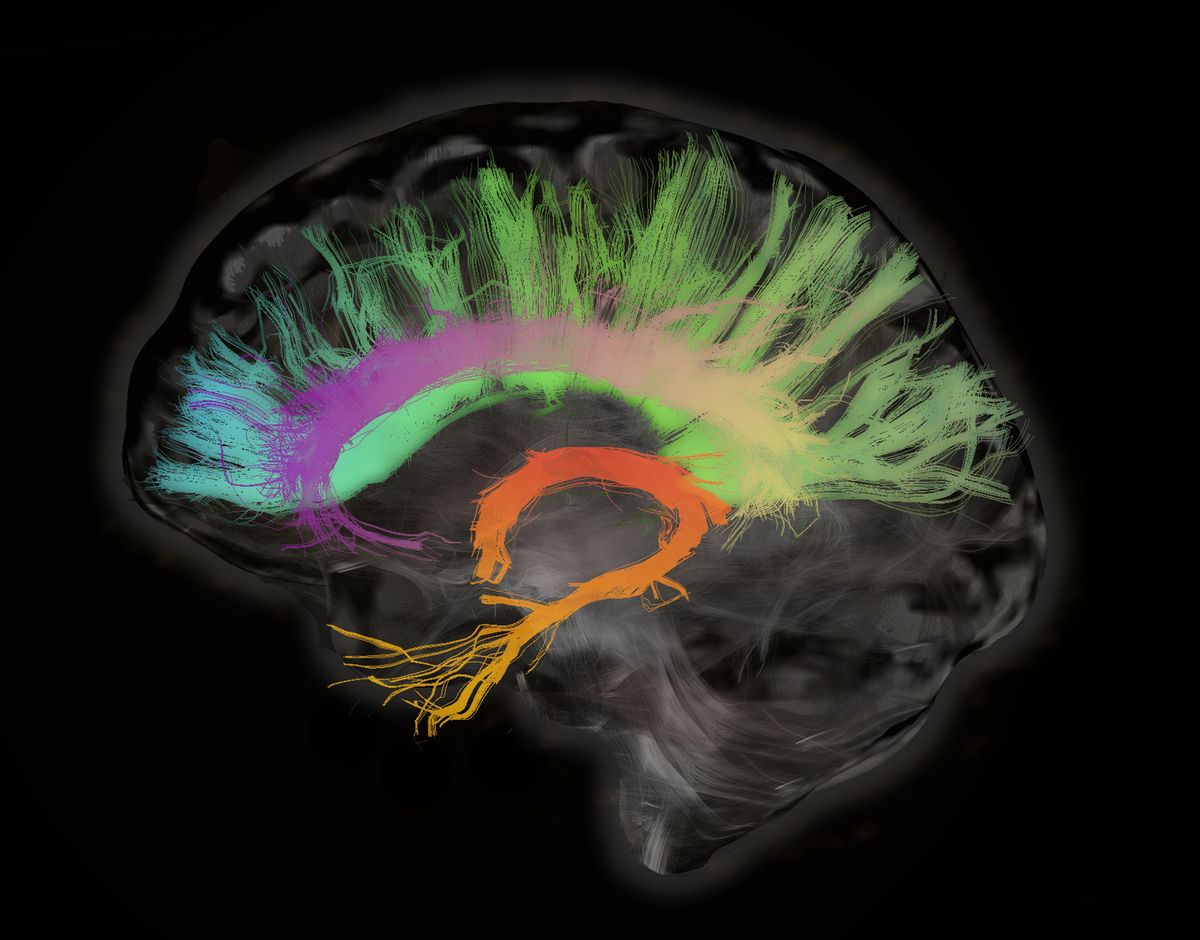
A Rutgers University study reveals how the human brain integrates fast and slow neural signals through white-matter pathways, influencing cognitive performance and linked to genetic and molecular features, with implications for understanding brain disorders.
A 2023 study by UC Santa Barbara researchers found that hormonal fluctuations during the menstrual cycle cause structural changes across the entire brain, including white matter and cortical thickness, suggesting a broader impact of menstruation on brain structure than previously understood.
A study found that preterm infants who received more skin-to-skin contact showed stronger development in brain regions related to emotion and stress regulation, suggesting early caregiving experiences may influence long-term brain health.
A long-term study by Johns Hopkins University has found that individuals with type 2 diabetes experience accelerated brain shrinkage, particularly in white matter, increasing their risk of mild cognitive impairment (MCI) by 41%. The study also highlights a synergistic relationship between diabetes and amyloid plaques, further elevating the risk of cognitive decline. The findings suggest that managing diabetes could reduce the risk of Alzheimer's dementia, emphasizing the importance of targeted interventions for those at risk. The study, which tracked participants over 27 years, was published in JAMA Network.
Women who undergo ovary removal before menopause, especially before age 40, show reduced white matter integrity in their brains later in life, potentially increasing the risk of cognitive impairment and dementia.
A recent study published in Health Data Science reveals that high cumulative body mass index (BMI) is associated with smaller brain volume, larger white matter lesions, and abnormal microstructural integrity, particularly in adults under 45 and over 60. The research emphasizes the importance of maintaining a healthy BMI throughout adulthood for optimal brain health, recommending a BMI below 26.2 for better neurological outcomes. The study utilized neuroimaging data and genetic analysis to establish causal relationships between high BMI and adverse brain health effects, highlighting the need for public health strategies to control BMI for improved neurological outcomes.
A comprehensive analysis of previous research has found significant differences in the brain's white matter between regular cannabis users and non-users. The study, which reviewed 30 studies involving 2,898 participants, revealed that cannabis users generally showed lower integrity in the superior longitudinal fasciculus, a key nerve bundle associated with executive functions, and higher mean diffusivity in the corpus callosum, which connects the brain's two hemispheres. These changes were more pronounced in those who started using cannabis at a younger age and for longer periods. However, the research also highlighted the need for more standardized methods of measuring cannabis use and longitudinal studies to better understand the impact of cannabis on the brain's white matter.
A study conducted by researchers at the University of California, Santa Barbara suggests that hormones fluctuating throughout the menstrual cycle may lead to changes in the brain's structure. The study examined the brain structure of 30 women throughout their menstrual cycles and found that these changes correlated with fluctuations in four hormones. While the impact of these brain changes on cognition or the risk of brain diseases is still unknown, the research highlights the effects of menstrual cycle hormones on the brain and emphasizes the need for more studies focused on people who menstruate.
Scientists have discovered brain signals in the white matter of the brain, which is primarily made up of axons that connect brain cells. These signals, known as blood oxygenation-level dependent (BOLD) signals, were observed to increase during different tasks, but the cause and significance of this increase are still unknown. The researchers hope that further understanding of these white matter brain signals will help in addressing health issues such as Alzheimer's disease and epilepsy.
Researchers at Vanderbilt University have discovered a powerful and unexplained signal in the white matter of the human brain. Using functional magnetic resonance imaging (fMRI), the team observed increased blood oxygenation-level dependent (BOLD) signals in the white matter when individuals performed tasks. This finding challenges the traditional focus on gray matter and suggests that white matter plays a crucial role in brain disorders such as epilepsy and multiple sclerosis. Further investigation is needed to understand the biological underpinnings of these changes and their implications for brain function.
A groundbreaking study conducted by researchers at Vanderbilt University has used functional magnetic resonance imaging (fMRI) to detect significant brain activity in white matter, challenging the conventional focus on gray matter. The study observed increased blood oxygenation-level dependent (BOLD) signals in white matter when subjects performed tasks, suggesting the potential importance of white matter in understanding various brain disorders. The researchers aim to further investigate these white matter signals and their biological basis, as well as their implications for brain function and connectivity.
Scientists at Vanderbilt University have used functional magnetic resonance imaging (fMRI) to detect blood oxygenation-level dependent (BOLD) signals in the white matter of the brain. They found that when individuals performed tasks during brain scans, BOLD signals increased in white matter throughout the brain. This discovery challenges the historical focus on gray matter and suggests that white matter plays a significant role in brain activity. Further research will explore the implications for brain disorders and investigate the biological basis for these changes.
Higher prenatal exposure to certain phthalates, commonly found in commercial products, has been linked to reduced gray matter in children's brains by age 10 and decreased IQ levels at age 14. The study found that alterations in gray matter volumes partially explain the connection between phthalate exposure and lower IQ. Additionally, prenatal exposure was associated with decreased white matter volumes in female children. The widespread exposure to phthalates and lax regulations raise significant public health concerns.
A study conducted on mice by Stanford scientists has identified significant molecular changes in the white matter of aging brains, which is responsible for transmitting brain signals. The research also found that plasma from young mice could potentially slow age-related cognitive decline. These findings provide insights into normal brain aging and neurodegenerative diseases such as Alzheimer's and Parkinson's. The study examined gene expression in different regions of the mouse brain and identified 82 genes that vary in concentration with age. The researchers also explored interventions such as caloric restriction and plasma injections to protect against age-related gene expression shifts. This study could lead to new treatments and interventions for neurodegenerative diseases and age-related cognitive decline.
Growing up in poverty may impact a child’s brain development, specifically in the white matter tracts which facilitate communication between different brain regions. The research, part of the large-scale Adolescent Brain Cognitive Development Study, links neighborhood and household poverty to these crucial aspects of brain structure. This association appears to be partially mediated by childhood obesity and lower cognitive function, both more prevalent in children living in poverty.