Tag

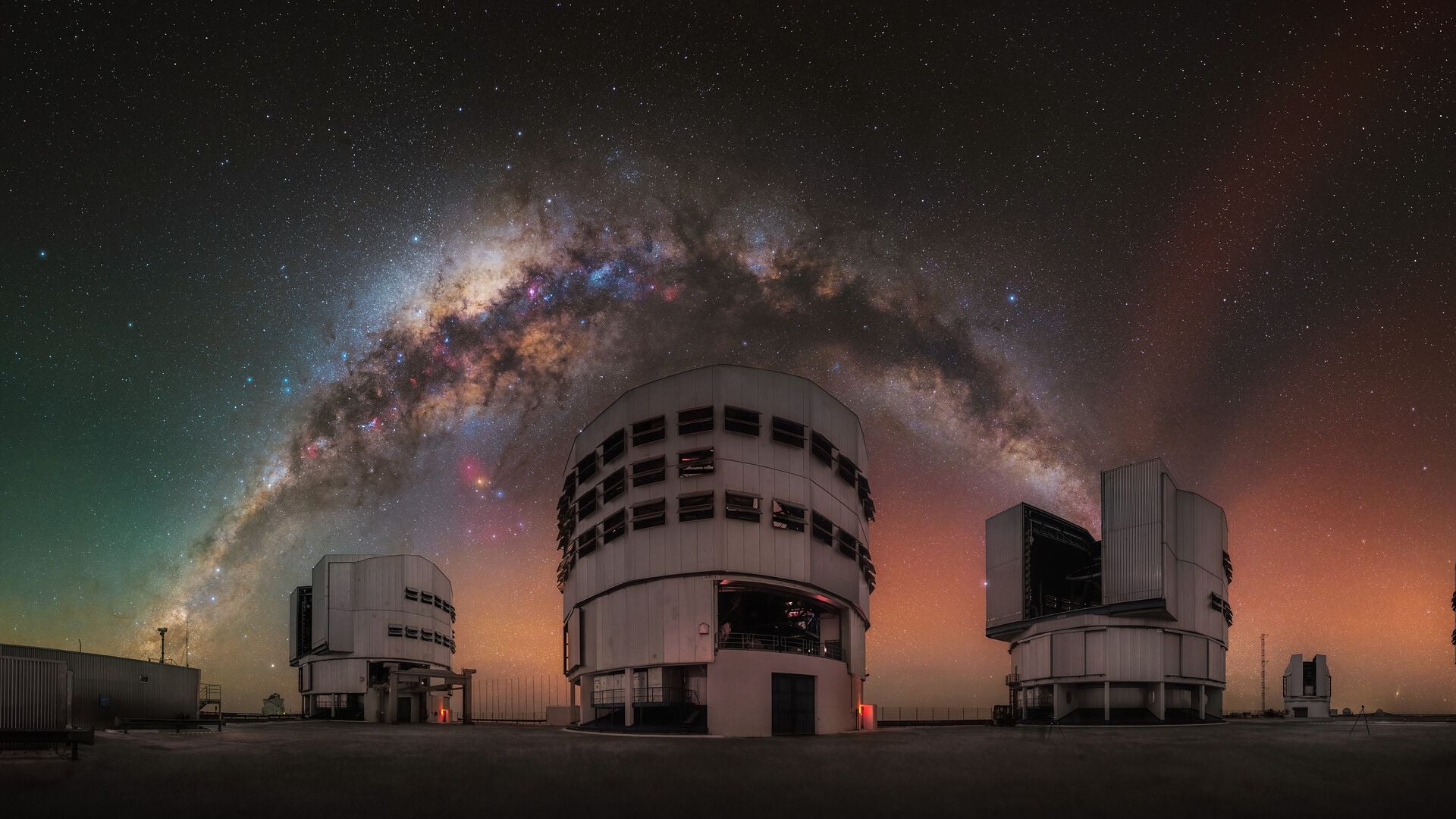
Very Large Telescope

All articles tagged with #very large telescope

science1 year ago

First-Ever Close-Up of Dying Star Beyond Our Galaxy Captured

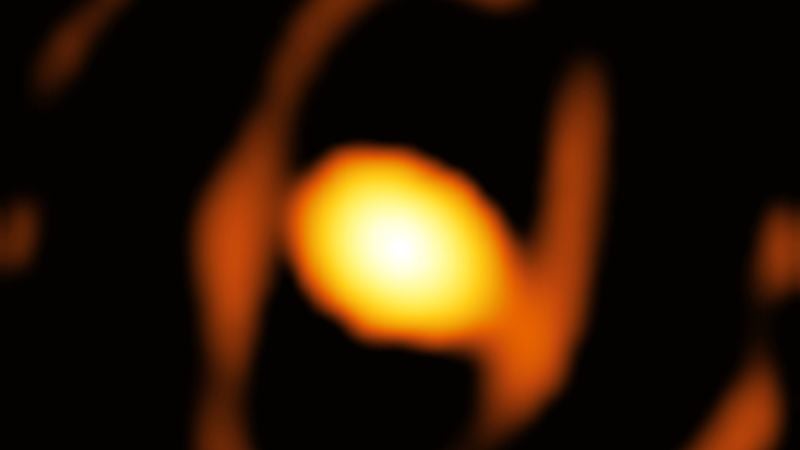
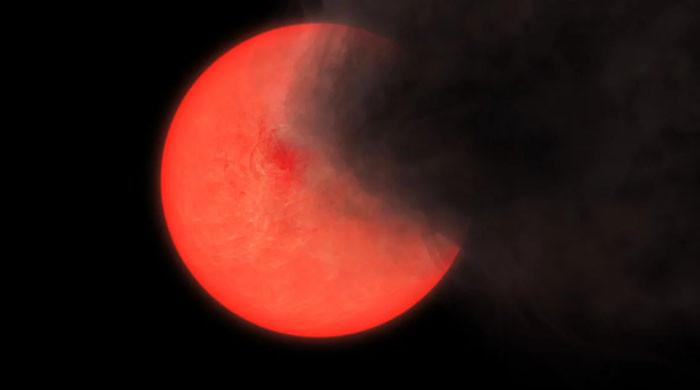
Astronomers have captured the first close-up image of the red supergiant star WOH G64, located 160,000 light-years away in the Large Magellanic Cloud, as it nears the end of its life. Using the Very Large Telescope Interferometer, researchers observed the star shedding gas and dust, forming an egg-shaped cocoon, a precursor to a supernova explosion. This discovery offers a rare glimpse into the life cycle of massive stars, with WOH G64 being one of the largest known, potentially visible to the naked eye if it explodes.

science1 year ago

5 Captivating Galaxy Images Reveal Cosmic Evolution

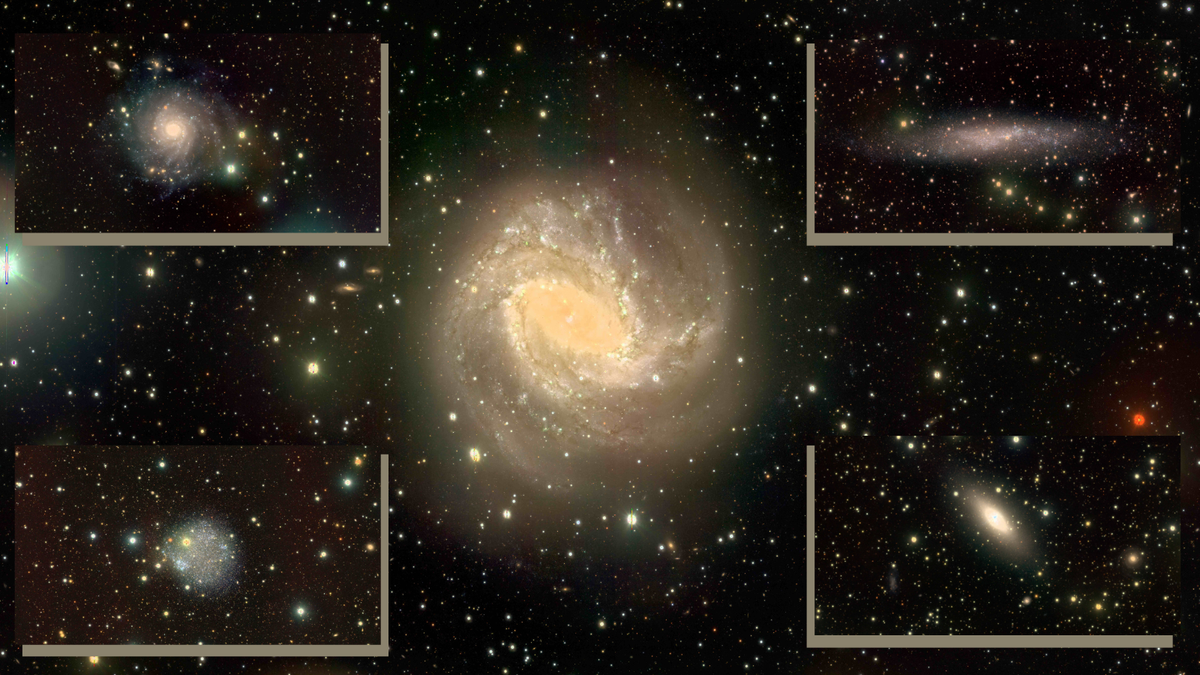
Astronomers using the Very Large Telescope in Chile have captured detailed images of five local galaxies, revealing their structures and star distributions. These observations, part of the VST-SMASH project, aim to enhance understanding of cosmic evolution and galaxy formation. The images, which include galaxies like IC 5332 and the Southern Pinwheel, are also being studied alongside data from the Euclid space telescope. The project highlights the VLT's capability in observing galaxies with low surface brightness and contributes to the study of galactic interactions and cosmic structure formation.

astronomy1 year ago

"Unveiling Planet Formation: Stunning Images and Groundbreaking Survey Capture Birth of Worlds"

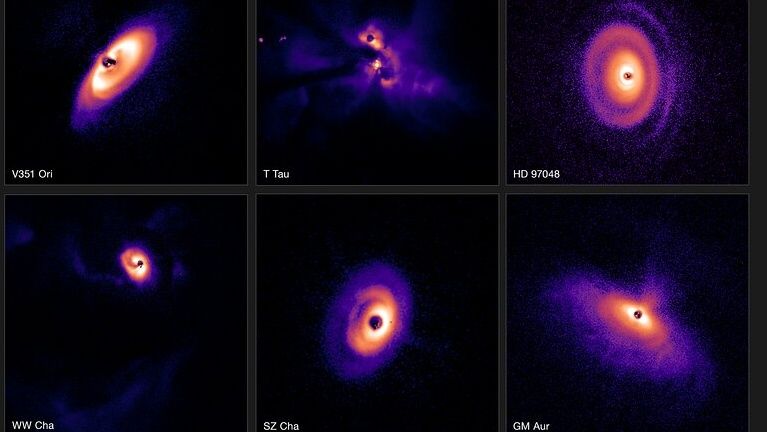
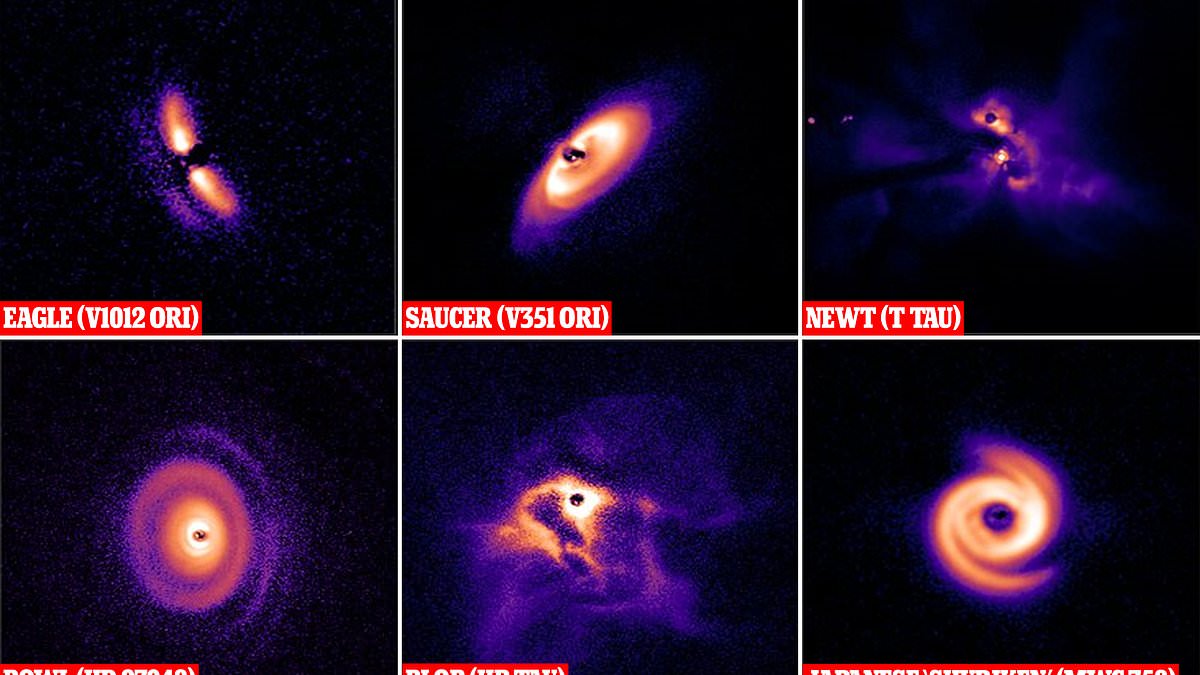
The Very Large Telescope in Chile has captured stunning images revealing unique insights into planet formation around young stars, showcasing emerging planet systems that resemble miniature galaxies rather than debris disks. These images, one of the largest collections of its kind, frame over 80 young stars and their planet-forming disks in three major star-forming regions of the Milky Way galaxy. The observations present a shift in the field of study, offering astronomers a unique opportunity to study how planets are born and revealing a wide variety of planet-forming disks with significant differences based on their respective star-forming regions. The researchers hope to obtain more detailed images with the new Extremely Large Telescope in the future.

astronomy1 year ago

"Revealing the Weird and Wonderful Ways Planets Form in Galactic Nurseries"

Stunning new images released by the European Southern Observatory's Very Large Telescope reveal the incredible variety of planet-forming discs surrounding young stars in the Milky Way, with swirling rings of gas and dust resembling bizarre objects like an eagle spreading its wings or a Japanese 'shuriken' throwing weapon. These planet-forming or 'protoplanetary' discs, located hundreds of light-years away, represent one of the largest surveys of their kind and show extraordinary diversity, with some appearing as perfect circles and others as asymmetrical blobs. The images, captured in infrared light, provide fascinating insights into star systems and suggest the possibility of massive planets embedded within the discs, potentially causing them to warp and become misaligned.

astronomy1 year ago

"Unveiling the Universe's Most Voracious and Dazzling Black Hole"

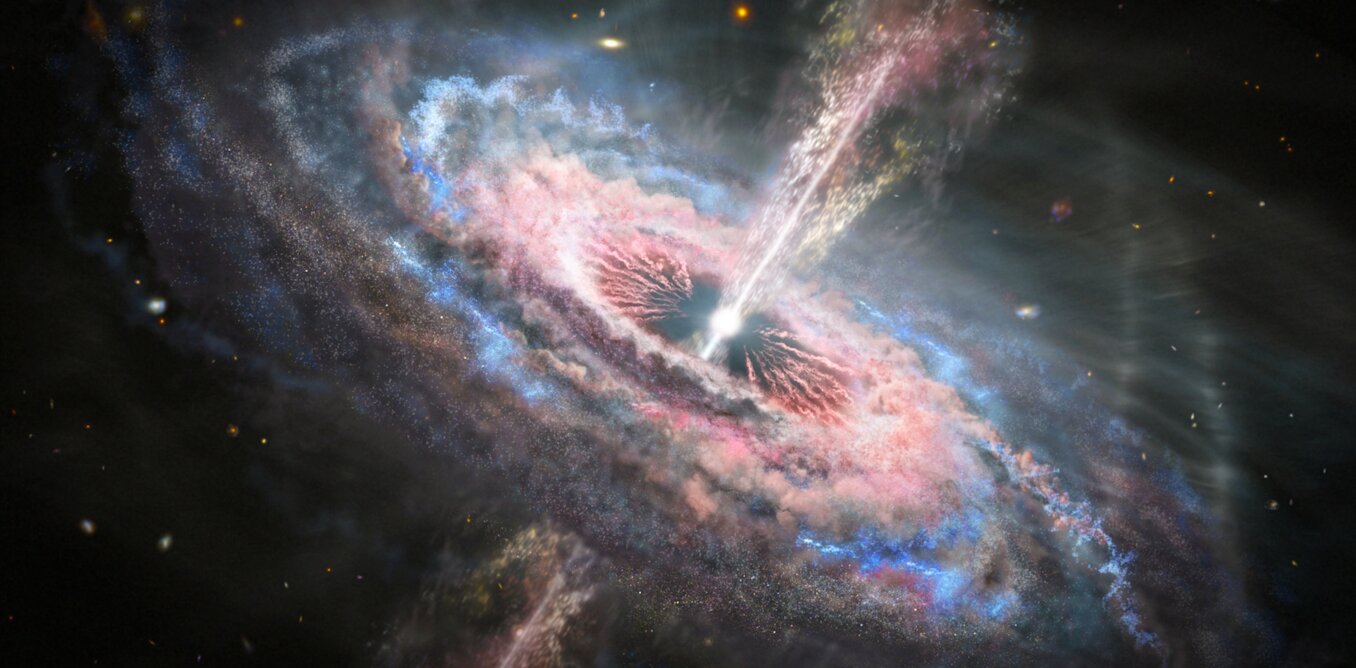
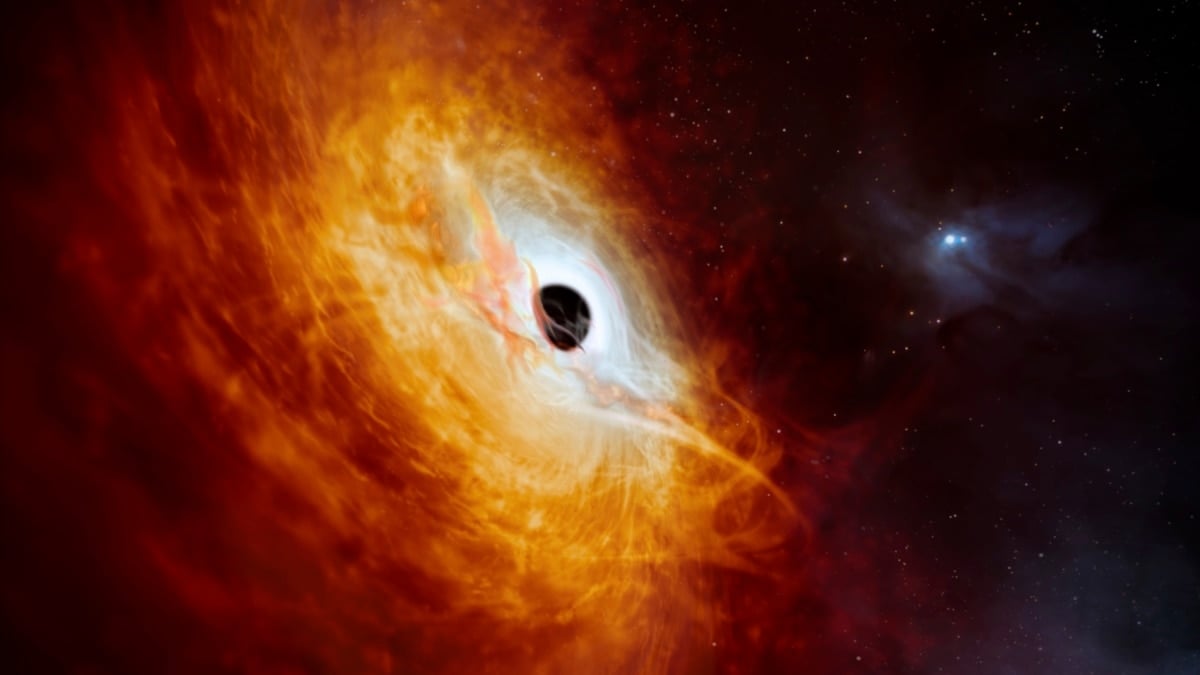
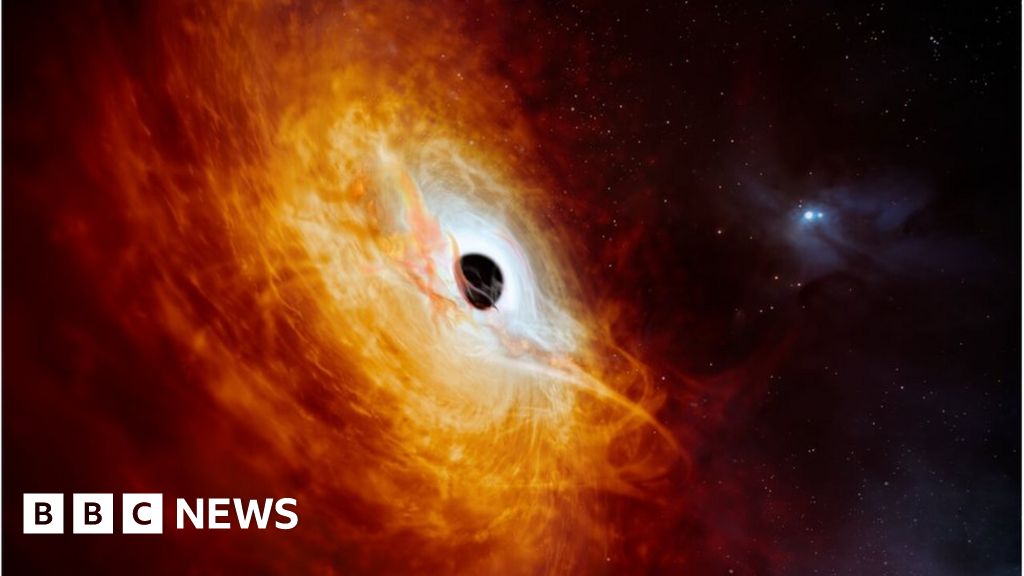
The European Southern Observatory's Very Large Telescope has discovered the brightest and fastest-growing quasar, challenging current understanding of galaxy formation in the early universe. The quasar, J0529-4351, has a black hole equivalent to 17 billion suns and is growing rapidly, raising questions about how it could have reached such size in less than two billion years after the Big Bang. This discovery prompts a reevaluation of early universe models and will be further studied using advanced instruments like Gravity+ and the Extremely Large Telescope.

astronomy1 year ago

"Unveiling the Brightest Object in the Universe: A 500 Trillion Times Brighter Than the Sun"

Astronomers have possibly discovered the brightest object ever observed in the universe, a distant quasar estimated to be at least 500 trillion times brighter than the sun. The quasar, identified by Australian researchers using the Very Large Telescope and Siding Spring Observatory, is powered by a supermassive black hole more than 17 billion times larger than our sun and is located about 12 billion light years away. The finding, reported in Nature Astronomy, could provide important insights into the early universe and the growth of supermassive black holes.

astronomy1 year ago

"Stunning Photo Captured by Very Large Telescope Reveals Milky Way's Star-Studded Core"

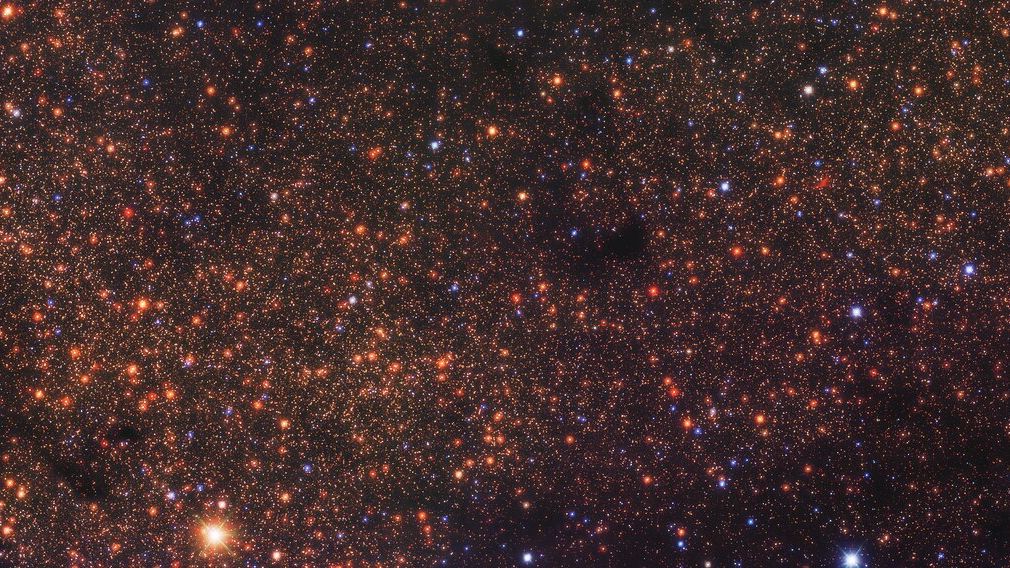
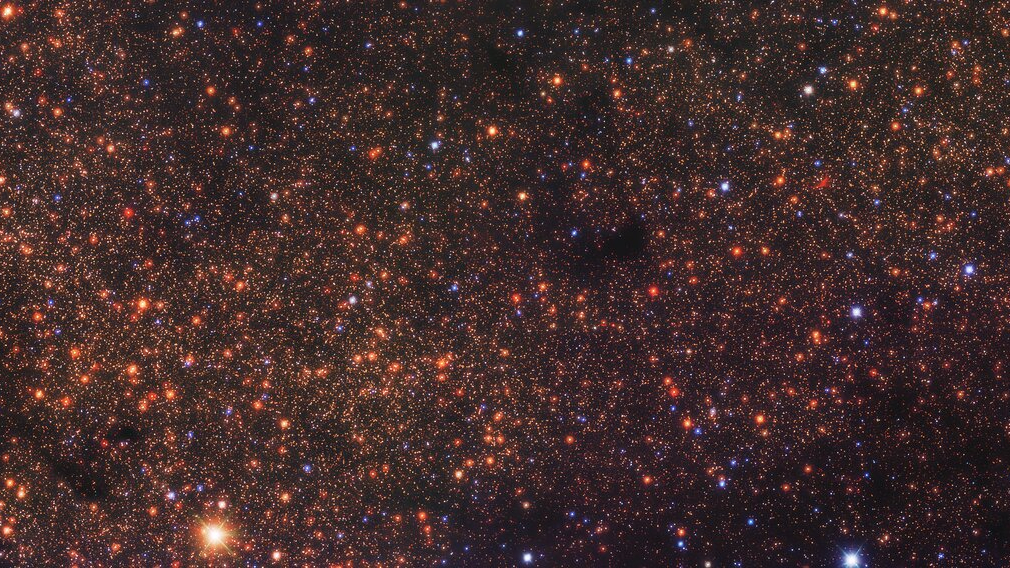
The European Southern Observatory's Very Large Telescope captured an infrared image of Sagittarius C, a star-forming region at the center of the Milky Way, revealing a densely packed population of stars. This region, located near the galactic center, is believed to be a prolific stellar nursery, with evidence suggesting the presence of many more young stars than currently observed. The VLT data indicates that Sagittarius C is rich in young stars, making it a promising candidate for hosting newly formed stars and providing astronomers with new regions to search for obscured young stars.

astronomy1 year ago

"Stunning Photo Captured by Very Large Telescope Reveals Milky Way's Star-Studded Core"

The European Southern Observatory's Very Large Telescope has captured a stunning infrared image of the star-forming region Sagittarius C at the center of the Milky Way, revealing thousands of distant stars. This region, located near the galaxy's central supermassive black hole, is believed to be a prolific stellar nursery, with evidence suggesting the presence of many more young stars than currently observed. Using the HAWK-I infrared camera, astronomers were able to peer through clouds of dust and gas to uncover the densely packed star population of Sagittarius C, making it a promising candidate for hosting newly formed stars.

astronomy1 year ago

"Discovery: Universe's Brightest Quasar Powered by Black Hole Eating a Sun a Day"

Scientists have discovered the most luminous object ever detected in the distant Universe, a quasar known as J0529-4351, powered by a supermassive black hole 17 billion times the mass of the Sun. This black hole has a voracious appetite, consuming the mass equivalent to one Sun every day, and its energy emission makes it over 500 trillion times more luminous than the Sun. The discovery, confirmed by observations from the Very Large Telescope in Chile, has astonished scientists, who say the quasar's emission has taken 12 billion years to reach Earth and that its hot accretion disc measures seven light-years in diameter, making it the largest in the Universe.

astronomy1 year ago

"Discovery of Oldest and Strange New Stars in Milky Way Galaxy"

Astronomers have discovered a new type of star, known as "old smokers," near the center of the Milky Way galaxy after a 10-year study. These stars, which were once hidden, go dormant for decades before ejecting clouds of dust and smoke. Using infrared light, astronomers observed these stars for the first time, with 222 showing discernible variations in brightness, 32 of which were young stars. The discovery may provide insights into the distribution of elements throughout the cosmos.

astronomy2 years ago

Astounding Image Reveals Running Chicken Nebula's Dazzling Appearance

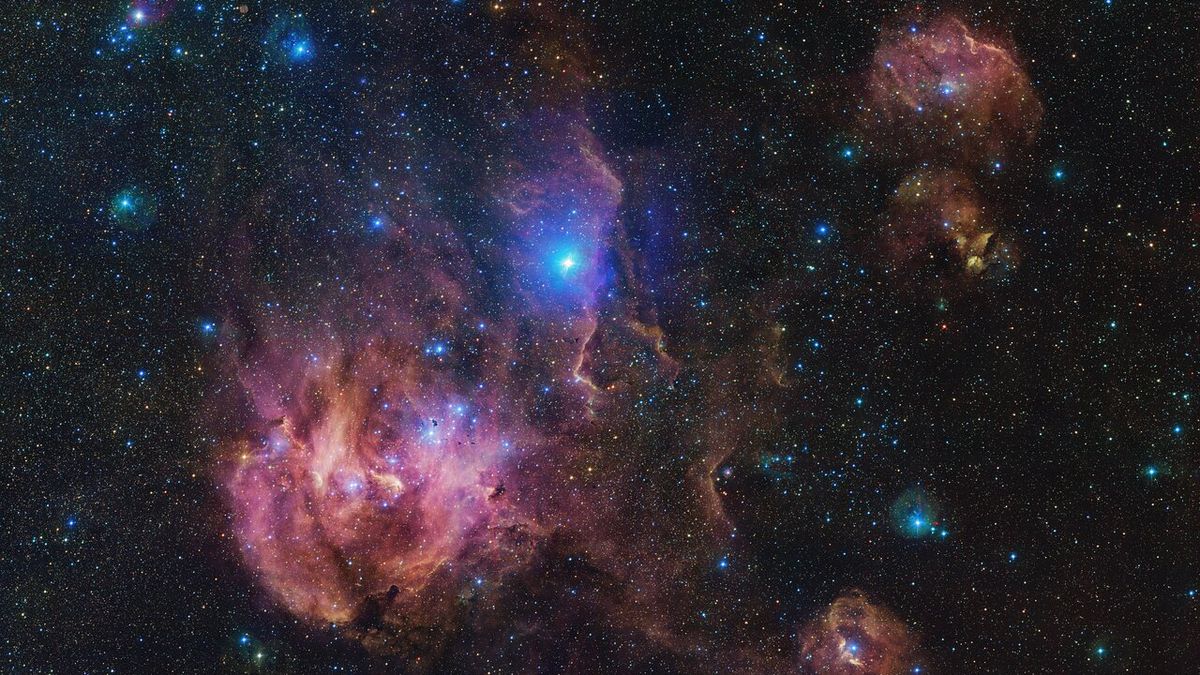
The European Southern Observatory's Very Large Telescope has captured a festive image of the Running Chicken Nebula, also known as IC 2944, resembling a turkey fleeing a cosmic Christmas dinner. The nebula, located 6,500 light-years from Earth, features wispy gas and dust tendrils glowing in red, pink, and orange, with bright blue stars scattered throughout. The image covers a patch of the sky as wide as 25 full moons and showcases various regions of the nebula, including the bright IC 2948, dark Bok globules, and emission nebulas Gum 39, Gum 40, and Gum 41.

astronomy2 years ago

Revolutionary Planet-Hunting Instrument Enhances Very Large Telescope's Capabilities

The High-Resolution Imaging and Spectroscopy of Exoplanets (HiRISE) instrument has been installed on the European Southern Observatory's Very Large Telescope (VLT), enhancing its imaging capabilities for exoplanet research. HiRISE combines the SPHERE imager with the upgraded CRIRES spectrograph, allowing for high-resolution spectroscopy and the characterization of exoplanet atmospheres. This cost-effective upgrade will aid in the study of exoplanet formation, composition, and evolution, and may serve as a pathfinder for future instruments on the Extremely Large Telescopes (ELTs).

astronomy2 years ago

"Groundbreaking Photo Captures Fascinating Solar System Through Massive Telescope"

Scientists using the Very Large Telescope have captured an image of the HIP 81208 star system, revealing a gas giant planet named HIP 81208 Cb. This discovery makes HIP 81208 a unique hierarchical quadruple system with two stars and two smaller bodies orbiting each one. The newly found planet is located at the border between planets and brown dwarfs, and its mass is approximately 15 times that of Jupiter. The image provides a rare direct view of an exoplanet, as most are too distant and small to be imaged.

science-and-astronomy2 years ago

Unexpected Discovery: Exoplanet Unveiled in Complex 3-Body Star System by Powerful Telescope

The Very Large Telescope in Chile has discovered a massive exoplanet orbiting a star in a multi-star system known as HIP 81208. The exoplanet, 15 times the mass of Jupiter, orbits a smaller star that itself orbits a larger star. The system also includes a brown dwarf. This marks the first hierarchical quadruple system found using direct imaging, providing valuable insights into the formation of complex systems.