Tag

Adaptive Optics

All articles tagged with #adaptive optics

science7 months ago

Scientists Capture the Sharpest Images of the Sun's Corona

New high-resolution images of the Sun's corona, achieved through advanced adaptive optics technology, reveal unprecedented fine structures, potentially unlocking answers to longstanding questions like the coronal heating problem and solar eruptions. This breakthrough, led by the National Solar Observatory, enhances ground-based solar observation capabilities and promises to revolutionize solar physics research.

science7 months ago

Revolutionary Adaptive Optics Unveil Sun's Coronal Rain in Stunning Detail

New coronal adaptive optics technology has enabled unprecedented high-resolution images of the sun's corona, revealing fine structures, turbulent flows, and phenomena like coronal rain, which could lead to breakthroughs in understanding solar activity and space weather. The system, installed at the Big Bear Solar Observatory, corrects atmospheric turbulence, allowing for detailed observation of the sun's outer atmosphere and promising future applications at larger telescopes.

science-and-technology1 year ago

"25 Years of Innovation: The Rise of Mega-Telescopes"

Over the past 25 years, advancements in lightweight mirror technology and segmented mirrors have led to the construction of mega-telescopes, significantly enhancing our ability to explore the universe. These telescopes, such as the Keck Observatory and the Very Large Telescope, have enabled groundbreaking discoveries, including the confirmation of a supermassive black hole at the center of the Milky Way and the first direct image of an exoplanet. Future projects like the Extremely Large Telescope aim to further our understanding, although challenges such as climate change and satellite constellations pose potential threats to ground-based astronomy.

neuroscience1 year ago

Uncovering Rare Cells: Key to Color Perception

Researchers at the University of Rochester used adaptive optics to identify rare retinal ganglion cells (RGCs) in the human fovea, challenging existing theories of color perception based on three types of cone photoreceptors. These non-cardinal RGCs may play a role in creating more nuanced color perception, potentially leading to advanced vision restoration techniques and improved retinal prosthetic designs. The study received support from prestigious institutions and could have a significant impact on vision science.

healthtech1 year ago

"Revolutionizing Retinal Imaging: AI Speeds Up Process 100-Fold"

Researchers at the National Institutes of Health have utilized artificial intelligence (AI) to significantly improve the speed and quality of retinal imaging, making it 100 times faster and enhancing image contrast 3.5-fold. By integrating AI with adaptive optics optical coherence tomography (OCT), the new method, called parallel discriminator generative adverbial network (P-GAN), successfully de-speckles retinal pigment epithelium (RPE) images, providing a better tool for evaluating age-related macular degeneration and other retinal diseases. This advancement is expected to make AO imaging more accessible for routine clinical applications and studies aimed at understanding blinding retinal diseases.

astronomy1 year ago

"Adapting to Earth's Atmosphere: Ground-Based Astronomers' Techniques"

Ground-based astronomers are overcoming Earth's atmosphere by using large, powerful telescopes placed in optimal locations and employing adaptive optics. Adaptive optics systems compensate for atmospheric distortion by creating artificial guide stars and using deformable mirrors to un-distort incoming light. This technology has allowed ground-based telescopes to outperform space-based telescopes in imaging quality, making ground-based astronomy a cost-effective and superior option for high-quality astronomical imaging.

science-and-technology1 year ago

"Novel Technique for Distortion-Free Manipulation of Structured Light Developed by Researchers"

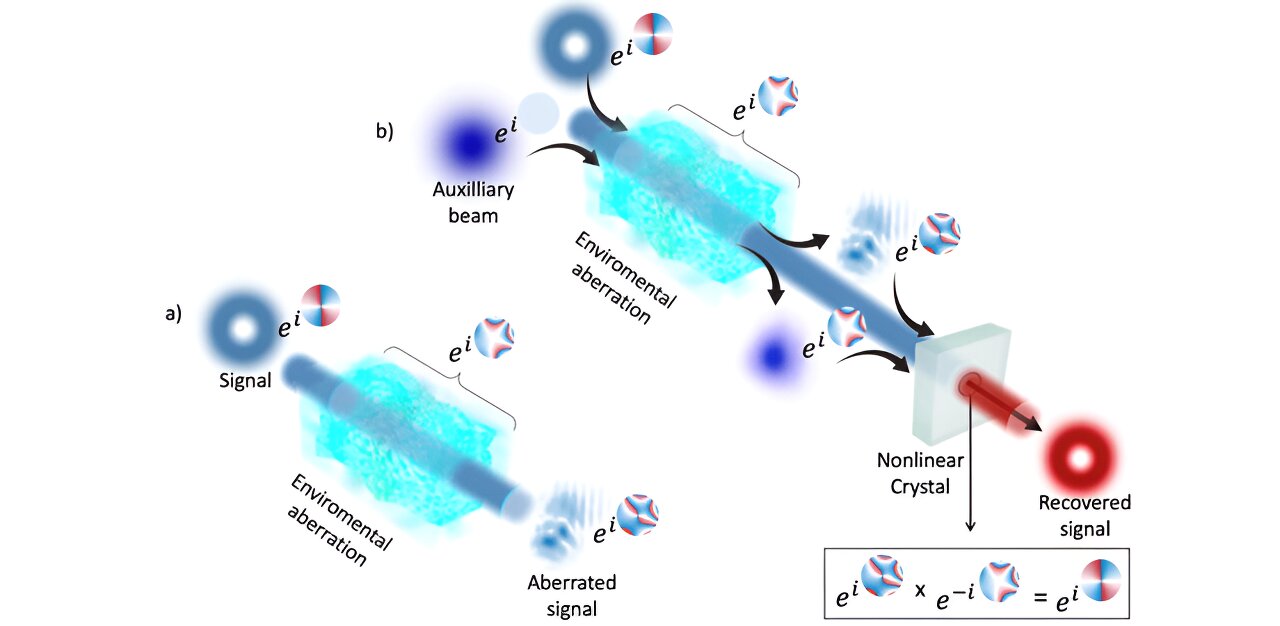
Researchers have developed a method to correct aberrated light coming out of a noisy environment by pairing it with another unstructured beam of light that experienced the same aberration. Using difference frequency generation in a nonlinear crystal, the structured beam is automatically restored without the need for knowledge of the aberration, enabling a nonlinear form of adaptive optics that works at the speed of light. This breakthrough has the potential to be integrated into systems for diverse applications, such as communications, imaging, and optical trapping, and also allows for communication and detection with different wavelengths.

astronomy1 year ago

"Astronomers Create 'Artificial Star' in Hawaii for Space Photo of the Week"

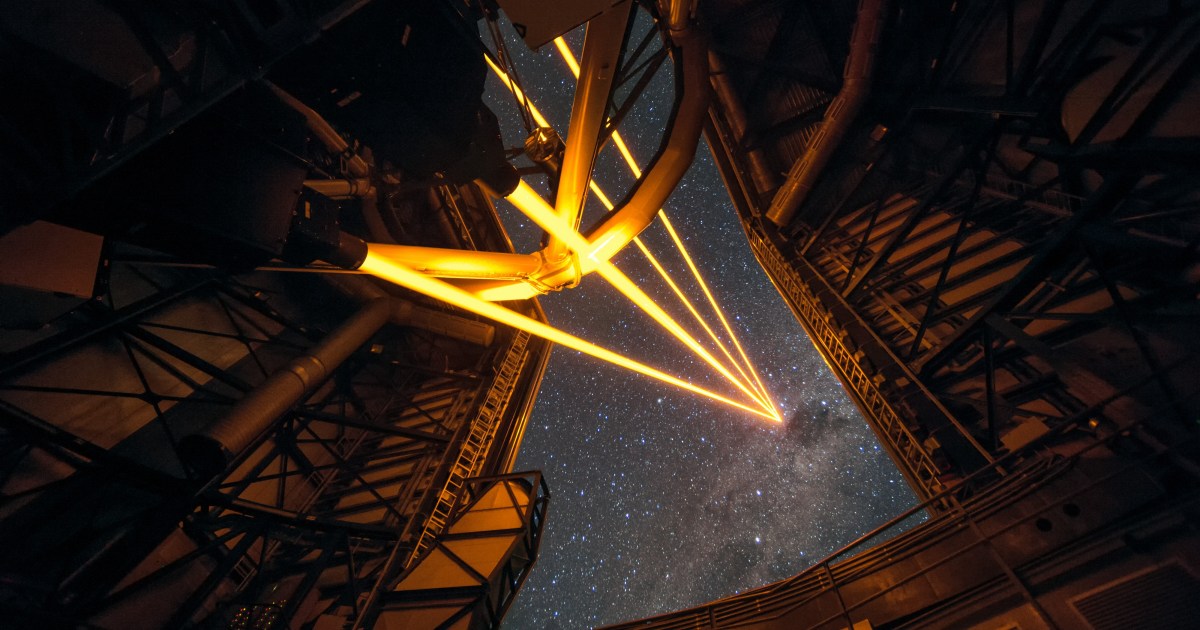
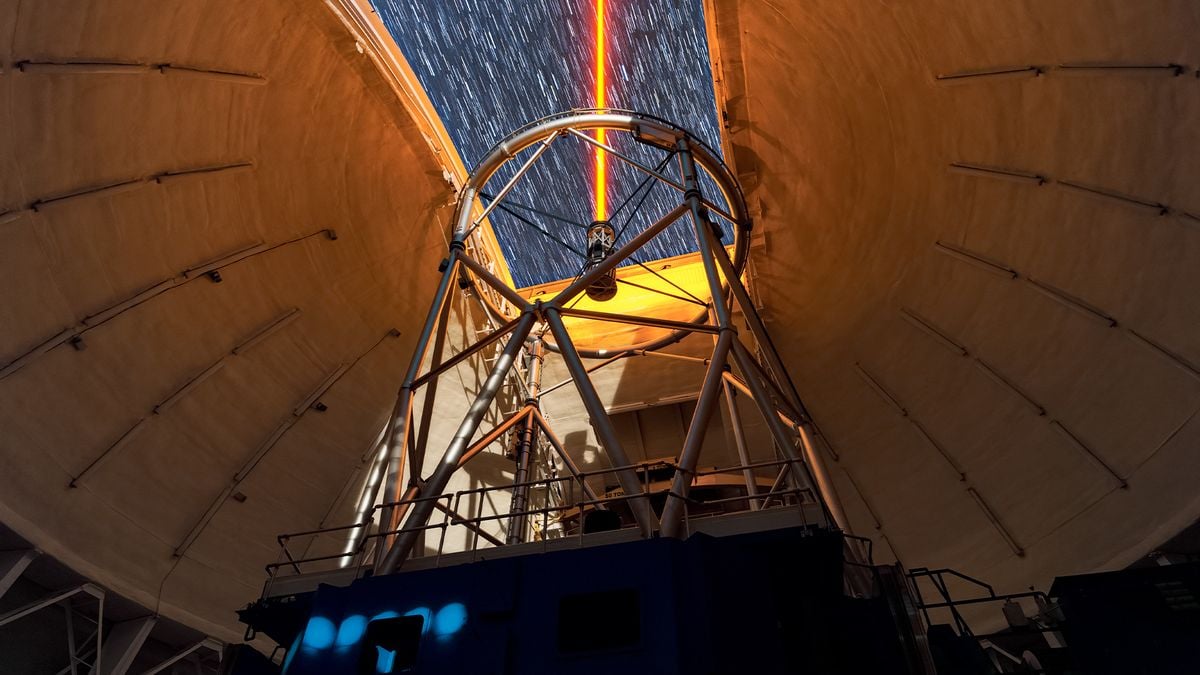
Astronomers at the Gemini North telescope in Hawaii are using adaptive optics and a yellow laser to create an "artificial star" in the Earth's atmosphere, allowing the telescope to correct for the distortions caused by atmospheric turbulence. This technology enables ground-based telescopes to achieve resolutions comparable to space-based telescopes like the Hubble and James Webb Space Telescope, potentially leading to higher-resolution images of stars, planets, and galaxies, as well as the direct imaging of exoplanets.

science-and-technology2 years ago

"Revolutionizing Space Exploration: Deformable Mirrors Unveil Earth-Sized Worlds"

Next-generation space telescopes, such as the James Webb Space Telescope and ground-based arrays like the Extremely Large Telescope (ELT), are incorporating deformable mirrors (DMs) to directly image exoplanets and study their atmospheres. DMs can correct for imperfections in the telescope and remove starlight contamination, allowing for the detection and characterization of smaller rocky exoplanets. NASA is actively developing DM technology through its Deformable Mirror Technology project, with plans to demonstrate their effectiveness on the Nancy Grace Roman Space Telescope in 2027. The lessons learned will contribute to the development of DMs for the proposed Habitable Worlds Observatory (HabEx) mission, which aims to directly image planetary systems around Sun-like stars.

science-and-technology2 years ago

$2 Billion Telescope Equipped with Large Earth Finder for Astronomical Discoveries.

The Giant Magellan Telescope, one of the world's largest ground-based telescopes, is being built to image planets in other star systems to see if they are Earth-like and habitable. Equipped with a "Large Earth Finder" and "Near-Infrared Spectrograph," it will be able to directly image exoplanets and take spectra of their atmospheres to look for biosignatures. The telescope will have the widest field of view and best image quality of any extremely large telescope, and will work in conjunction with the James Webb Space Telescope and the Vera Rubin Observatory to extend a golden age of space and ground-based observing.

science-and-technology2 years ago

Revolutionary Membrane Mirrors Transform Space Telescope Astronomy.

Researchers at Max Planck Institute for Extraterrestrial Physics have developed a new method to produce and shape large, high-quality mirrors that are significantly thinner than the primary mirrors traditionally employed in space telescopes. The mirrors are lightweight and flexible enough to be rolled up and packed efficiently within a spacecraft during launch. The researchers created the mirrors by using chemical vapor deposition to grow membrane mirrors on a rotating liquid inside a vacuum chamber. The new membrane-based mirrors could also be used in adaptive optics systems.

astronomy2 years ago

Revolutionary Membrane Mirrors for Space Telescopes

Researchers have developed a new method to produce and shape large, high-quality mirrors that are much thinner than the primary mirrors previously used for telescopes deployed in space. The mirrors are flexible enough to be rolled up and stored compactly inside a launch vehicle. The researchers used chemical vapor deposition to grow membrane mirrors on a rotating liquid inside a vacuum chamber, which allowed them to form parabolic thin membranes that can be used as the primary mirror of a telescope once coated with a reflecting surface such as aluminum. The new membrane-based mirrors could also be used in adaptive optics systems.