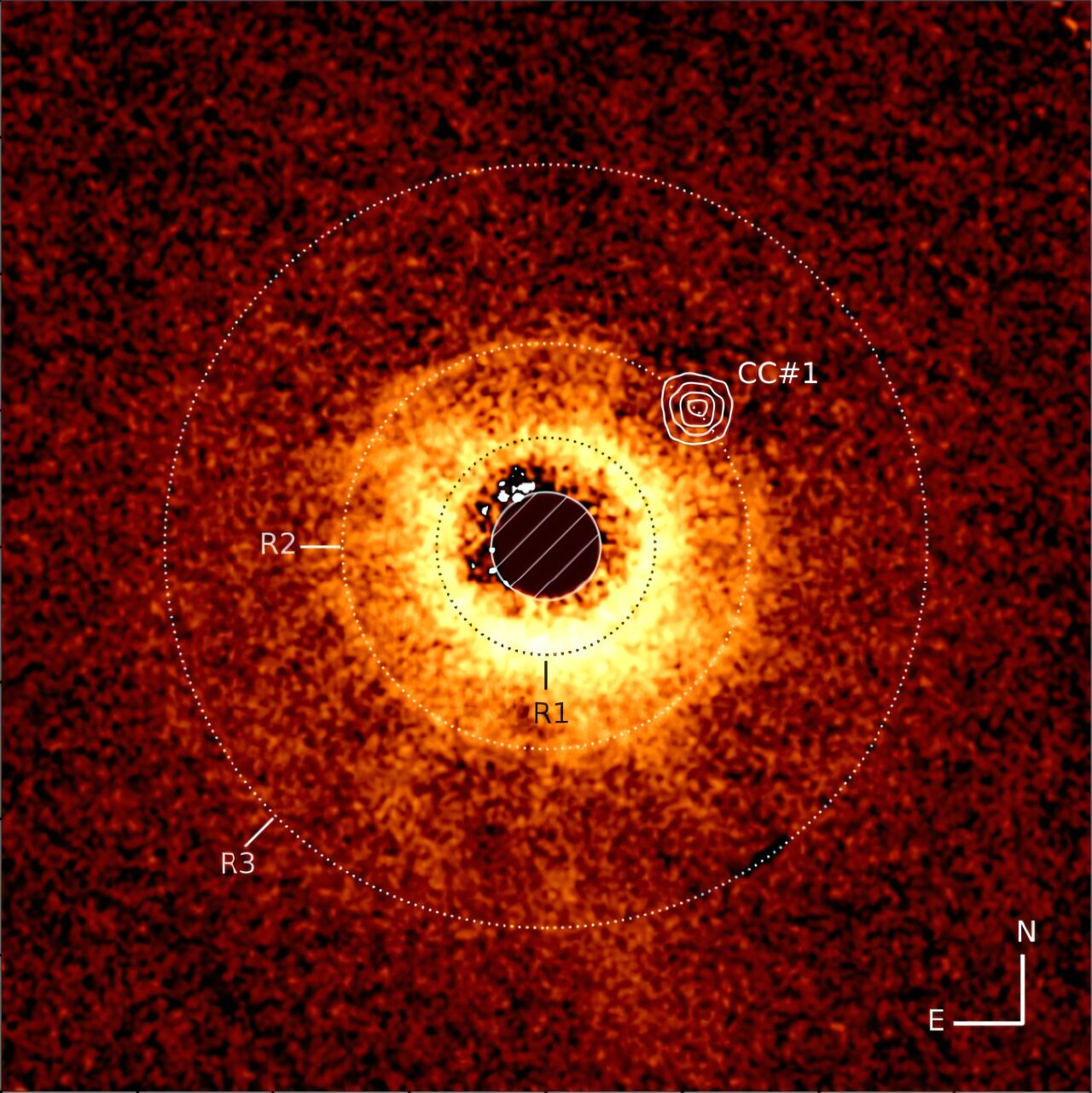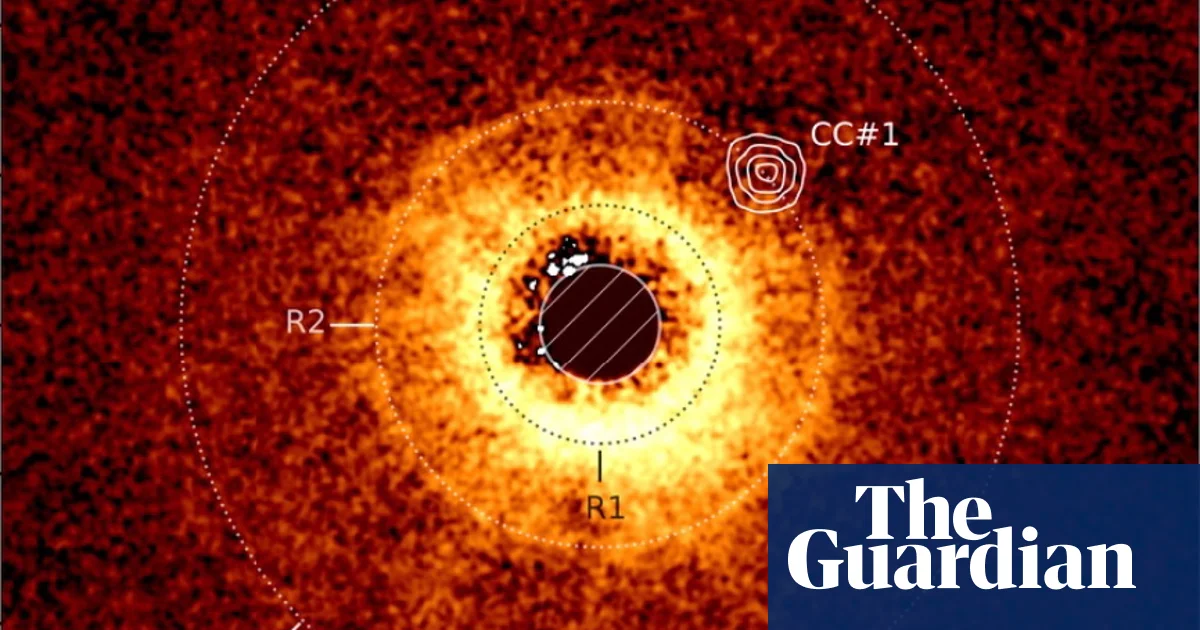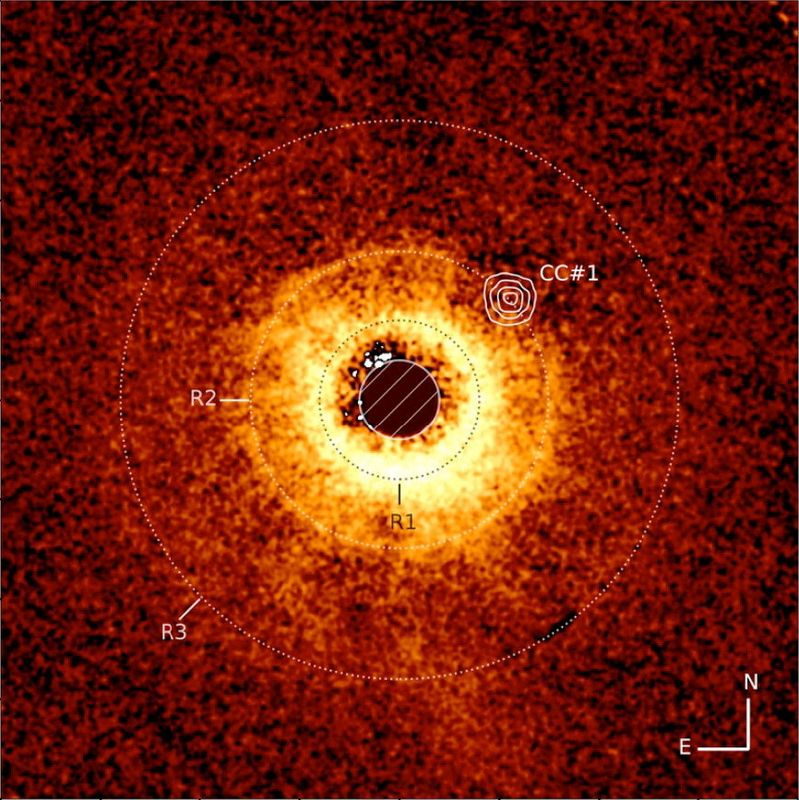
The James Webb Space Telescope has directly imaged its first exoplanet, TWA 7b, a Saturn-mass planet about 100 light-years away, marking a major milestone in astronomy by demonstrating advanced capabilities in direct imaging and opening new avenues for studying planetary formation and the potential for habitable worlds.
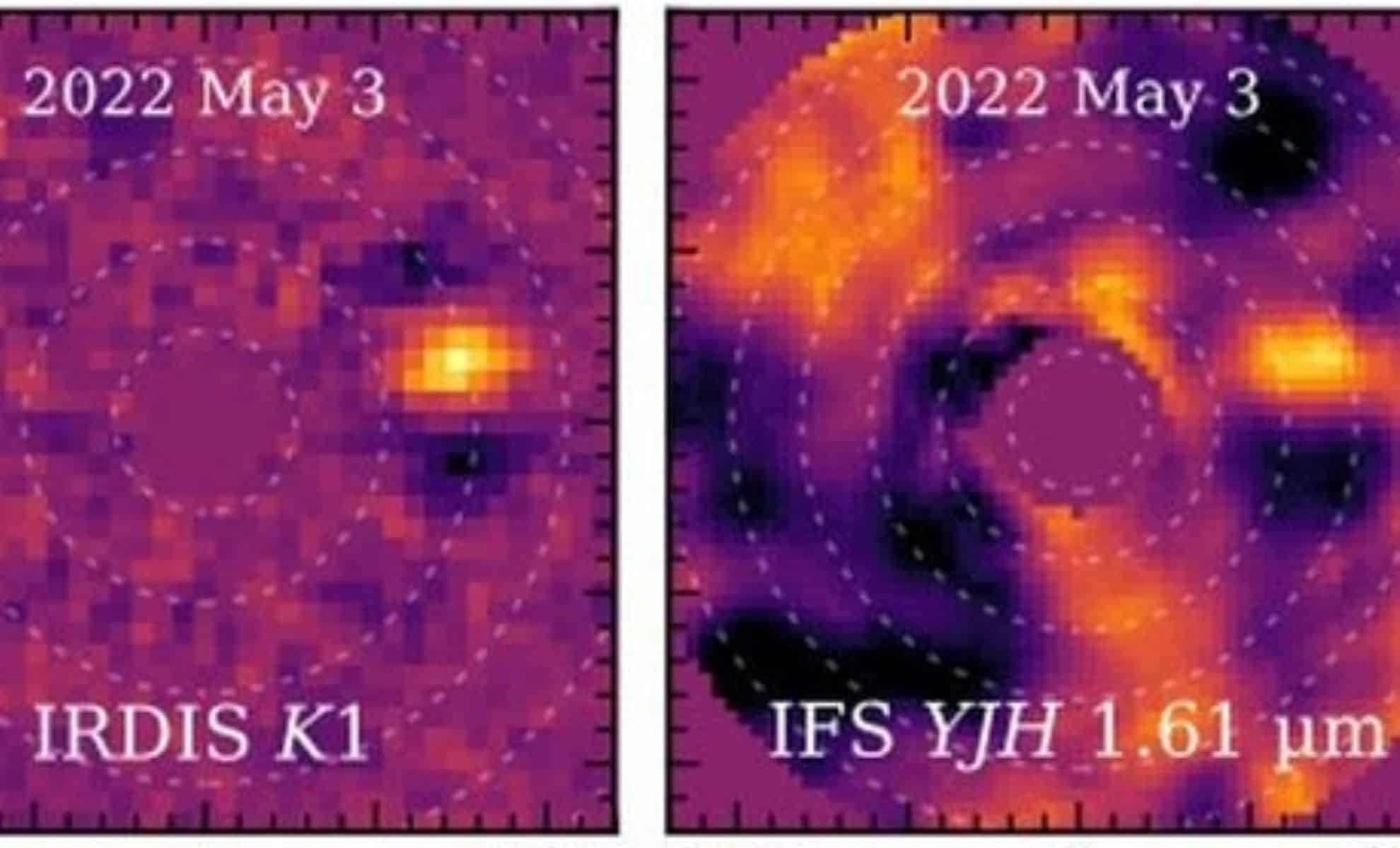
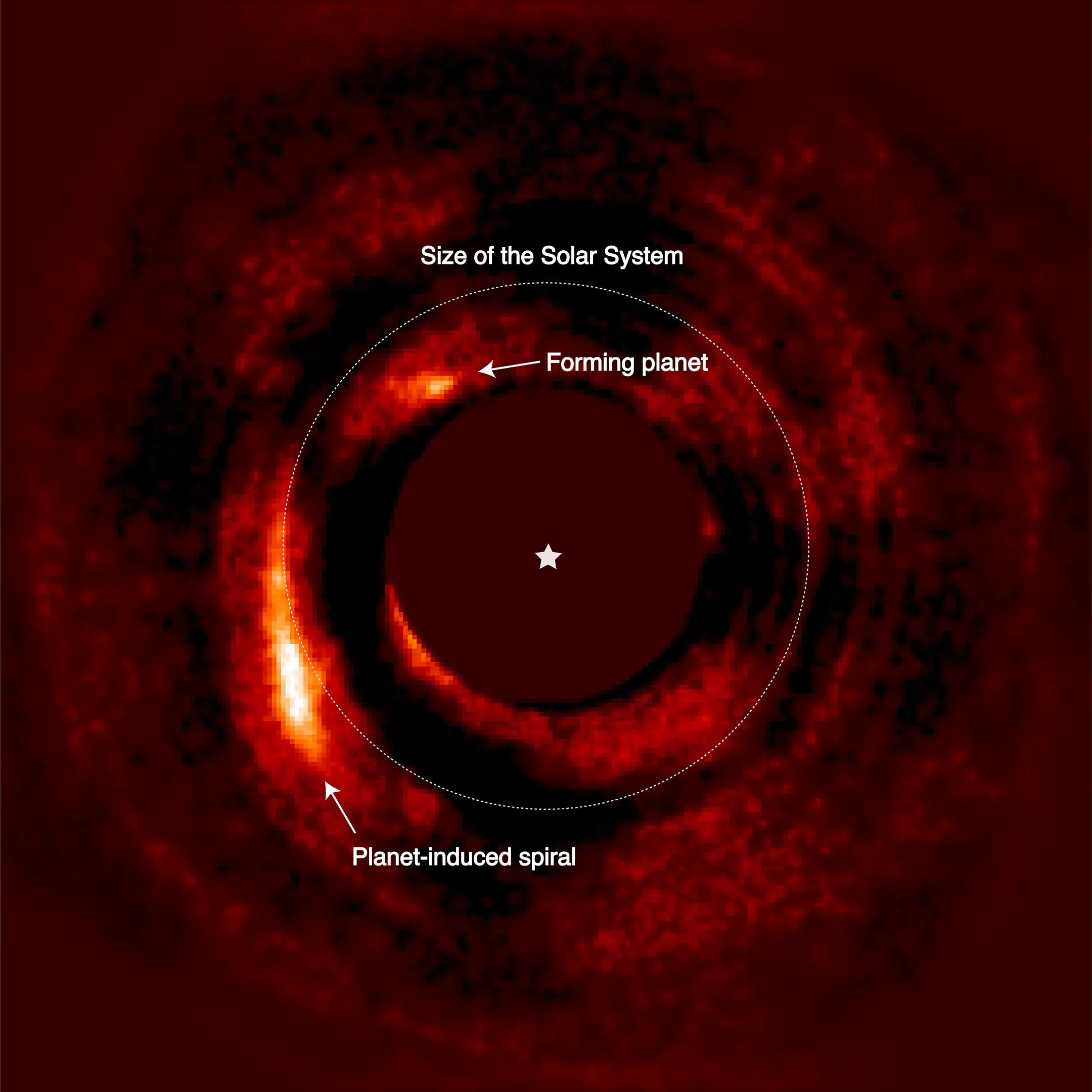
Astronomers discovered a giant planet, HD 135344 Ab, orbiting the primary star in the binary system HD 135344 AB using advanced imaging technology, challenging previous assumptions about planet formation around binary stars and providing new insights into the process near the snowline of protoplanetary disks.
Astronomers have directly imaged a young giant planet, HD 135344 Ab, orbiting the primary star in a binary system about 440 light-years away, revealing differences in planet formation processes between the two stars and highlighting the importance of high-precision astrometry and future telescopes for studying such planets.
The James Webb Space Telescope has successfully captured its first direct image of an exoplanet, TWA 7b, a small, cold planet similar in mass to Saturn, orbiting the star TWA 7 about 100 light years away. This achievement marks a significant advancement in the ability to directly image smaller exoplanets, which are key targets in the search for habitable worlds beyond our solar system.
The James Webb space telescope has captured the first direct images of a Saturn-sized exoplanet, TWA 7b, orbiting a star 110 light years away, providing new insights into young planetary systems and demonstrating advanced imaging techniques to observe faint planets near bright stars.
The James Webb Space Telescope has for the first time directly imaged a previously unknown exoplanet, a young gas giant roughly the size of Saturn orbiting a star in the Antlia constellation, demonstrating Webb's advanced capabilities in studying distant planetary systems.
The James Webb Space Telescope has captured the first direct infrared images of two exoplanets in the YSES-1 system, revealing unique features such as silicate clouds and a dust disk, providing valuable insights into early planetary formation.
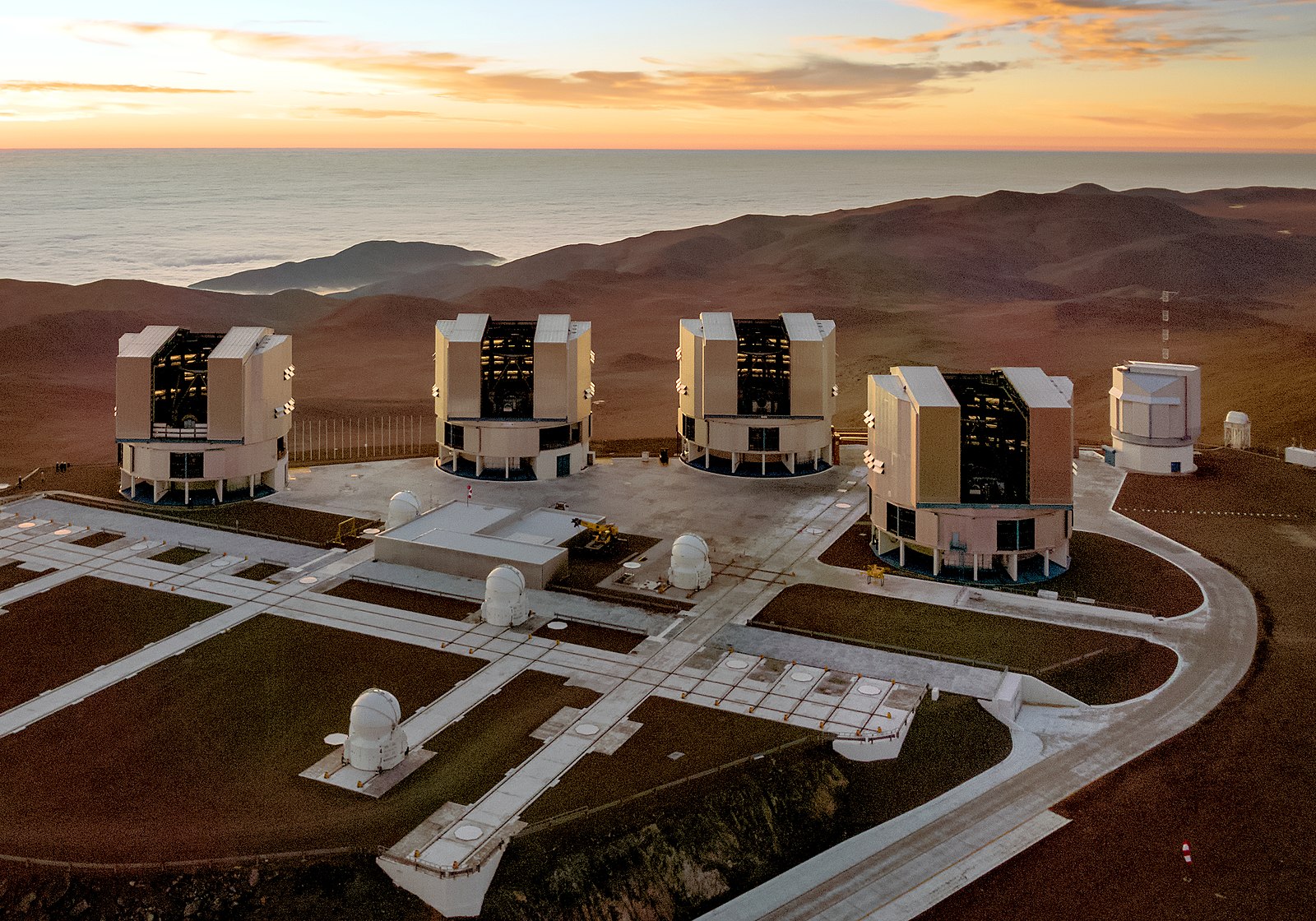
The High-Resolution Imaging and Spectroscopy of Exoplanets (HiRISE) instrument has been installed on the European Southern Observatory's Very Large Telescope (VLT), enhancing its imaging capabilities for exoplanet research. HiRISE combines the SPHERE imager with the upgraded CRIRES spectrograph, allowing for high-resolution spectroscopy and the characterization of exoplanet atmospheres. This cost-effective upgrade will aid in the study of exoplanet formation, composition, and evolution, and may serve as a pathfinder for future instruments on the Extremely Large Telescopes (ELTs).
The Very Large Telescope in Chile has discovered a massive exoplanet orbiting a star in a multi-star system known as HIP 81208. The exoplanet, 15 times the mass of Jupiter, orbits a smaller star that itself orbits a larger star. The system also includes a brown dwarf. This marks the first hierarchical quadruple system found using direct imaging, providing valuable insights into the formation of complex systems.
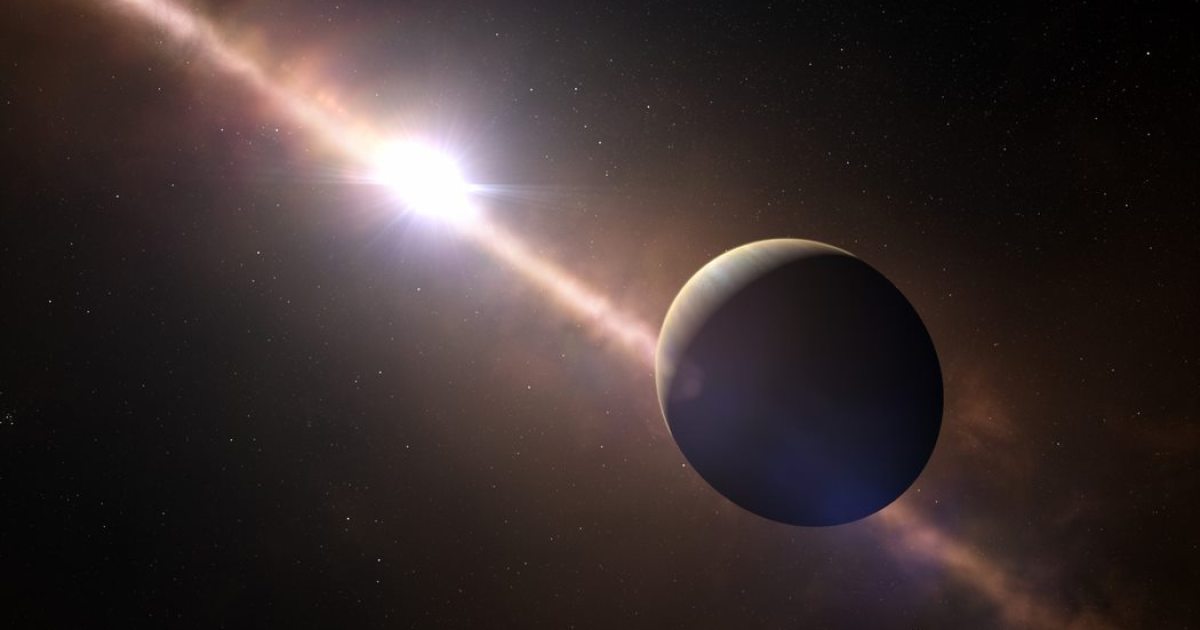
Astronomers have created a time-lapse video of an exoplanet called Beta Pictoris b orbiting its star, using 17 years of observations. The planet, located 63 light-years away, is relatively large and its star is bright, allowing for direct imaging. The video covers three quarters of one orbit and is the longest time-lapse footage of an exoplanet to date. Researchers used computer algorithms to process the images and remove blurring effects and glare. The planet was first imaged in 2003 and has a mass around 13 times that of Jupiter.
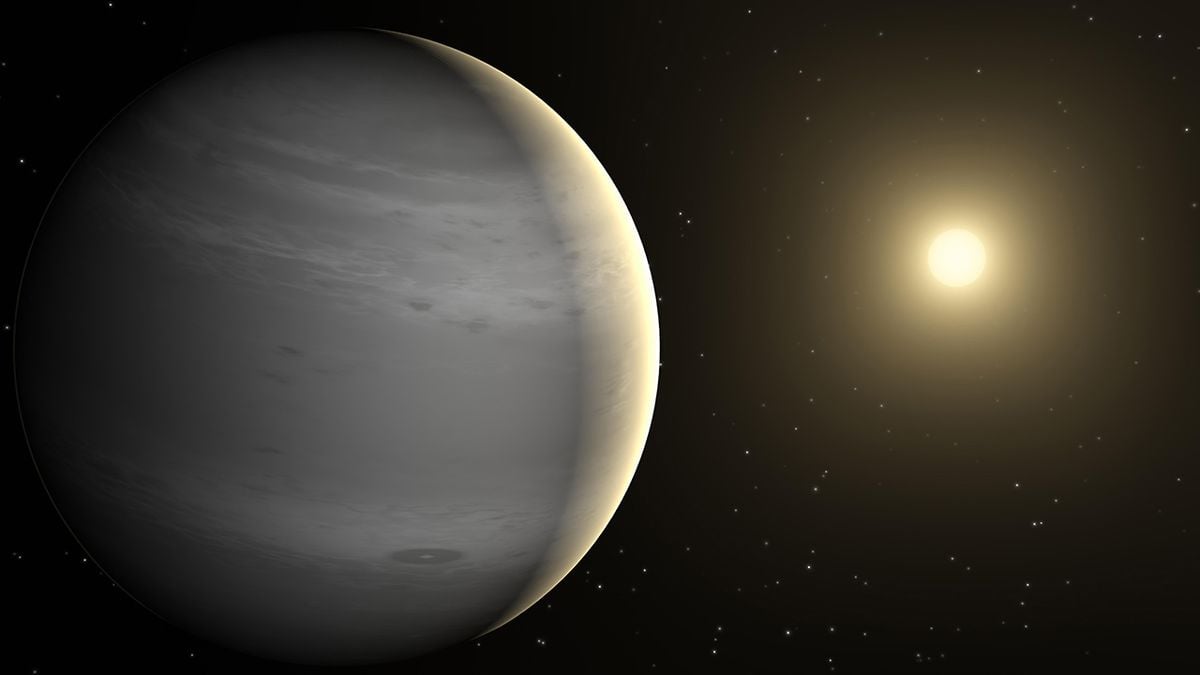
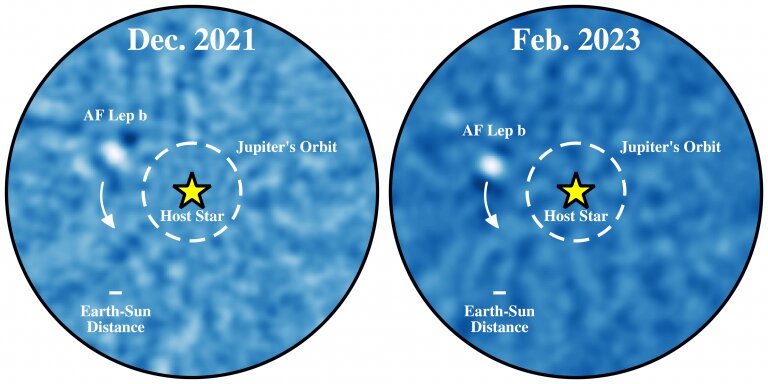
Scientists at the University of Texas at Austin have used astrometry to directly capture images of AF Lep b, one of the lowest-mass planets ever observed. This groundbreaking technique could revolutionize the discovery of extrasolar planets that are challenging to detect due to their distance, mass, or orientation relative to Earth. AF Lep b is approximately three times the mass of Jupiter and orbits a young Sun-like star about 87.5 light-years away. The combination of direct imaging and astrometry allows for the identification of previously difficult-to-detect extrasolar planets and enables the direct measurement of a planet's mass. The researchers plan to further study AF Lep b using advanced telescopes.
Astronomers using the W. M. Keck Observatory have successfully captured direct images of AF Lep b, one of the lowest-mass planets, using the astrometry technique. This marks the first time astrometry has been used to detect a giant planet orbiting a young Sun-like star. AF Lep b is approximately three times the mass of Jupiter and orbits a young star about 87.5 light-years away. This breakthrough could revolutionize the discovery of extrasolar planets that are challenging to detect due to their distance, mass, or orientation relative to Earth.
Astronomers have discovered a young exoplanet, AF Lep b, using the astrometry method, which involves measuring tiny changes in a star's position caused by the gravitational tugs of an orbiting planet. This is the first time astrometry has been used to find a giant planet orbiting a young star similar to the Sun. The team also used direct imaging to confirm the planet's existence and determine its mass, distance from its star, and orbital eccentricity. Further observations and studies of AF Lep b will be conducted using advanced telescopes like the James Webb Space Telescope.
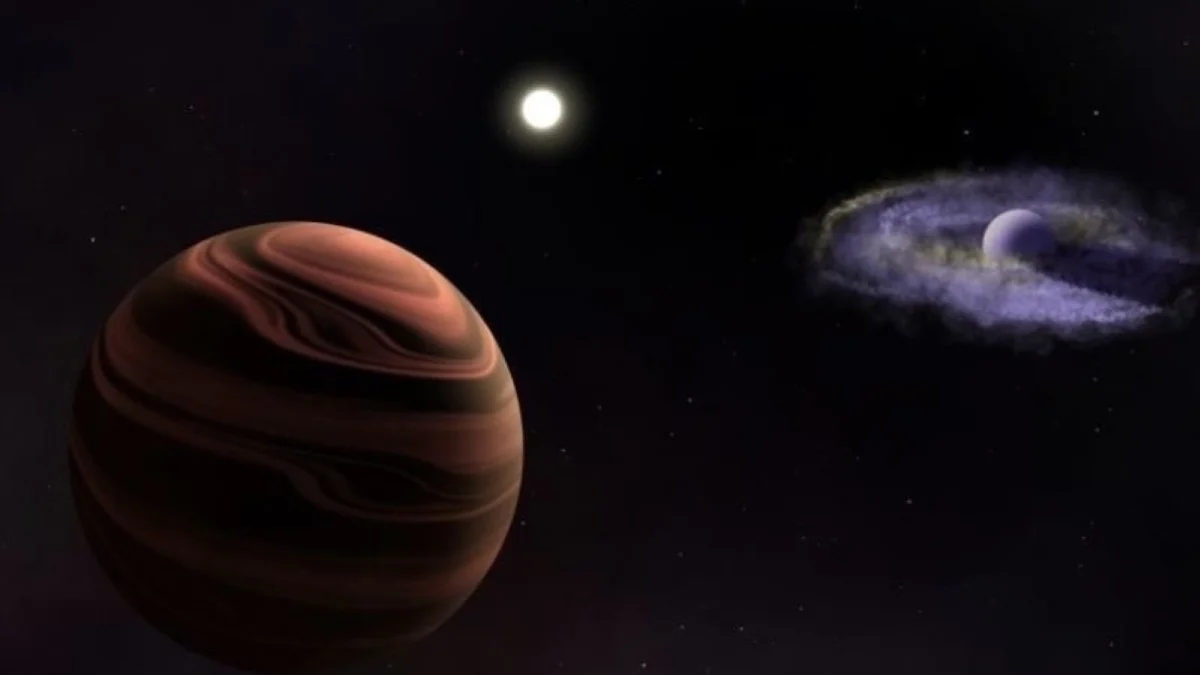
Astronomers have confirmed the existence of a protoplanet, HD169142 b, located 374 light years away from Earth. Using data from the SPHERE instrument of the European Southern Observatory, researchers from the University of Liège and Monash University were able to detect the thermal signature of the forming planet. The protoplanet, which is still in the process of gathering material, is located in a disk of gas and dust surrounding the star HD 169142. This discovery increases the number of confirmed protoplanets to three and provides valuable insights into the early stages of planet formation. Further observations with the James Webb Space Telescope could provide additional characterization and confirmation of the protoplanet.
Astronomers using the W. M. Keck Observatory in Hawaii have directly captured images of AF Lep b, one of the lowest-mass planets ever discovered. The planet is about three times the mass of Jupiter and orbits a young sun-like star about 87.5 light-years away. The discovery was made using a technique called astrometry, which measures the subtle movements of a host star over many years to help astronomers determine whether hard-to-see orbiting companions, including planets, are gravitationally tugging at it. This new method of combining direct imaging with astrometry could help astronomers find extrasolar planets that were hard to find before with other methods.