Tag

Black Hole

All articles tagged with #black hole

James Webb Telescope Detects Supermassive Black Hole Speeding Away from Galaxy

Originally Published 3 days ago — by Live Science

Featured image for James Webb Telescope Detects Supermassive Black Hole Speeding Away from Galaxy
Source: Live Science

The James Webb Space Telescope has potentially confirmed the first observed supermassive black hole escaping its galaxy at 2.2 million mph, leaving behind a trail of young stars and creating a shockwave detectable in space, providing new insights into galaxy and black hole dynamics.

Massive Black Hole Reveals Its Hidden Secrets

Originally Published 5 days ago — by Indian Defence Review

Featured image for Massive Black Hole Reveals Its Hidden Secrets
Source: Indian Defence Review

Using XRISM's high-resolution instruments alongside ESA's XMM-Newton and NASA's NuSTAR, scientists captured unprecedented details of a supermassive black hole in galaxy MCG–6-30-15, confirming relativistic effects near the event horizon, identifying multiple wind zones, and challenging previous models of distant reflection, thus advancing our understanding of black hole physics and galaxy growth.

XRISM Captures Sharpest Image Yet of Fast-Spinning Black Hole

Originally Published 7 days ago — by Universe Today

Featured image for XRISM Captures Sharpest Image Yet of Fast-Spinning Black Hole
Source: Universe Today

XRISM, a joint JAXA-NASA mission, has captured the sharpest X-ray image to date of a rapidly spinning supermassive black hole in galaxy MCG–6-30-15, providing new insights into black hole spin and the environment near the event horizon by combining high-resolution data with other telescopes, and confirming the presence of material orbiting close to the speed of light.

Black Hole's Twisting Effect Confirms Einstein's Predictions

Originally Published 7 days ago — by The Daily Galaxy

Featured image for Black Hole's Twisting Effect Confirms Einstein's Predictions
Source: The Daily Galaxy

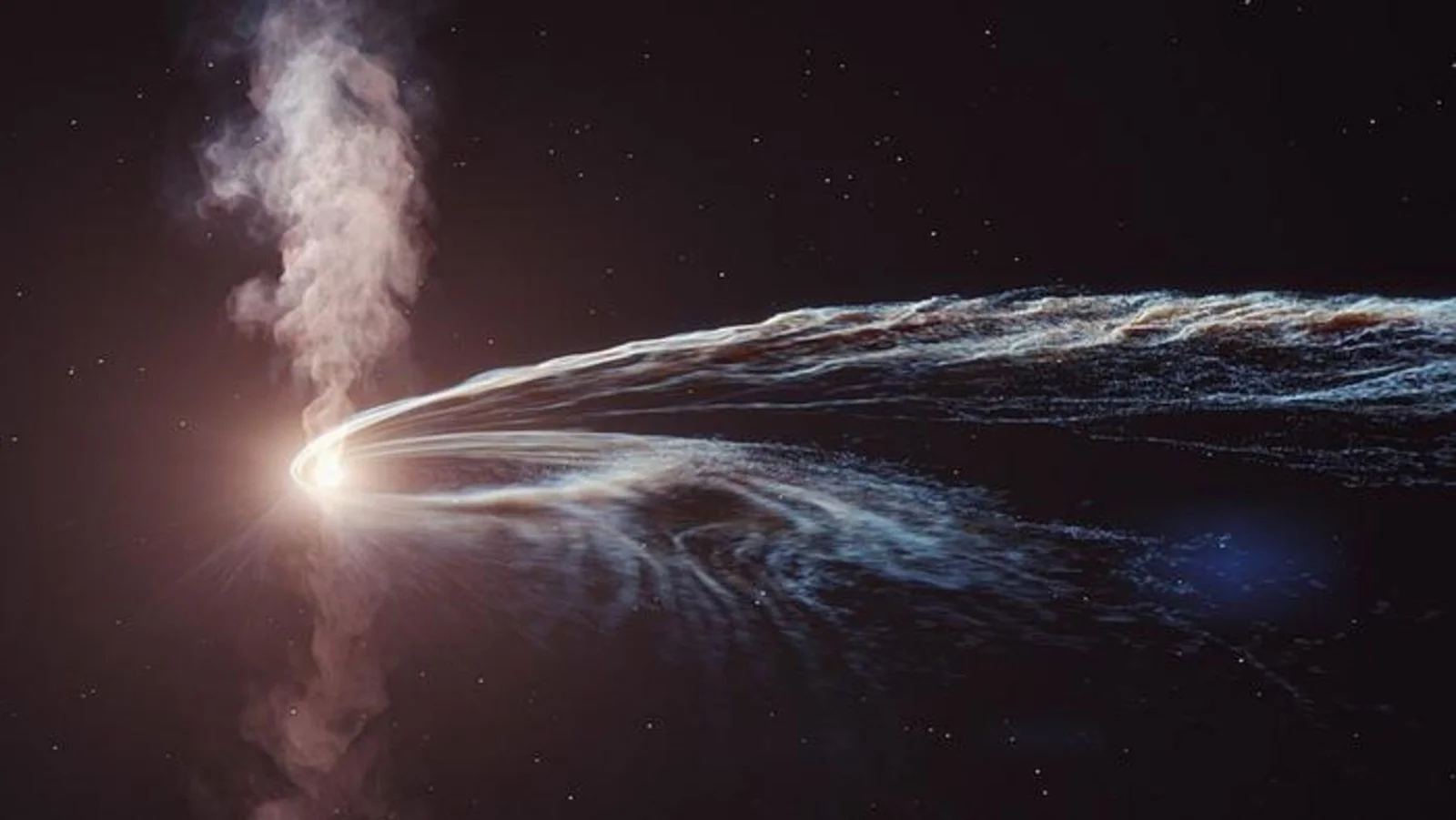
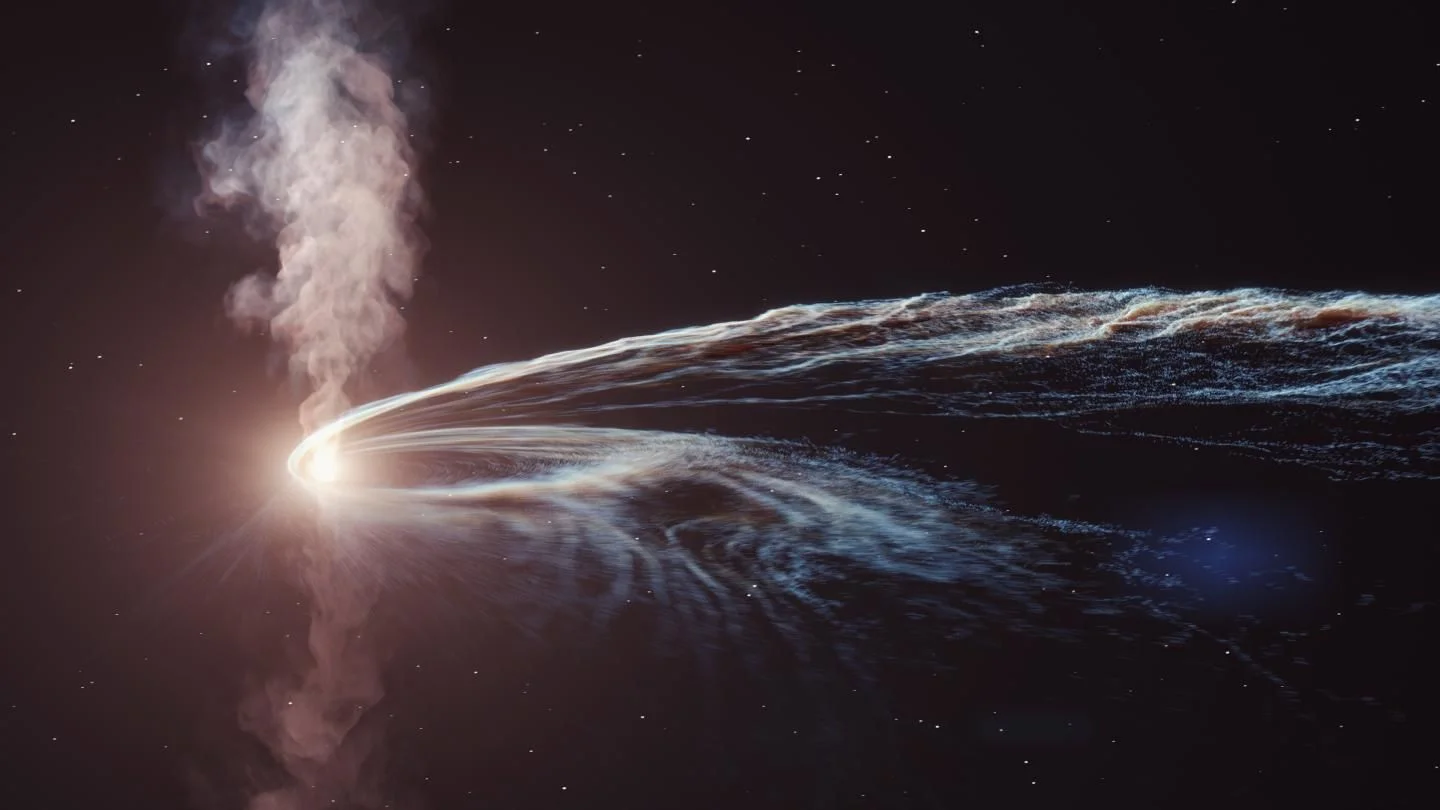
Astronomers have directly observed a spinning black hole twisting spacetime, confirming Einstein's prediction of frame-dragging through the detection of Lense-Thirring precession during a tidal disruption event, using X-ray and radio telescopes, deepening our understanding of black hole physics and spacetime dynamics.

Ancient Black Hole Predates Stars and Galaxies, Challenging Cosmic Origins

Originally Published 8 days ago — by Interesting Engineering

Featured image for Ancient Black Hole Predates Stars and Galaxies, Challenging Cosmic Origins
Source: Interesting Engineering

Astronomers using the James Webb Space Telescope discovered a massive black hole in a young galaxy from just 700 million years after the Big Bang, challenging traditional theories of galaxy and black hole formation. The black hole's size and the lack of surrounding stars suggest it may have originated as a primordial black hole, formed directly from density fluctuations in the early universe, rather than from star collapse. This finding opens new possibilities about the origins of supermassive black holes and the early universe, though further research is needed to confirm these theories.

Black Hole Ejects Matter at Record-Breaking Speeds

Originally Published 14 days ago — by Daily Kos

Featured image for Black Hole Ejects Matter at Record-Breaking Speeds
Source: Daily Kos

Scientists observed a supermassive black hole in galaxy NGC 3783 eject matter at a record-breaking speed of 60,000 km/sec, using X-ray satellites. This rapid wind formation, triggered by a burst of X-ray light, resembles solar eruptions but on a vastly larger scale, providing new insights into black hole behavior.

Black Hole Holds Water Enough to Fill Trillions of Oceans

Originally Published 15 days ago — by Earth.com

Featured image for Black Hole Holds Water Enough to Fill Trillions of Oceans
Source: Earth.com

Astronomers have discovered the largest and most distant water reservoir in the cosmos within a quasar called APM 08279+5255, containing enough water to fill trillions of Earth oceans, and its brightness is likely amplified by gravitational lensing, providing insights into galaxy and black hole growth in the early universe.

James Webb Telescope Detects First Runaway Supermassive Black Hole Speeding Through Galaxy

Originally Published 23 days ago — by Gizmodo

Featured image for James Webb Telescope Detects First Runaway Supermassive Black Hole Speeding Through Galaxy
Source: Gizmodo

Astronomers using the Webb space telescope have observed the first known runaway supermassive black hole, which is traveling at 2.2 million mph and leaving a trail of gas that is forming new stars over 200,000 light-years long, likely ejected from its galaxy due to a galaxy merger or binary black hole interaction.

James Webb Telescope Confirms First Runaway Supermassive Black Hole in Distant Galaxy

Originally Published 25 days ago — by Space

Featured image for James Webb Telescope Confirms First Runaway Supermassive Black Hole in Distant Galaxy
Source: Space

Astronomers using the James Webb Space Telescope confirmed the existence of a runaway supermassive black hole, 10 million times the sun's mass, moving at 2.2 million mph through the Cosmic Owl galaxies, leaving a trail of star-forming gas and shock waves, and providing new insights into black hole ejections during galaxy mergers.

James Webb Telescope Discovers Hidden Black Hole in 'Jekyll and Hyde' Galaxy

Originally Published 25 days ago — by Live Science

Featured image for James Webb Telescope Discovers Hidden Black Hole in 'Jekyll and Hyde' Galaxy
Source: Live Science

NASA's JWST discovered a supermassive black hole hidden in the 'Jekyll and Hyde' galaxy Virgil, which appears as a normal star-forming galaxy in optical light but reveals a black hole in infrared, challenging previous ideas about black hole and galaxy formation in the early universe.

Astronomers Confirm Spacetime Drag Around Black Hole, Validating Einstein's Predictions

Originally Published 27 days ago — by Yahoo

Featured image for Astronomers Confirm Spacetime Drag Around Black Hole, Validating Einstein's Predictions
Source: Yahoo

Astronomers have directly observed a whirlpool in spacetime caused by a rapidly spinning black hole, providing the first empirical evidence of the Lense–Thirring precession, a phenomenon where a spinning black hole drags spacetime around with it, confirming a long-standing theoretical prediction.