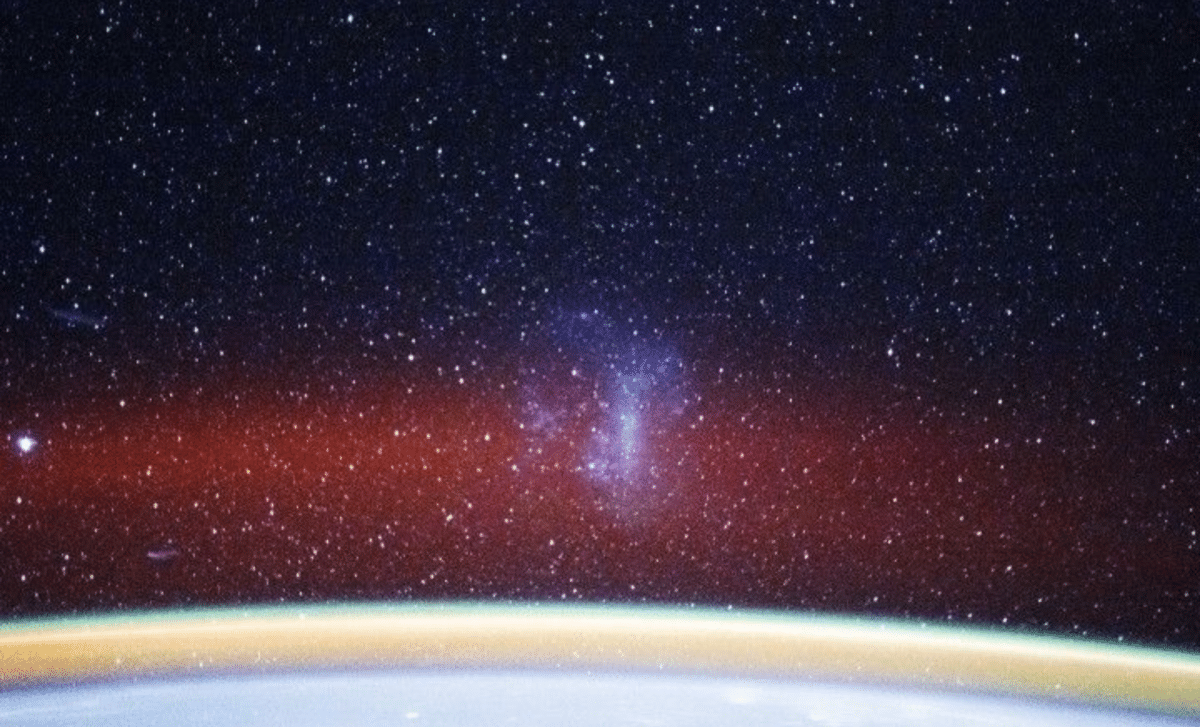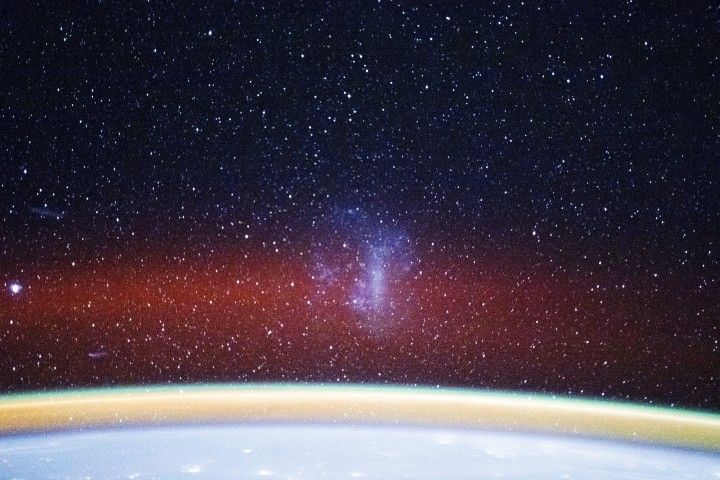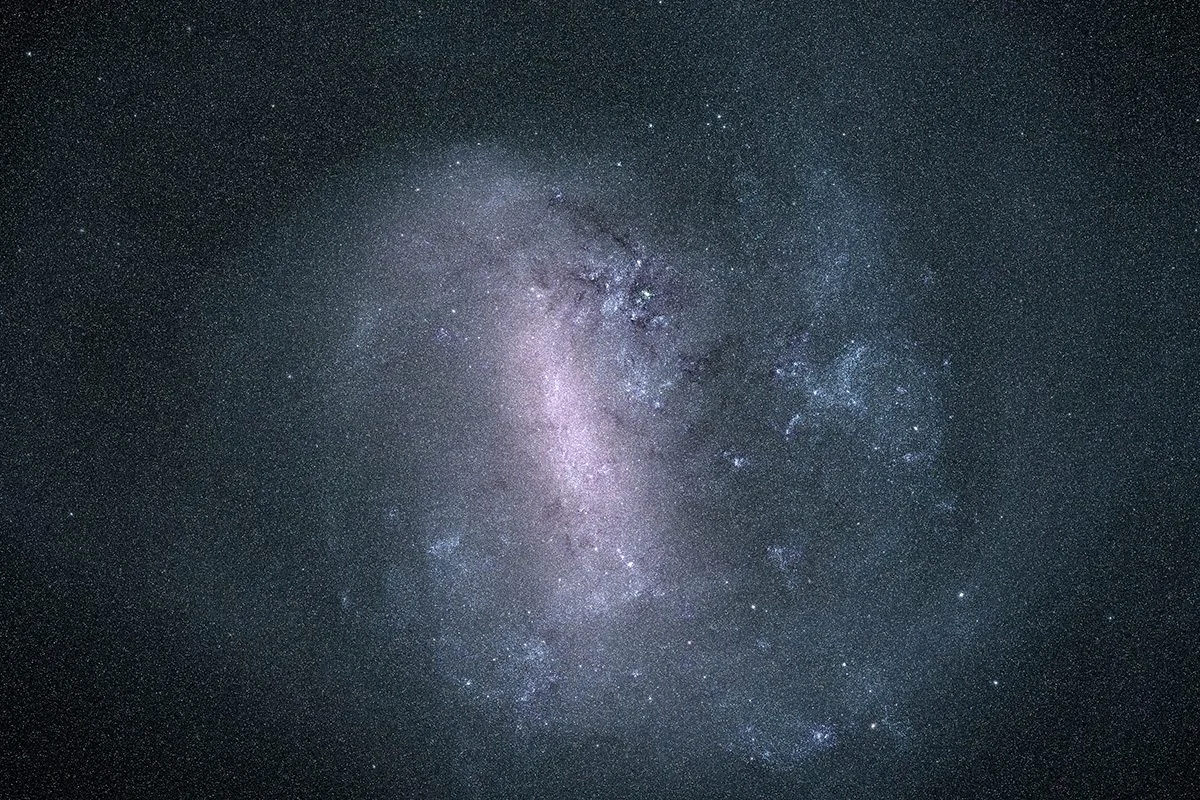
A recent image captured by an astronaut aboard the ISS shows the Large Magellanic Cloud, a nearby dwarf galaxy rich in star-forming regions and supernova remnants, highlighting its significance in understanding stellar evolution and its dynamic role within the Local Group. The image emphasizes the contrast between Earth's atmosphere and the galaxy's energetic activity, inspiring public interest in cosmic exploration.
NASA's Earth Observatory highlights the Large Magellanic Cloud, a nearby dwarf galaxy rich in star formation, captured from the International Space Station, offering insights into stellar life cycles and cosmic phenomena like supernovae.
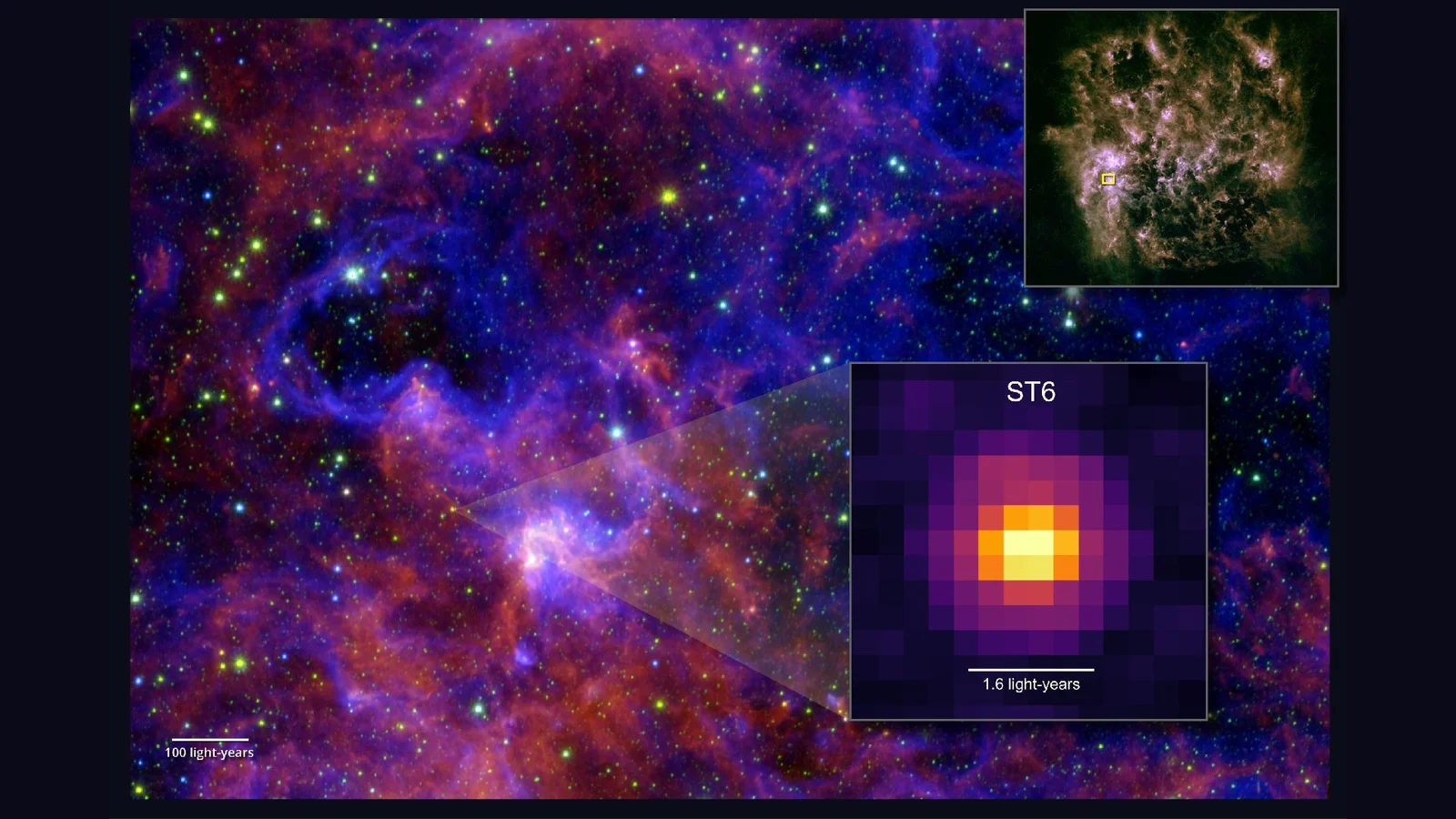
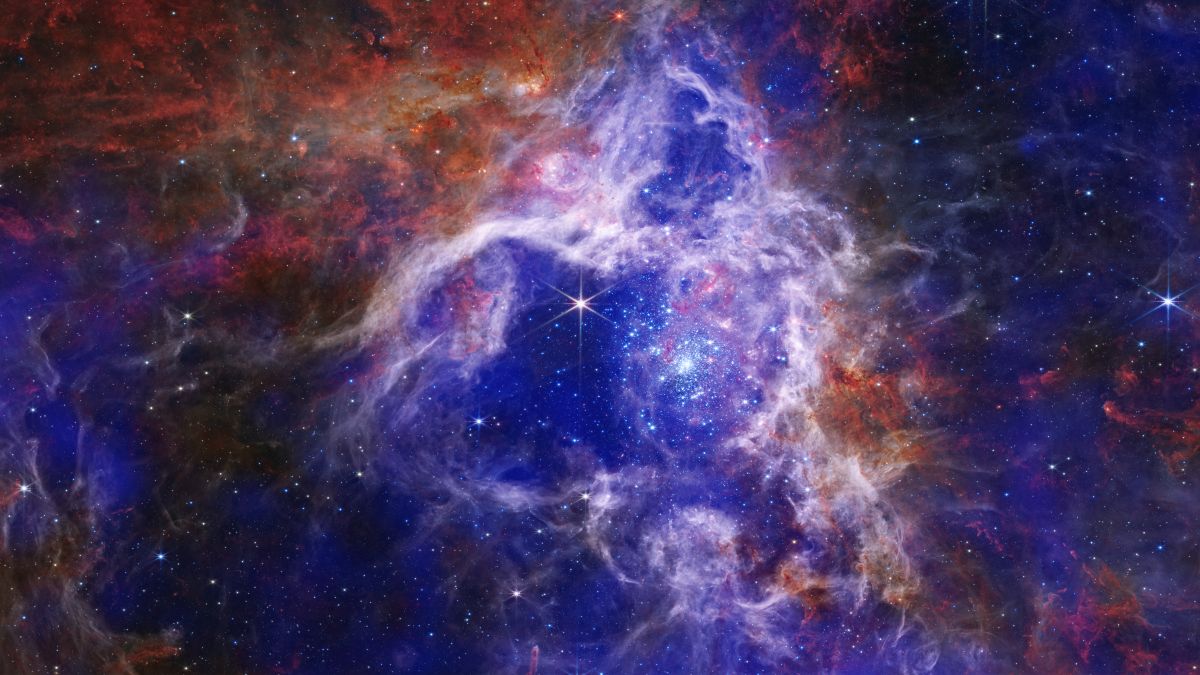
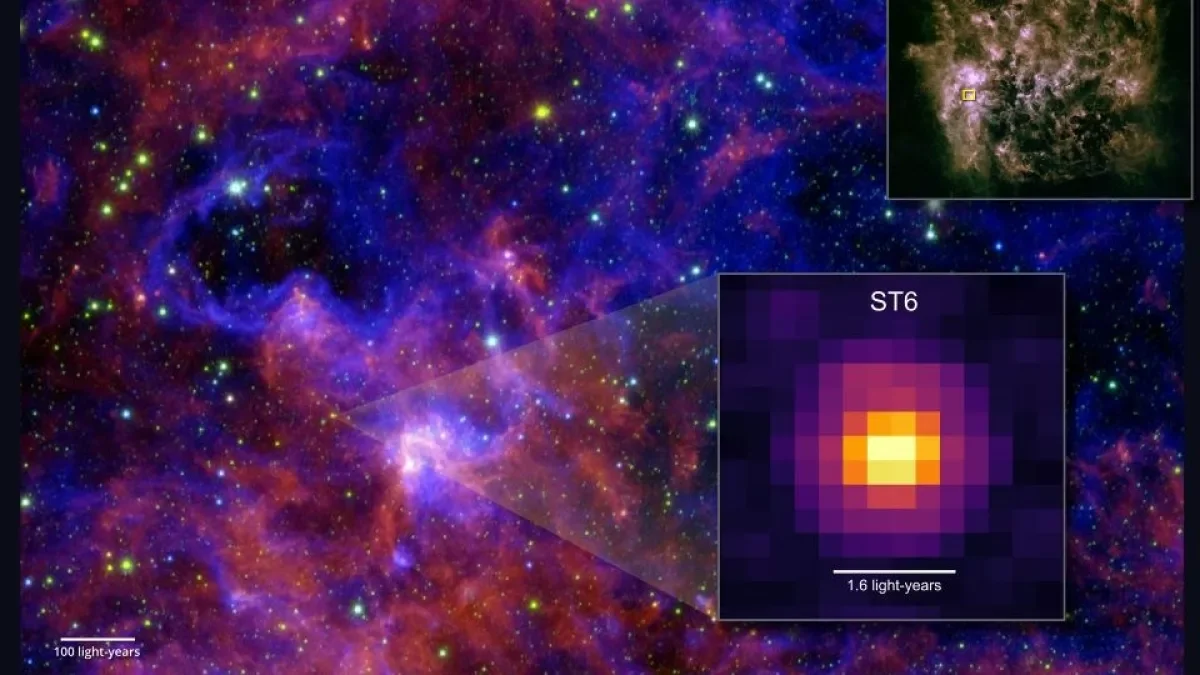
Scientists using the James Webb Space Telescope detected complex carbon-based molecules in the ice around a star in the Large Magellanic Cloud, marking the first such discovery outside the Milky Way and providing insights into the origins of life-related chemistry in primitive cosmic environments.
Astronomers have for the first time detected complex organic molecules, including ethanol, acetaldehyde, methyl formate, and acetic acid, in ice beyond the Milky Way, specifically in the Large Magellanic Cloud, suggesting that the ingredients for life are widespread across the universe.
Researchers using the James Webb Space Telescope have detected complex organic molecules, considered the 'seeds of life,' in icy environments beyond our galaxy, specifically in the Large Magellanic Cloud, indicating that such molecules can form in harsh, low-metallicity conditions similar to early universe galaxies, which may have implications for the origins of life elsewhere in the universe.
Astronomers using the James Webb Space Telescope have detected complex organic molecules, including some found on Earth, frozen in ice around a young star in the neighboring galaxy, the Large Magellanic Cloud, marking the first such discovery outside the Milky Way and providing new insights into the potential for life beyond our galaxy.
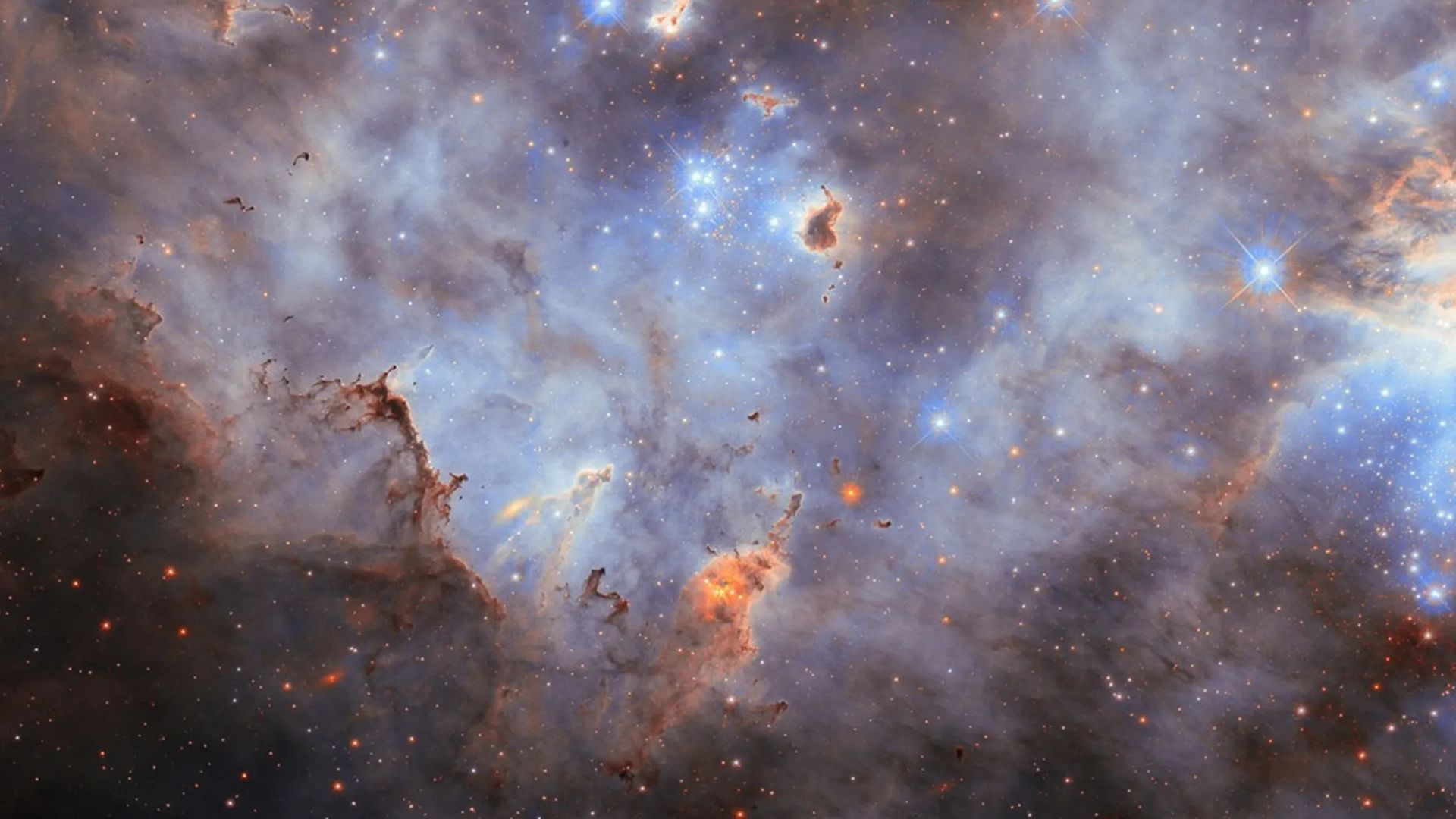
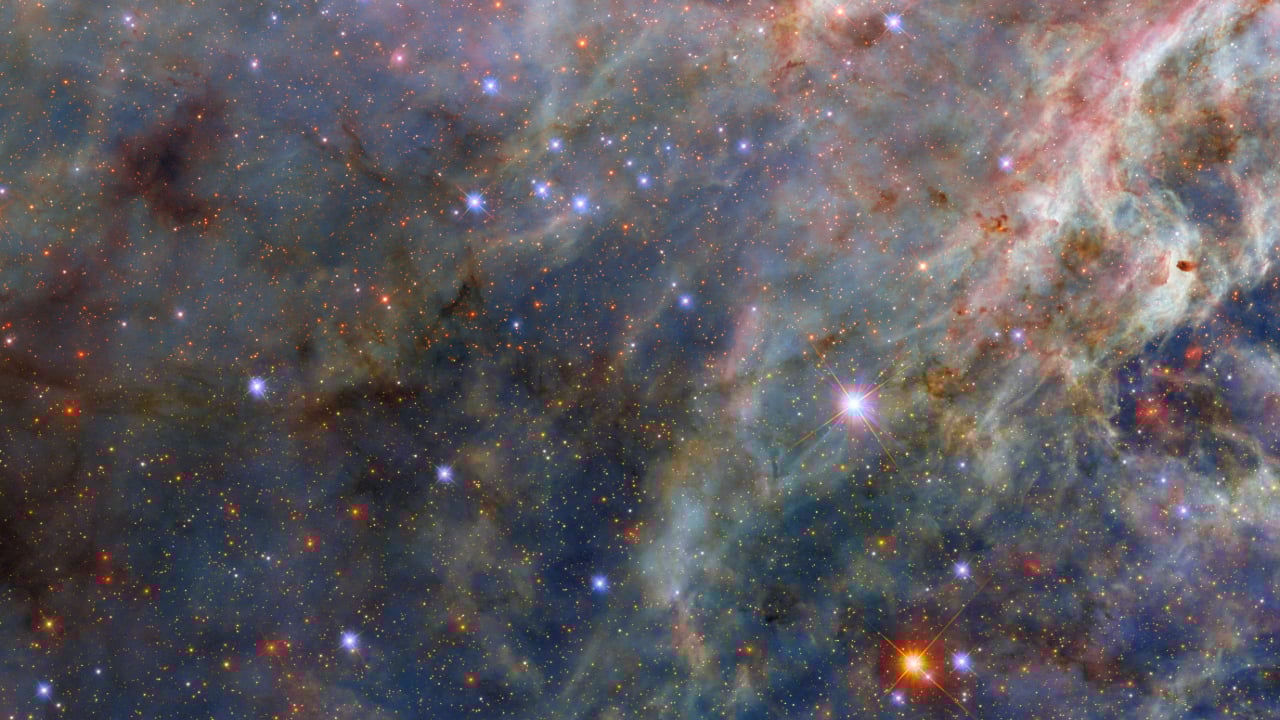
The Hubble Space Telescope captured a detailed image of a star cluster in the Large Magellanic Cloud, a nearby satellite galaxy of the Milky Way, providing insights into star formation and galactic evolution in different environments.
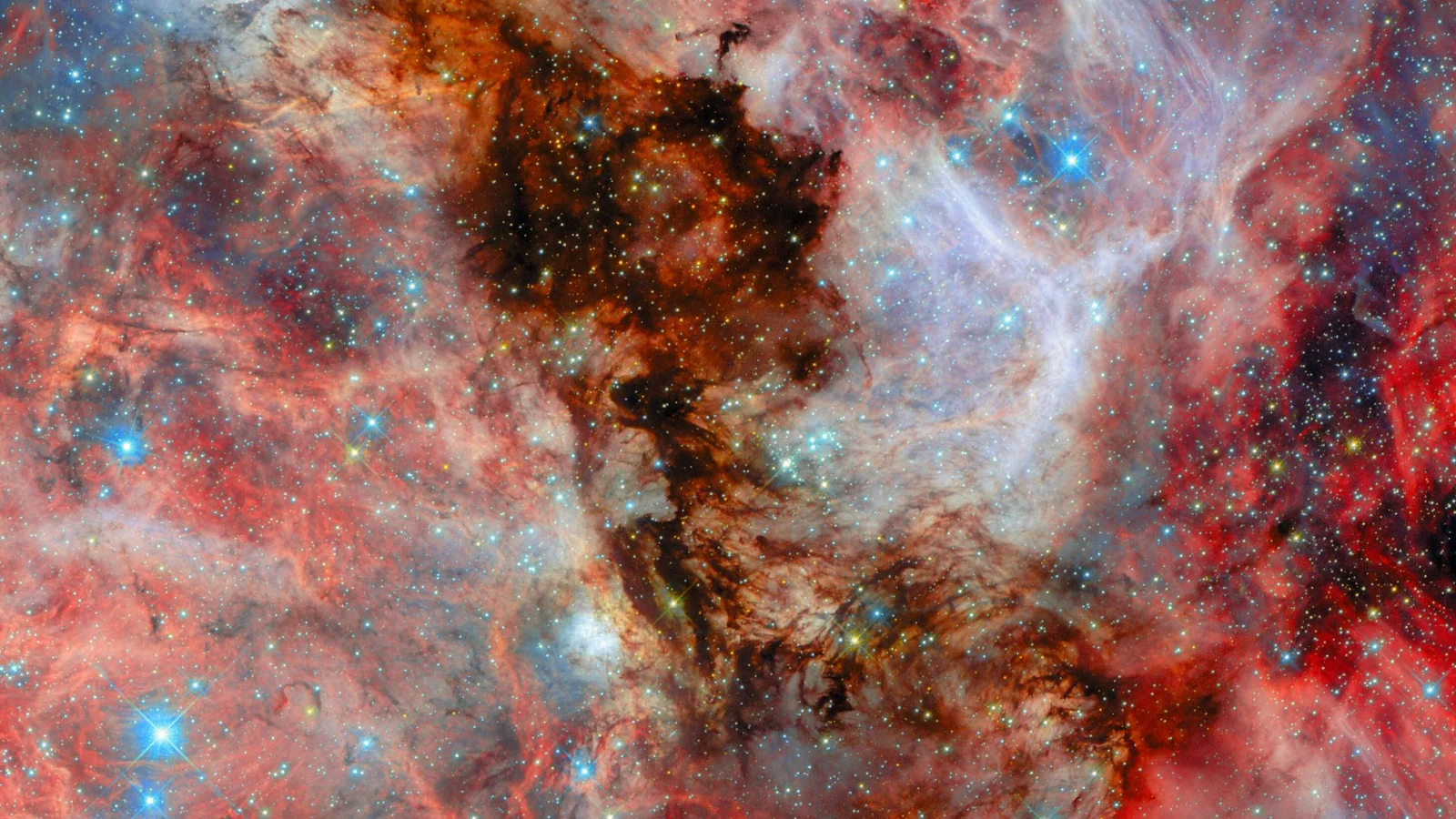
Hubble captured a stunning image of the Tarantula nebula in the Large Magellanic Cloud, revealing active star formation and massive Wolf-Rayet stars, highlighting the nebula as a significant stellar nursery about 160,000 light-years away.
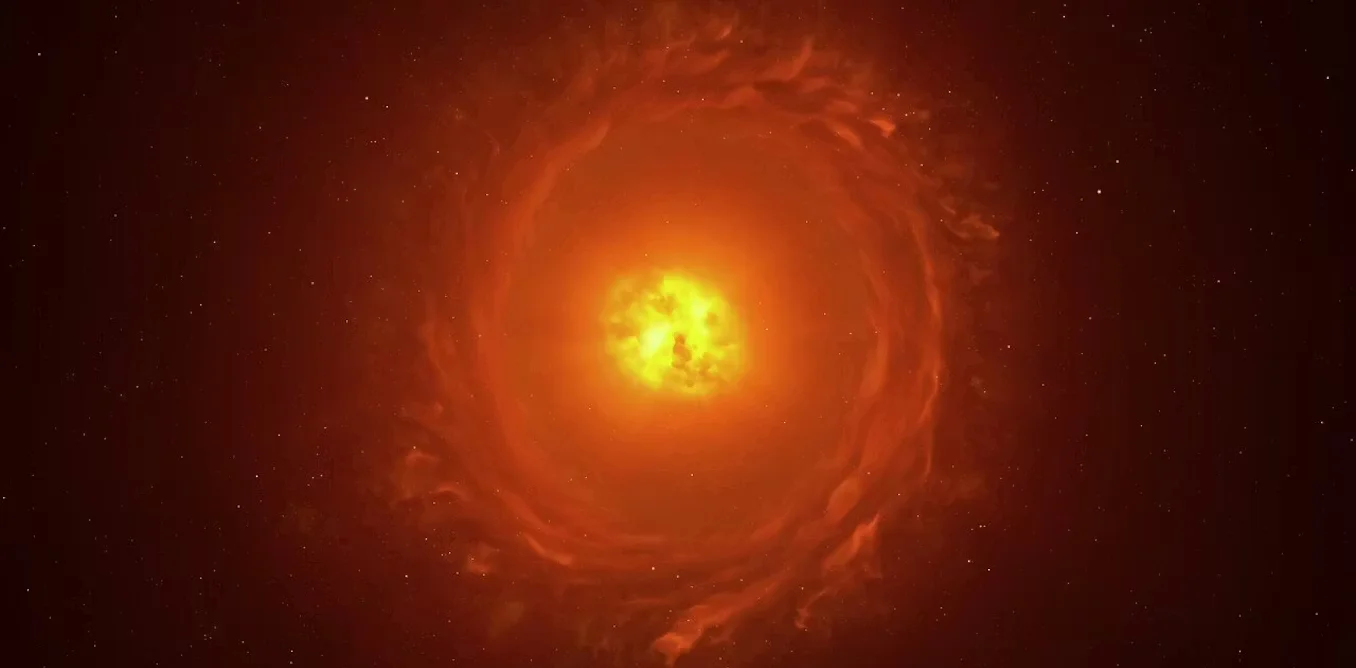
For the first time, astronomers have captured a clear image of a star in another galaxy, WOH G64, using the European Southern Observatory's Very Large Telescope. This red supergiant, located in the Large Magellanic Cloud, is encased in a unique gas and dust cocoon, offering insights into stellar evolution and death. The GRAVITY instrument, which combines light from multiple telescopes, enabled this breakthrough, paving the way for future discoveries in astrophysics and the potential study of exoplanets for signs of extraterrestrial life.
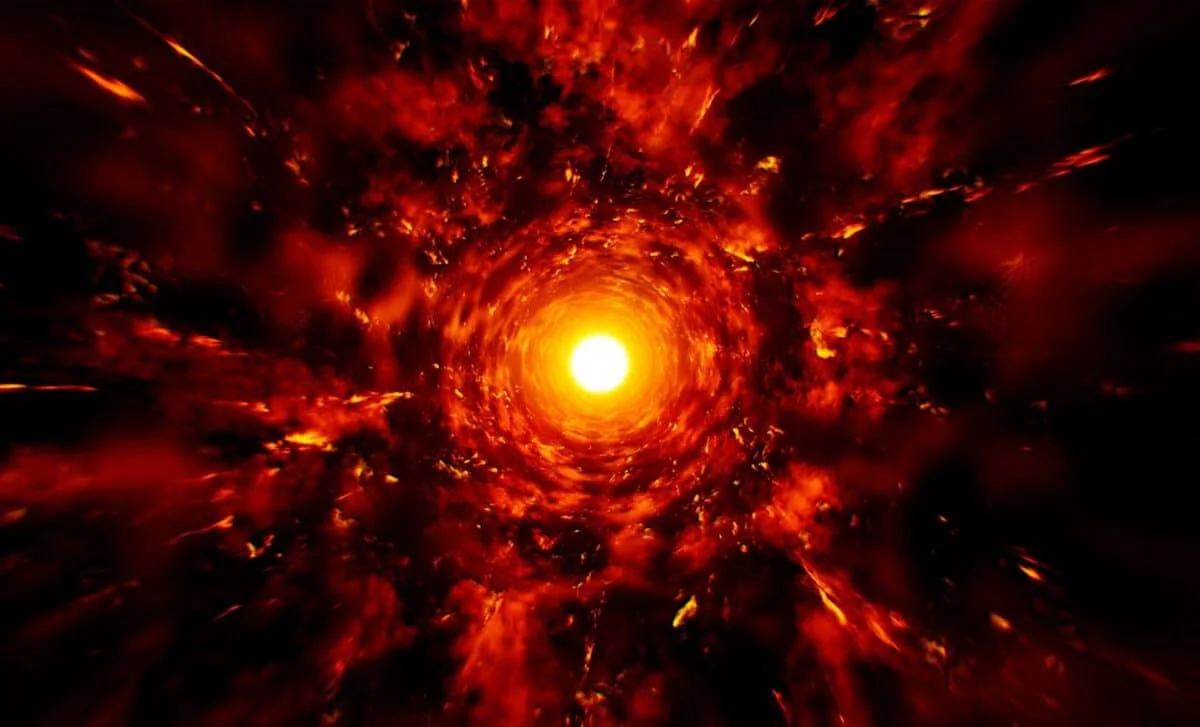
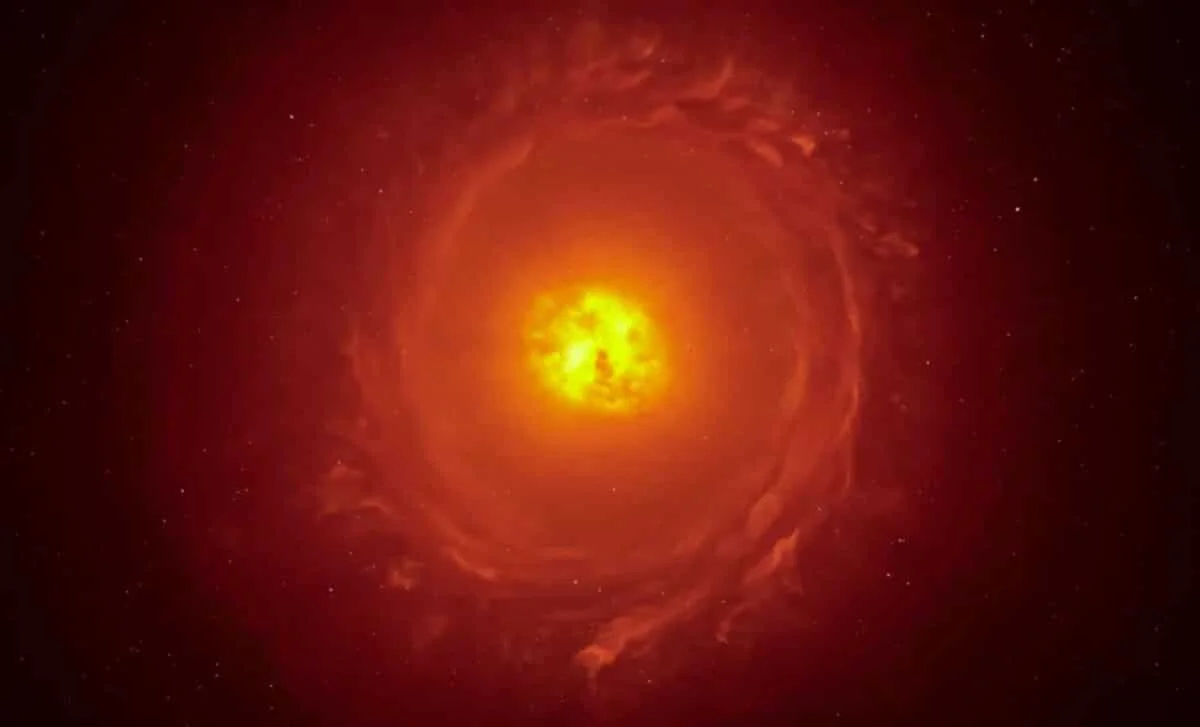
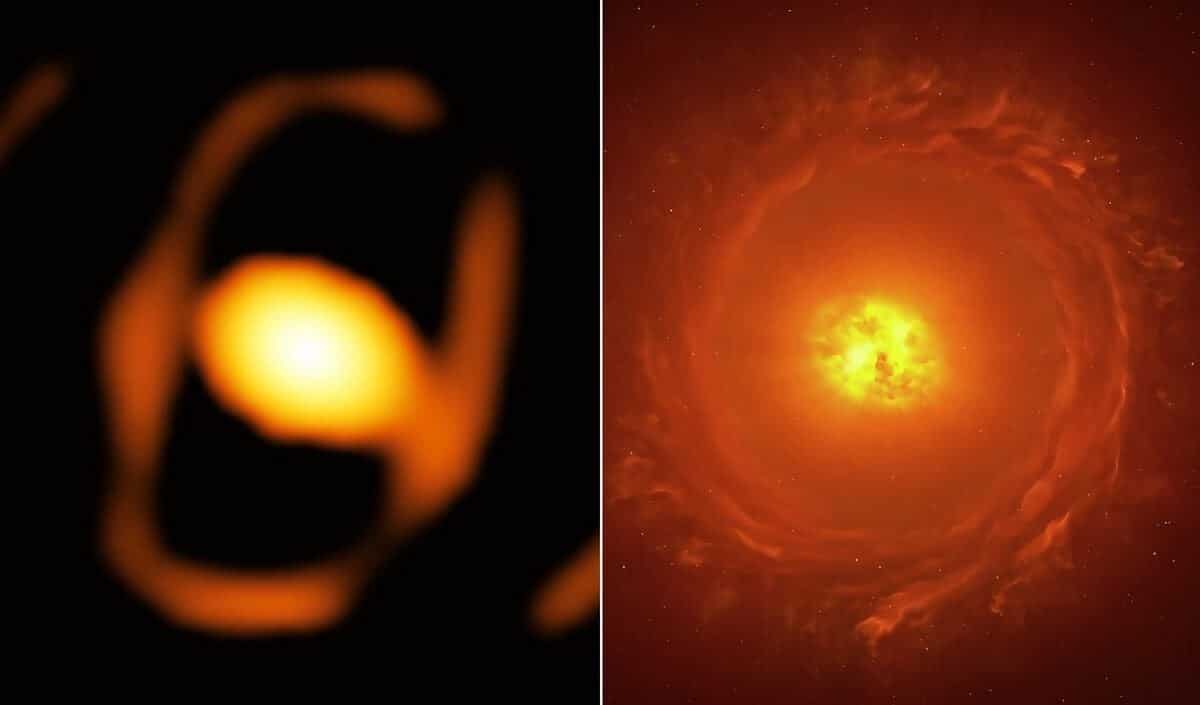
Astronomers have captured the first close-up image of WOH G64, a massive red supergiant star located in the Large Magellanic Cloud, using the European Southern Observatory's Very Large Telescope Interferometer. This star, 1,500 times wider than the sun, is nearing the end of its life and may soon explode in a supernova. The image reveals an egg-shaped cocoon of gas and dust surrounding the star, which has dimmed significantly over the past decade. This discovery provides a rare opportunity to observe a star's life cycle in real time.
Astronomers have captured the first close-up image of a star outside our Galaxy, WOH G64, located 160,000 lightyears away in the Large Magellanic Cloud. This red supergiant, imaged using the ESO's Very Large Telescope Interferometer, is in its final life stages, shedding gas and dust before a potential supernova. The discovery offers a rare opportunity to observe a star's life cycle in real time, revealing a dimming and an egg-shaped cocoon around the star, possibly due to material ejection or an unseen companion star.
Astronomers have captured the first-ever close-up image of a star outside the Milky Way, WOH G64, located in the Large Magellanic Cloud. Using the GRAVITY instrument on the European Southern Observatory's Very Large Telescope Interferometer, they observed a dusty cocoon around the star, indicating it is in the final stages before a supernova. This red supergiant, over 1,500 times the size of the sun, has shown significant changes over the past decade, providing a rare opportunity to study a star's life in real time.
Astronomers have captured the first close-up image of a star outside the Milky Way, WOH G64, using the GRAVITY instrument on ESO's Very Large Telescope Interferometer. Located in the Large Magellanic Cloud, this red supergiant is over 160,000 light-years away and is in the final stages before a supernova. The image reveals a dusty cocoon around the star, which has dimmed over the past decade, possibly due to material shedding or an undiscovered companion star. This observation offers a rare glimpse into the life cycle of distant stars.
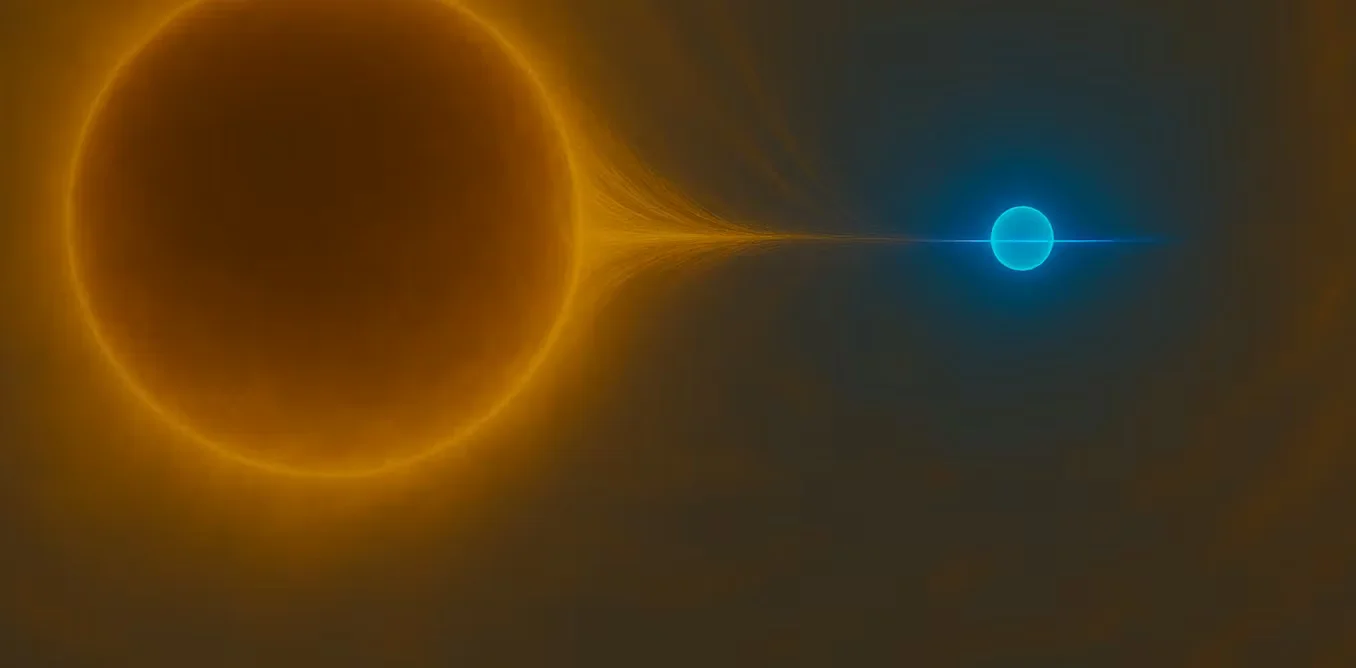
Astronomers have captured the first detailed image of a star outside the Milky Way, revealing a red supergiant star, WOH G64, enveloped in an egg-shaped cocoon of gas and dust. This observation, made using the European Southern Observatory's Very Large Telescope Interferometer, suggests the star is in a transitional phase, potentially leading to a supernova. The star, located 160,000 light years away in the Large Magellanic Cloud, has recently ejected its outer layer, a process that may be influenced by its rotation or a companion star.
Astronomers have captured the first close-up image of the red supergiant star WOH G64, located 160,000 light-years away in the Large Magellanic Cloud, as it nears the end of its life. Using the Very Large Telescope Interferometer, researchers observed the star shedding gas and dust, forming an egg-shaped cocoon, a precursor to a supernova explosion. This discovery offers a rare glimpse into the life cycle of massive stars, with WOH G64 being one of the largest known, potentially visible to the naked eye if it explodes.