Tag

Infrared Image

All articles tagged with #infrared image

astronomy1 year ago

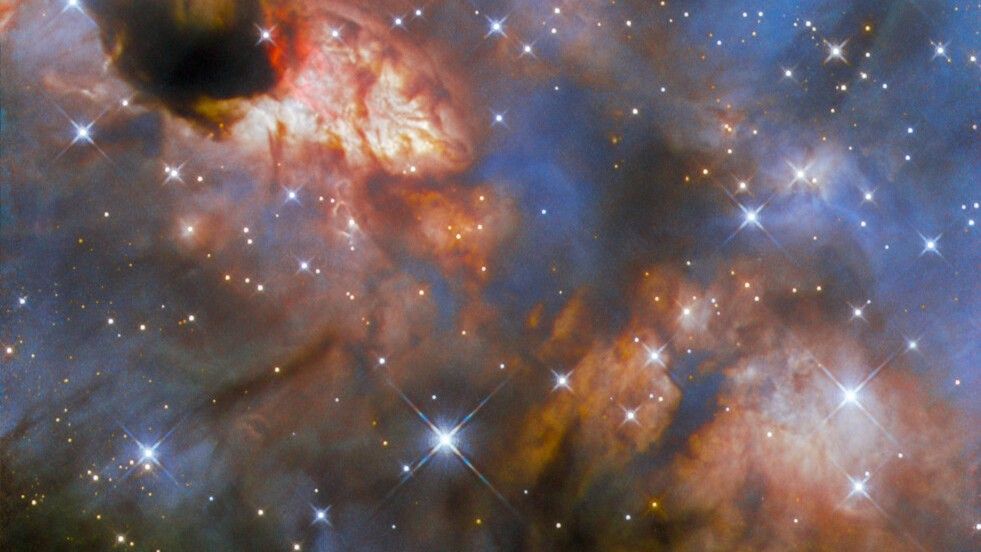
"A Young Star's Cosmic Cleanup: Stunning New Hubble Image"

The Hubble Space Telescope has captured a stunning and unusually colorful image of the star-forming nebula IRAS 16562-3959, located 5,900 light-years away in the constellation Scorpius. Using only infrared light, the image showcases vibrant colors representing different wavelengths, revealing a cosmic landscape filled with stars being born and dust clouds. Scientists believe the nebula hosts a massive protostar about 30 times the mass of the sun, with its powerful radiation jets shaping the surrounding gas and dust.
astronomy1 year ago

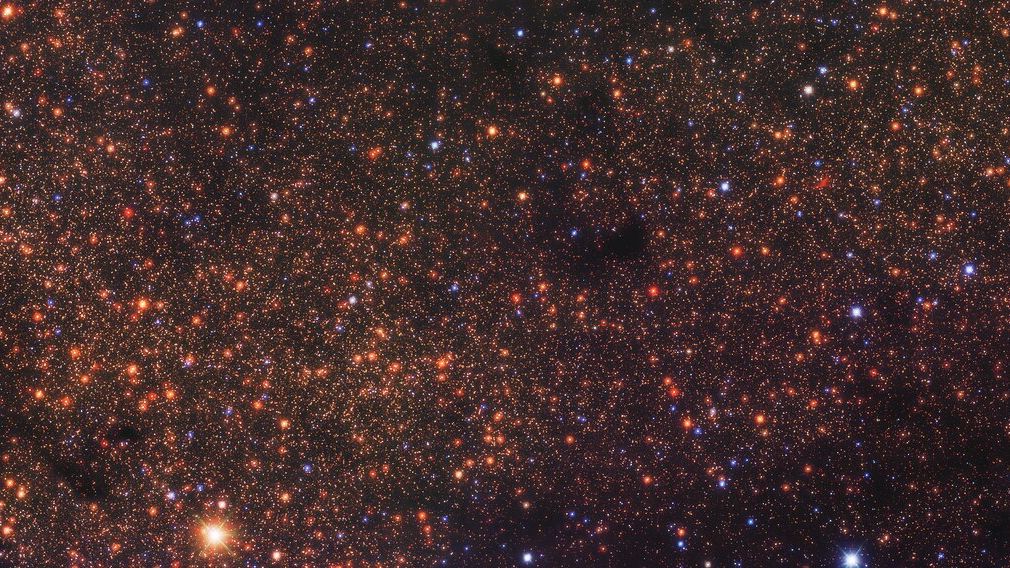
"Stunning Photo Captured by Very Large Telescope Reveals Milky Way's Star-Studded Core"

The European Southern Observatory's Very Large Telescope captured an infrared image of Sagittarius C, a star-forming region at the center of the Milky Way, revealing a densely packed population of stars. This region, located near the galactic center, is believed to be a prolific stellar nursery, with evidence suggesting the presence of many more young stars than currently observed. The VLT data indicates that Sagittarius C is rich in young stars, making it a promising candidate for hosting newly formed stars and providing astronomers with new regions to search for obscured young stars.

astronomy1 year ago

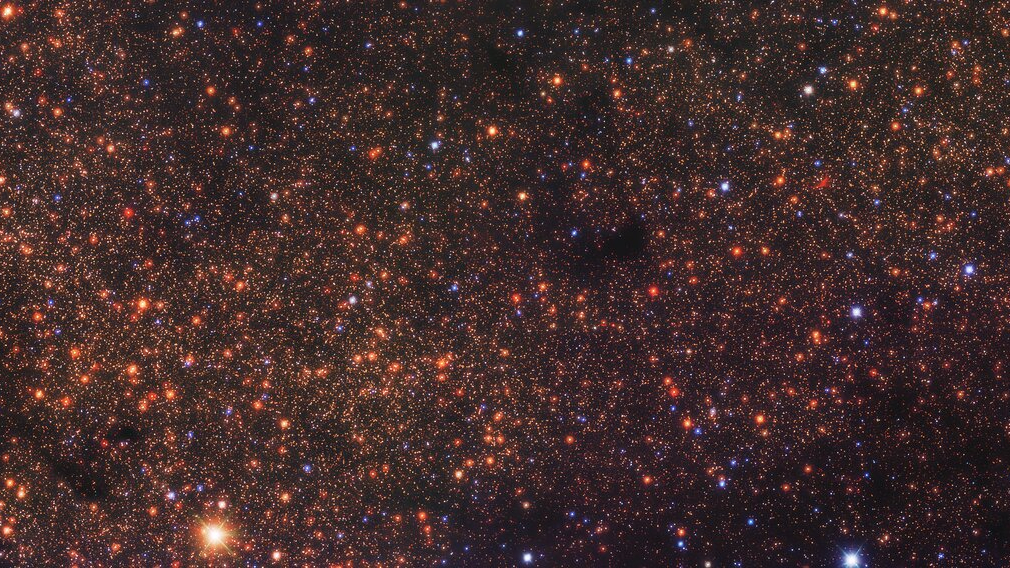
"Stunning Photo Captured by Very Large Telescope Reveals Milky Way's Star-Studded Core"

The European Southern Observatory's Very Large Telescope has captured a stunning infrared image of the star-forming region Sagittarius C at the center of the Milky Way, revealing thousands of distant stars. This region, located near the galaxy's central supermassive black hole, is believed to be a prolific stellar nursery, with evidence suggesting the presence of many more young stars than currently observed. Using the HAWK-I infrared camera, astronomers were able to peer through clouds of dust and gas to uncover the densely packed star population of Sagittarius C, making it a promising candidate for hosting newly formed stars.

astronomy2 years ago

"James Webb Telescope Uncovers Hidden Discovery in Crab Nebula's Core"

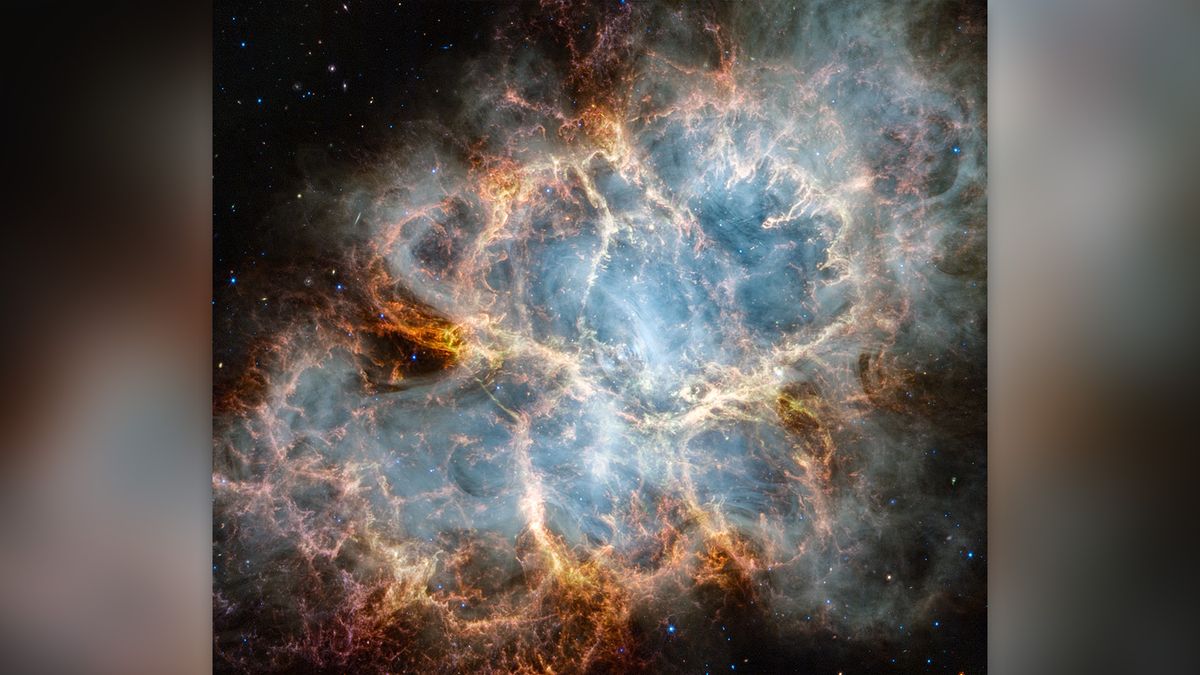
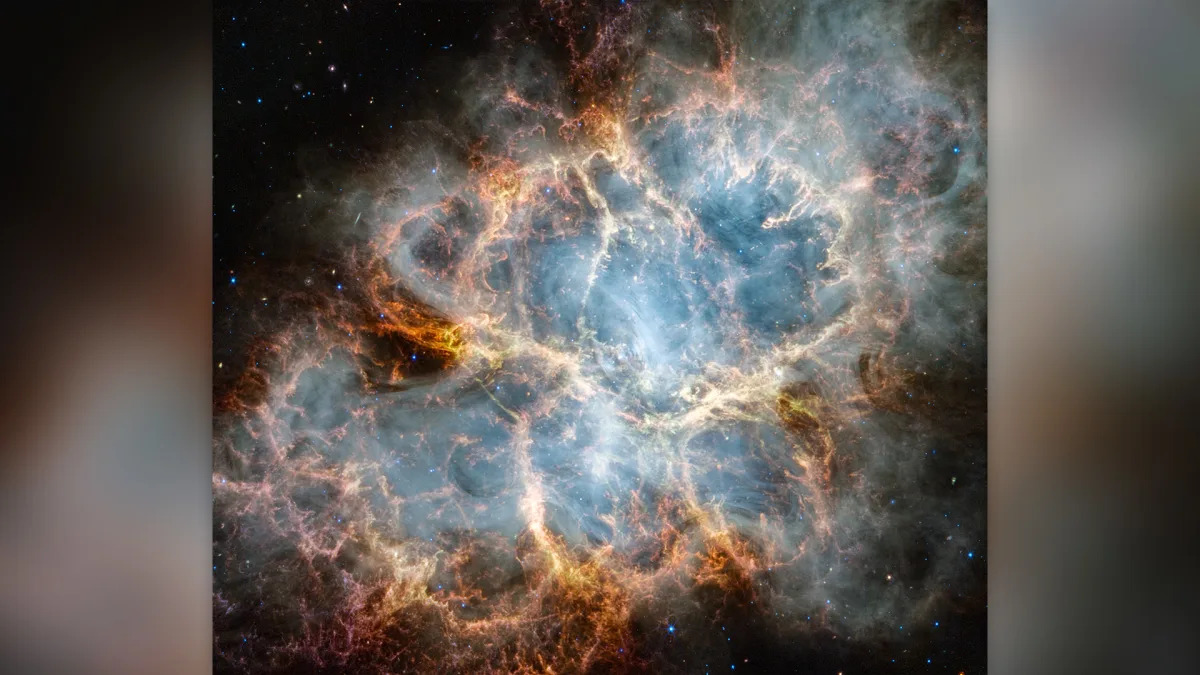
The James Webb Space Telescope (JWST) has captured the highest-resolution infrared image of the Crab Nebula, revealing new details within the supernova remnant. The image shows wispy gas filaments, dust grains emitting light, and a bluish-white smoky glow caused by radiation from charged particles moving around magnetic-field lines produced by the central neutron star. JWST's infrared capabilities allow it to see through dust and gas that typically block visible light emissions. This image surpasses the previous best picture from the Hubble Space Telescope in 2005 and provides valuable insights into the inner workings of the Crab Nebula.

astronomy2 years ago

"James Webb Telescope Uncovers Hidden Discovery in Crab Nebula's Core"

The James Webb Space Telescope (JWST) has captured the highest-resolution infrared image of the Crab Nebula, revealing new details within the supernova remnant. The image shows wispy gas filaments, dust grains emitting light, and a bluish-white smoky glow caused by radiation from charged particles moving around magnetic-field lines produced by the central neutron star. JWST's infrared capabilities allow it to see through dust and gas that typically block visible light emissions. This image surpasses the previous best picture from the Hubble Space Telescope in 2005 and provides valuable insights into the inner workings of the Crab Nebula.

space2 years ago

"Stunning Image of Whirlpool Galaxy Captured by NASA's James Webb Telescope"

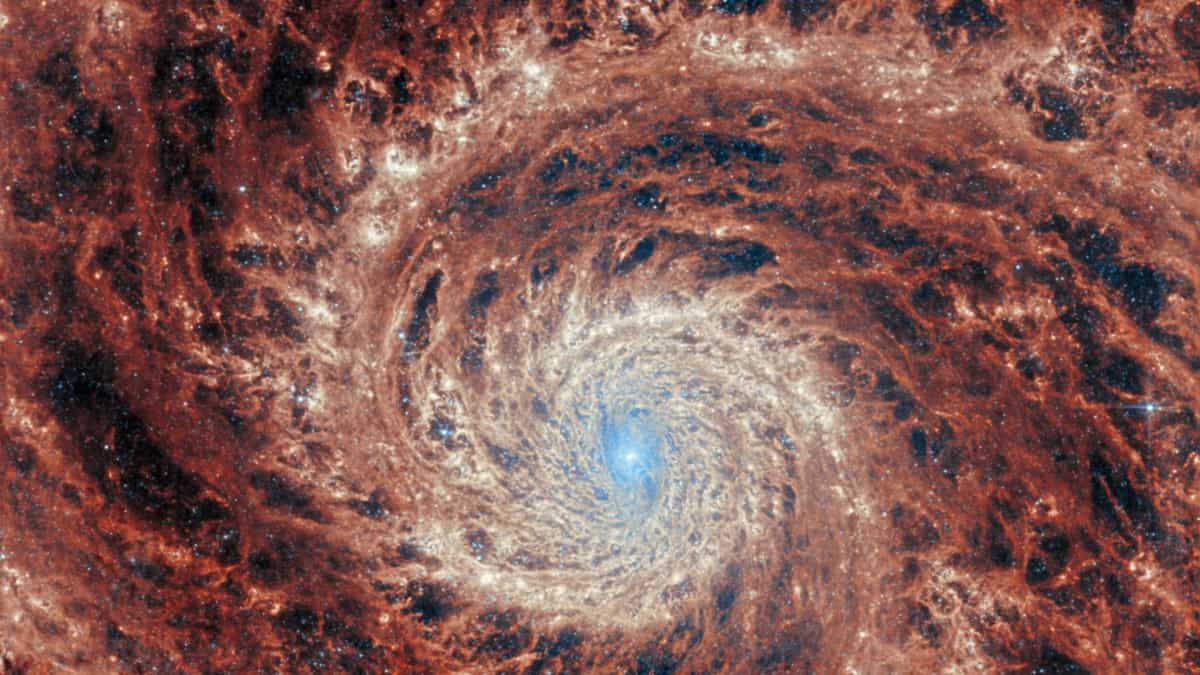
NASA's James Webb Space Telescope has captured a brilliant new infrared image of the Whirlpool Galaxy, also known as M51 or NGC 5194. The image reveals warm dust concentrated along the galaxy's spiral arms, bright areas where stars are forming, regions of ionized gas created by recently formed star clusters, and cavernous black "bubbles" through which stars behind the galaxy can be seen. The telescope is observing the galaxy as part of a series of observations called FEAST, which aims to shed light on the interplay between stellar feedback and star formation in environments outside of our own galaxy.

space-science2 years ago

"Webb's Infrared Snapshot Reveals Dynamic Birth of Stars"

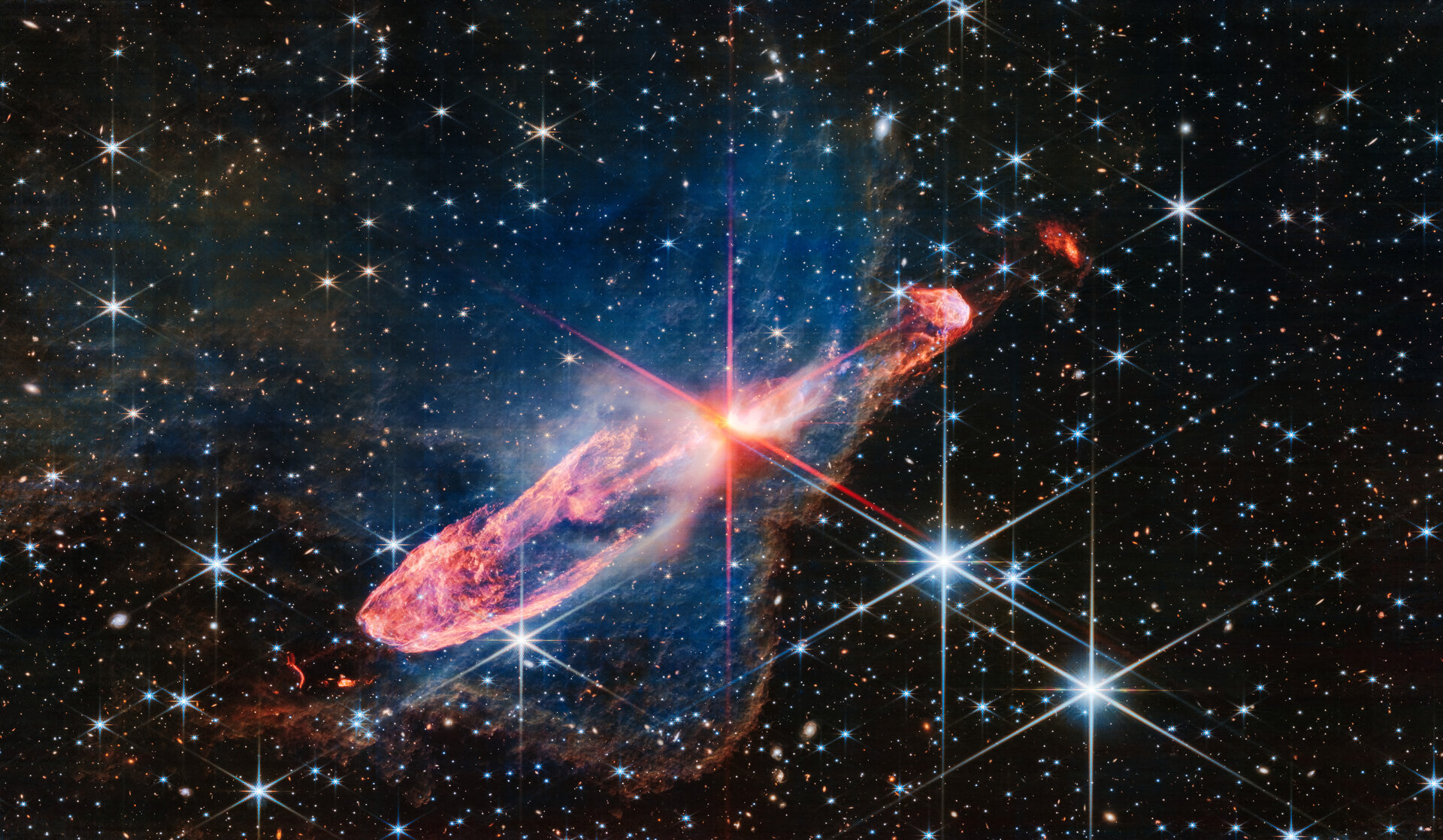
The James Webb Space Telescope has captured a high-resolution near-infrared image of a pair of actively forming young stars, known as Herbig-Haro 46/47, providing the most detailed portrait of these stars to date. The stars are buried in a disc of gas and dust, with their activity and the surrounding nebula now visible. This image will help researchers gain new insights into the process of star formation.

astronomy2 years ago

"Stunning Infrared Image Unveils Cosmic Chameleon's True Colors"

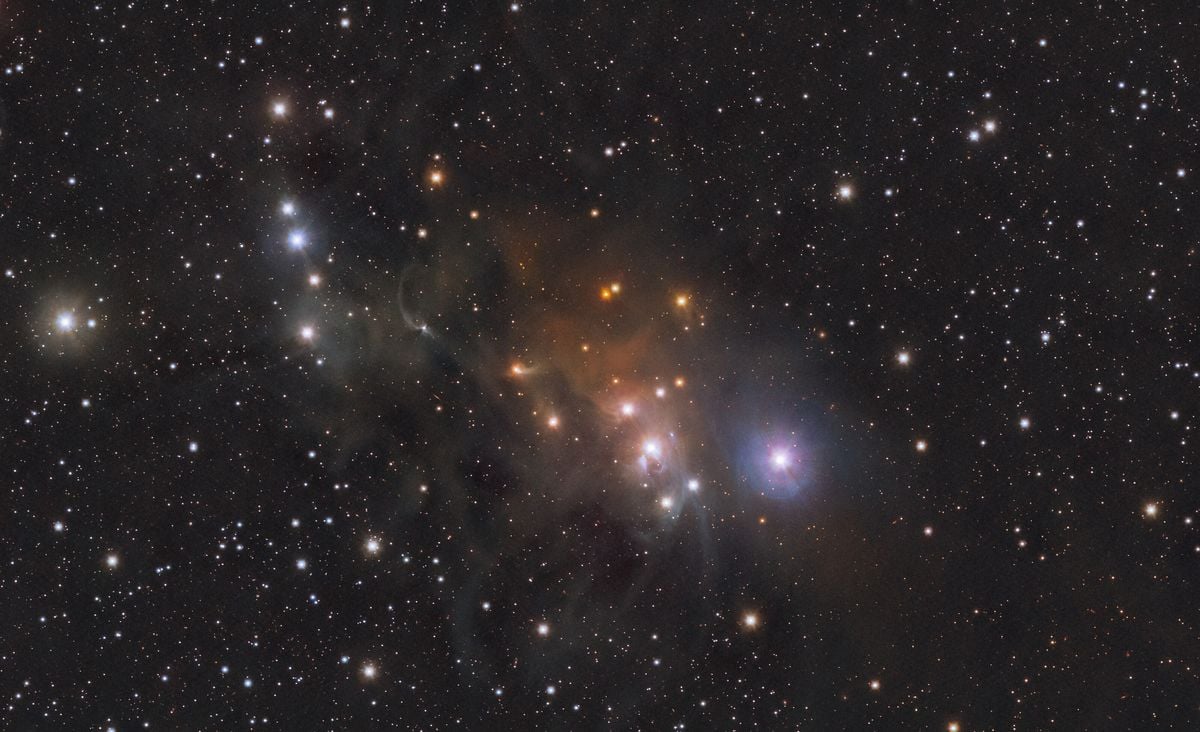
The European Southern Observatory (ESO) has released a stunning infrared image of the Chamaeleon Complex, a vast stellar nursery located approximately 522 light-years from Earth. The image showcases the brightest nebula in the region, IC 2631, which is a reflection nebula made of dust clouds that reflect light emitted from nearby stars. The nebula is primarily illuminated by a young and bright star called HD 97300. The image, captured using ESO's VISTA telescope, reveals interstellar gas and dust energized by young stars in the process of forming. Despite its name, IC 2631 can be observed in the southern hemisphere throughout most of the year.

astronomy2 years ago

"Webb Telescope Uncovers Secrets of Fomalhaut's Planetary System and Debris Disk"

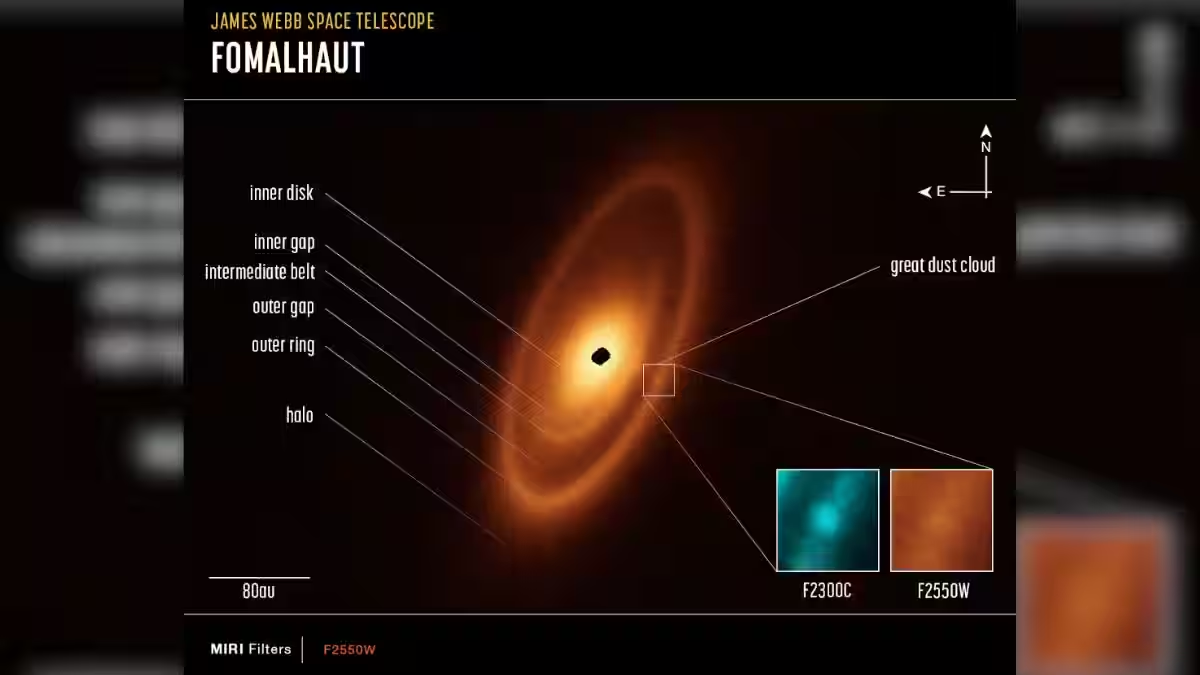
NASA's James Webb Space Telescope captured a sharp infrared image of Fomalhaut's debris disk, revealing details never seen before, including a large dust cloud in the outer ring that is possible evidence for colliding bodies, and an inner dust disk and gap likely shaped and maintained by embedded but unseen planets. The debris belts stretch across a gargantuan amount of space, nearly 14 billion miles (23 billion km) from Fomalhaut. The telescope used its Mid-Infrared Instrument (MIRI) to capture the image.

science2 years ago

NASA's Webb Telescope Reveals Stunning New Details of Supernova Remnants.

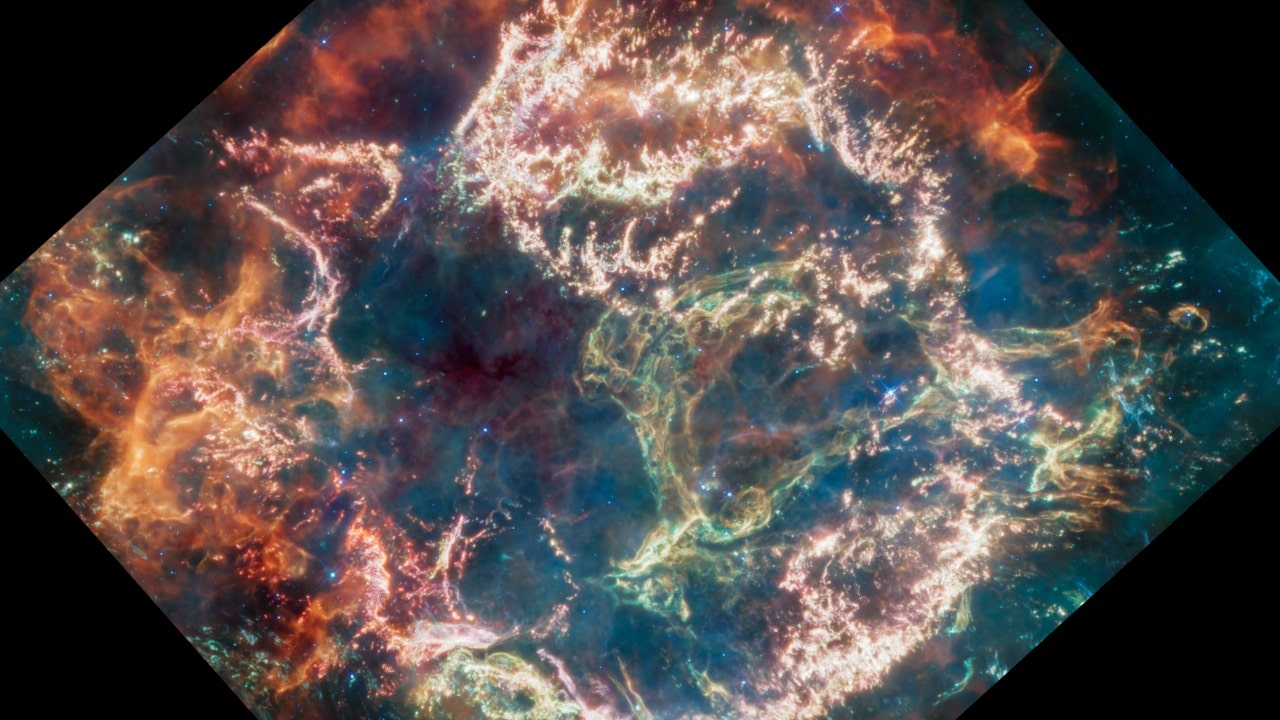
NASA's James Webb Space Telescope has captured a mid-infrared image of Cassiopeia A, the youngest known supernova remnant from an exploding, massive star in our galaxy. The image shows the remnant in new detail, revealing warm dust emissions, heavy elements, and dust emission. Scientists hope to gain a better understanding of its dust content and where the building blocks of planets and ourselves are created.

science-and-exploration2 years ago

Webb captures stunning image of Uranus' rings.

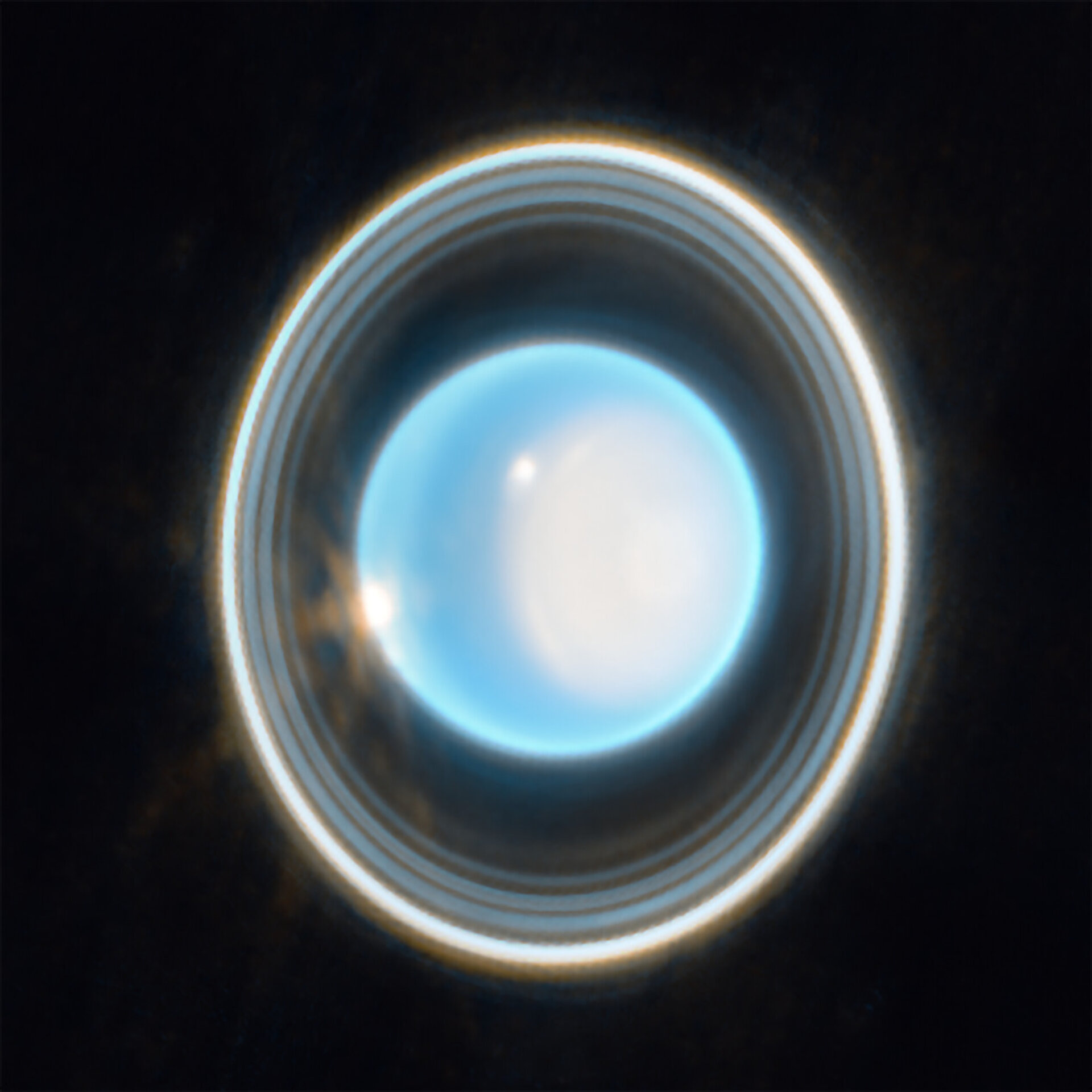
The James Webb Space Telescope has captured a stunning infrared image of Uranus, highlighting the planet's dramatic rings and dynamic atmosphere. The image shows bright features in the planet's atmosphere and demonstrates the observatory's unprecedented sensitivity for the faintest dusty rings. Uranus has 13 known rings, and 11 of them are visible in this image. The sensitivity and longer wavelengths of Webb's Near-Infrared Camera (NIRCam) have revealed a subtle enhanced brightening at the center of the polar cap, which is unique to Uranus. The image is just the tip of the iceberg of what Webb can do when observing this mysterious planet.