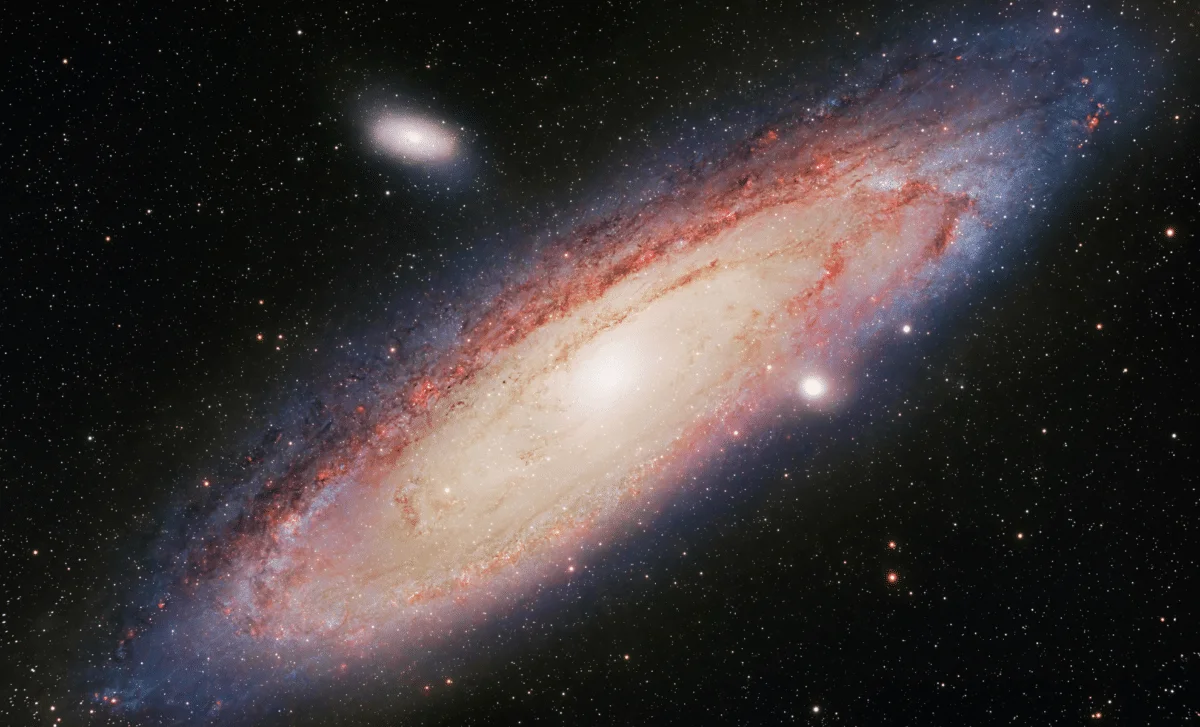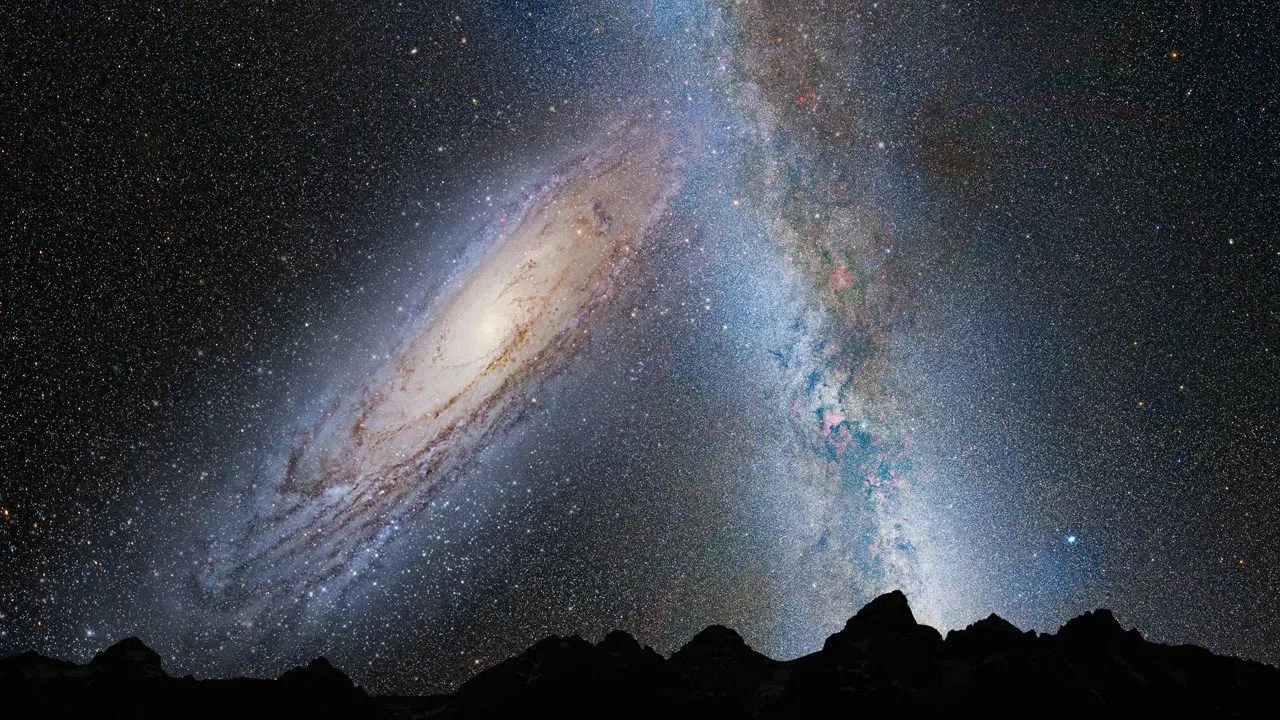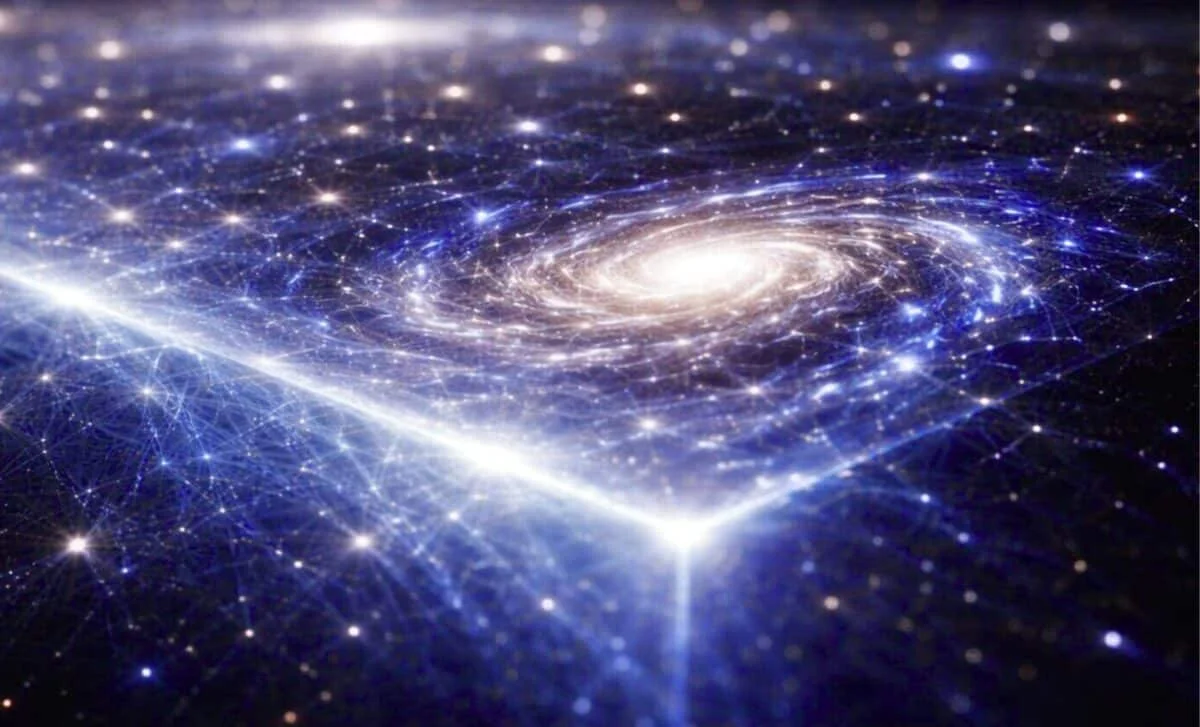
Canadian astronomers used JWST data to create the most detailed timeline of the Milky Way's evolution, revealing a turbulent early history with frequent galaxy mergers and intense star formation, followed by a transition to a stable spiral galaxy.
The article discusses the interstellar object 3I/ATLAS, its abundance in the galaxy, and the potential for future detection and study of interstellar visitors through advanced telescopes and missions, suggesting such objects are common and not unique.
A star-forming region called NGC 2264, located 2,700 light-years away in Monoceros, resembles a Christmas tree with glowing clouds, young stars, and nebulae, creating a festive cosmic display nearly 80 light-years across.
Earth's radio bubble, originating from the first broadcast in 1906, has expanded to a radius of 119 light-years, reaching some nearby stars but only a tiny fraction of the Milky Way, and is gradually diminishing as technology advances.
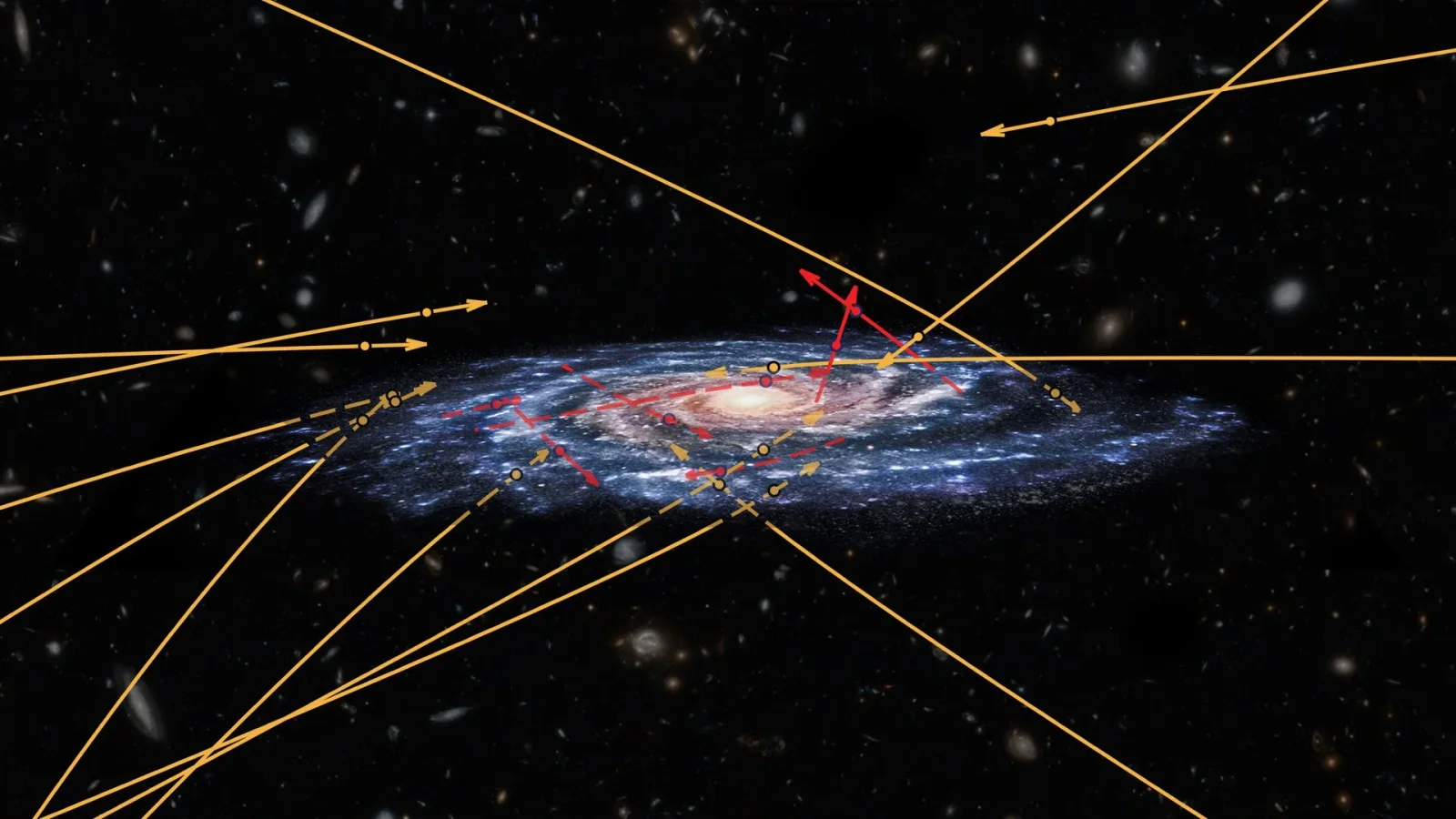
Comet 3I/ATLAS, an interstellar visitor from beyond the Milky Way, made its closest approach to Earth on December 19, coming within 168 million miles, and is now heading back to the outer solar system. Its trajectory suggests it originated from an older, thick disk region of the galaxy, making it potentially the oldest comet observed. Its unexpected brightening near the sun has intrigued scientists, and data from this encounter will enhance understanding of interstellar objects and galactic history.
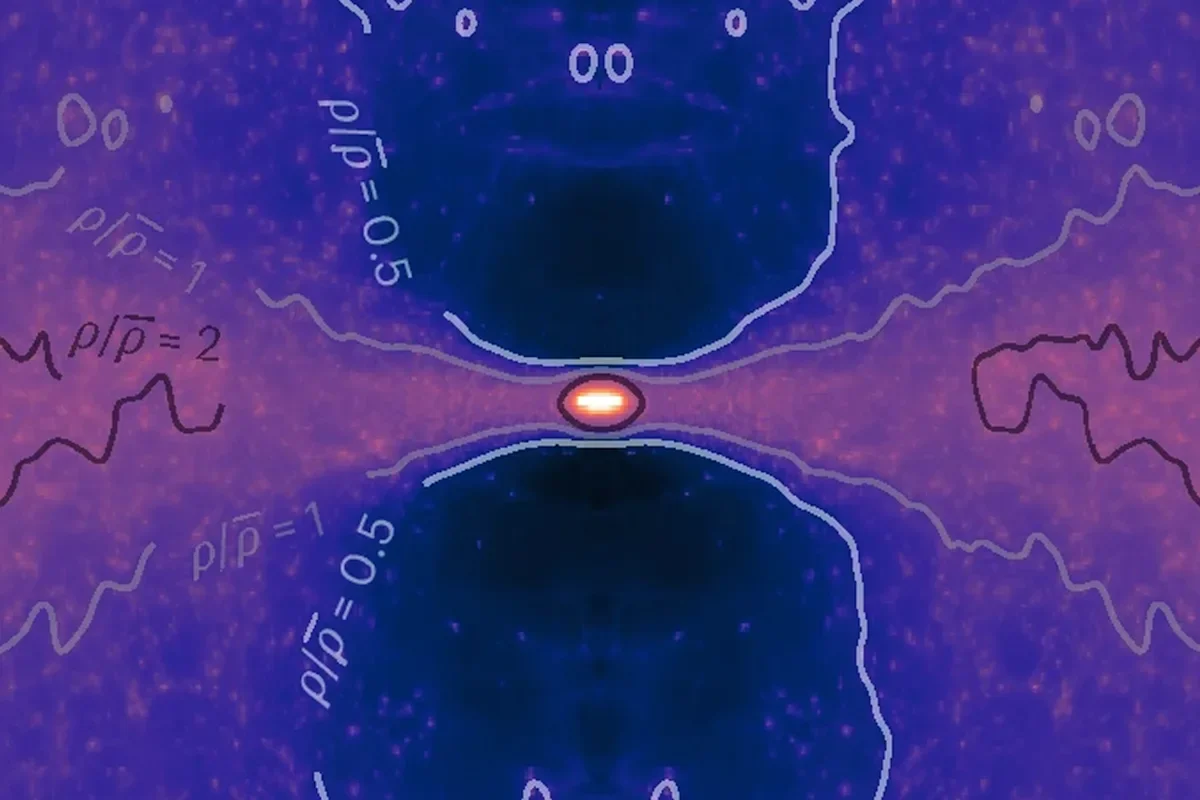
Scientists may have found the first direct evidence of dark matter using gamma rays detected by NASA's Fermi Telescope, which could mark a major breakthrough in understanding this elusive substance, possibly confirming the existence of WIMPs and their annihilation in the Milky Way's center.
A groundbreaking radio image of the Milky Way, created from over 40,000 hours of data, reveals detailed views of star death and birth, marking a significant milestone in galactic imaging and understanding stellar life cycles.
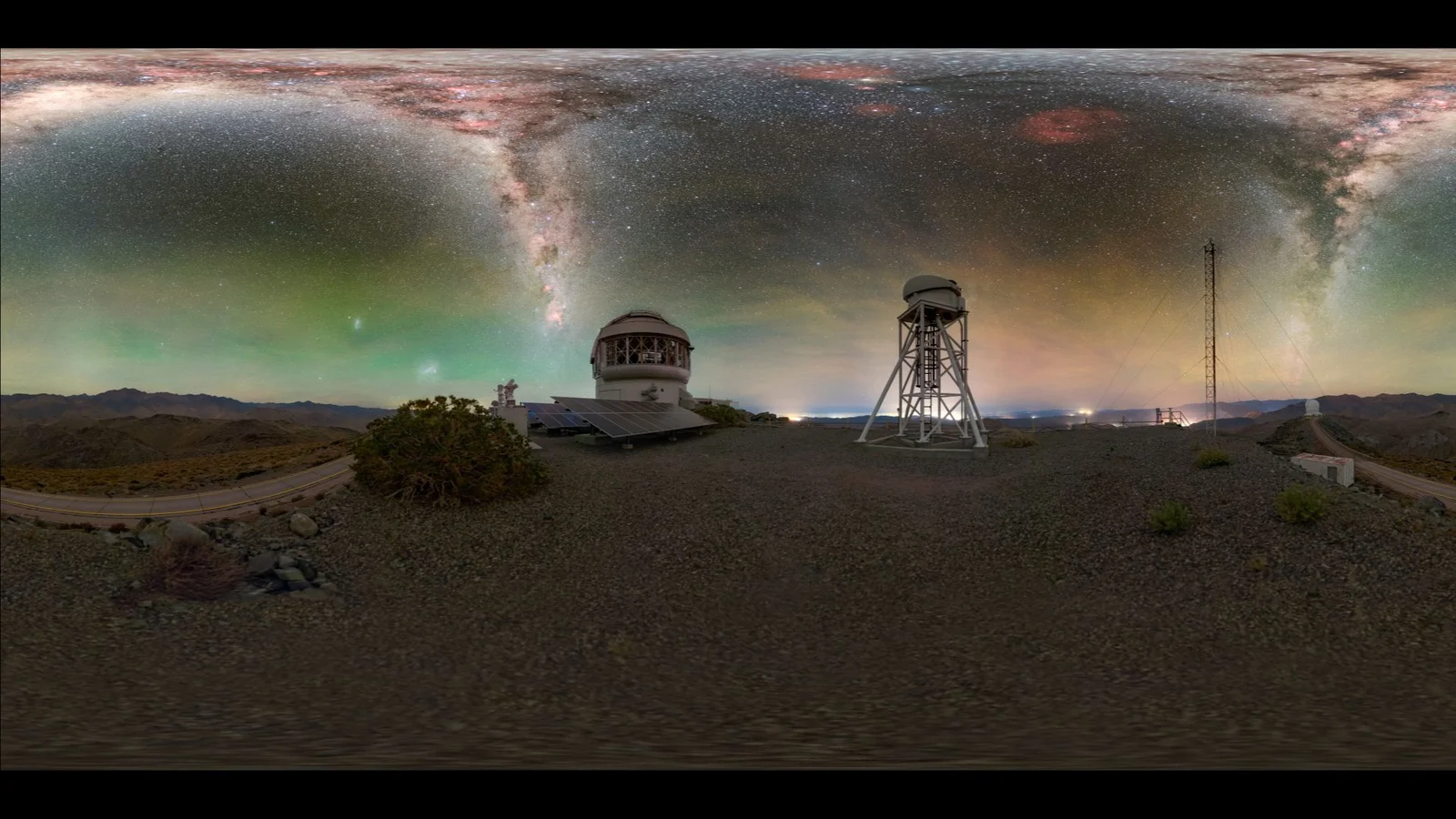
The article highlights a stunning image of the Milky Way over the Very Large Telescope in Chile's Atacama Desert, emphasizing the site's exceptional dark-sky conditions and the importance of protecting such natural environments from light pollution for astronomical research.
Astronomers using Gaia data have discovered a large wave-like ripple in the Milky Way's outer disk, likely caused by a past galactic encounter, such as with the Sagittarius dwarf galaxy, revealing the galaxy's dynamic and active nature.
Astronomers used the Murchison Widefield Array in Western Australia to create a detailed radio color map of the Milky Way's southern region, revealing structures like supernova remnants and star-forming regions, with data available for public use and research.
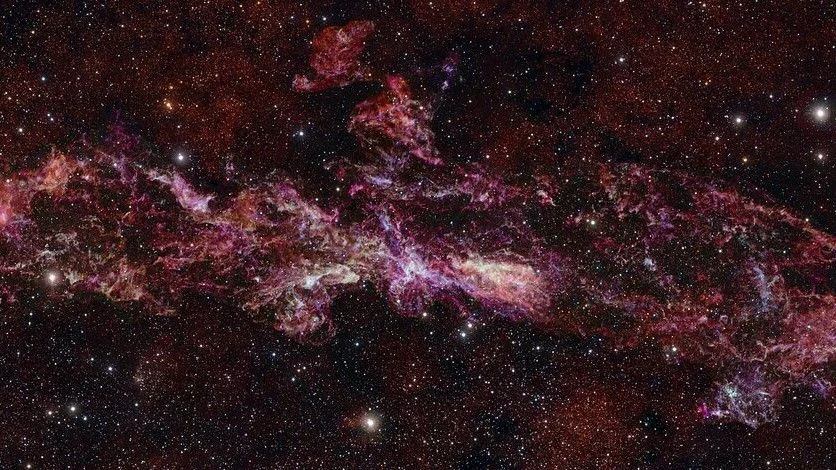
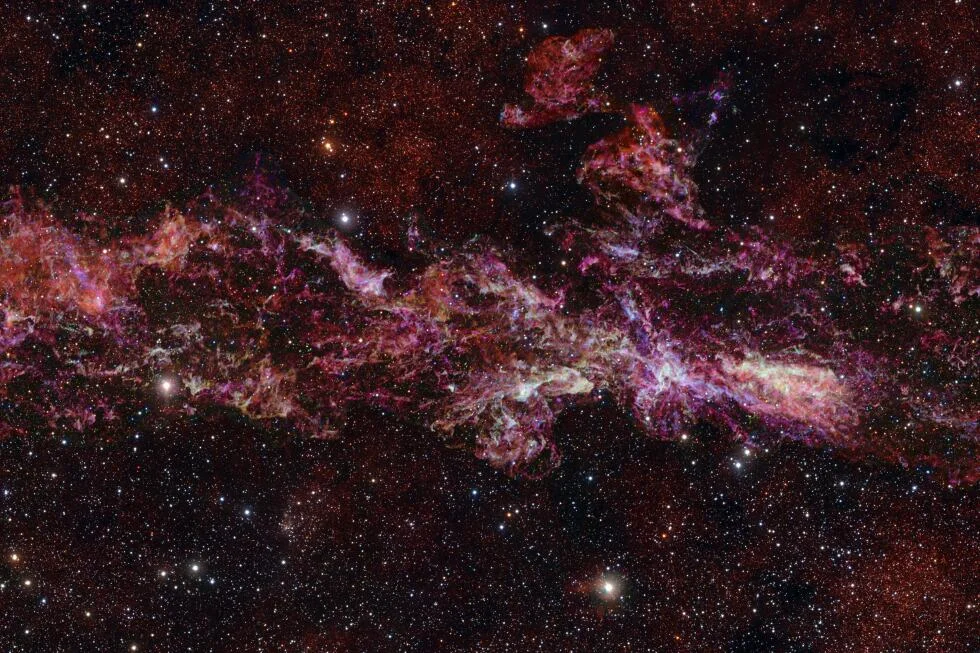
Astronomers have discovered a nearly perfect spherical object in the Milky Way, named Teleios, which is likely a supernova remnant from a Type Ia supernova, but its exact distance and age remain uncertain, prompting further observations.
Astronomers have released the largest low-frequency radio color image of the Milky Way, revealing detailed structures like supernova remnants, star-forming regions, and pulsars, created from data by the Murchison Widefield Array in Australia, providing new insights into our galaxy's hidden features and setting the stage for future observations with the upcoming SKA-Low telescope.
A new, detailed radio map of the Milky Way galaxy has been created using the Murchison Widefield Array, revealing intricate structures and components of our galaxy across a broad range of radio frequencies, providing valuable insights into its composition and evolution.
New high-resolution radio images of the Milky Way's galactic plane, created by combining data from the GLEAM and GLEAM-X surveys using the Murchison Widefield Array, reveal unprecedented detail and will aid future galactic studies, with even more advanced observations expected from the upcoming SKA-Low telescope.
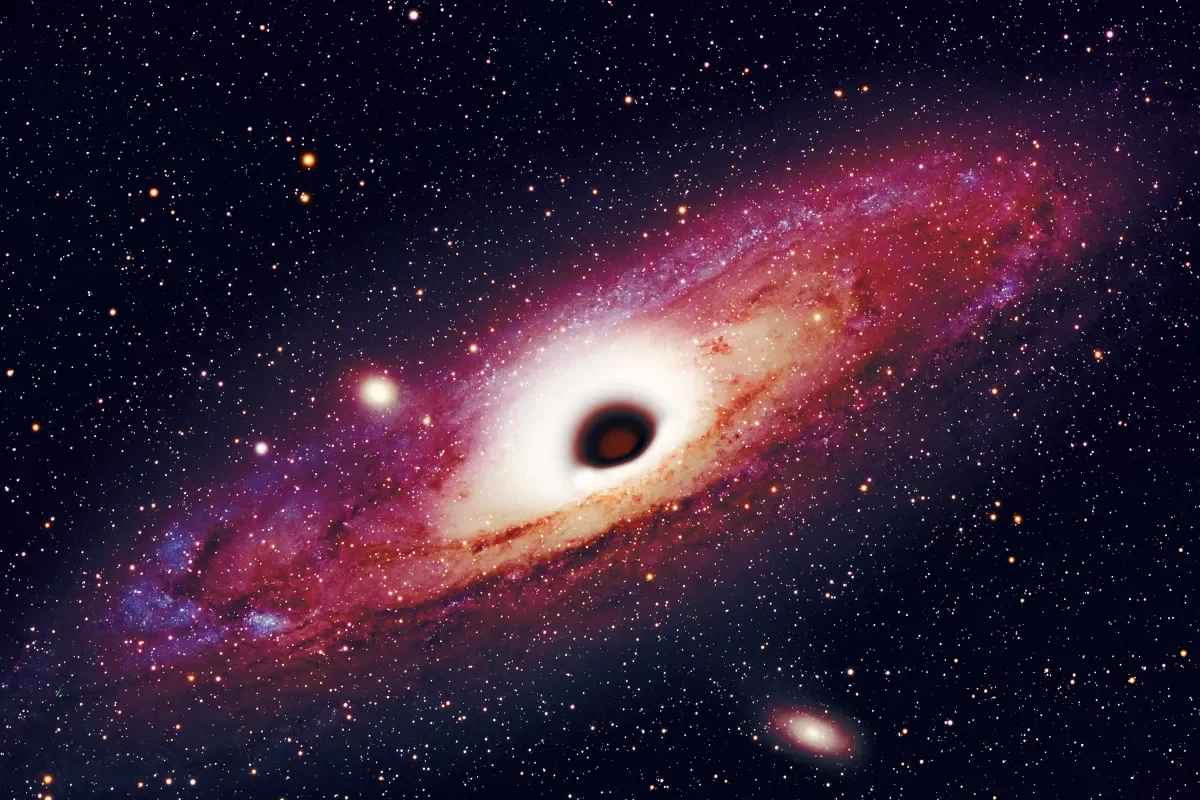
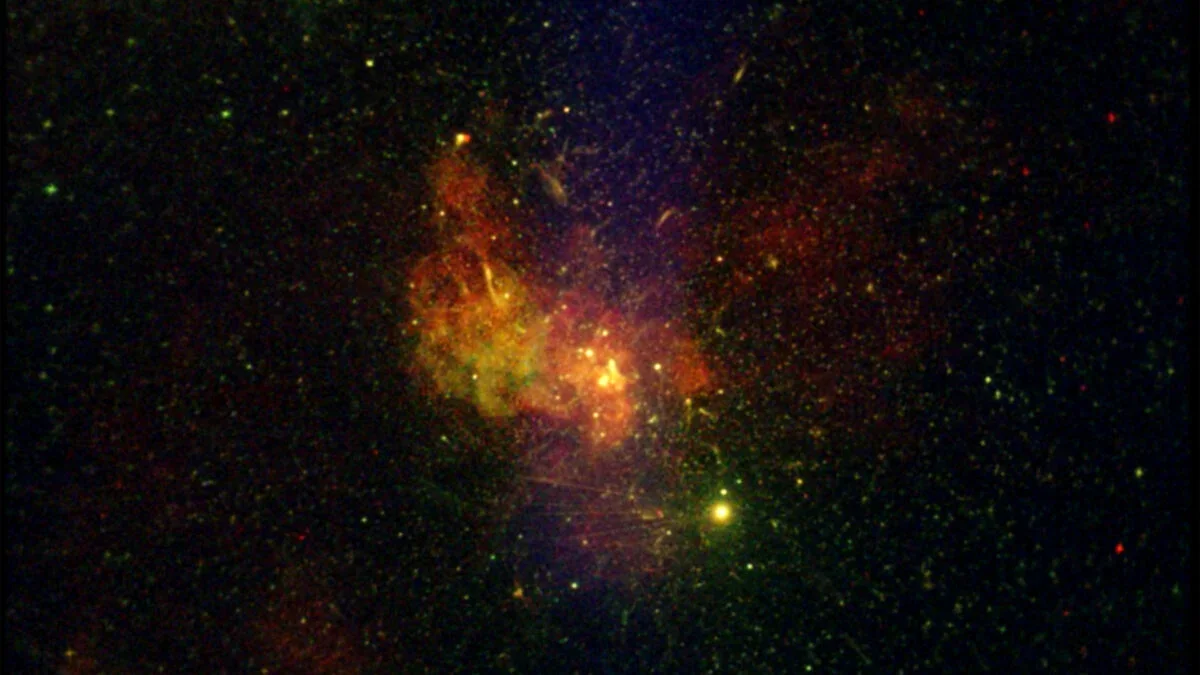
Scientists discovered an unexpectedly large black hole at the center of the tiny galaxy Segue 1, challenging previous beliefs that such small galaxies are primarily held together by dark matter. The black hole, about 450,000 times the mass of the sun, is more massive than all the galaxy's stars combined, prompting a reevaluation of galaxy formation and evolution theories.