Tag

Webb Space Telescope

All articles tagged with #webb space telescope

science-and-technology1 year ago

"Webb Telescope Unveils Extreme Temperature Differences on Distant Exoplanet"

The exoplanet WASP-39b, located 700 light-years away, has a bizarre weather pattern where its permanently dark side is 300 degrees hotter than its permanently light side. This phenomenon is due to powerful winds transferring heat from the star-facing side to the dark side. The Webb Space Telescope's near-infrared spectrograph helped scientists uncover these findings, revealing complex atmospheric dynamics and prompting further study of other tidally locked exoplanets.

astronomy1 year ago

"Unraveling the Enigma: New Insights into Cosmic Explosions and Precious Metal Origins"

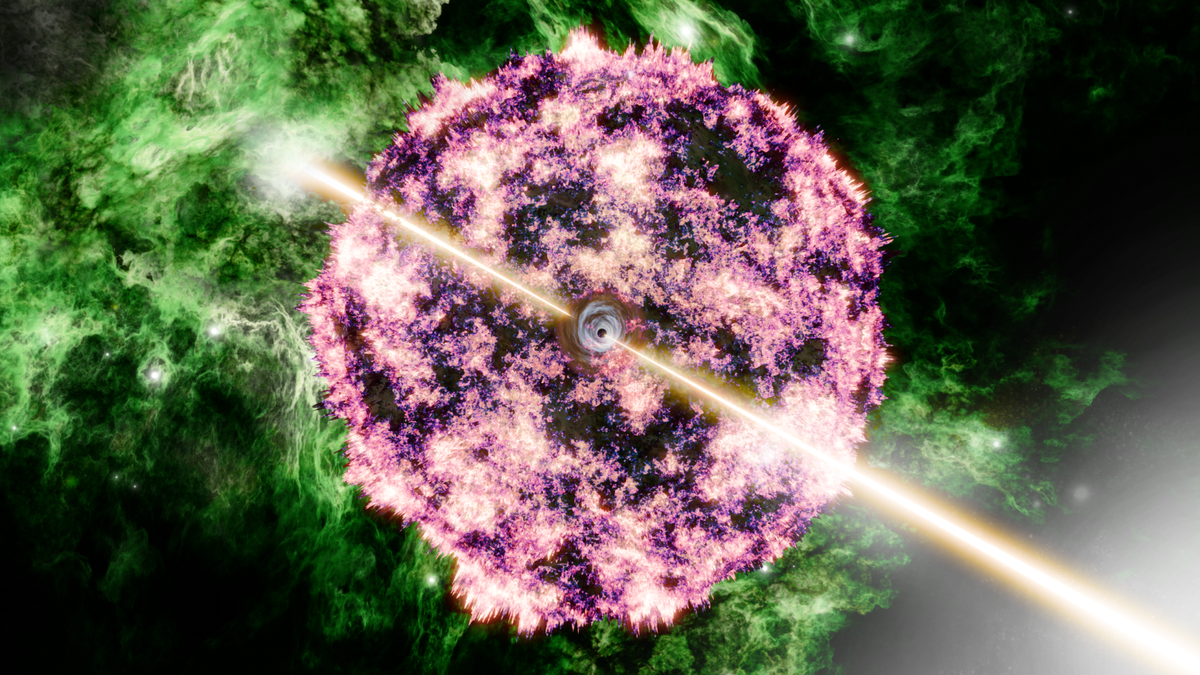
Researchers have determined that the extremely bright cosmic explosion known as the Brightest Of All Time (BOAT) was caused by a supernova, but found no signs of heavy elements like gold and platinum, deepening the mystery of their origins. The event, observed with the Webb Space Telescope, lasted 10 hours and emitted gamma-rays with energies reaching up to 13 teraelectronvolts. The findings challenge previous hypotheses about the production of heavy elements and point to alternative channels for their creation, prompting astronomers to rework their models of cosmic phenomena.

astronomy1 year ago

"Exploring Current Observations of Webb and Hubble Telescopes"

NASA's Webb Space Telescope is being used for current, upcoming, and recent past observations, allowing scientists to study various science themes such as star lifecycle, galaxies over time, other worlds, and the early universe. Users can access details of each observation, including science focus areas and instruments used, through the "Observation Details +" button on the website. The telescope's observations are providing valuable insights into the universe.

astronomy1 year ago

"Space Telescope Discovers Neutron Star in Remnants of Supernova"

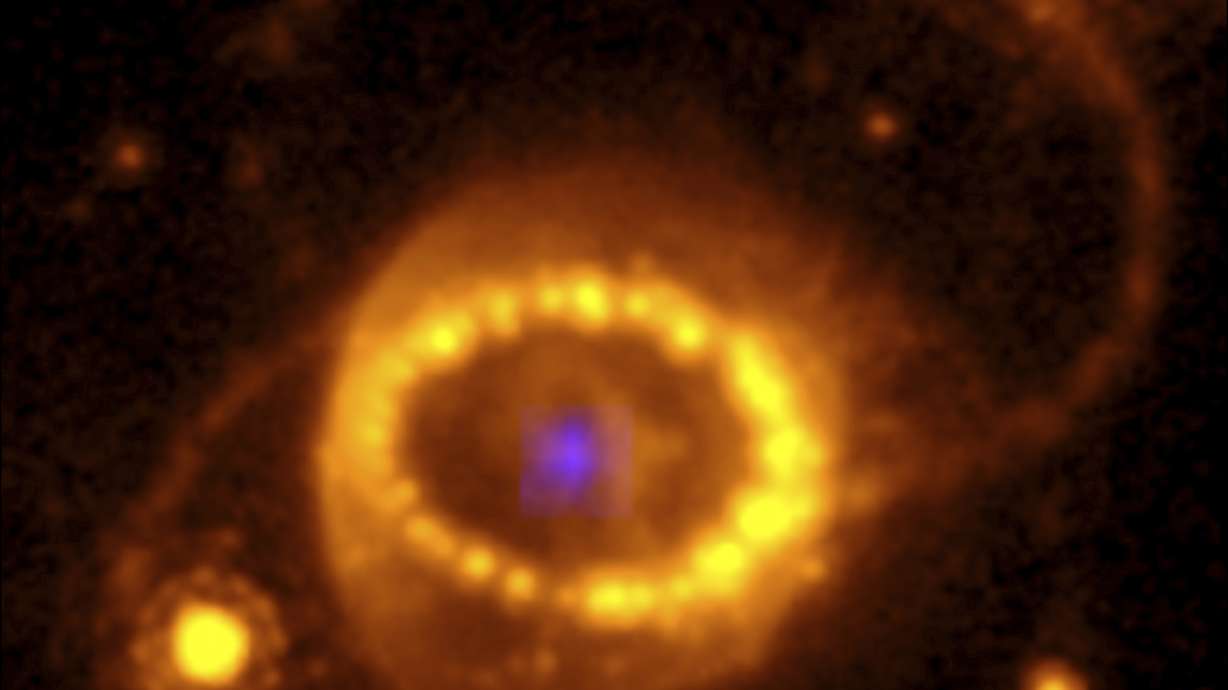
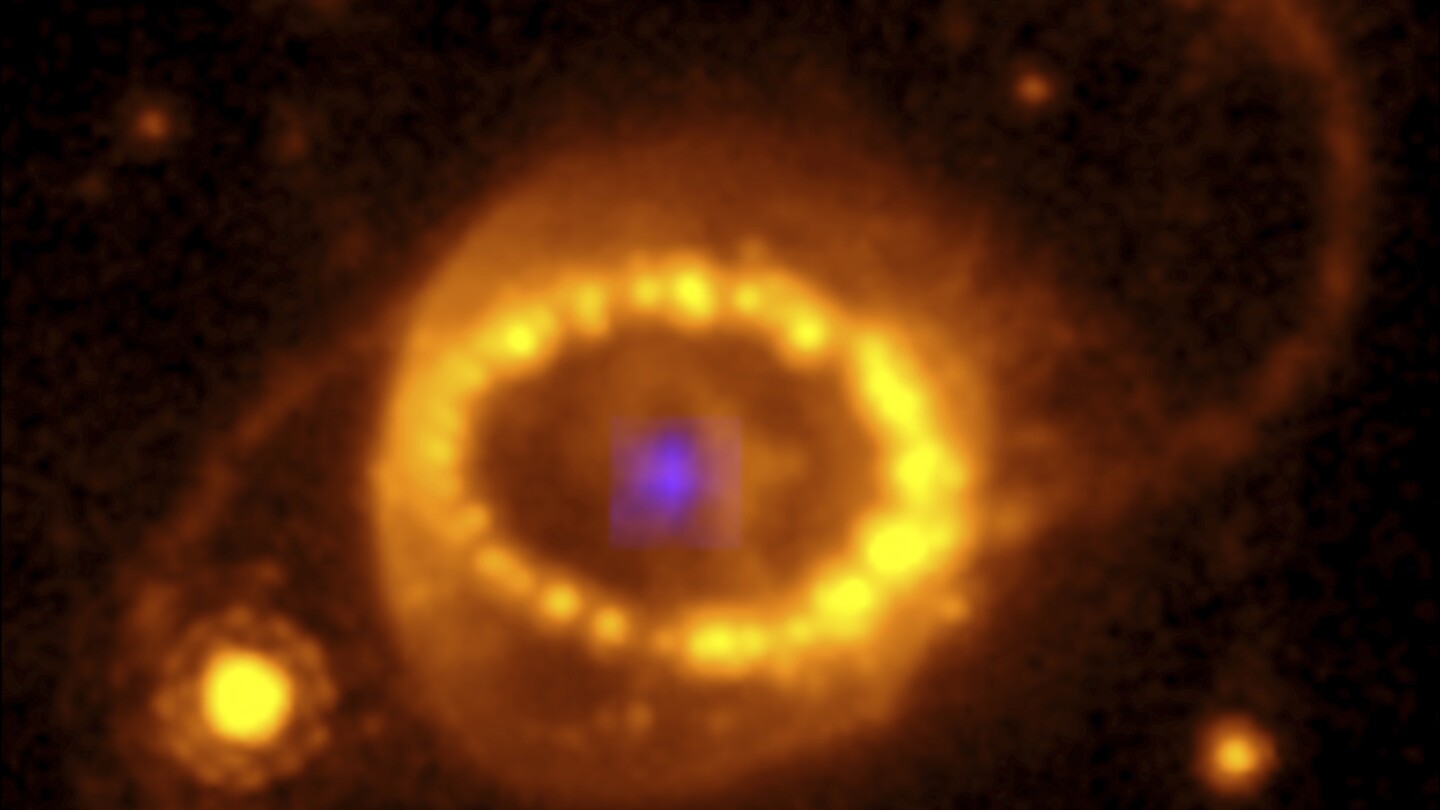
NASA's Webb Space Telescope has confirmed the transformation of a star that exploded in a supernova in 1987 into a neutron star, an incredibly dense object in the universe. The telescope detected two chemical signatures of argon and sulfur, indicating the presence of a pulsing super-hot neutron star in the debris. This discovery will help astronomers better understand neutron stars and their role in seeding the universe with important elements. The neutron star, located in a nearby galaxy, is densely packed and only 12 miles from end to end, yet weighs 1 1/2 times our sun. This marks the first time modern astronomy has witnessed the birth and early years of a neutron star, providing valuable insights into these exotic cosmic objects.

astronomy1 year ago

"James Webb Space Telescope Discovers Neutron Star in 1987 Supernova Debris"

NASA's Webb Space Telescope has confirmed the transformation of a star that exploded in a supernova in 1987 into a neutron star, using infrared light to cut through debris and detect chemical signatures. This discovery provides insight into the birth and early years of a neutron star, shedding light on these exotic cosmic objects and their role in seeding the universe with essential elements. The neutron star, located in a nearby galaxy, is densely packed and weighs 1 1/2 times our sun, making it one of the most enigmatic objects in the universe.

astronomy2 years ago

"Webb Telescope Discovers Ancient Supernova Through Gravitational Lens"

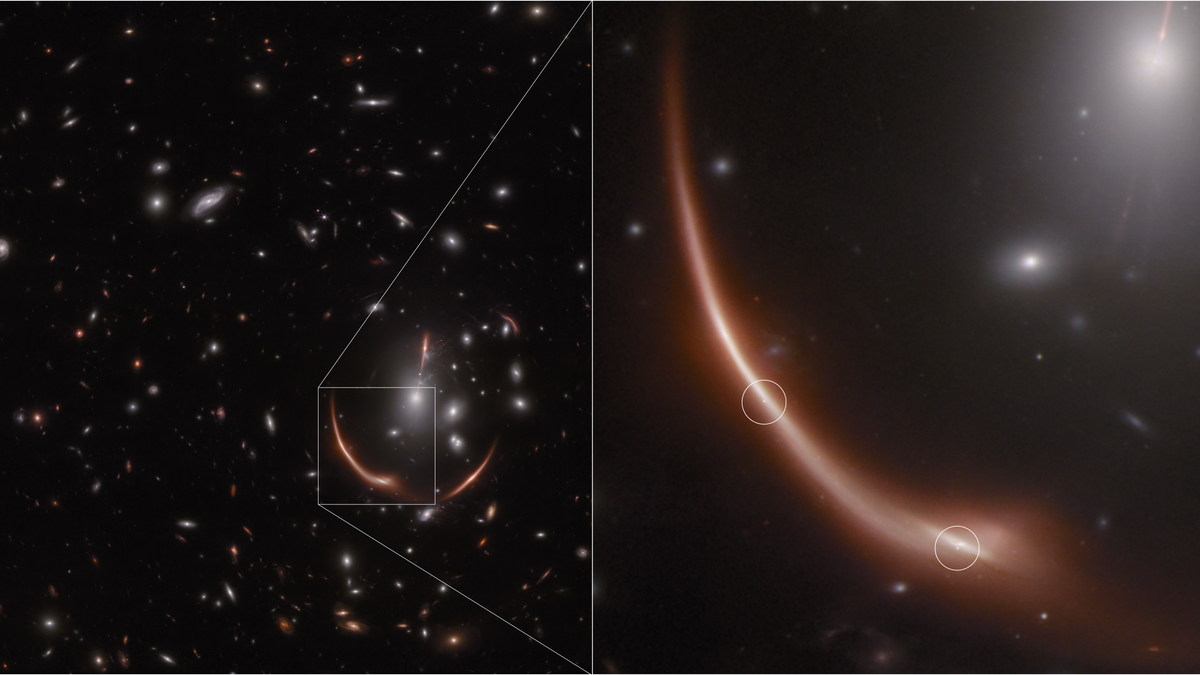
The Webb Space Telescope has captured images of a supernova in the ancient universe, magnified by a gravitational lensed galaxy. Named Encore, this is the second supernova spotted in the lensed region, with the first one, Requiem, expected to reappear in 2035. Gravitational lenses allow astronomers to observe faint and distant light sources, providing insights into the size and expansion rate of the universe. Encore and Requiem are Type 1a supernovae, which are crucial for calculating the Hubble Constant and addressing the Hubble Tension.

astronomy2 years ago

"JWST Captures Stunning Image of Uranus: Luminous Rings and Moons Revealed"

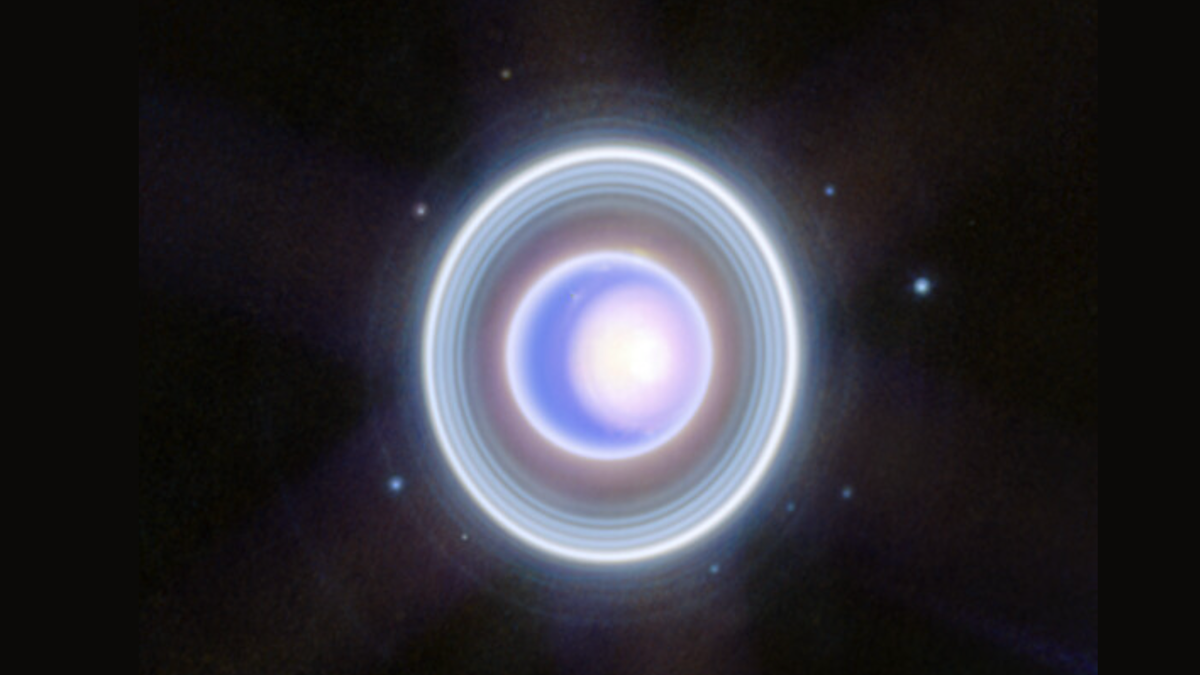
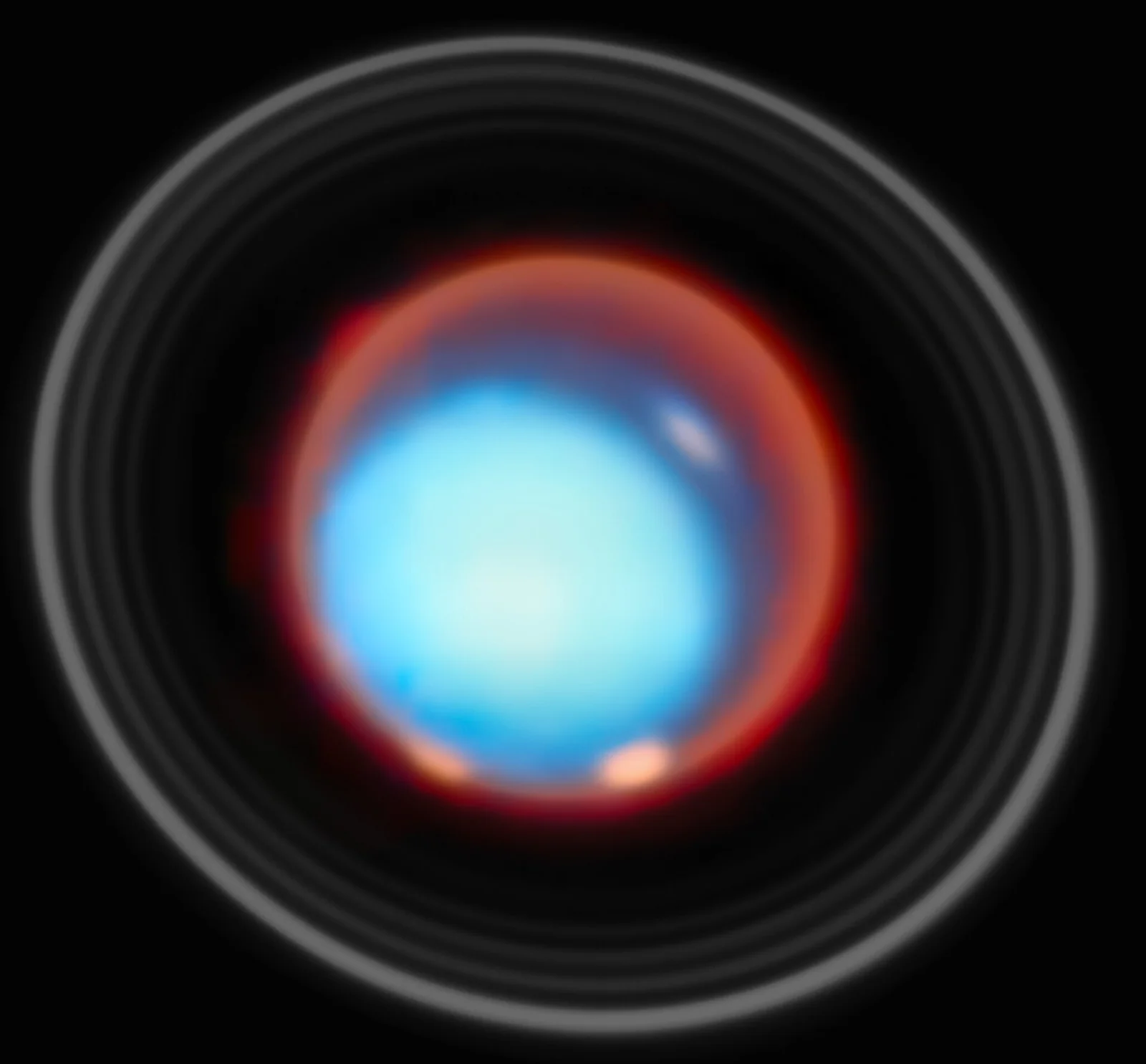
The Webb Space Telescope has captured a stunning image of Uranus, revealing its luminous appearance and ring system. The image also showcases nine of Uranus' moons, which are named after characters from Shakespeare and Pope's works. Uranus, an ice giant with a rocky core, has an extreme tilt that causes a large north polar cap, creating a deep blue crescent. The planet's unique features make it an intriguing subject for planetary scientists, and a probe mission to Uranus has been identified as a top priority for the next decade.

space2 years ago

"Webb Space Telescope Reveals Stunning High-Definition Images of Cassiopeia A Supernova Remnant"

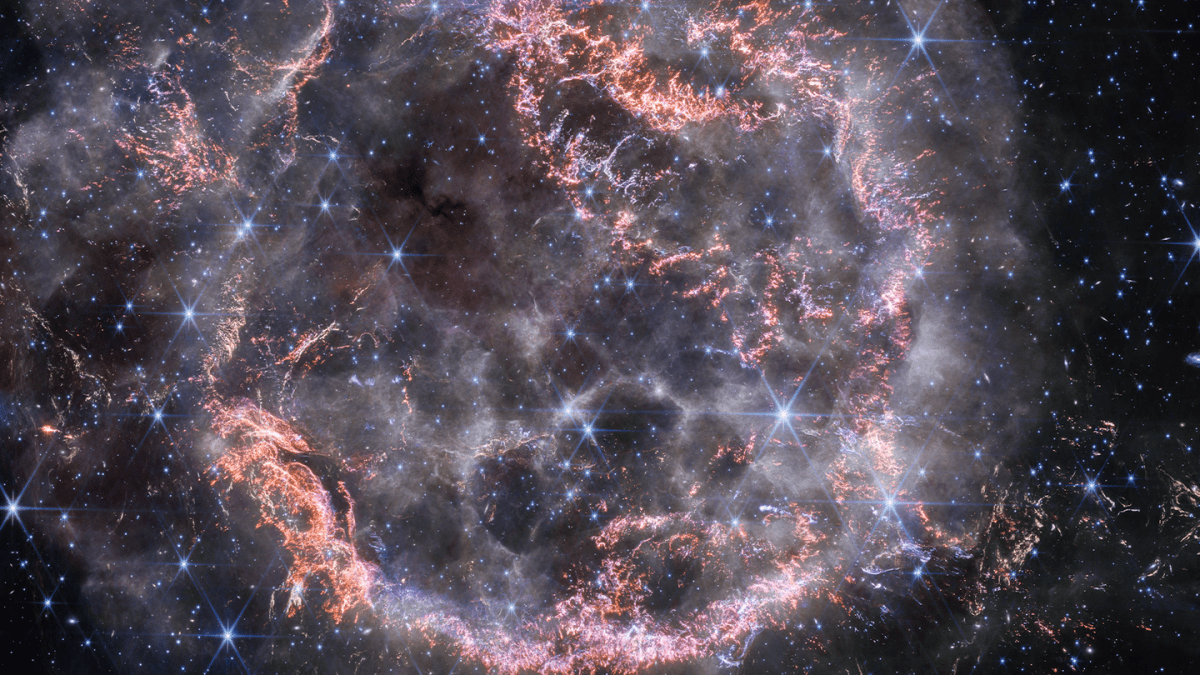
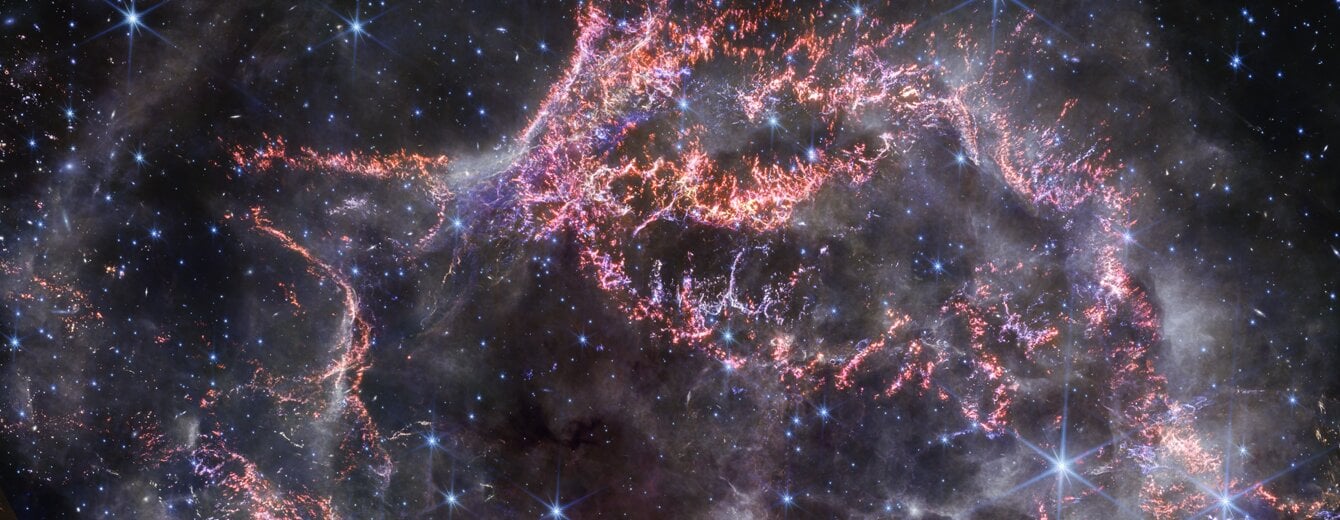
The Webb Space Telescope has captured a high-resolution image of the supernova remnant Cassiopeia A, revealing intricate details of the expanding shell of material from the star's explosion. The image shows clumps of gas in bright orange and light pink, composed of sulfur, oxygen, argon, and neon. The debris includes tiny filaments comparable to shards of glass, providing new insights into the star's explosion. This is the second image of Cassiopeia A taken by Webb, with the invisible wavelengths of light captured by the telescope shifted into the visible spectrum.

space2 years ago

2023: A Year of Stellar Space Achievements and Breathtaking Images

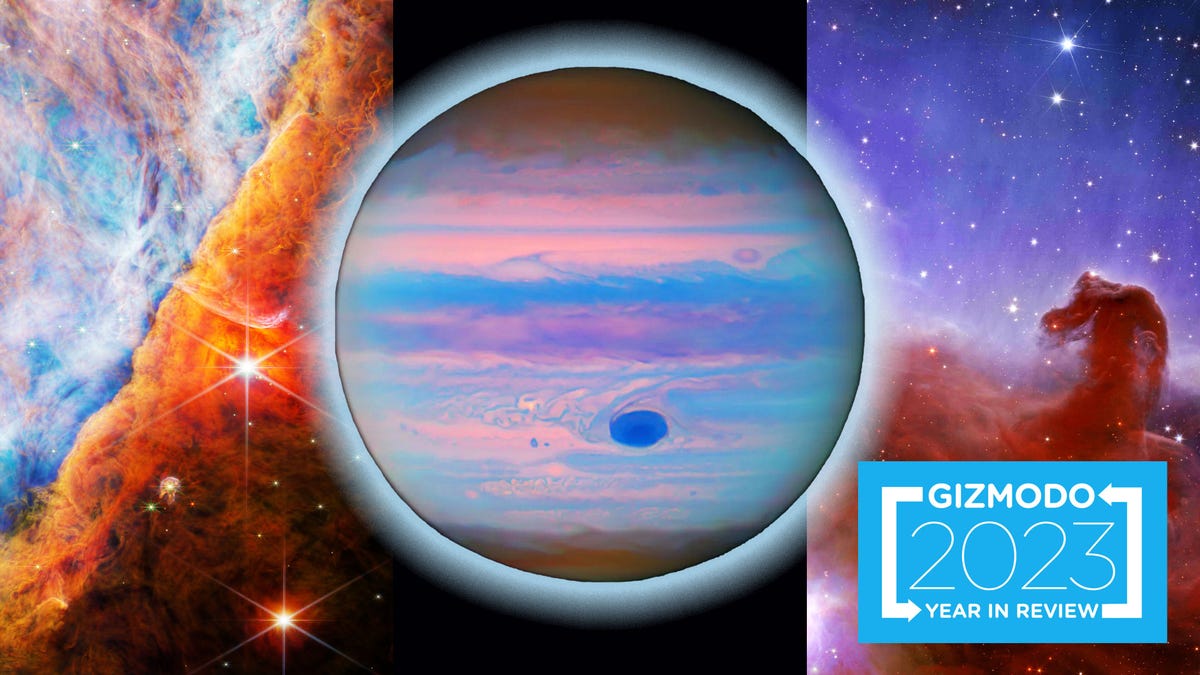
Astronomers have captured stunning space images in 2023, including the closest star-forming region Rho Ophiuchi, the galaxy cluster MACS0416, the Horsehead Nebula, Jupiter in ultraviolet light, a pulsar wind nebula resembling a spectral hand, an infrared aurora on Uranus, the galactic onion NGC 3923, an outburst by Eta Carinae, bipolar jets from Herbig-Haro 211, a gaseous ring of hydrogen orbiting a galaxy, ancient galaxies in the CEERS deep field, the globular cluster Terzan 12, the Ring Nebula, and a massive star in the Milky Way's center.

astronomy2 years ago

"Webb Space Telescope's Stunning HD View Reveals Hidden Secrets of Exploded Star"

The James Webb Space Telescope has provided a stunning new high-definition look at the supernova remnant Cassiopeia A (Cas A) in the near-infrared spectrum. The image reveals intricate details of the expanding shell of material from the exploded star, including tiny knots of gas and light echoes. The image also highlights the absence of color in certain regions, indicating the presence of ionized gas and dust. Researchers are particularly intrigued by a large, striated blob called "Baby Cas A," which appears to be a light echo located about 170 light-years behind the supernova remnant.

astronomy2 years ago

Hubble Telescope Identifies Earth-Sized Exoplanet with Similar Gravity

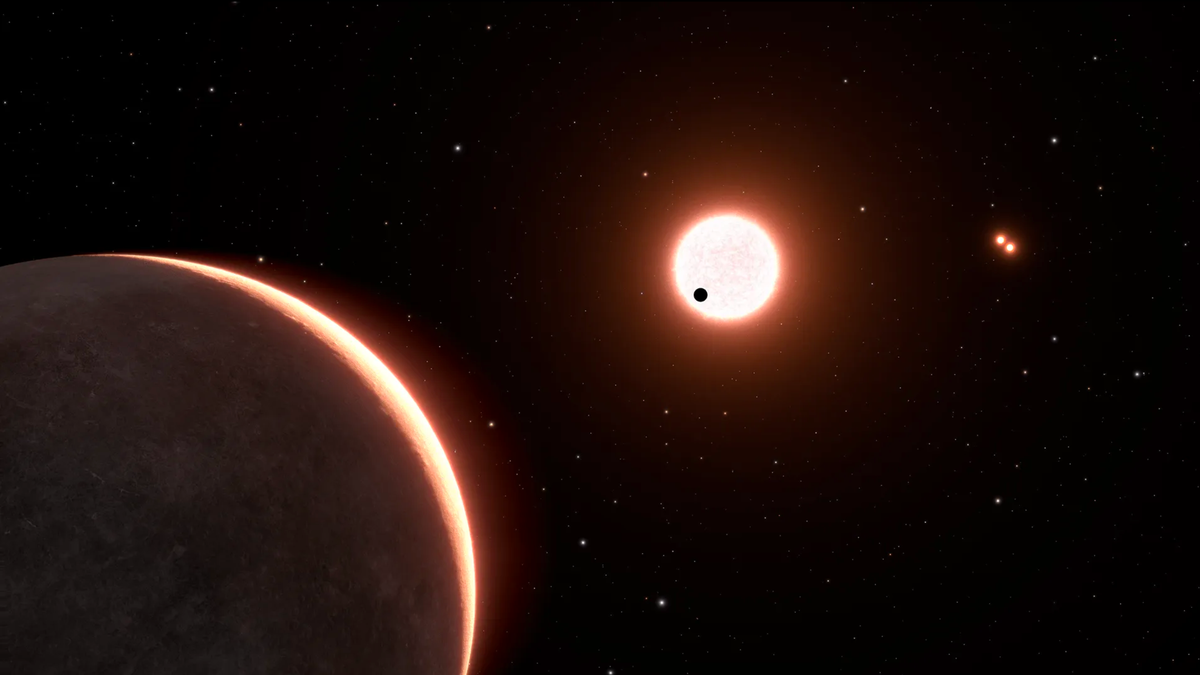
The Hubble Space Telescope has accurately determined the size of an Earth-sized exoplanet named LTT 1445Ac, which orbits a red dwarf star in a triple system 22 light-years away from Earth. The observations revealed that the planet has a diameter 1.07 times that of Earth, making it a rocky world with similar gravity. However, its surface temperature of 500°F (260°C) makes it unsuitable for life. The findings highlight the importance of space telescopes like Hubble and the upcoming James Webb Space Telescope in the search for habitable worlds beyond our solar system.

space-science2 years ago

"Webb Telescope Discovers Alien World with Sand Clouds and Sulfuric Skies"

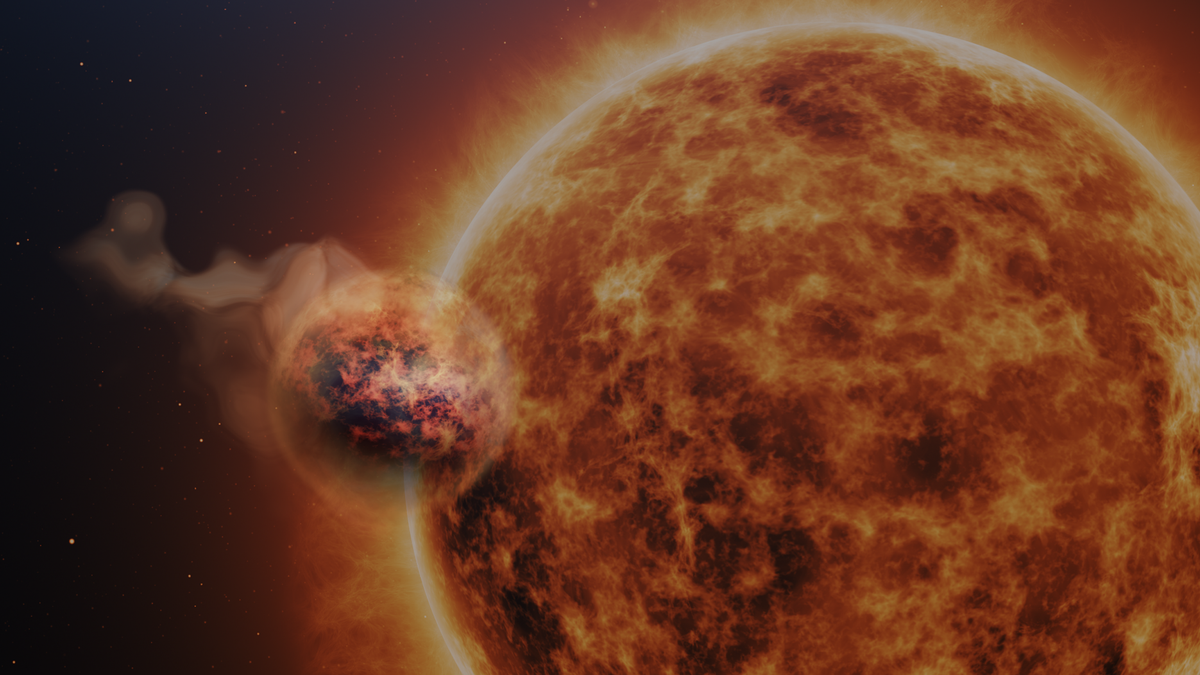
The Webb Space Telescope has discovered a Neptune-like gas giant called WASP-107b, located 211 light-years away from Earth. The telescope detected water vapor, sulfur dioxide, and sand-like silicate clouds in the planet's atmosphere. WASP-107b's less dense constitution allowed astronomers to study its atmosphere in greater detail than is possible with Jupiter. The discovery of sand clouds and sulfuric skies on this exoplanet reshapes our understanding of planetary formation and evolution. The Webb Space Telescope's observations of exoplanets are providing valuable insights into the diversity of worlds and the search for habitable planets beyond our solar system.

astronomy2 years ago

"NASA's Webb Telescope Discovers Powerful Jet Stream on Jupiter"

The Webb Space Telescope has detected a high-speed jet shooting across the equator of Jupiter, traveling at about 320 miles per hour and located in Jupiter's lower stratosphere. This discovery suggests that Jupiter's atmosphere may be more dynamic than previously thought. The jet was tracked using visible wind shears in the image taken by Webb's Near-Infrared Camera. The finding indicates that Jupiter's atmospheric circulation around its equator is more similar to Saturn than previously known. Future missions, such as the ESA's JUICE and NASA's Europa Clipper, will provide more detailed observations of Jupiter and its moons.