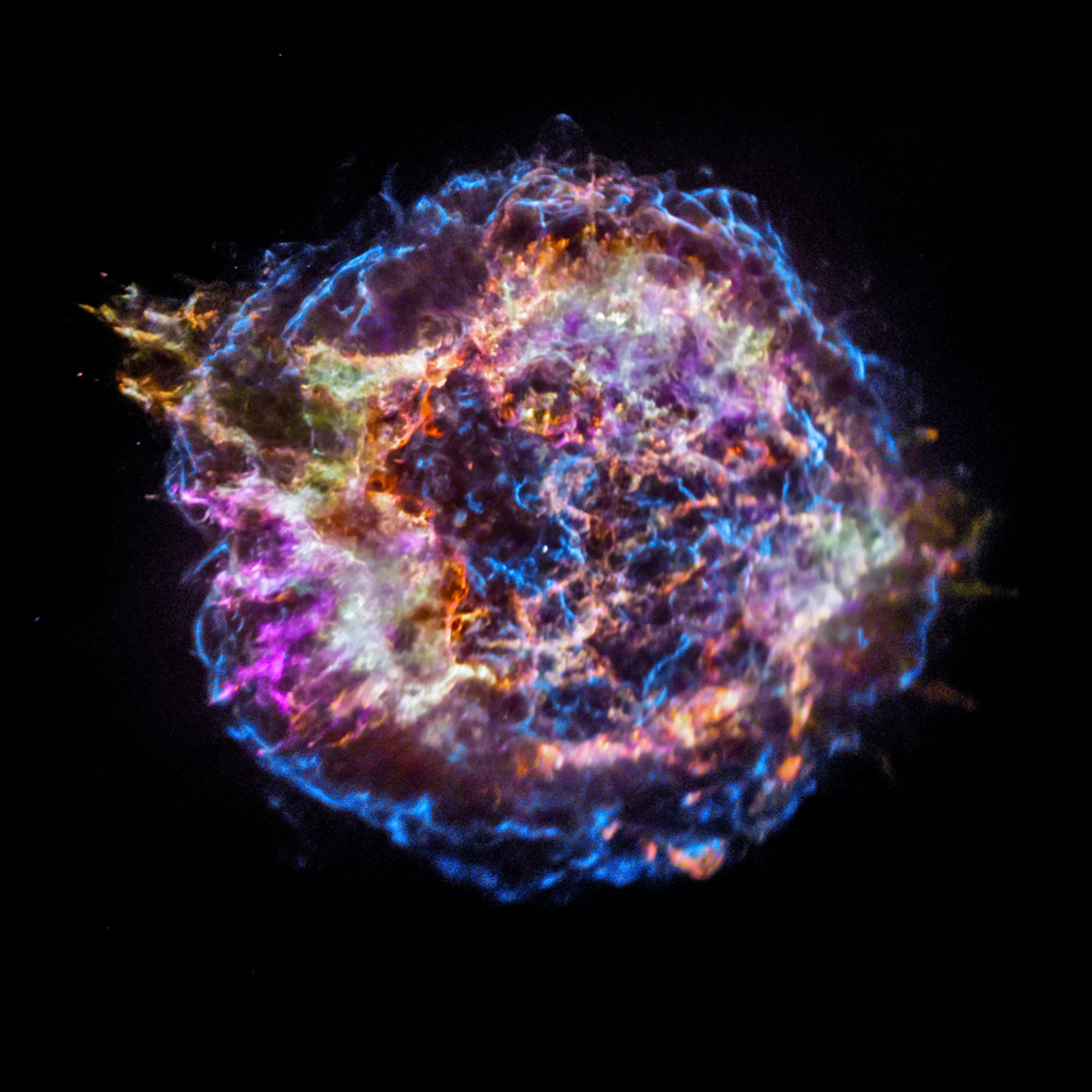
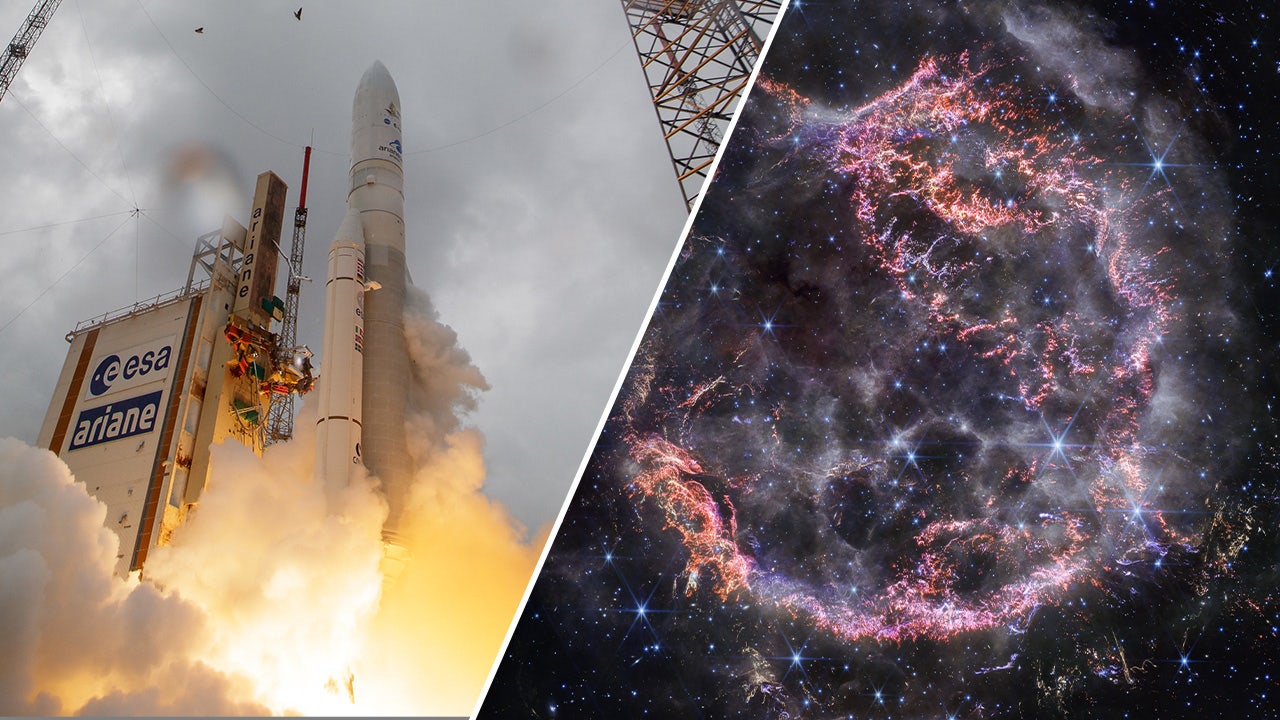
NASA's Chandra X-ray Observatory revealed that a star, Cassiopeia A, experienced violent internal upheaval just hours before its explosion, with layers of silicon and neon breaking into each other, which may have influenced the shape and dynamics of the supernova remnant and its explosion mechanism.
The James Webb Space Telescope has provided new insights into the supernova remnant Cassiopeia A, revealing detailed structures of carbon monoxide and argon ejecta. These findings challenge previous beliefs about dust formation in the early universe, showing that CO molecules are reforming after the reverse shock, which may protect dust in the ejecta. The study highlights the complex processes of molecular formation and destruction in supernova remnants and their role in cosmic dust formation.
To celebrate the 25th anniversary of the Chandra X-ray Observatory, NASA released time-lapse videos of two supernova explosions, the Crab Nebula and Cassiopeia A, showing their evolution over two decades. Despite proposed budget cuts, there is legislative support for the continued operation of Chandra, which has been crucial for astrophysical discoveries.
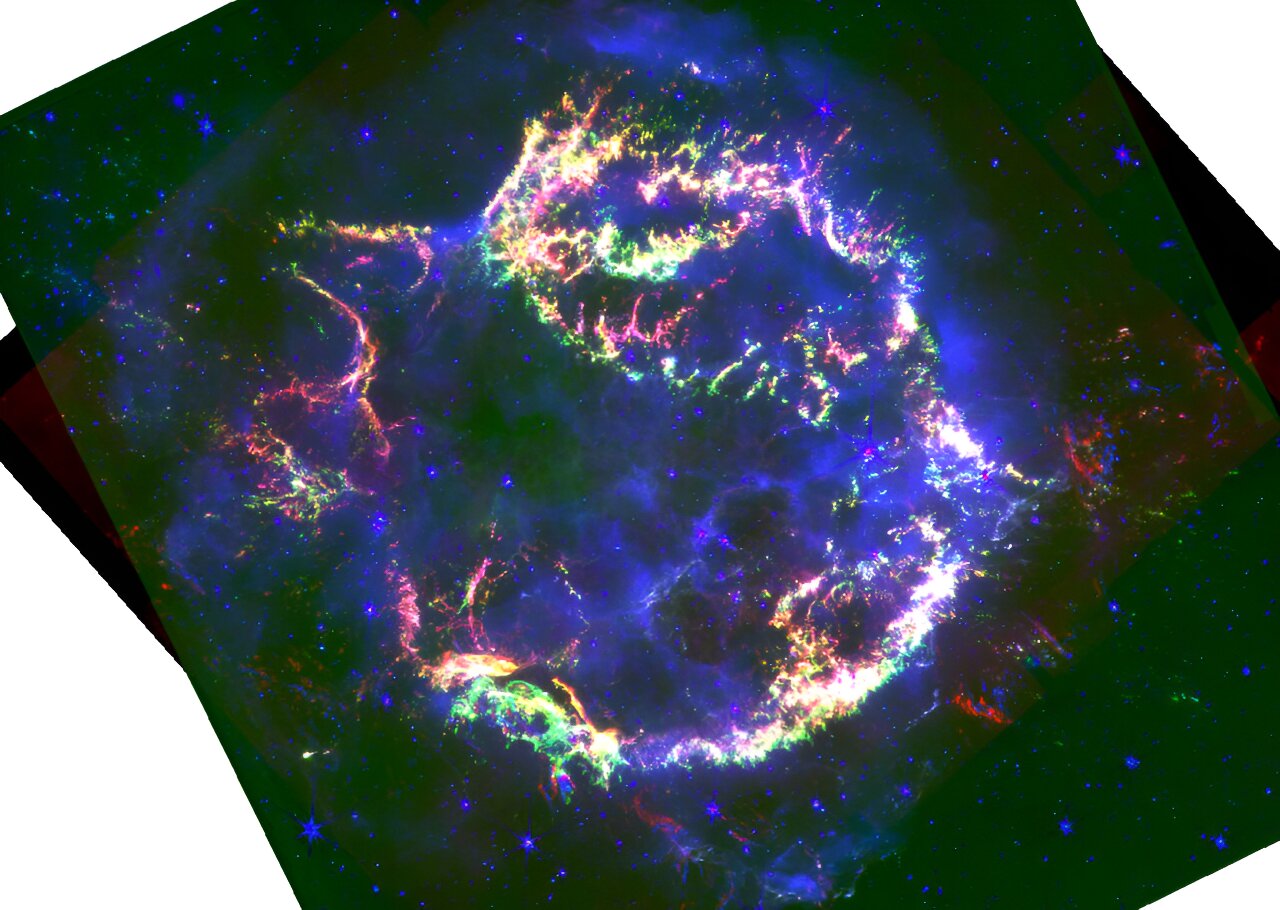
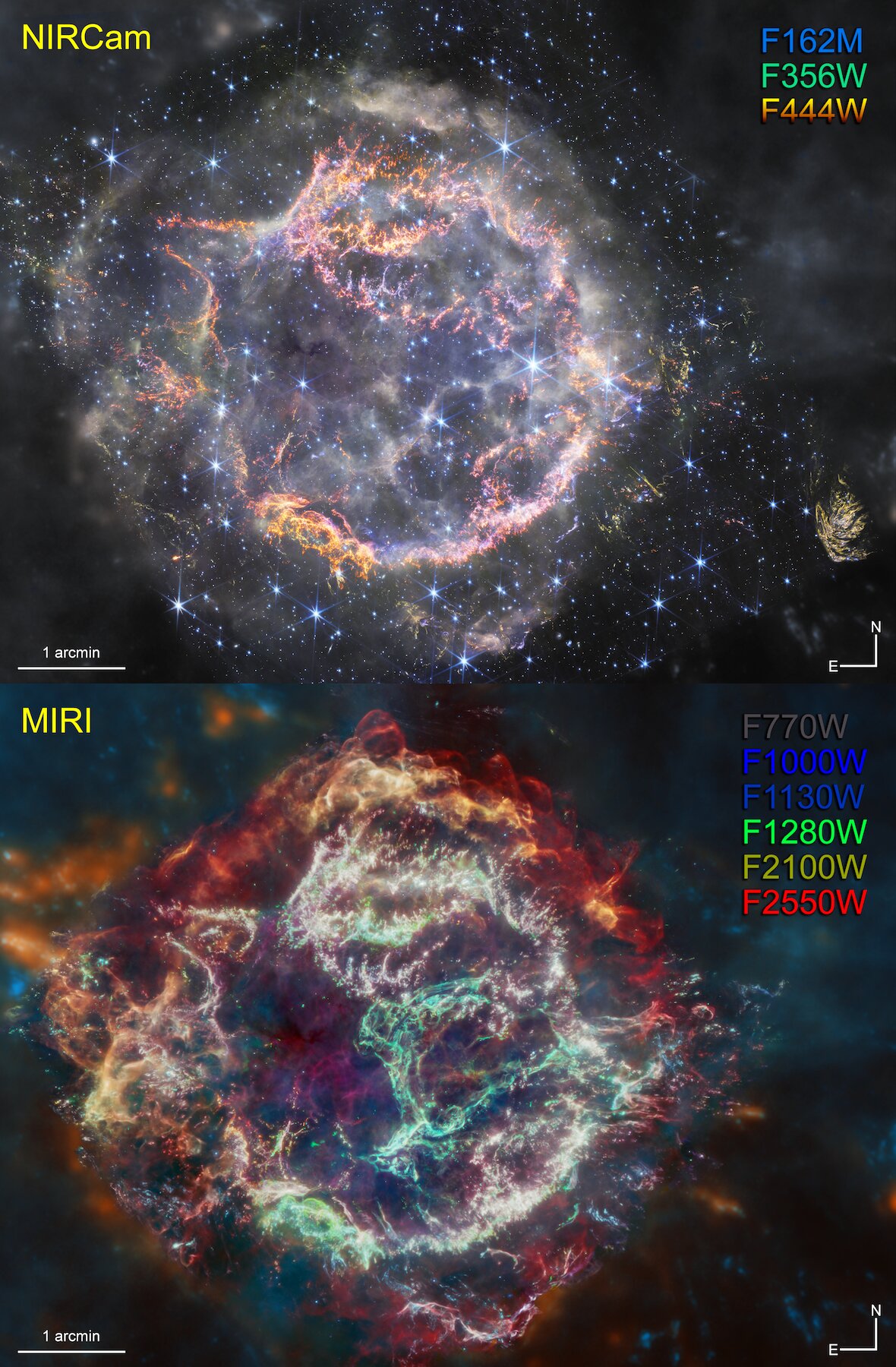
Astronomers have solved the mystery of the "Green Monster," a grinch-like wisp of green light in the Cassiopeia A supernova remnant, revealing it to be a blast wave bordering the debris field. New observations from NASA's James Webb Space Telescope show that the Green Monster's X-ray properties match those of outer regions of the supernova debris field, suggesting it was created when a blast wave slammed into material shed by the star thousands of years prior to its explosion. The discovery also unveiled a network of "pristine debris" near the center of the remnant, shedding light on the physical processes involved in the star's collapse.
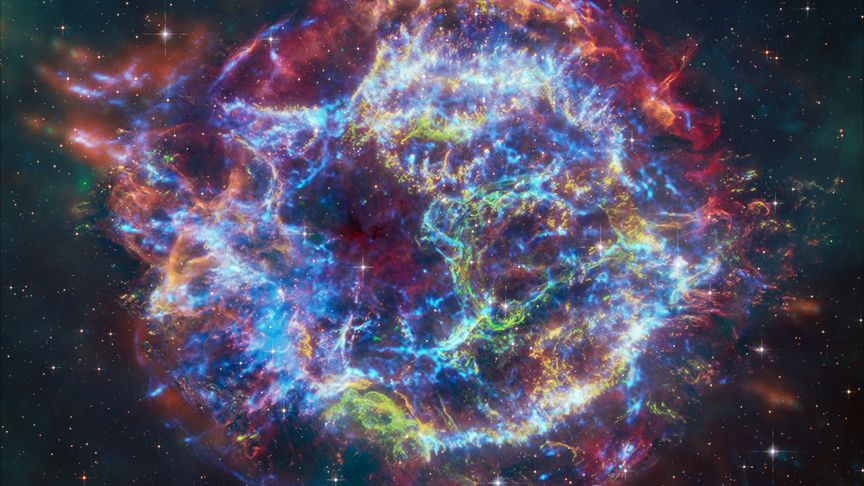
Astronomers have discovered that the "Green Monster," a peculiar green light seen in the remnants of a supernova explosion, is actually a blast wave bordering the debris field. The James Webb Space Telescope captured unprecedented detail of the supernova remnant, revealing a 10-light-year-long ball of light infused with red clouds and streaks of white, green, and orange light. The X-ray properties of the Green Monster match those of the outer regions of the supernova debris field, suggesting it was created when a blast wave collided with material shed by the star thousands of years before its explosion. Additionally, the study uncovered a network of "pristine debris" near the center of the explosion, shedding light on the physical processes involved in the star's collapse.
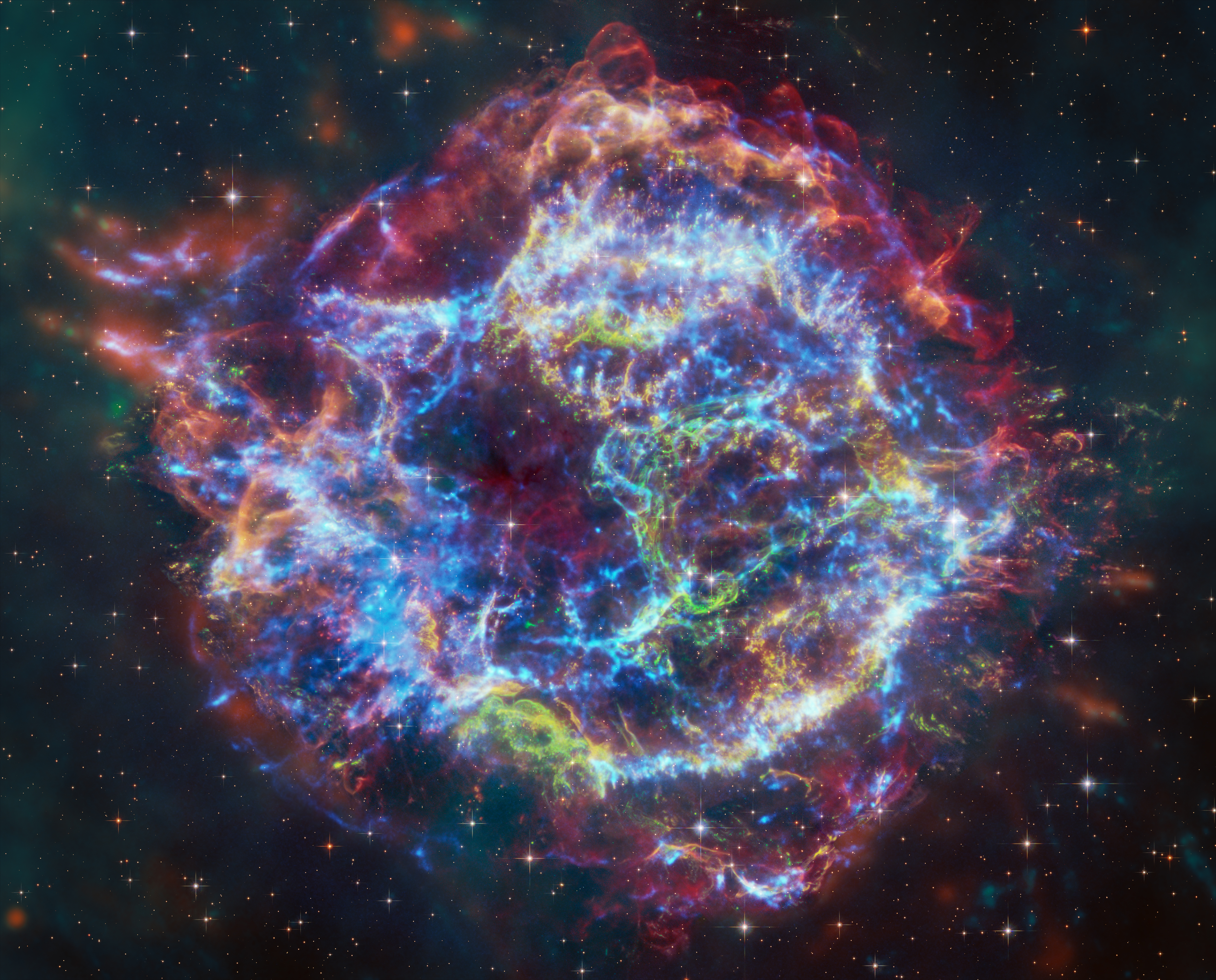
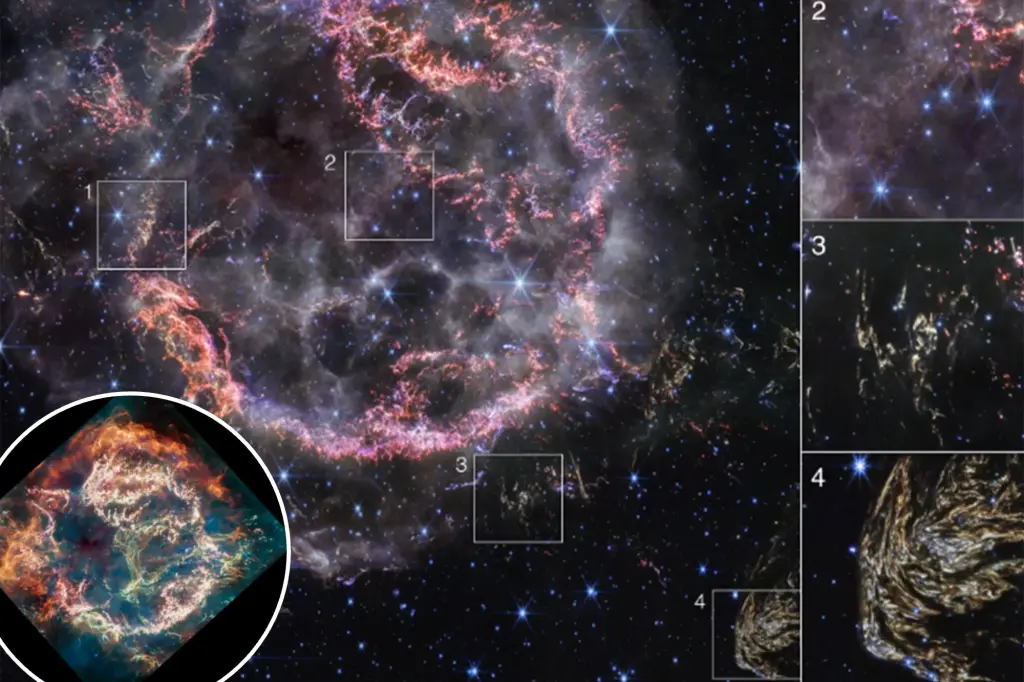
NASA astronomers have used data from the Chandra X-ray Observatory and James Webb Space Telescope to investigate a peculiar structure, dubbed the "Green Monster," within the debris field of the Cassiopeia A supernova remnant. By combining infrared data from Webb with X-rays from Chandra, researchers have identified the source of the Green Monster as a blast wave from the exploded star colliding with surrounding material. This discovery sheds light on the star's remains and the explosion itself, providing new insights into the formation of dust and the history of mass loss before the supernova. The study also presents the first combined image of Cas A using data from both telescopes, offering a comprehensive view of the debris from the exploded star.
NASA's Chandra X-ray Observatory and James Webb Space Telescope have combined data to study the supernova remnant Cassiopeia A, uncovering new details about the explosion that created it 340 years ago. The study explains an unusual structure in the debris called the "Green Monster" and reveals that it was created by a blast wave from the exploded star slamming into surrounding material. The research also compares pristine debris seen by Webb with X-ray maps of radioactive elements created in the supernova, shedding light on the explosion's details. These findings were presented at the American Astronomical Society meeting and are detailed in two papers submitted to Astrophysical Journal Letters.
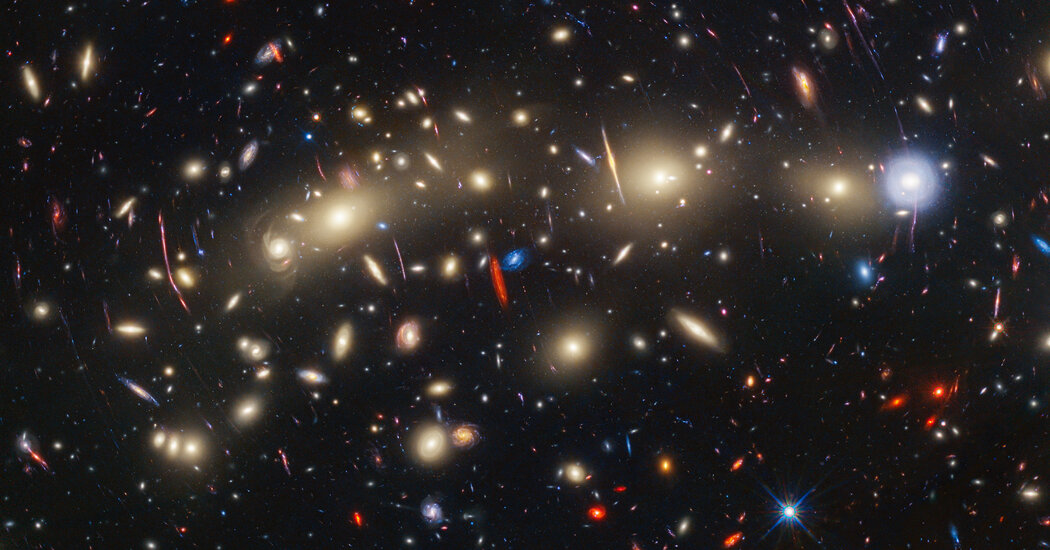
Astronomers have released images of the Christmas Tree Galaxy Cluster and Cassiopeia A, showcasing the festive spirit in outer space. The Christmas Tree Galaxy Cluster, located 4.3 billion light-years away, features 14 stars that flicker like lights on a Christmas tree. The Cassiopeia A, a supernova remnant, is closer to Earth and plays a crucial role in cosmic evolution by helping galaxies grow and creating elements necessary for life. These images, made possible by the James Webb Space Telescope and the Hubble Space Telescope, continue the tradition of connecting the season of light with cosmic phenomena occurring light-years away.
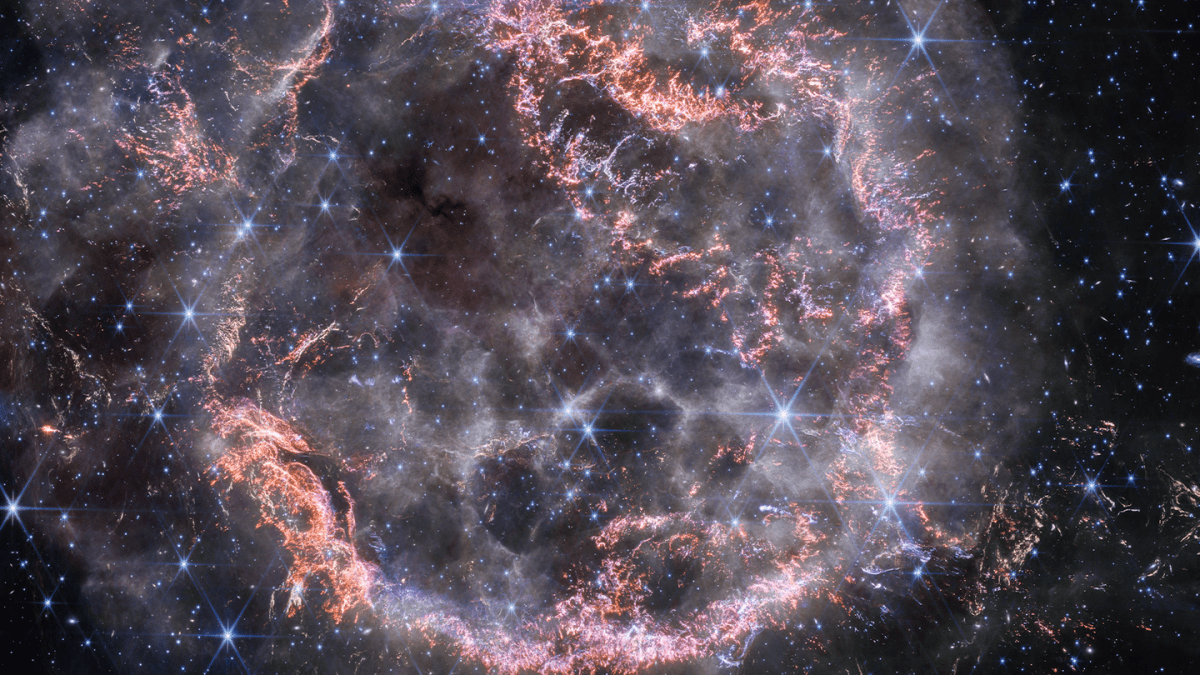
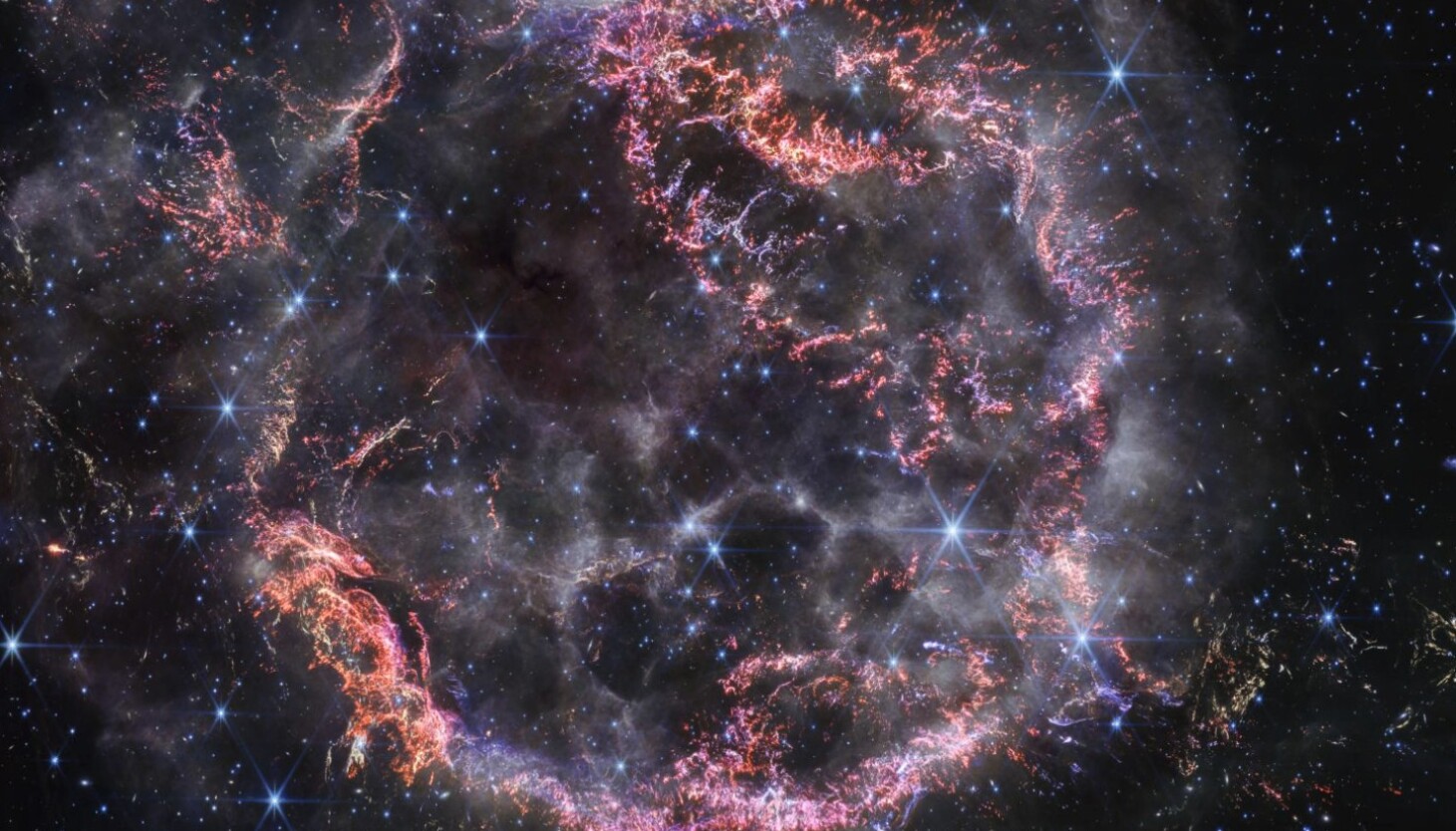
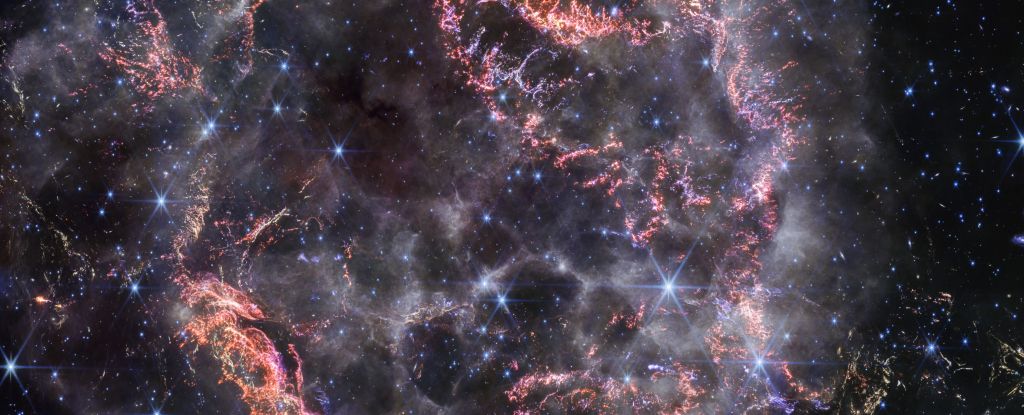
The Webb Space Telescope has captured a high-resolution image of the supernova remnant Cassiopeia A, revealing intricate details of the expanding shell of material from the star's explosion. The image shows clumps of gas in bright orange and light pink, composed of sulfur, oxygen, argon, and neon. The debris includes tiny filaments comparable to shards of glass, providing new insights into the star's explosion. This is the second image of Cassiopeia A taken by Webb, with the invisible wavelengths of light captured by the telescope shifted into the visible spectrum.
The James Webb Space Telescope's high-definition image of the Cassiopeia A supernova remnant was revealed as part of the White House's holiday celebrations. The image captured by the telescope's Near-Infrared Camera (NIRCam) shows intricate details of the expanding shell of material from the exploded star. Researchers are amazed by the resolution of the image, which provides new insights into the explosion. The image also revealed a large blob nicknamed Baby Cas A, resembling an offspring of the supernova. The James Webb Space Telescope, launched in December 2021, continues to capture detailed images of supernova remnants.
The James Webb Space Telescope has captured stunning and detailed images of Cassiopeia A, the youngest known supernova in the Milky Way Galaxy. The near-infrared images reveal intricate details of the expanding shell of material from the exploded star, resembling a shiny ornament. The Webb Telescope's infrared equipment can detect tiny knots of gas, providing transformational insight into how the star exploded. The image shows clumps of bright orange and light pink representing the inner shell of the supernova remnant, which contains dust and molecules that will eventually form new stars and planetary systems. The Webb telescope's larger mirror and optimized infrared capabilities allow it to peer farther back in time than the Hubble Space Telescope.
The James Webb Space Telescope (JWST) has captured a stunning near-infrared image of Cassiopeia A, a famous supernova remnant in the Milky Way. The image reveals new details and features, including a stripey blob called Baby Cas A, which is actually a light echo caused by Cas A's light hitting a distant clump of dust. The image also shows the inner shell of the explosion, resembling shards of glass, and the smoky outer shell expanding into interstellar space. Scientists are gaining transformative insights into how the star exploded and are studying the dynamics of the remnant.
NASA has released stunning new images of the Cassiopeia A supernova captured by the James Webb Space Telescope. The images reveal the explosion of the star in unprecedented detail, showing filaments resembling shards of glass. The telescope's advanced technology allows for the detection of tiny knots of gas from the star itself, providing new insights into the explosion. The images also highlight the inner shell of the supernova, which will eventually form new stars and planetary systems. However, researchers are puzzled by a massive loop of green light, nicknamed the "Green Monster," and the discovery of a light echo known as Baby Cas A. These images are part of a series taken by the Webb telescope since its operational debut last year.
The White House's first-ever Advent calendar will feature an image of the Cassiopeia A supernova remnant taken by the James Webb Space Telescope (JWST). The high-resolution image showcases the shattered remnants of the dying star and provides valuable insights into its explosion. The calendar, located in the East Room of the White House, aims to capture the "Magic, Wonder, and Joy" of the holiday season.
The James Webb Space Telescope has captured the closest and most detailed image inside a supernova remnant called Cassiopeia A, providing astronomers with unprecedented insights into the processes that fuel these explosive events. The image reveals new features that have not been seen before, including circular holes and a blob nicknamed "Baby Cas A." Analyzing the image could enhance our understanding of cosmological evolution and the life cycles of stars.