Tag

Gravitational Lens

All articles tagged with #gravitational lens

science5 months ago

Scientists Discover One of the Largest Black Holes in the Universe

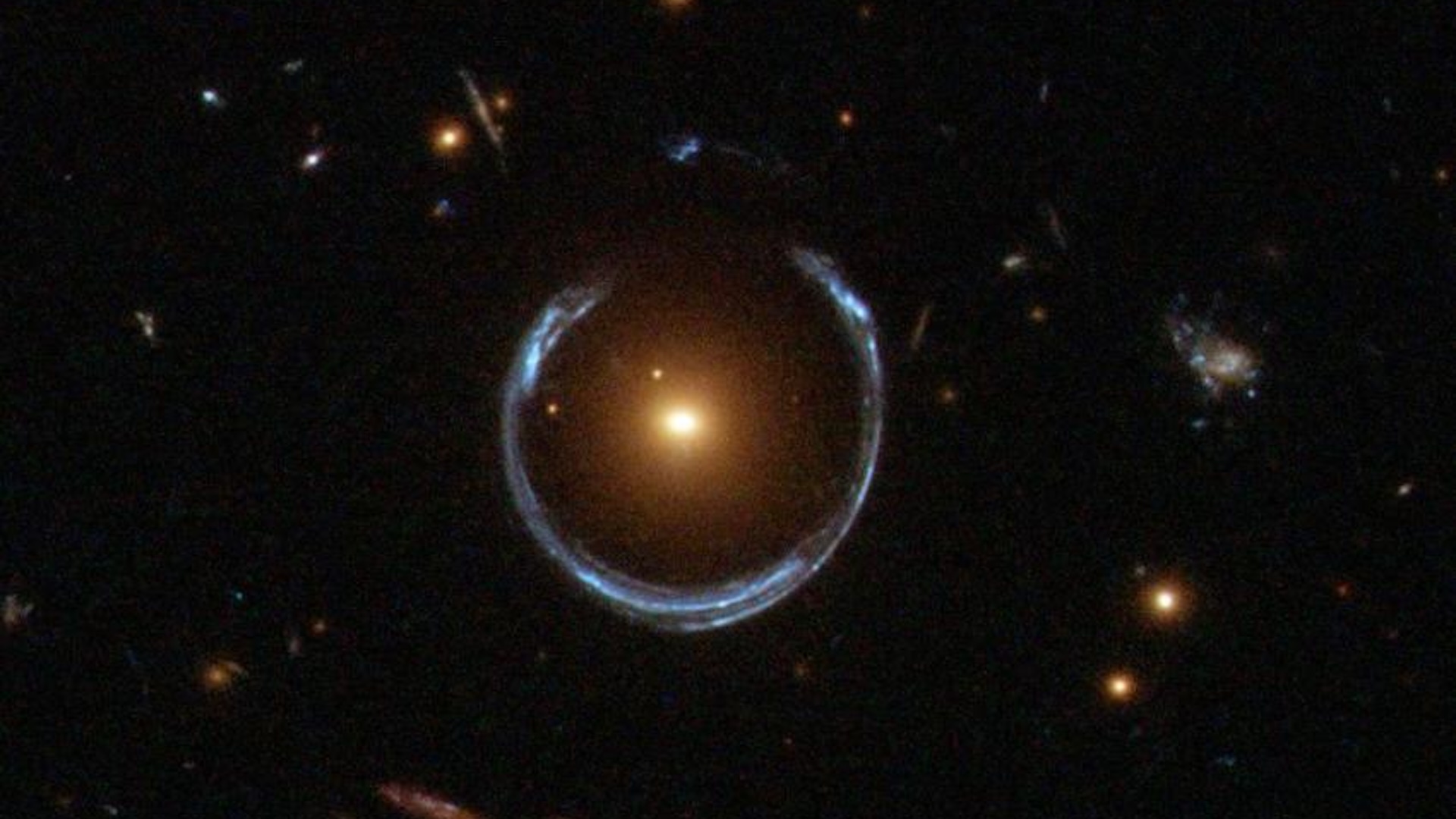
Scientists have identified a colossal black hole in the Cosmic Horseshoe galaxy system, estimated to be 36 billion times the mass of the sun, making it one of the largest ever observed, using gravitational lensing techniques. This discovery raises questions about how such massive objects form so early in the universe and challenges current understanding of galaxy and black hole evolution.

astronomy2 years ago

"Webb Telescope Discovers Ancient Supernova Through Gravitational Lens"

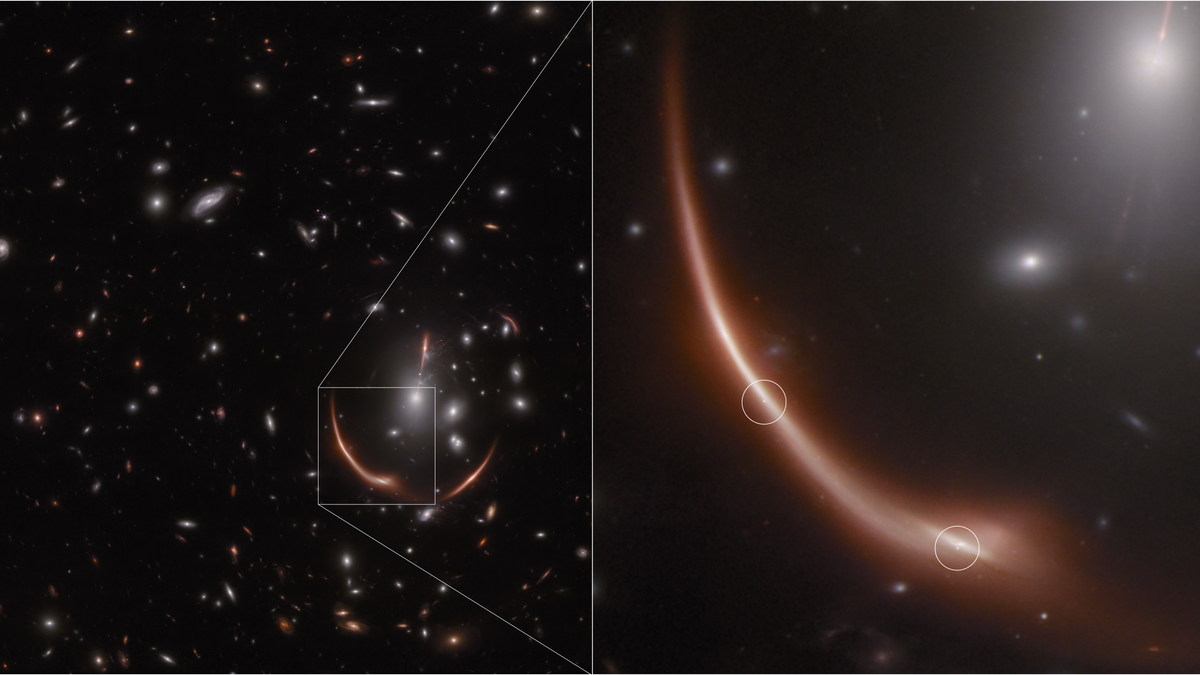
The Webb Space Telescope has captured images of a supernova in the ancient universe, magnified by a gravitational lensed galaxy. Named Encore, this is the second supernova spotted in the lensed region, with the first one, Requiem, expected to reappear in 2035. Gravitational lenses allow astronomers to observe faint and distant light sources, providing insights into the size and expansion rate of the universe. Encore and Requiem are Type 1a supernovae, which are crucial for calculating the Hubble Constant and addressing the Hubble Tension.

astronomy2 years ago

"Unveiling the Mathematical Secrets of Black Hole Reflections in Our Universe"

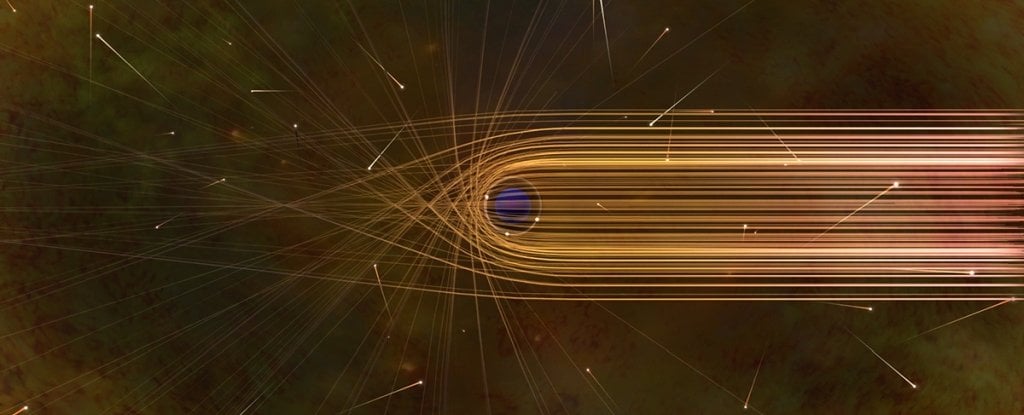
Astronomers have developed precise mathematical equations that describe the reflections of the Universe in the warped light around a black hole. These equations, developed by physics student Albert Sneppen, reveal that the proximity of each reflection depends on the angle of observation and the rate of the black hole's spin. This breakthrough not only provides a new tool for studying the gravitational environment around black holes but also offers opportunities to test our understanding of gravity. The research could potentially help us study the physics of black hole space-time and the objects behind them through infinite reflections.

astronomy2 years ago

JWST Uncovers Unprecedentedly Distant Galaxies

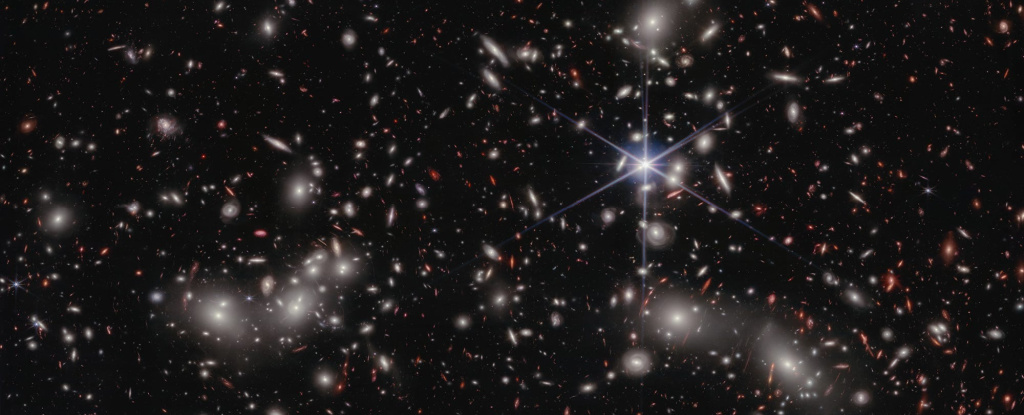
Using the James Webb Space Telescope, astronomers have discovered two of the most distant galaxies ever observed, located 33 billion light-years away behind the gravitational lens of Pandora's Cluster. These galaxies are larger than any previously detected at such distances and have unique shapes, resembling a "peanut" and a "fluffy ball." The light from these ancient galaxies, three times older than Earth, provides insights into the physics of the early universe near the cosmic dawn.

astronomy2 years ago

"Record-breaking Discovery: Oldest and Massive Black Hole Unveiled"

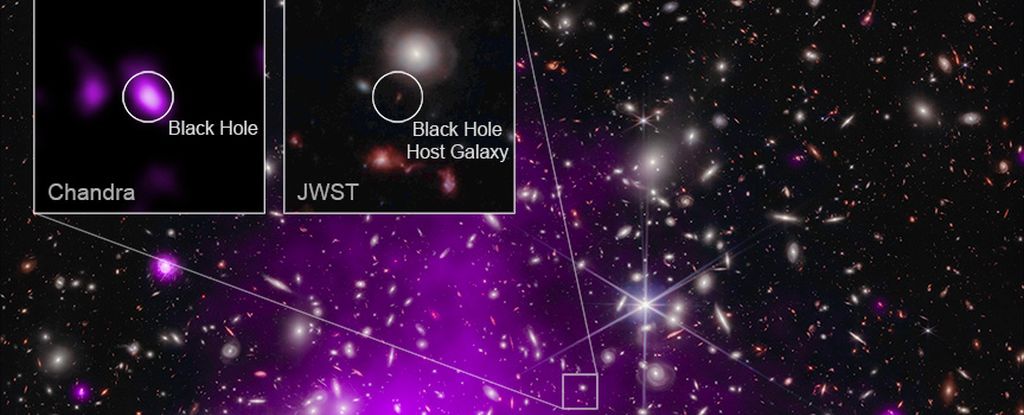
Astronomers have discovered the earliest black hole ever observed, located in a galaxy called UHZ1 just 470 million years after the Big Bang. This supermassive black hole is at a stage of development never seen before, with a similar mass to its host galaxy. The discovery provides key evidence for the direct gravitational collapse model of supermassive black hole formation. The black hole's mass is estimated to be between 10 million and 100 million times that of the Sun, about the same mass as the rest of the stars in the galaxy combined. The findings suggest that some black holes form from massive clouds of gas rather than slow accretion.

astronomy2 years ago

"Dark Energy Camera Uncovers Shell Galaxy's Layered Secrets"

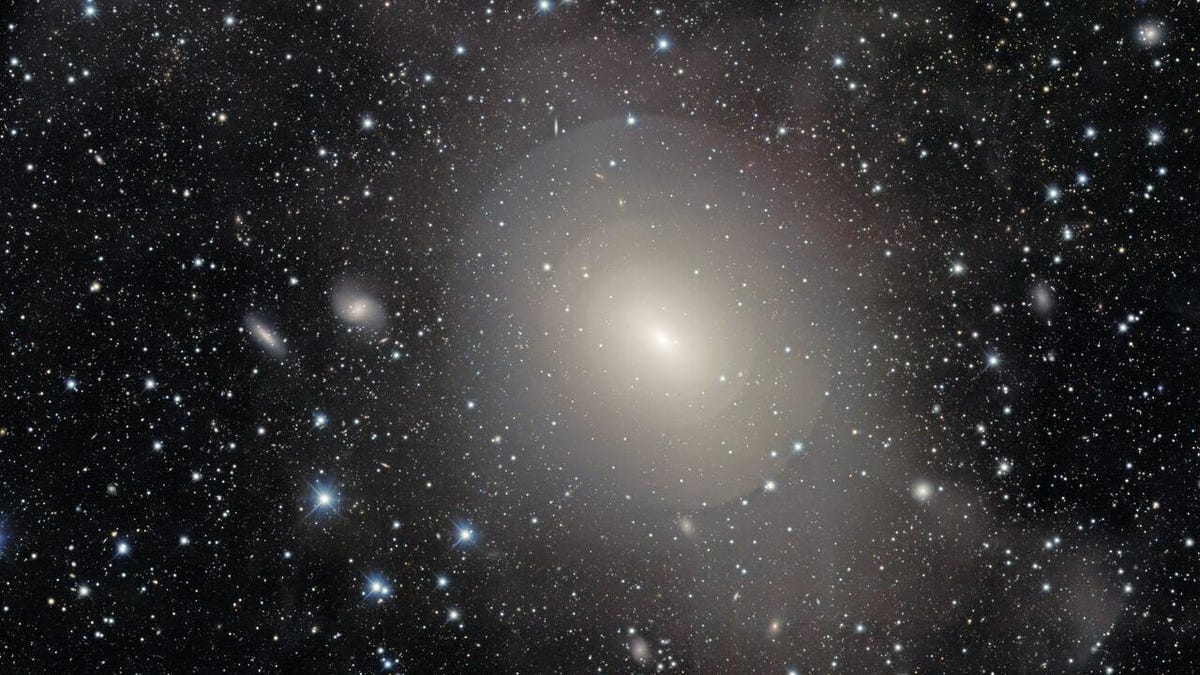
The Dark Energy Camera has captured an image of the shell galaxy NGC 3923, revealing its onion-like layers of concentric rings within its galactic halo. Shell galaxies make up 10% of all elliptical galaxies and NGC 3923 is about 50% larger than the Milky Way, with the largest known shells. The image also features a gravitational lens around the galaxy cluster PLCK G287.0+32.9, which bends light and magnifies distant objects. Gravitational lenses have been used to spot ancient light and provide evidence for dark matter.

astronomy2 years ago

"JWST's Unprecedented Discovery: Farthest Gravitational Lens Ever Found"

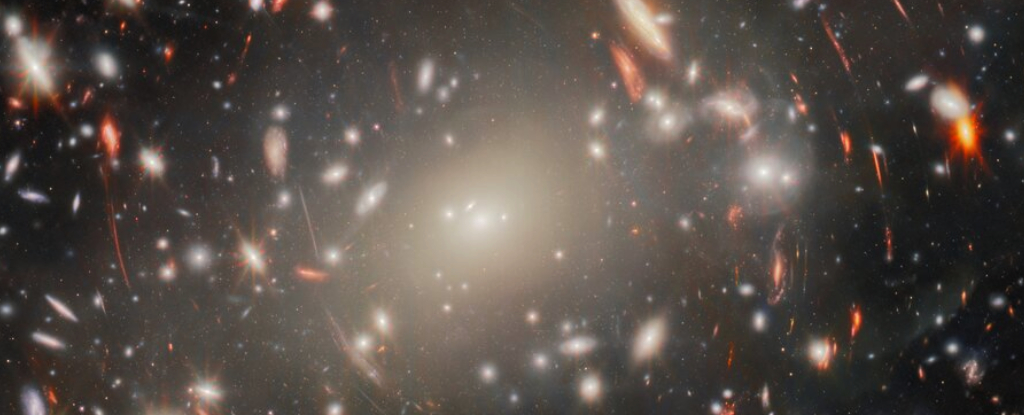
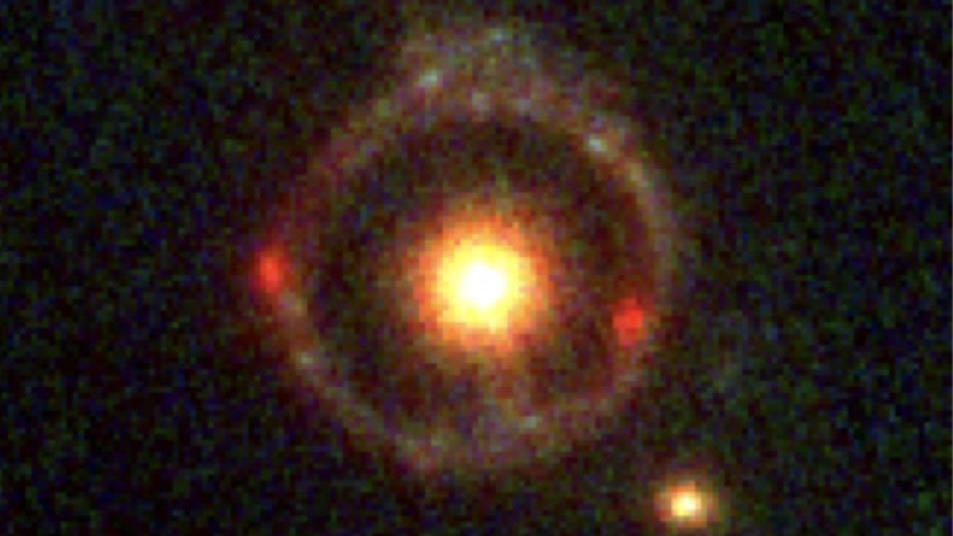
NASA's James Webb Space Telescope (JWST) has discovered the farthest gravitational lens ever, showcasing the bending and magnification of light caused by the presence of massive objects in space. The lensing system, located 17 billion light-years away, consists of a compact, massive galaxy acting as the lens and a more distant galaxy whose light is stretched into a ring-like shape. This discovery demonstrates the unique capabilities of JWST in observing distant galaxies and studying the effects of Einstein's theory of general relativity in action.

astronomy2 years ago

Unveiling the Enigmatic Mapping of Dark Matter in Space

Scientists have used a gravitational lens to map the distribution of dark matter on the smallest scale ever observed, with a resolution of 30,000 light-years. By analyzing the distorted light from a gravitationally lensed galaxy, researchers were able to subtract the effects of visible matter and create a detailed map of the dark matter. The map supports the theory of cold dark matter, revealing clumps of dark matter within galaxies and in the spaces between. This breakthrough provides a powerful tool for understanding the elusive nature of dark matter and narrowing down its properties.

astronomy2 years ago

"Einstein's Unseen Phenomenon Captured by Astronomers"

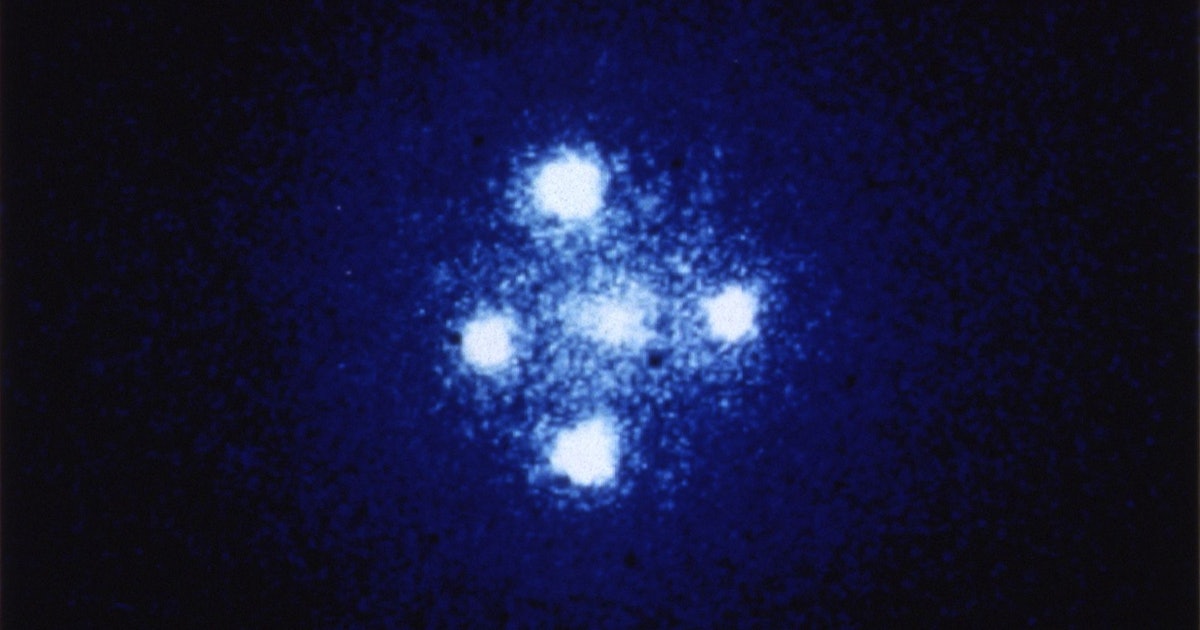
Astronomers have observed a rare phenomenon called an Einstein cross, which was predicted by Albert Einstein but thought to be impossible to see. The phenomenon occurs when a massive object bends the fabric of spacetime, causing light to follow curved paths around it. In this case, four images of the same galaxy were projected by a gravitational lens, allowing astronomers to study galaxies that would normally be too faint and far away to see. The discovery provides valuable information about the ages and chemical makeup of the galaxies involved. This finding challenges Einstein's belief that such perfect alignments would never be observed, and more of these formations are expected to be discovered in the future with advanced telescopes.

science-and-astronomy2 years ago

Ancient Magnetic Galaxy Sheds Light on Milky Way's History

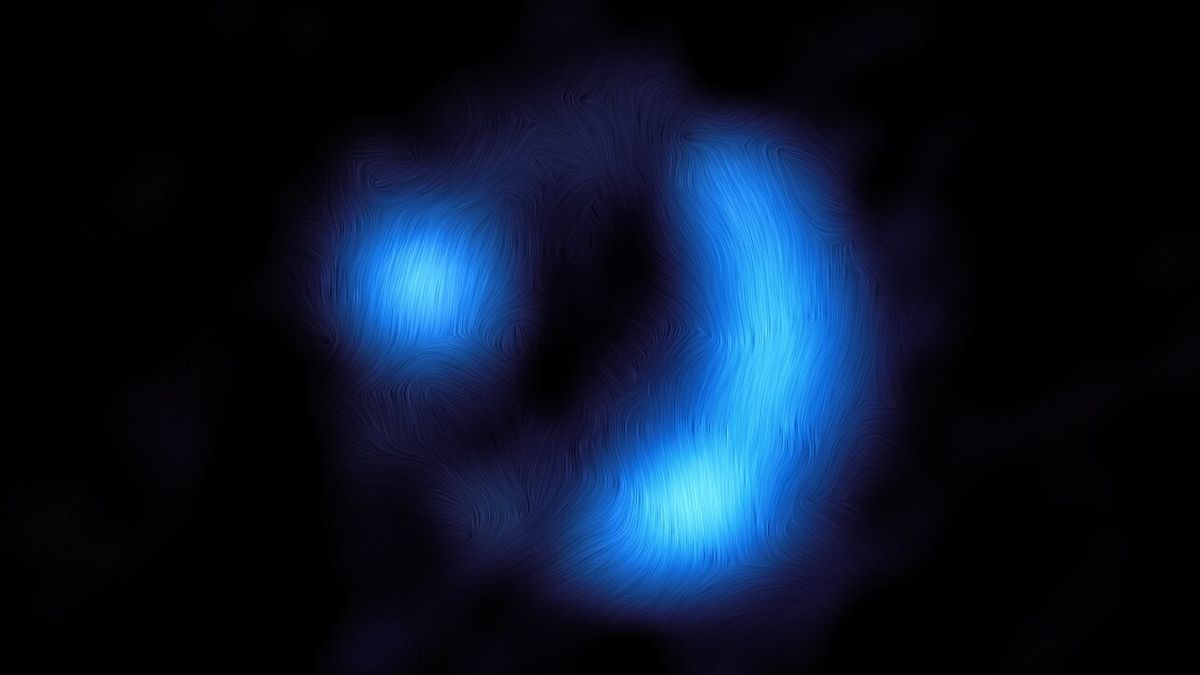
Astronomers have detected a magnetic field spanning 16,000 light years in an ancient galaxy, known as 9io9, which existed over 11 billion years ago. This is the earliest detection of galactic magnetism in the universe. The discovery was made using the Atacama Large Millimeter/submillimeter Array (ALMA) in Chile. The weak magnetic field suggests that intense star formation in the early stages of the galaxy's life helped propagate the magnetic field across the galaxy. This finding provides new insights into the formation of galactic magnetic fields and their role in galactic evolution.

astronomy2 years ago

Einstein's effect causes supernova to appear multiple times.

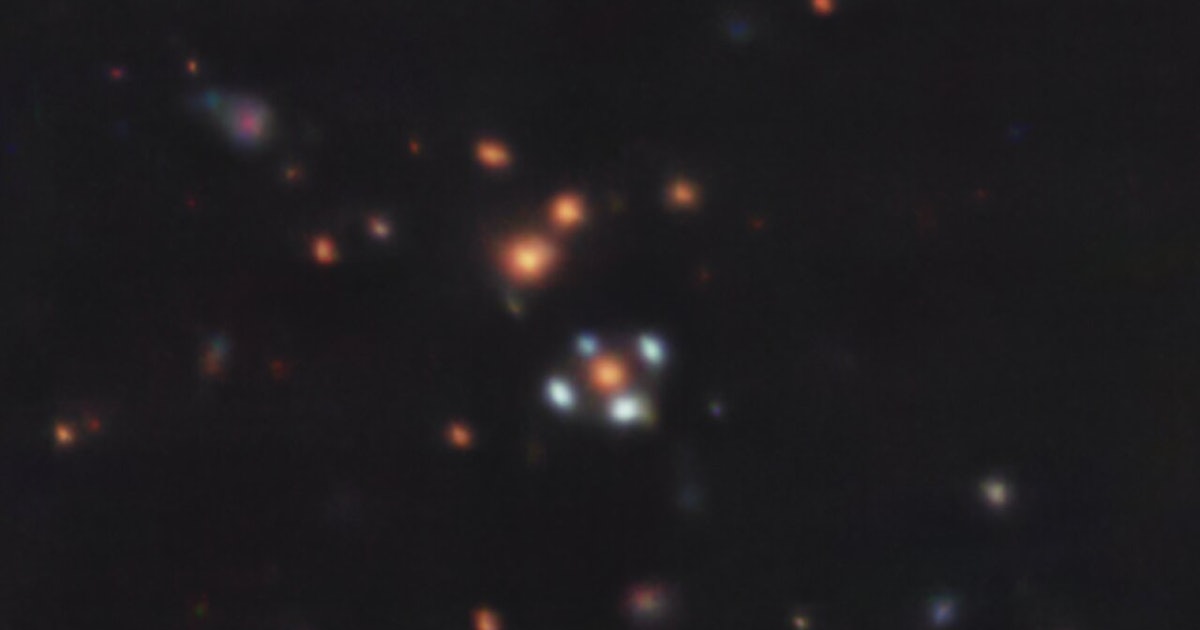
An international team of astronomers led by Ariel Goobar of the Oskar Klein Centre at Stockholm University discovered an unusual Type Ia supernova, SN Zwicky (SN 2022qmx), and observed it four times thanks to a gravitational lens. The team observed an “Einstein Cross,” a phenomenon predicted by Einstein’s Theory of General Relativity where the presence of a gravitational lens in the foreground amplifies light from a distant object. The discovery of SN Zwicky presents numerous opportunities for astronomers, including the ability to study it in greater detail and further investigate the mysteries of gravitational lenses.

astronomy2 years ago

Multiple Views of Supernova Captured Through Gravitational Lensing.

Astronomers have observed an unusual Type Ia supernova, SN Zwicky, four times thanks to a gravitational lens, an unusual phenomenon predicted by Einstein's Theory of General Relativity. The team observed it with the Zwicky Transient Facility, the adaptive optics at the W.M. Keck Observatory, and the Very Large Telescope. The Hubble Space Telescope confirmed that the multiple-image lensing effect resulted from a galaxy in the foreground that magnified the supernova 25 times. This discovery presents numerous opportunities for astronomers, including the ability to study SN Zwicky in greater detail and further investigate the mysteries of gravitational lenses.

science-and-astronomy2 years ago

JWST discovers ancient complex organic molecules and distant smoke in space.

Astronomers using the James Webb Space Telescope have discovered evidence of complex organic molecules similar to smoke or smog in a distant galaxy more than 12 billion light-years away. These carbon-based molecules, known as polycyclic aromatic hydrocarbons, are found in oil and coal deposits on Earth, as well as in smog. The discovery was made with the help of a gravitational lens, and the presence of these molecules is not uniform across the galaxy, the reason for which remains to be explained.