Tag

Time Perception

All articles tagged with #time perception

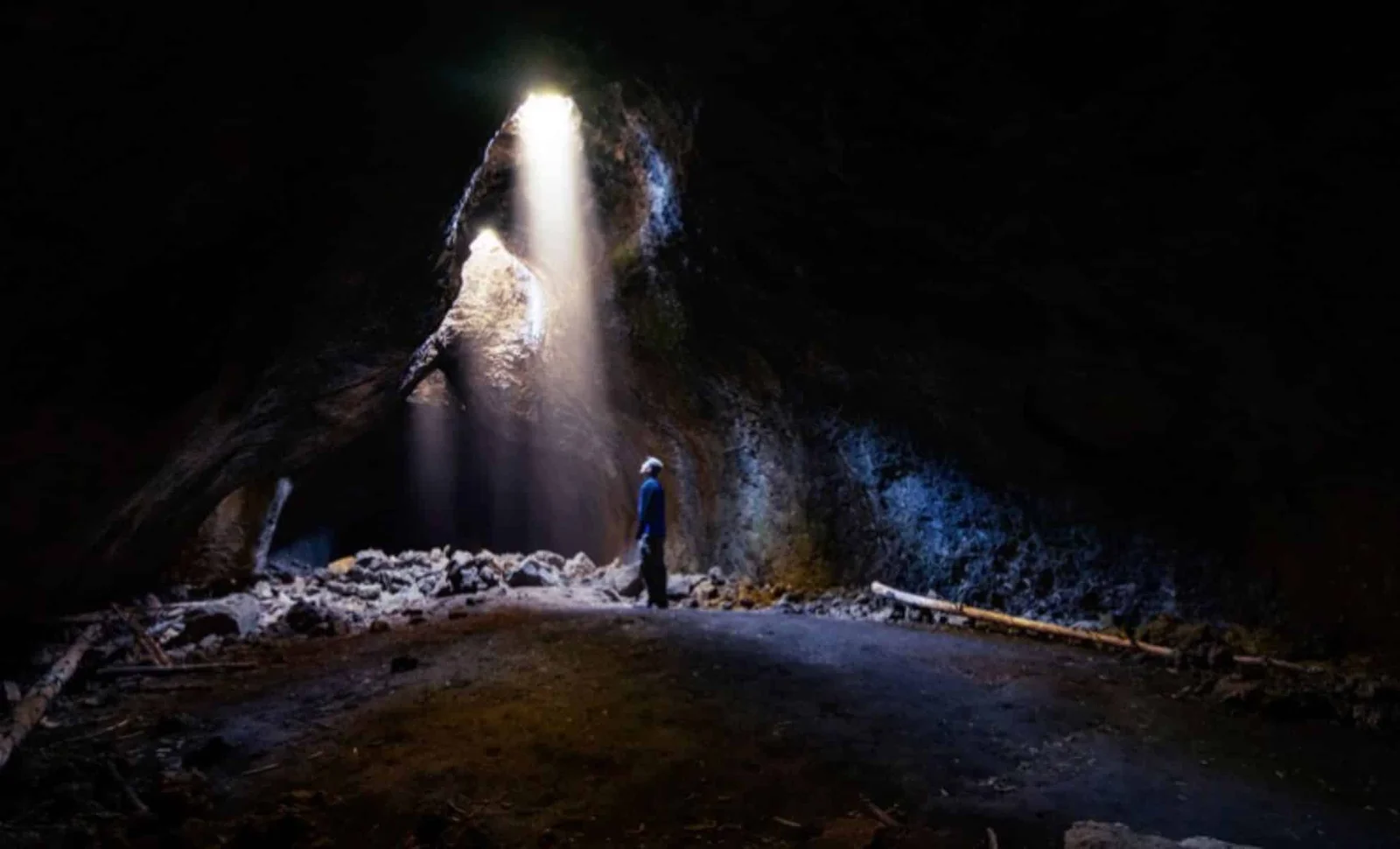
Young Scientist Turns Focus from Rocks to Human Time Mysteries

Originally Published 10 days ago — by Indian Defence Review

Featured image for Young Scientist Turns Focus from Rocks to Human Time Mysteries
Source: Indian Defence Review

Michel Siffre's 1962 underground experiment in a glacier cave revealed that humans have an internal biological clock, leading to the development of circadian science, with wide-ranging implications for medicine, space exploration, and understanding sleep and fatigue.

Running Skews Brain's Time Perception

Originally Published 23 days ago — by PsyPost

Featured image for Running Skews Brain's Time Perception
Source: PsyPost

A study published in Scientific Reports found that running and other complex movements distort time perception primarily due to cognitive effort involved in controlling movement, rather than physical exertion, as evidenced by similar time overestimations during running, backward walking, and dual tasks regardless of heart rate differences.

Scientific Explanation for December's Earlier Arrival Each Year

Originally Published 25 days ago — by ScienceAlert

Featured image for Scientific Explanation for December's Earlier Arrival Each Year
Source: ScienceAlert

The article explains how our perception of time is influenced by brain processes, with time seeming to pass faster when engaged in novel or exciting activities and slower during routine or boring moments. It highlights that our brains infer time based on change and memory density, which explains why years feel short when routines dominate and why time seems to fly as we age. To make time feel longer, creating new memories and experiences is recommended.

This Week in Science: Comets, Galactic Mysteries, and the Aging of Time

Originally Published 2 months ago — by Live Science

Featured image for This Week in Science: Comets, Galactic Mysteries, and the Aging of Time
Source: Live Science

This week in science, three comets were visible in the sky, a mysterious glow at the Milky Way's center may be linked to dark matter collisions, time appears to speed up with age due to neural changes, and scientists discuss the possibility of bringing Neanderthals back to life.

Study Explains Why Time Feels Faster as We Age

Originally Published 2 months ago — by Live Science

Featured image for Study Explains Why Time Feels Faster as We Age
Source: Live Science

A study using fMRI scans of people watching an Alfred Hitchcock show suggests that as we age, our brains experience fewer and longer-lasting neural states, which may contribute to the perception that time passes more quickly in older adults. This neural dedifferentiation could make it harder to distinguish between events, influencing our subjective experience of time.

Scientists Uncover Why Time Slows During Challenging Tasks

Originally Published 6 months ago — by Earth.com

Featured image for Scientists Uncover Why Time Slows During Challenging Tasks
Source: Earth.com

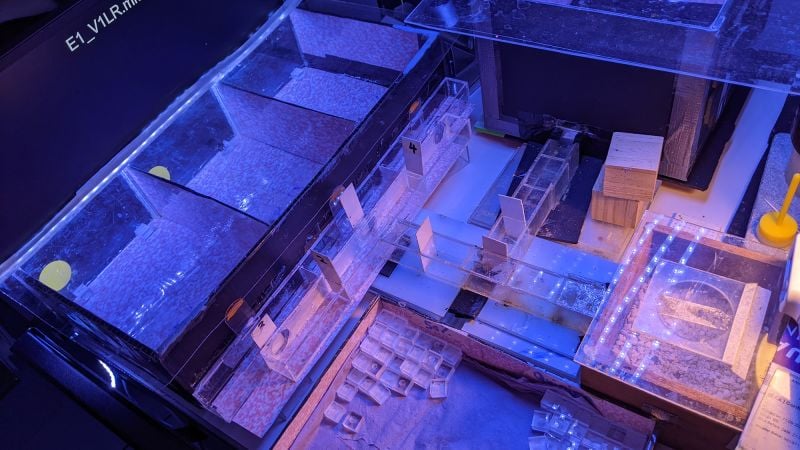
Research shows that during intense exercise, people perceive time as passing more slowly due to sensory overload and neural activity in brain regions involved in timing and movement, but this illusion quickly dissipates after stopping exercise. Understanding this distortion can help athletes better calibrate effort and pacing, emphasizing the importance of external cues like distance markers or timers over internal sense of time.

Scientists Reveal Why Time Feels Faster as We Age

Originally Published 6 months ago — by Earth.com

Featured image for Scientists Reveal Why Time Feels Faster as We Age
Source: Earth.com

As we age, our perception of time accelerates due to decreased novelty, slower neural processing, and routine-driven days, which lead to fewer memorable moments and a faster sense of time passing. Engaging in new activities and maintaining curiosity can help slow this perception and make life feel longer and more fulfilling.

Prolonged Stay in One Place May Accelerate Aging, Scientists Warn

Originally Published 7 months ago — by The Daily Galaxy

Featured image for Prolonged Stay in One Place May Accelerate Aging, Scientists Warn
Source: The Daily Galaxy

A study found that during intense exercise, people perceive time as passing 8-9% slower, which could influence athletic pacing and performance. The research suggests that psychological and physiological factors during exertion affect time perception, with potential applications in sports training and beyond.

"Unveiling the Tactile Influence on Time Perception through Optogenetics"

Originally Published 1 year ago — by SciTechDaily

Featured image for "Unveiling the Tactile Influence on Time Perception through Optogenetics"
Source: SciTechDaily

A new study using optogenetics has revealed that the perception of time is intertwined with the sense of touch, with the somatosensory cortex playing a dual role in processing both tactile sensations and time perception. The research demonstrates that the perception of time is rooted in a widespread network of brain areas, shedding light on the intricate interplay between the sense of touch and the sense of time. This insight opens new avenues for understanding the complex relationship between sensing the external world and sensing time.

"Optogenetics Study Unveils Touch's Influence on Time Perception"

Originally Published 1 year ago — by PsyPost

Featured image for "Optogenetics Study Unveils Touch's Influence on Time Perception"
Source: PsyPost

A groundbreaking study published in Nature Communications reveals a link between the sense of touch and time perception, demonstrating the crucial role of the somatosensory cortex in how we perceive the duration of tactile experiences. Utilizing optogenetics, researchers found that increasing neuronal activity in this brain region led to altered perceptions of both intensity and duration of tactile stimuli in rats. The study challenges the traditional view of time perception and suggests an integrated approach to understanding sensory experiences, while also providing a theoretical framework for linking neural processes to subjective experiences.

"Harvard Study Uncovers Time Perception's Impact on Wound Healing"

Originally Published 1 year ago — by PsyPost

Featured image for "Harvard Study Uncovers Time Perception's Impact on Wound Healing"
Source: PsyPost

A Harvard psychology study reveals a surprising link between time perception and wound healing, showing that wounds heal faster when people believe more time has passed. The study involved manipulating participants' sense of time during a cupping procedure and found that those who believed more time had passed showed faster healing rates. The findings suggest that psychological constructs, such as the perception of time, can directly influence physical health outcomes, highlighting the importance of understanding and questioning implicit beliefs.

"Unraveling the Brain's Perception of Time Through Singing Mice"

Originally Published 1 year ago — by Medical Xpress

Featured image for "Unraveling the Brain's Perception of Time Through Singing Mice"
Source: Medical Xpress

Neuroscientists are using singing mice to understand how the brain controls timing and communication, uncovering a new clue that suggests the brain bends our processing of time to suit our needs. Research published in Nature Neuroscience shows that neurons in the mice's brains engage in temporal scaling, slowing down or speeding up intervals rather than encoding absolute time like a clock. This discovery offers new insight into how the brain generates vocal communication and may have implications for understanding how our brains enable us to interact with the world.

"Temporal Bending in 'Tempus': A Surf Film's Reality Twist"

Originally Published 2 years ago — by The Inertia

Featured image for "Temporal Bending in 'Tempus': A Surf Film's Reality Twist"
Source: The Inertia

The new film Tempus from Brazilian surf brand Seventy explores the sensation of bending reality while riding waves, offering a visual reflection on the relativity of time and the connection between surf, sea, space, and time. Filmed in the Maldives, the movie features surfers riding classic and alternative board shapes, accompanied by an original soundtrack, and is directed by Pedro Fujarra and Heitor Vallim.