A study explains the 'illusion of unfairness,' showing that people often feel life is rigged against them due to emotional reactions to randomness and perceived lack of control, even when outcomes are purely chance. Recognizing this can help manage feelings of injustice and regain perspective.
Researchers at Caltech have demonstrated that quantum computers can generate randomness more efficiently using smaller qubit blocks, potentially enabling faster and more powerful quantum systems for various applications, while also raising fundamental questions about the limits of observing quantum phenomena.
Researchers at the University of Colorado have developed a quantum-based random number generator that is highly resistant to tampering, using entangled photons and a publicly available hash chain to verify the randomness, significantly increasing security against potential spoofing.
Researchers have used a 56-qubit quantum computer to generate certifiably random bits, verified by classical supercomputers, marking a significant milestone in practical quantum computing and its applications in cryptography and secure communications.
Former President Donald Trump narrowly escaped an assassination attempt during a Pennsylvania rally, suffering only a bloodied ear. The incident underscores the role of chance in shaping history and highlights the unpredictability of events that can have significant impacts on society and politics.
The article explores the pervasive nature of computational processes, likening them to a form of music that can be felt and understood in various phenomena, from mailing a letter to machine learning. It delves into the concept of randomness as a complex computational process and highlights advances in AI and machine learning that help manage this complexity, drawing parallels to human cognitive processes like language translation.
AI models exhibit human-like biases when asked to pick random numbers, often avoiding extremes and favoring certain numbers, due to their training data reflecting human tendencies rather than true randomness.
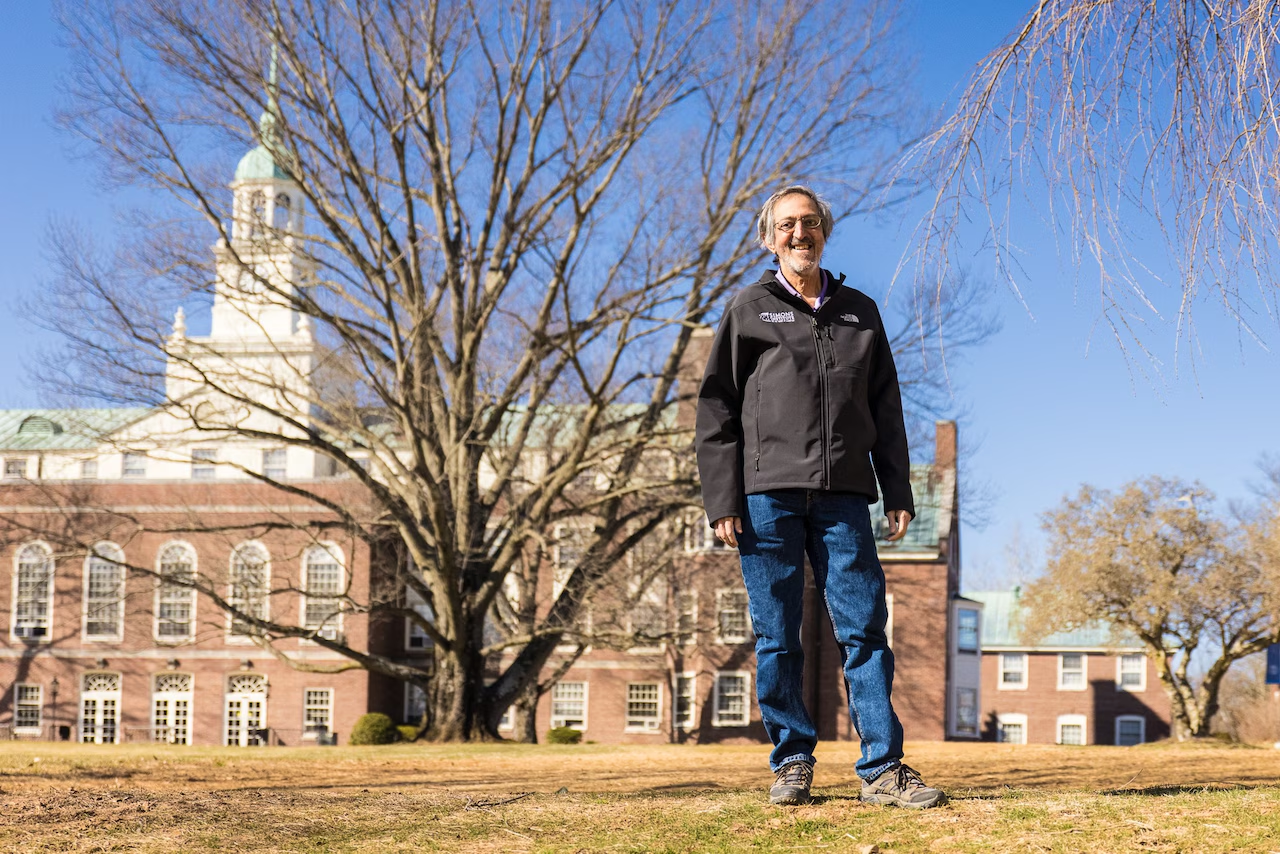
Avi Wigderson, a professor at the Institute for Advanced Study in Princeton, has been awarded the 2023 A.M. Turing Award for his influential work in incorporating randomness into computer algorithms, earning him the title of the "Nobel Prize for computer science." Wigderson's contributions to theoretical computer science and his leadership in the intersection of math and science were recognized in this prestigious honor.
Avi Wigderson, a pioneer in complexity theory, has won the Turing Award for his influential work in the theory of computation, particularly in the areas of randomness and cryptography. His research has revealed deep connections between mathematics and computer science, impacting various fields within computer science. Wigderson's foundational contributions include zero-knowledge interactive proofs in cryptography and linking computational hardness to randomness, shedding light on the nature of randomness and its role in efficient problem-solving. His work has had far-reaching implications, extending beyond traditional computing to biological and physical systems.
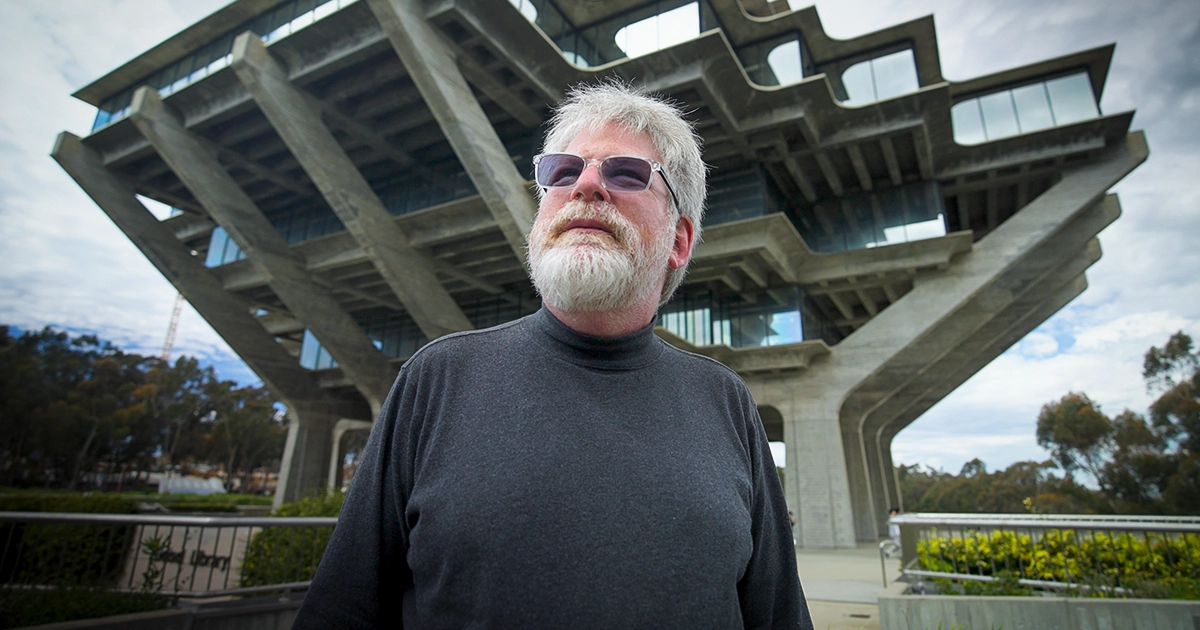
Russell Impagliazzo, a computer scientist at the University of California, San Diego, has made significant contributions to computational complexity theory, cryptography, and the study of randomness in computation. His work includes formulating the P versus NP problem in terms of five hypothetical worlds, which has inspired a generation of researchers. Impagliazzo's love for tabletop role-playing games and improv comedy has also influenced his research, providing him with a playful spirit and a collaborative approach to exploring hypothetical worlds and solving complex computational problems.
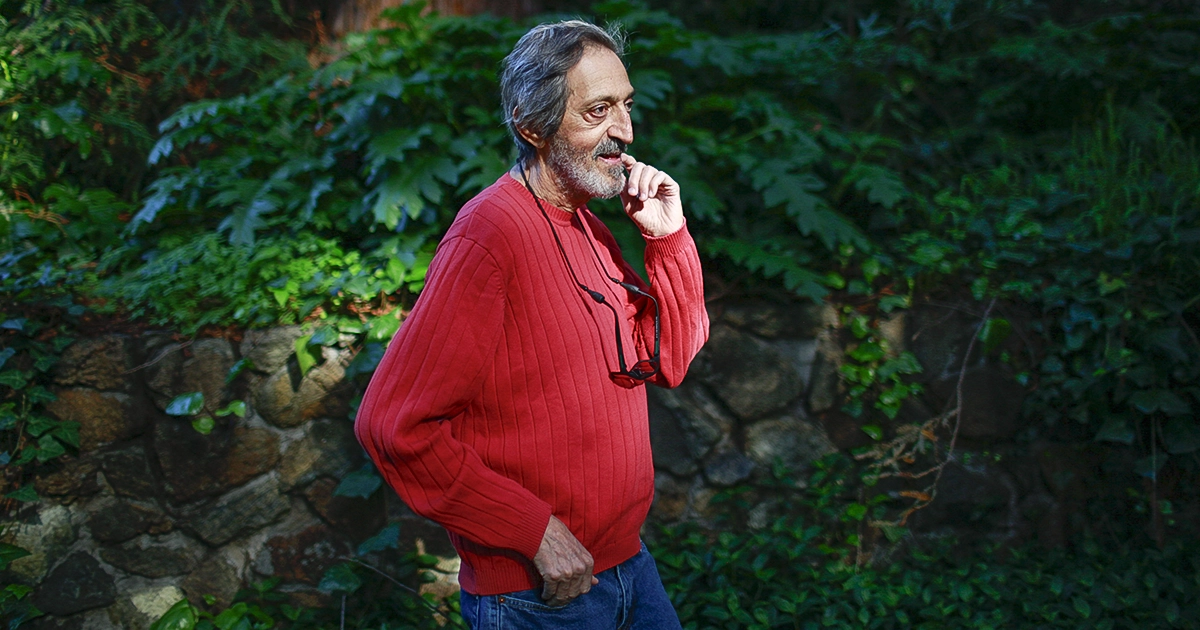
Michel Talagrand, a retired researcher at France’s National Center for Scientific Research, has been awarded the 2024 Abel Prize for his contributions to understanding randomness in the universe, which has applications in mathematical physics and statistics. Talagrand, who credited a period of blindness during his youth for enhancing his mathematical abilities, will receive 7.5 million Norwegian kroner for his work.
Podcaster and life coach Jay Shetty emphasizes the importance of embracing randomness in daily routines to improve well-being, sparking creativity and joy. Research suggests that engaging with novelty can stimulate the brain and release dopamine, while also helping to retain information and think outside the box. Shetty's own practices include texting a random contact, reading a random page from a book, and trying new activities for the sake of learning and joy. Embracing randomness without the pressure of perfection can lead to reconnection, self-accomplishment, and newfound passion.
Ramsey theory, the study of mathematical patterns, has seen recent advances in understanding the behavior of numbers and networks as they grow infinitely large. However, analyzing finite numbers in Ramsey theory poses computational challenges due to the exponential growth in the number of possible answers. Researchers have employed various strategies, including randomness, to find the best progression-free sets and calculate Ramsey numbers. The techniques developed in studying Ramsey graphs could have broader applications in generating other types of graphs efficiently. The study of small Ramsey numbers remains a challenge due to the complexity of computation, but it continues to intrigue mathematicians.
Researchers have developed a new model that suggests that the similarities between species may be the key to their coexistence and biodiversity. The model combines the concept of life history, which includes species statistics such as average number of offspring, time until sexual maturity, and lifespan, with the influence of random factors on deterministic interactions among species. The researchers found that certain species could persist alongside each other for long periods even though they were competing for the same resources, and that a complex term called effective population size could describe a kind of complementarity that could exist among species.
Randomness has played an important role in computer science since its inception. Adding randomness into an algorithm can help calculate the correct answer to unambiguous true-or-false questions. Randomness has been used in primality testing and graph theory to solve complex problems. While deterministic algorithms are often efficient only in principle, randomized algorithms remain popular because de-randomization can be tricky. Randomness has found countless other uses in computer science, from cryptography to game theory to machine learning.