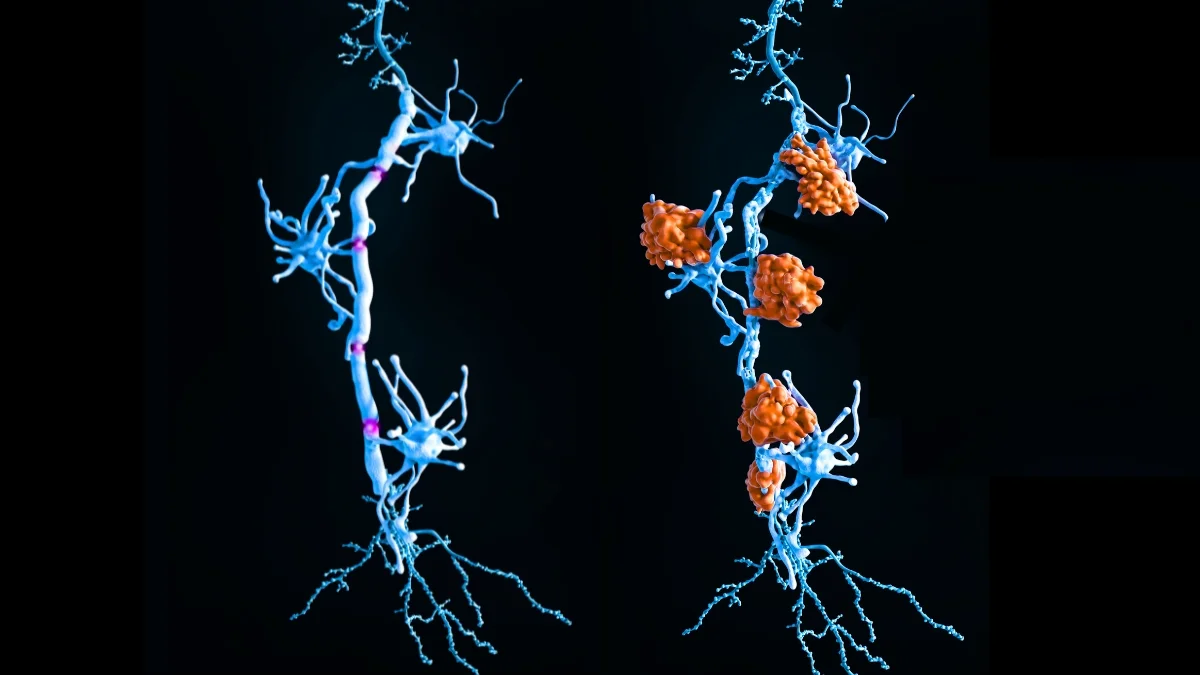
Scientists at UCL used machine learning to analyze blood tests and brain scans from 634 MS patients, discovering two distinct subtypes of the disease with different progression patterns, which could lead to more personalized treatment approaches.
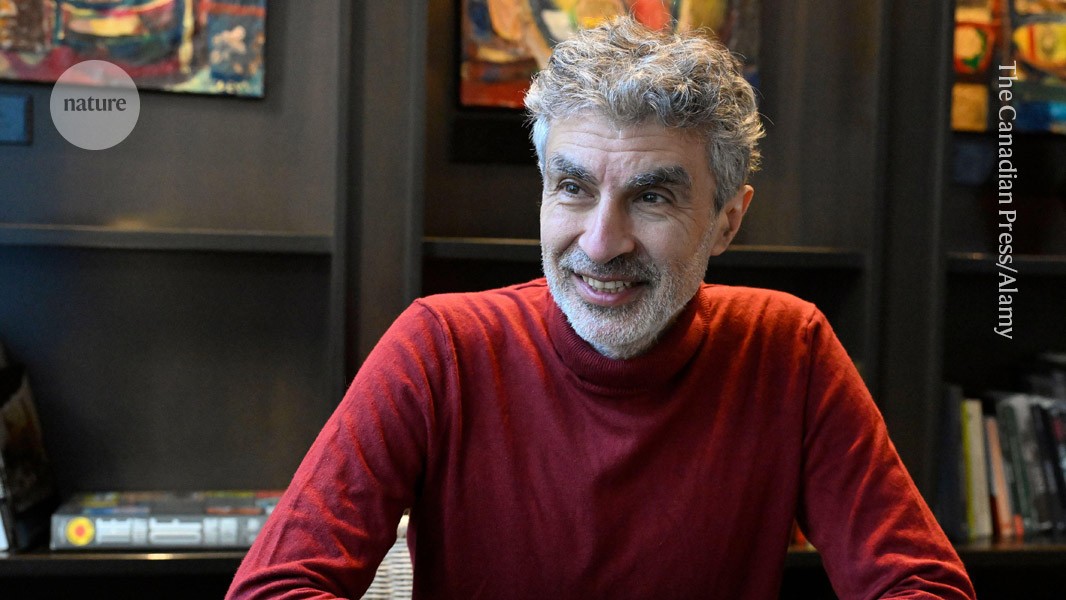
Computer scientist Yann LeCun emphasizes that true intelligence fundamentally involves learning, highlighting the importance of learning processes in understanding and developing artificial intelligence.
Researchers at Duke University have developed an AI framework that simplifies complex dynamic systems into understandable rules, aiding scientific discovery across various fields by identifying key variables and stable states, and extending the capabilities of traditional physics-based models.
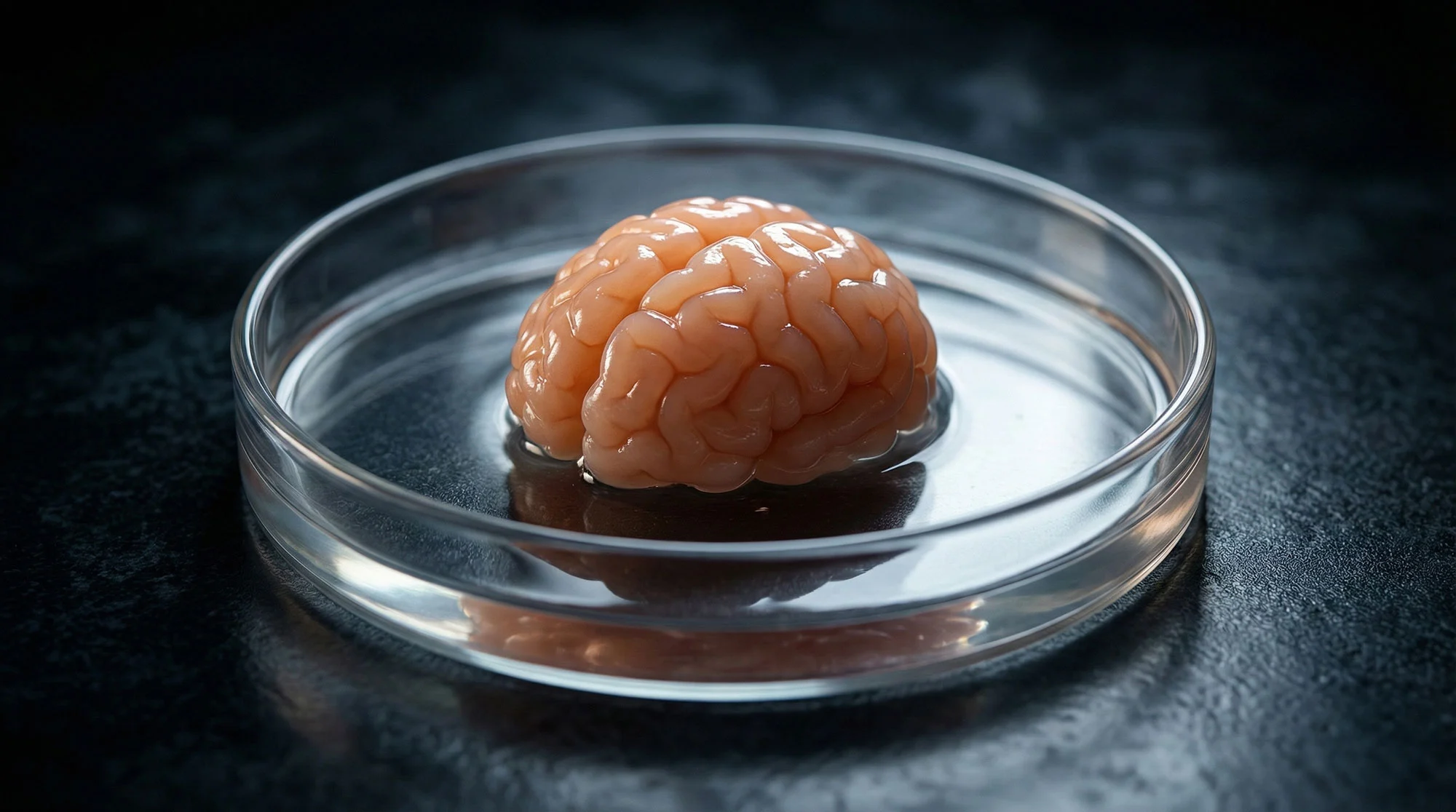
Scientists used lab-grown brain organoids and machine learning to identify distinct electrical signatures associated with schizophrenia and bipolar disorder, potentially paving the way for more accurate diagnoses and personalized treatments.
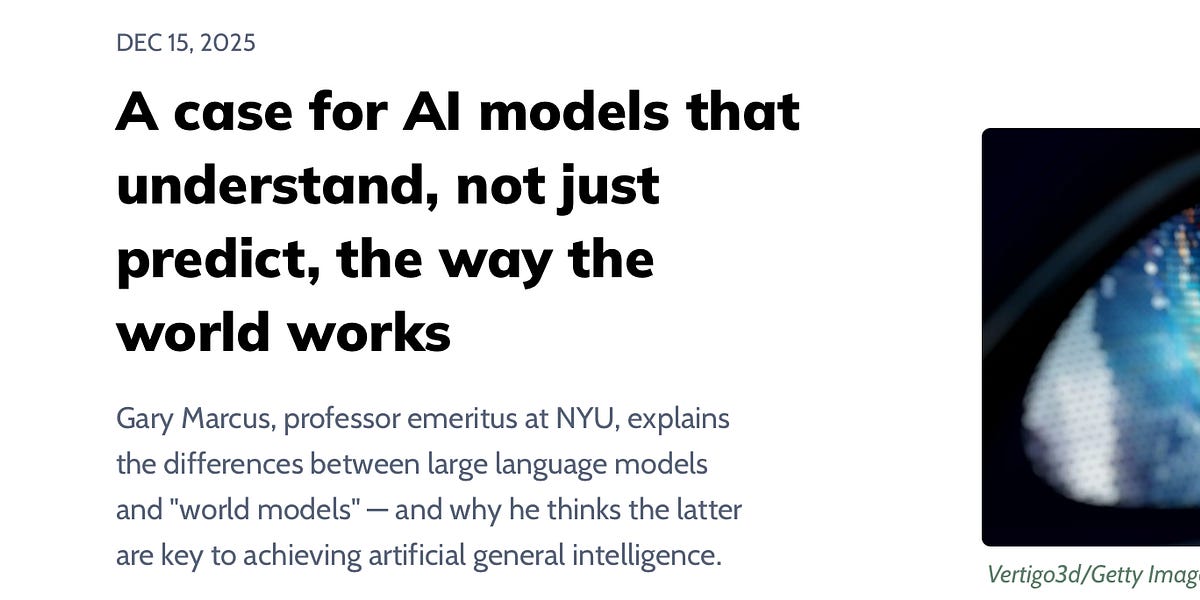
The article argues for the development of AI models that truly understand the world, rather than just predict outcomes, emphasizing the importance of semantic comprehension in language models to be genuinely useful.
Yoshua Bengio, a pioneer in AI and machine learning, has become the first researcher to be cited over one million times on Google Scholar, highlighting his influential work on neural networks and the rapid growth of AI technology.
As layoffs increase, training AI models has become a lucrative side hustle, with humans performing tasks like data labeling and model fine-tuning to help develop autonomous systems, potentially at the cost of future jobs, while some workers see it as a way to stay relevant in an increasingly automated world.
Many iPhone users are experiencing issues with autocorrect after updating to iOS 26, likely due to new on-device AI language models, but the exact cause remains unclear due to the secretive nature of Apple's technology and the complexity of modern AI systems.
Embark Studios' CCO defends the use of AI in their game Arc Raiders, emphasizing that AI tools are used to assist human creativity rather than replace it, and highlighting their focus on small, innovative teams leveraging emerging technologies to enhance game development.
This study introduces LifeClock, a comprehensive biological aging clock based on routine clinical data from electronic health records (EHRs), utilizing a transformer-based model called EHRFormer to predict biological age across the full human lifespan and assess its association with disease risks and survival outcomes, demonstrating high accuracy and potential for personalized medicine.
Researchers developed an AI system that invented its own learning method, DiscoRL, which outperformed human-designed algorithms on complex tasks like Atari games, indicating future potential for automated discovery of advanced reinforcement learning algorithms.
Nvidia's DGX Spark is marketed as the world's smallest AI supercomputer, offering a cost-effective solution with 128 GB of memory and the GB10 SoC, capable of running large models up to 200 billion parameters. While not the fastest GPU, it excels in running models that consumer GPUs can't handle, making it suitable for AI development, fine-tuning, and inference workloads. Its compact size, software ecosystem, and ability to run models beyond typical consumer hardware make it a notable option for AI practitioners, though it faces competition from other small-form-factor systems and Nvidia's own higher-end offerings.
MIT researchers have made progress in nuclear fusion by developing a physics-based machine learning model to predict plasma behavior in tokamak reactors, aiding safer and more reliable energy production, marking a significant step toward practical fusion energy.
A groundbreaking study using AI found that adults with ADHD exhibit distinct visual processing patterns that can be accurately identified with over 90% accuracy, suggesting a potential neural marker for the disorder and opening avenues for improved diagnosis and understanding of ADHD's neural basis.