Tag

Cryptography

All articles tagged with #cryptography

GPG Failure Highlights Security Concerns

Originally Published 15 days ago — by Hacker News

The article discusses concerns about GnuPG's security issues, including a significant vulnerability that allows plaintext recovery, and debates whether GPG signatures on git commits are secure or if alternatives like SSH keys or Signal should be used for secure communication and signing. It highlights the complexity and flaws in PGP's design, the challenges of key management, and the political and technical difficulties in replacing or improving upon existing cryptographic tools.

Preparing Finance for Quantum Computing and Its Cybersecurity Risks

Originally Published 6 months ago — by Bank for International Settlements

Featured image for Preparing Finance for Quantum Computing and Its Cybersecurity Risks
Source: Bank for International Settlements

The BIS paper emphasizes the urgent need for the financial system to prepare for quantum computing's potential to break current encryption, advocating for early adoption of quantum-safe cryptographic measures, coordinated planning, and exploring long-term solutions like quantum key distribution to ensure security and resilience.

Enhancing Quantum Power Through Improved Randomness

Originally Published 6 months ago — by Phys.org

Featured image for Enhancing Quantum Power Through Improved Randomness
Source: Phys.org

Researchers at Caltech have demonstrated that quantum computers can generate randomness more efficiently using smaller qubit blocks, potentially enabling faster and more powerful quantum systems for various applications, while also raising fundamental questions about the limits of observing quantum phenomena.

China's Quantum Computer Breaks RSA Encryption, Endangering Global Data Security

Originally Published 6 months ago — by Earth.com

Featured image for China's Quantum Computer Breaks RSA Encryption, Endangering Global Data Security
Source: Earth.com

A Chinese research team demonstrated that a quantum annealing processor from D‑Wave Systems successfully factored a 22-bit RSA integer, indicating that quantum computers could pose a future threat to current cryptographic security, prompting urgent updates to encryption standards and practices.

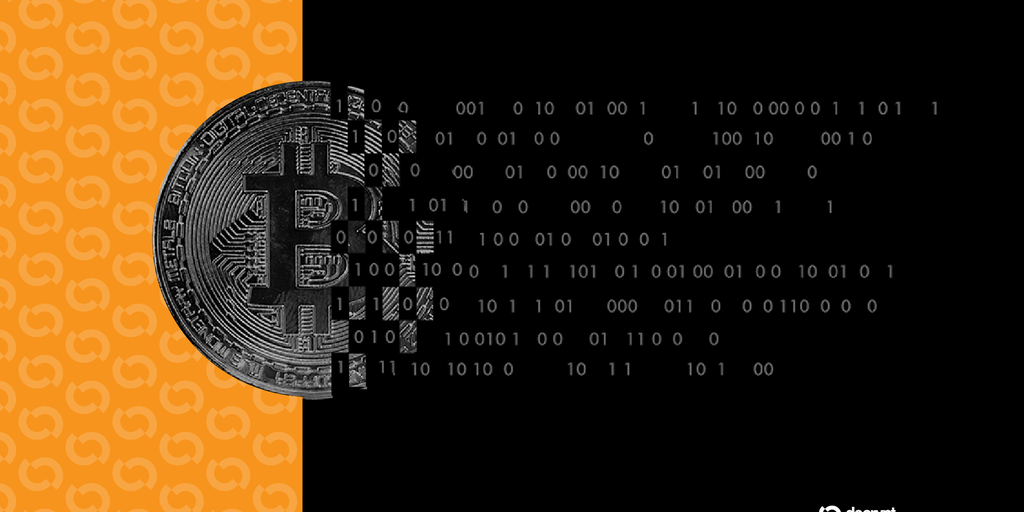
IBM Advances Quantum Computing, Heightening Bitcoin Security Concerns

Originally Published 7 months ago — by Decrypt

Featured image for IBM Advances Quantum Computing, Heightening Bitcoin Security Concerns
Source: Decrypt

IBM is developing a fault-tolerant quantum computer called Starling, expected by 2029, which could accelerate the timeline for quantum threats to Bitcoin's security. Despite current skepticism, experts acknowledge that advancements in quantum error correction could eventually pose risks to cryptographic systems, prompting a need for quantum-resistant encryption. IBM's roadmap includes scaling up qubits and modular architectures to achieve practical quantum computing.

Quantum Physics and Blockchain Enable Truly Random Numbers

Originally Published 7 months ago — by IFLScience

Featured image for Quantum Physics and Blockchain Enable Truly Random Numbers
Source: IFLScience

Researchers have developed a new method using quantum entanglement and blockchain technology to generate and verify truly random numbers, overcoming the limitations of traditional pseudo-random generators and enhancing security for applications like cryptography and public lotteries.

Google's Quantum Advances Signal Easier Breakthroughs for Bitcoin and RSA Encryption

Originally Published 7 months ago — by CoinDesk

Featured image for Google's Quantum Advances Signal Easier Breakthroughs for Bitcoin and RSA Encryption
Source: CoinDesk

A Google research paper reveals that quantum computers could break RSA encryption 20 times faster than previously estimated, raising concerns about the security of cryptographic systems like those used in cryptocurrencies, although current quantum technology is not yet capable of such feats.

Google's Quantum Advances Could Make Breaking Encryption 20 Times Easier

Originally Published 7 months ago — by Decrypt

Featured image for Google's Quantum Advances Could Make Breaking Encryption 20 Times Easier
Source: Decrypt

Google's latest research indicates that quantum computers could break RSA encryption 20 times faster than previously thought, raising concerns about the security of Bitcoin and other cryptographic systems. While current quantum computers are far from capable of such tasks, the findings accelerate the timeline for potential quantum threats, prompting the crypto community to develop quantum-resistant solutions. A Bitcoin bounty has been launched to test quantum vulnerabilities, highlighting the urgency of preparing for a post-quantum cryptographic era.

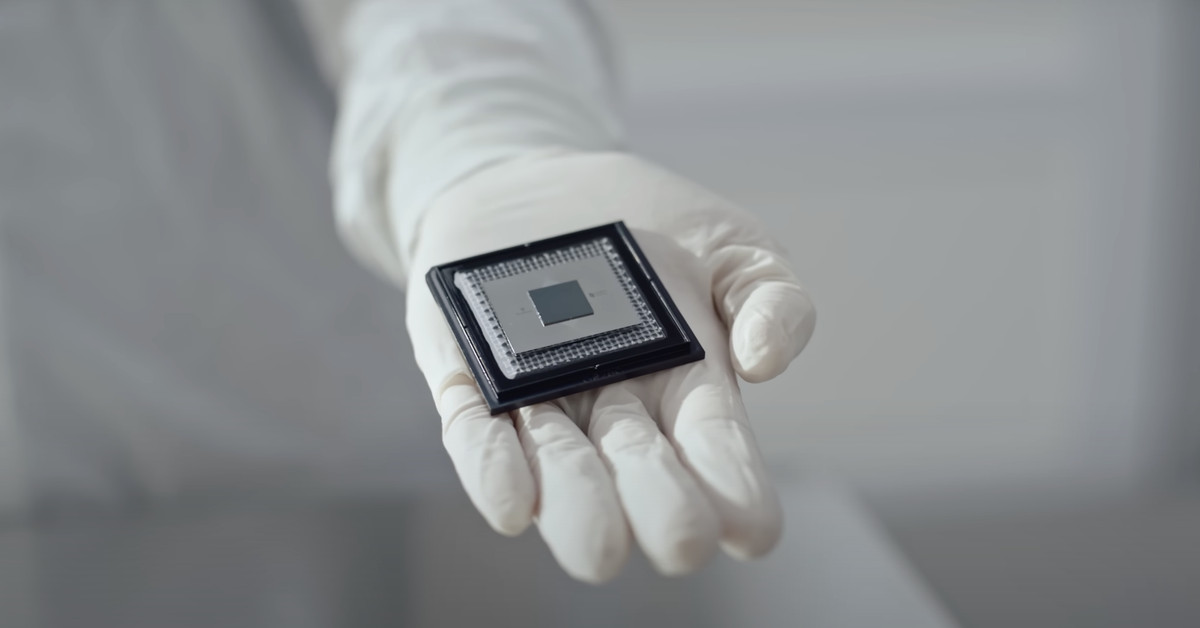
Google Unveils Willow: A Quantum Leap in Computing

Originally Published 1 year ago — by The Verge

Featured image for Google Unveils Willow: A Quantum Leap in Computing
Source: The Verge

Google's new Willow quantum chip is not capable of breaking modern cryptography, according to the company's Quantum AI director. While the chip can solve complex problems much faster than traditional supercomputers, it lacks the millions of qubits needed to crack encryption codes like RSA. Despite concerns about quantum computers potentially undermining global security, experts estimate that such capabilities are at least a decade away. In response, efforts are underway to develop post-quantum cryptography standards to safeguard against future threats.

"Unraveling the Erotic Enigma of the Voynich Manuscript"

Originally Published 1 year ago — by The Conversation

Featured image for "Unraveling the Erotic Enigma of the Voynich Manuscript"
Source: The Conversation

The Voynich manuscript, a mysterious late-medieval document covered in illustrations of stars, planets, plants, and naked women, has long puzzled historians. In a recent article, researchers propose that the manuscript contains information about sex and conception, drawing on late-medieval gynaecology and sexology. They suggest that the largest illustration, the Rosettes, represents a late-medieval understanding of sex and conception, resolving many of the manuscript's contradictions. The proposal aligns with the patriarchal culture of the time and sheds light on the manuscript's enigmatic features, offering a new perspective for future research.

"Avi Wigderson: Turing Award Winner for Randomness Insights"

Originally Published 1 year ago — by Quanta Magazine

Featured image for "Avi Wigderson: Turing Award Winner for Randomness Insights"
Source: Quanta Magazine

Avi Wigderson, a pioneer in complexity theory, has won the Turing Award for his influential work in the theory of computation, particularly in the areas of randomness and cryptography. His research has revealed deep connections between mathematics and computer science, impacting various fields within computer science. Wigderson's foundational contributions include zero-knowledge interactive proofs in cryptography and linking computational hardness to randomness, shedding light on the nature of randomness and its role in efficient problem-solving. His work has had far-reaching implications, extending beyond traditional computing to biological and physical systems.

"Exploring Computation: Conjuring New Worlds"

Originally Published 1 year ago — by Quanta Magazine

Featured image for "Exploring Computation: Conjuring New Worlds"
Source: Quanta Magazine

Russell Impagliazzo, a computer scientist at the University of California, San Diego, has made significant contributions to computational complexity theory, cryptography, and the study of randomness in computation. His work includes formulating the P versus NP problem in terms of five hypothetical worlds, which has inspired a generation of researchers. Impagliazzo's love for tabletop role-playing games and improv comedy has also influenced his research, providing him with a playful spirit and a collaborative approach to exploring hypothetical worlds and solving complex computational problems.

"Unpatchable Vulnerability in Apple's M-Series Chips Leaks Secret Encryption Keys"

Originally Published 1 year ago — by The Hacker News

Featured image for "Unpatchable Vulnerability in Apple's M-Series Chips Leaks Secret Encryption Keys"
Source: The Hacker News

A new vulnerability named GoFetch has been discovered in Apple M-series chips, allowing attackers to extract secret encryption keys by exploiting a microarchitectural side-channel attack related to the data memory-dependent prefetcher (DMP). This vulnerability poses a serious threat to the security of constant-time cryptographic implementations, rendering them susceptible to key-extraction attacks. The flaw cannot be fixed in existing Apple CPUs, requiring cryptographic library developers to take preventive measures, potentially impacting performance. Additionally, a new GPU attack affecting popular browsers and graphics cards has been demonstrated, leveraging specially crafted JavaScript code to infer sensitive information, impacting all operating systems and browsers implementing the WebGPU standard.

"Apple Silicon Vulnerability Exposes Cryptographic Keys in Unfixable CPU Exploit"

Originally Published 1 year ago — by The Register

Featured image for "Apple Silicon Vulnerability Exposes Cryptographic Keys in Unfixable CPU Exploit"
Source: The Register

A new side-channel vulnerability, dubbed GoFetch, has been discovered in the architecture of Apple Silicon processors, allowing malicious apps to extract cryptographic keys. The issue stems from how processors equipped with data memory-dependent prefetchers implement certain cryptographic operations, mixing data and addresses at the hardware level. The vulnerability affects Apple Silicon chips and 13th generation and newer Intel architectures. The researchers were able to mount end-to-end attacks on Apple hardware containing M1 processors and found similar exploitable behavior in base-model M2 and M3 Apple Silicon CPUs. Disabling the vulnerable feature may seriously degrade performance, and the only alternative fix is to rely on third-party cryptographic programs to improve their implementations.