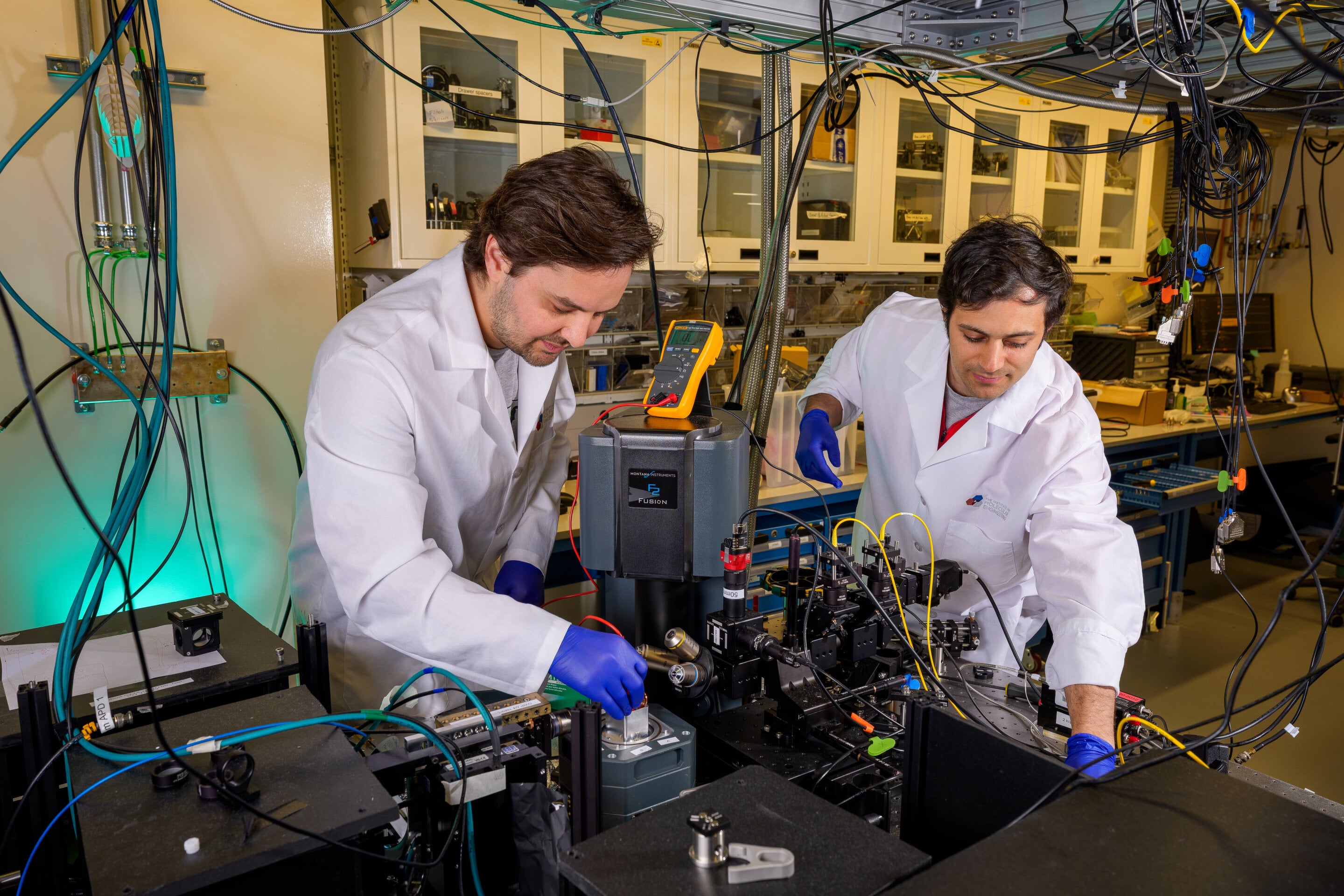
Researchers at UChicago have engineered protein qubits within living cells, enabling quantum sensing directly in biological systems, which could revolutionize nanoscale MRI and biological research by allowing direct measurement of quantum properties in living tissues and molecules.
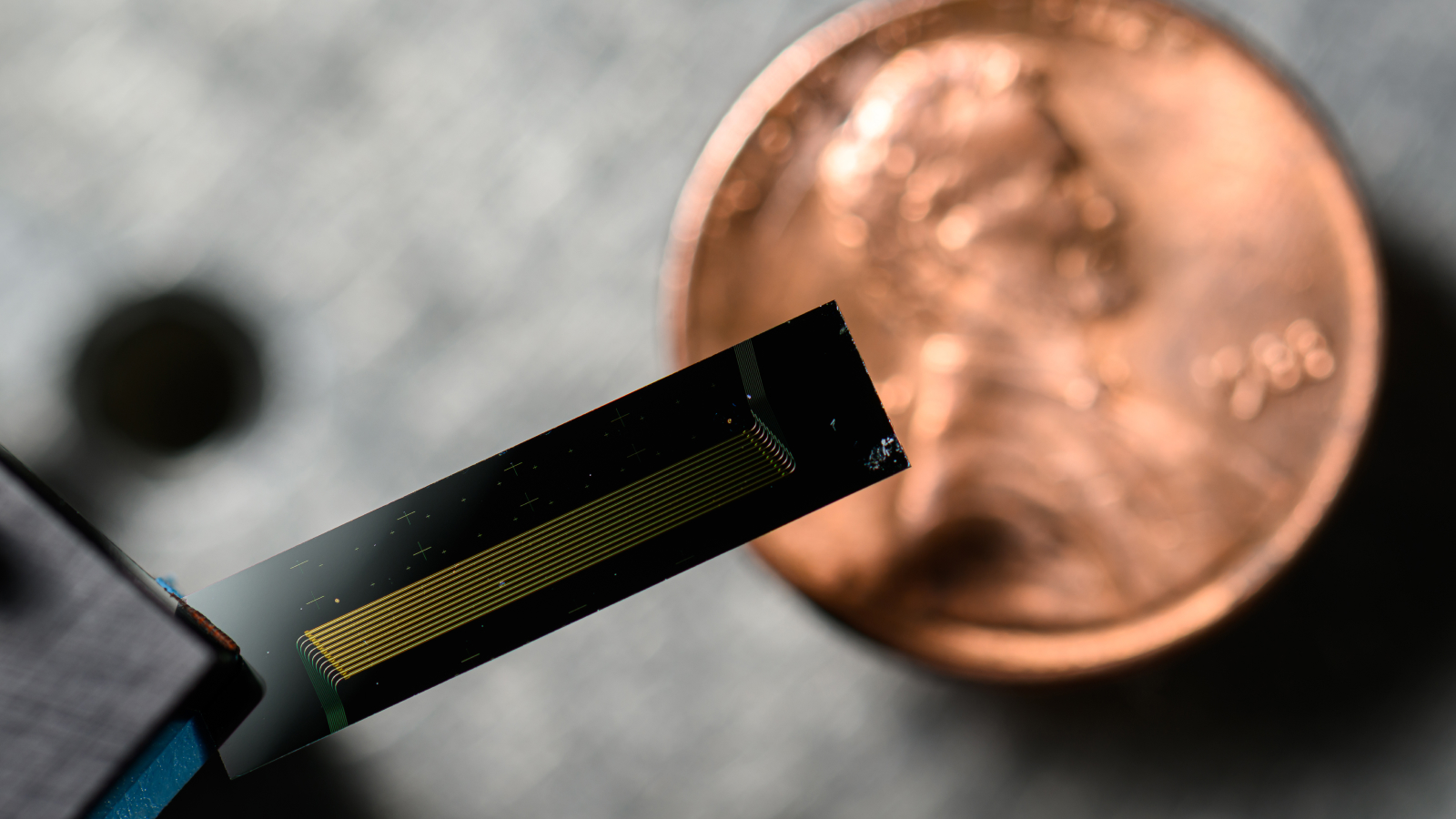
Researchers have developed a compact, penny-sized laser that can significantly improve lidar technology for autonomous vehicles by providing faster, more accurate measurements, potentially leading to better navigation and smaller sensor packages.
Researchers at the University of Colorado have developed a quantum-based random number generator that is highly resistant to tampering, using entangled photons and a publicly available hash chain to verify the randomness, significantly increasing security against potential spoofing.
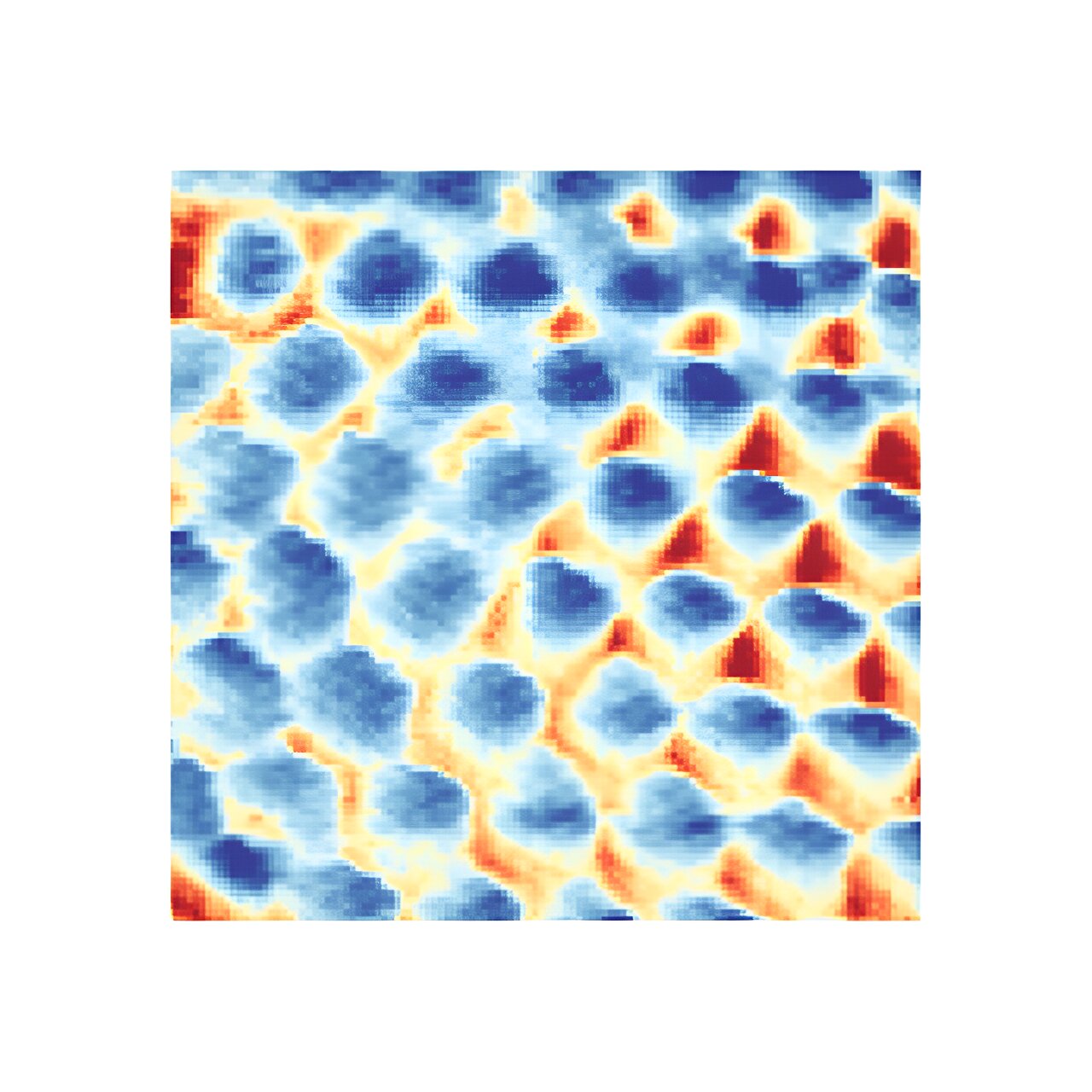
Physicists at Princeton University have successfully visualized the Wigner crystal, a crystal made entirely of electrons, for the first time using a scanning tunneling microscope. This breakthrough confirms a 90-year-old theory proposed by Eugene Wigner and could lead to the discovery of new quantum phases of matter. The researchers used pristine graphene and low temperatures to directly image the crystal, observing its triangular configuration and its ability to transition into an electron liquid phase. They also discovered the quantum nature of the crystal, including the "zero-point" motion of electrons, and are now investigating how the crystal melts and transitions into other exotic liquid phases.
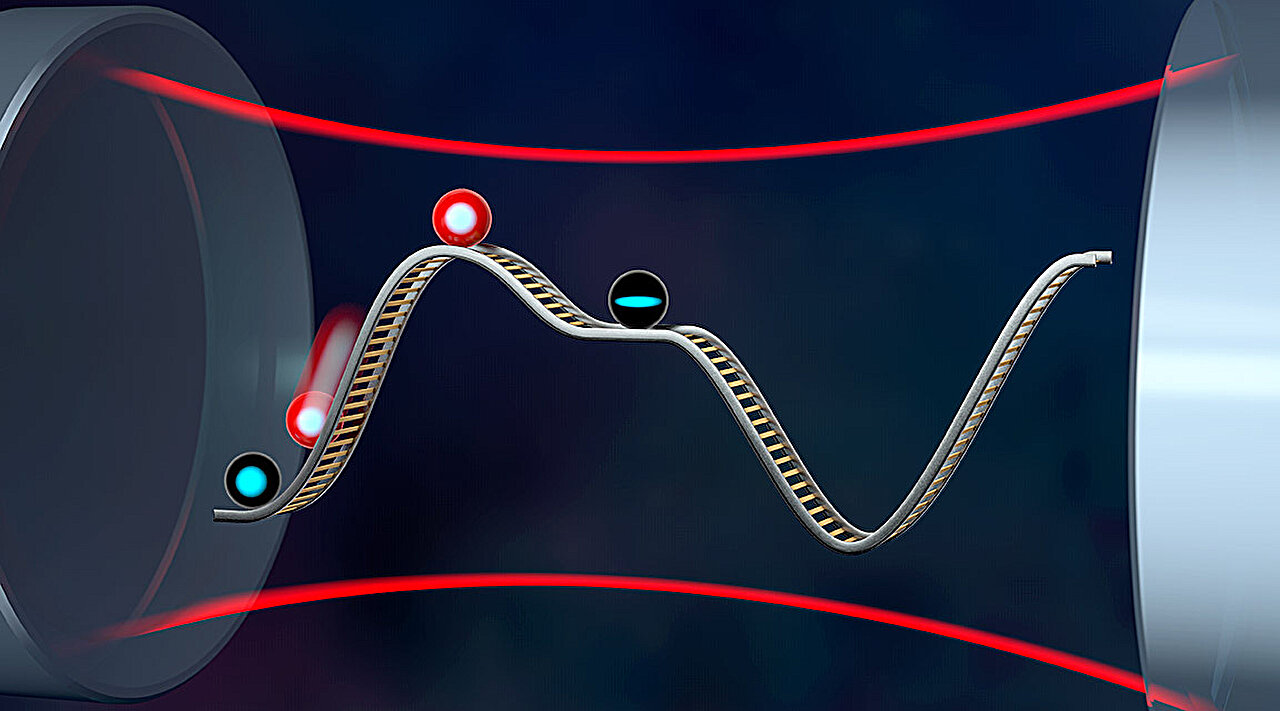
Physicists have discovered a method to create highly entangled spin-squeezed states in multilevel atoms by harnessing superradiance inside an optical cavity, leading to the generation of dark states that are immune to superradiance and emit light at a much slower pace. This breakthrough could significantly enhance the precision of atomic clocks and quantum metrology, offering opportunities for quantum-enhanced measurements and potential applications in noise reduction.
Vizio has unveiled its new Quantum and Quantum Pro Smart TVs, offering good picture quality at affordable prices starting at $499. The Quantum models promise accurate color and contrast from various viewing angles, with a base 60FPS at 4K and 120FPS at 1080p. These QLED screens feature Dolby Vision Bright+ and other tuning features to reduce light bleed. The Pro version caters to gamers with silky-smooth framerates, supporting variable refresh rates up to 240Hz at FHD. The regular Quantum starts at $499 for the 65-inch screen, while the Pro version ranges from $699 to $999.
The ATLAS experiment at the LHC accelerator has measured the fundamental properties of strong interactions between protons at ultra-high energies by studying elastic scattering in proton-proton collisions. By analyzing the distribution of the scattering angle, the researchers were able to draw conclusions about the spatial structure of the colliding particles and the properties of their interactions. The measurements were made possible by using a dedicated measurement system and a special magnet configuration to minimize angular divergence. The results provide insights into the total cross-section and the interference between strong nuclear and Coulomb interactions, challenging pre-LHC theoretical models and advancing our understanding of fundamental particle interactions.
Physicists have discovered a new phase of matter called the "chiral bose-liquid state" by engineering a "frustration machine" that creates a semiconductor device. The device works by stacking an upper semiconducting layer through which electrons are able to freely move, and a lower layer with holes that electrons occasionally move into. The resulting frustration produces the novel chiral edge state, which produces several unique characteristics. The discovery could have applications that include more secure and reliable methods for encoding digital information.
Scientists from Ohio University, Argonne National Laboratory, and the University of Illinois-Chicago have taken the world's first X-ray signature of a single atom using synchrotron X-ray scanning tunneling microscopy. The team used a specialized detector made of a sharp metal tip positioned at extreme proximity to the sample to collect X-ray excited electrons. The technique could revolutionize research and give birth to new technologies in areas such as quantum information and the detection of trace elements in environmental and medical research.