Dedekind numbers are a sequence of mathematical values with complex growth, first studied by Richard Dedekind, and are extremely difficult to compute beyond the eighth term due to their exponential complexity. The ninth Dedekind number was only recently discovered through advanced computational methods, but finding the tenth may be impossible for the foreseeable future due to the astronomical computational power required.

Researchers have demonstrated that recognizing phases of matter in quantum states can be exponentially hard for quantum computers, especially as the correlation length increases, making some problems practically impossible to solve efficiently, which raises fundamental questions about the limits of physical observation.
Researchers and enthusiasts have pushed the boundaries of the busy beaver problem, discovering that the numbers involved grow faster than any notation can handle, with the latest lower bounds on BB(6) reaching unimaginably large values expressed through advanced mathematical operations like pentation, highlighting the profound complexity and ongoing challenge of understanding these extreme computational processes.
Recent advances in catalytic computing reveal that a full hard drive can actually boost computer performance by enabling complex calculations through innovative manipulation of memory, challenging traditional views on memory limitations in computing.
Avi Wigderson, a pioneer in complexity theory, has won the Turing Award for his influential work in the theory of computation, particularly in the areas of randomness and cryptography. His research has revealed deep connections between mathematics and computer science, impacting various fields within computer science. Wigderson's foundational contributions include zero-knowledge interactive proofs in cryptography and linking computational hardness to randomness, shedding light on the nature of randomness and its role in efficient problem-solving. His work has had far-reaching implications, extending beyond traditional computing to biological and physical systems.
Ramsey theory, the study of mathematical patterns, has seen recent advances in understanding the behavior of numbers and networks as they grow infinitely large. However, analyzing finite numbers in Ramsey theory poses computational challenges due to the exponential growth in the number of possible answers. Researchers have employed various strategies, including randomness, to find the best progression-free sets and calculate Ramsey numbers. The techniques developed in studying Ramsey graphs could have broader applications in generating other types of graphs efficiently. The study of small Ramsey numbers remains a challenge due to the complexity of computation, but it continues to intrigue mathematicians.
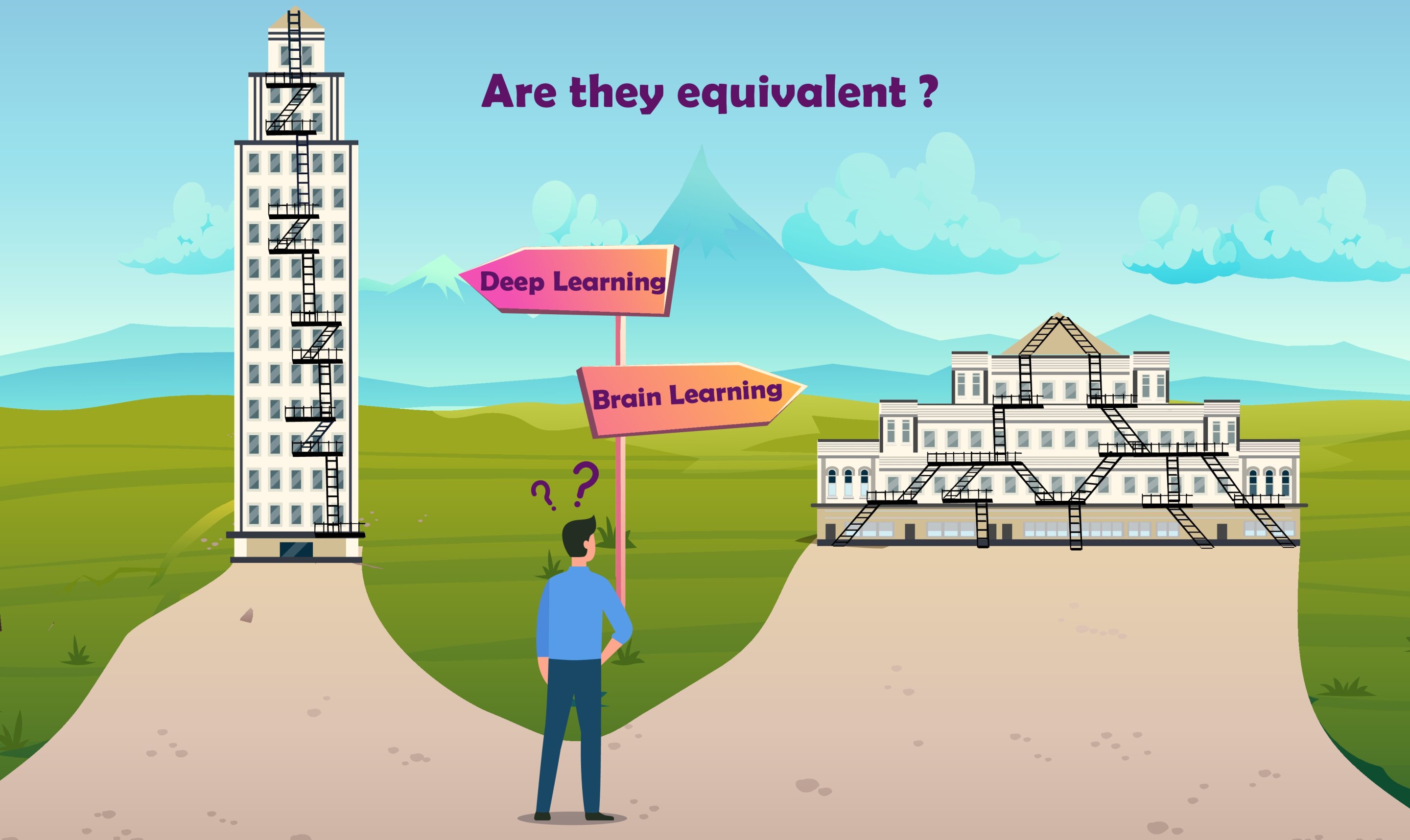
Researchers at Bar-Ilan University have shown that efficient learning on an artificial shallow architecture can achieve the same classification success rates as deep learning architectures, but with less computational complexity. This raises the question of whether deep learning is necessary for artificial intelligence. The efficient realization of shallow architectures requires a shift in the properties of advanced GPU technology and future dedicated hardware developments. Brain-inspired shallow learning has advanced computational capability with reduced complexity and energy consumption.