Scientists have developed a molecule that prevents the harmful clumping of alpha-synuclein protein, a key factor in Parkinson's disease, showing promise in animal models and potentially paving the way for new treatments to slow or stop disease progression.
Scientists at the University of Basel discovered that certain food molecules, specifically dietary RNAs, can trigger a mild stress response in nematodes that promotes healthier aging by activating cellular cleanup processes and reducing harmful protein buildup, suggesting diet influences healthspan and aging.
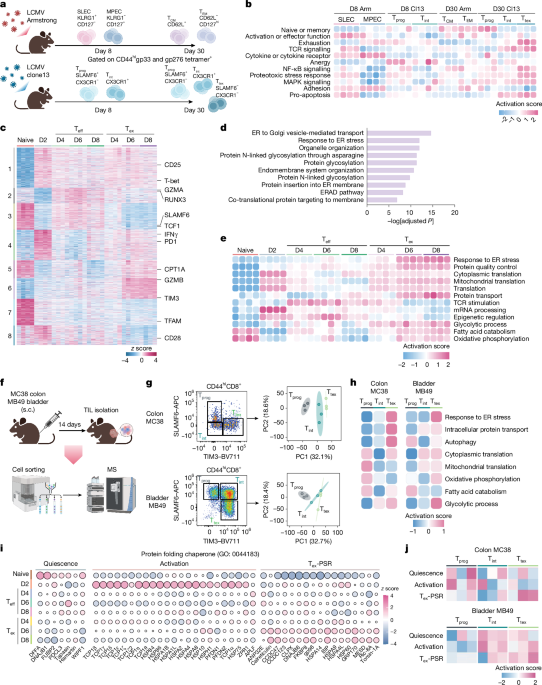
The study reveals that proteotoxic stress response (PSR) drives T cell exhaustion in cancer, characterized by increased protein synthesis, chaperone activation, and protein aggregation, with sustained AKT activity as a key upstream driver. Targeting specific chaperones like gp96 and BiP can mitigate exhaustion and improve immunotherapy outcomes.
Scientists developed CANYA, an explainable AI tool that deciphers the chemical language of proteins to predict and understand their tendency to form harmful clumps linked to diseases like Alzheimer's, using a large dataset of synthetic protein fragments to improve drug development and biotech applications.
Researchers at Kumamoto University have discovered that G-quadruplexes (G4s), unique RNA structures, promote harmful protein aggregation in neurodegenerative diseases like Parkinson's. By blocking G4s with 5-aminolevulinic acid (5-ALA), they prevented Parkinson's-like symptoms in mice, suggesting a new treatment avenue. This breakthrough could lead to early interventions for neurodegenerative diseases, potentially extending to conditions like Alzheimer's.
Researchers at Kumamoto University have discovered that RNA structures called G-quadruplexes (G4s) promote the aggregation of α-synuclein, a protein linked to neurodegenerative diseases like Parkinson's. Elevated calcium levels trigger these G4s, which act as scaffolds for harmful protein clumping. Administering 5-aminolevulinic acid (5-ALA) to model mice prevented aggregation and reduced motor symptoms, suggesting G4-targeted therapies could offer early intervention for neurodegenerative diseases. This breakthrough may also apply to other conditions involving protein aggregation, such as Alzheimer's.
Researchers from the University of Cambridge have used an AI-based strategy to identify compounds that block the clumping of alpha-synuclein, a protein associated with Parkinson's disease, speeding up the initial screening process ten-fold and reducing costs by a thousand-fold. This breakthrough could lead to faster development of potential treatments for Parkinson's, a condition projected to triple in prevalence by 2040. The team's machine learning method allowed them to identify highly potent compounds for further investigation, offering hope for the development of disease-modifying treatments for Parkinson's.
Researchers have used computational models to understand the aggregation of alpha-synuclein protein, a key factor in Parkinson’s disease development. The study reveals that environmental factors such as molecule crowding and ionic changes enhance aggregation through distinct mechanisms. This research not only advances our understanding of neurodegenerative diseases but also offers new avenues for exploring therapeutic interventions.
Researchers have identified the protein TAF15 as the key aggregate in certain cases of frontotemporal dementia, a type of neurodegenerative disease that affects the frontal and temporal lobes of the brain. Using advanced cryo-electron microscopy, scientists discovered TAF15 aggregates in brain samples, providing new insights into the molecular basis of the disease. This breakthrough could lead to targeted diagnostic tests and therapies for frontotemporal dementia, as well as potential treatments for motor neuron disease.
Researchers have discovered that a mutated version of the α-synuclein protein, implicated in Parkinson's disease, propagates through the brain's glymphatic system before forming clumps. By tracking fluorescent α-synuclein in mice, they observed early spread of the protein, with fibril formation occurring much later. This suggests that targeting the monomeric α-synuclein and its propagation through the glymphatic system may be a potential strategy to halt the progression of Parkinson's disease.
Researchers have developed a new imaging technique to capture the moment when proteins associated with neurodegenerative diseases like Alzheimer's and ALS begin to aggregate. By closely monitoring the transition of proteins from their liquid to solid phase, the team observed the formation of dense protein condensates that eventually solidified into clumps. This breakthrough provides insights into the physical process underlying neurodegenerative diseases and could lead to a better understanding of protein interactions.
Researchers at the University of Helsinki have identified specific strains of Desulfovibrio bacteria as the primary cause of Parkinson's disease, triggering α-synuclein protein aggregation. The study enables screening for and removal of these harmful bacteria from the gut, potentially preventing Parkinson's disease. The findings indicate that environmental exposure to Desulfovibrio bacterial strains causes Parkinson's disease, and only a small share of the disease is caused by individual genes.
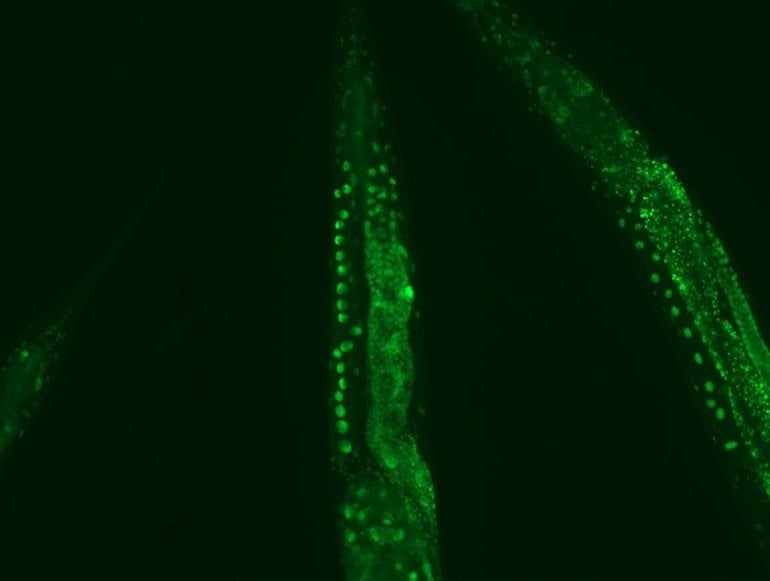
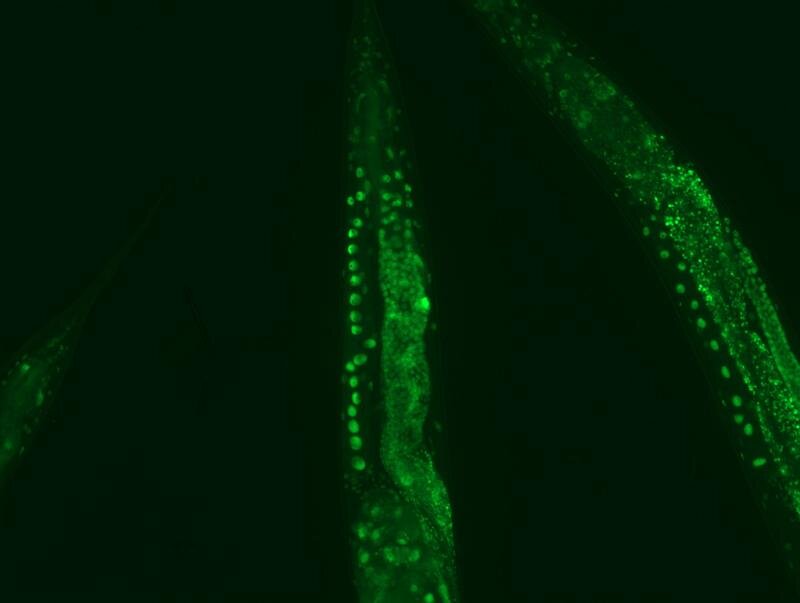
Cold temperatures activate a cellular mechanism that breaks down harmful protein aggregations responsible for various diseases associated with aging, according to a study by the University of Cologne. The research team used a non-vertebrate model organism and cultivated human cells, both carrying genes for two neurodegenerative diseases. Cold actively removed protein clumps, preventing protein aggregation that is pathological in both diseases. The scientists explored the impact of cold on the activity of proteasomes, a cellular mechanism that removes damaged proteins from cells. The research revealed that the proteasome activator PA28γ/PSME3 mitigated the deficits caused by aging in both the nematode and in the human cells.
Cold temperatures activate a cellular cleansing mechanism that breaks down harmful protein aggregations responsible for various diseases associated with aging. The proteasome activator PA28γ/PSME3 mitigated the deficits caused by aging in both the nematode and in the human cells. Aging is a major risk factor for several neurodegenerative diseases associated with protein aggregation, including Alzheimer's, Parkinson's, Huntington's and ALS. The research was conducted at the University of Cologne's CECAD Cluster of Excellence in Aging Research.