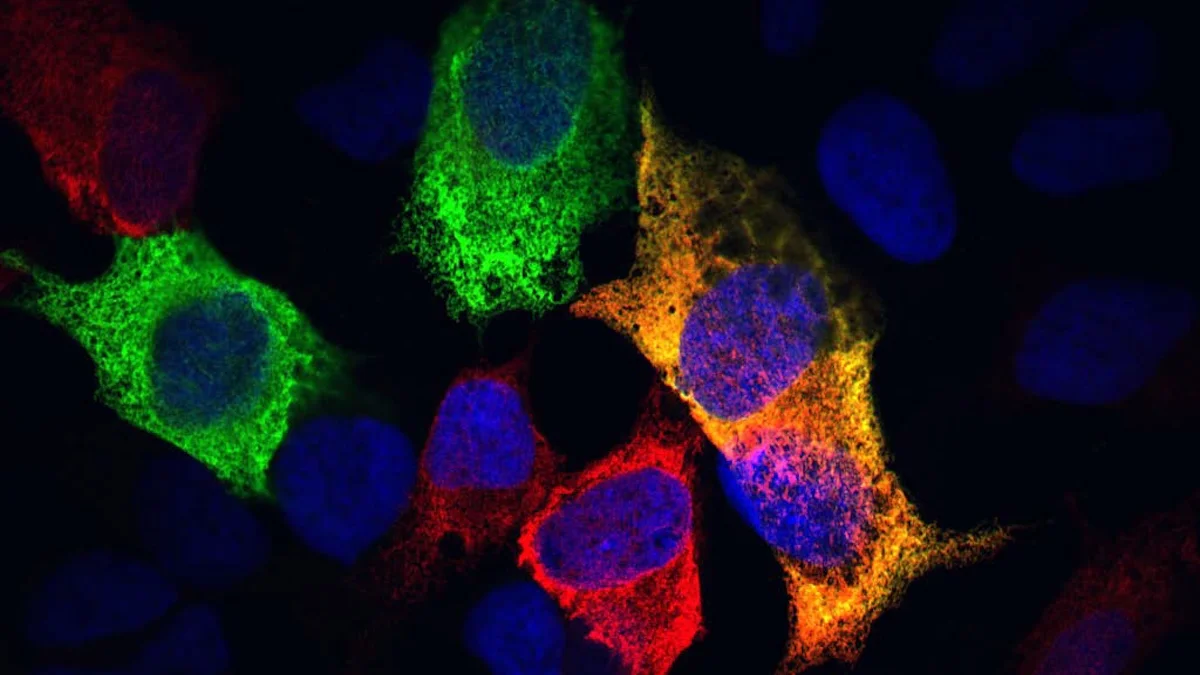
Researchers studying aging in Caenorhabditis elegans found that aging promotes remodeling of the endoplasmic reticulum via ER-phagy, with rough ER declining while smooth ER changes are modest; this reorganization may affect protein homeostasis and aging, and could point to new drug targets for age-related diseases.
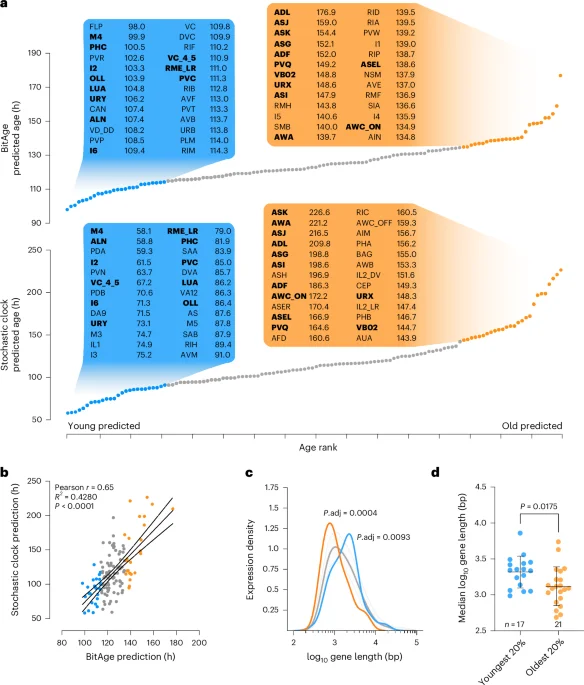
Aging clocks applied to single neuron types in C. elegans reveal neuron-type–specific biological ages, with environmentally exposed ciliated amphid neurons aging fastest and degenerating earlier. Reducing translation slows degeneration in fast-aging neurons, and neuronal aging patterns correlate with human brain aging while anticorrelating with known geroprotective interventions. An in silico CMAP screen identifies potential neuroprotective compounds, notably syringic acid and vanoxerine, while some agents (e.g., WAY-100635, Bay K8644) can be neurotoxic. The study suggests neuron-type aging trajectories can guide protective interventions and risk-factor identification for neurodegeneration across species.
Scientists at the University of Basel discovered that certain food molecules, specifically dietary RNAs, can trigger a mild stress response in nematodes that promotes healthier aging by activating cellular cleanup processes and reducing harmful protein buildup, suggesting diet influences healthspan and aging.
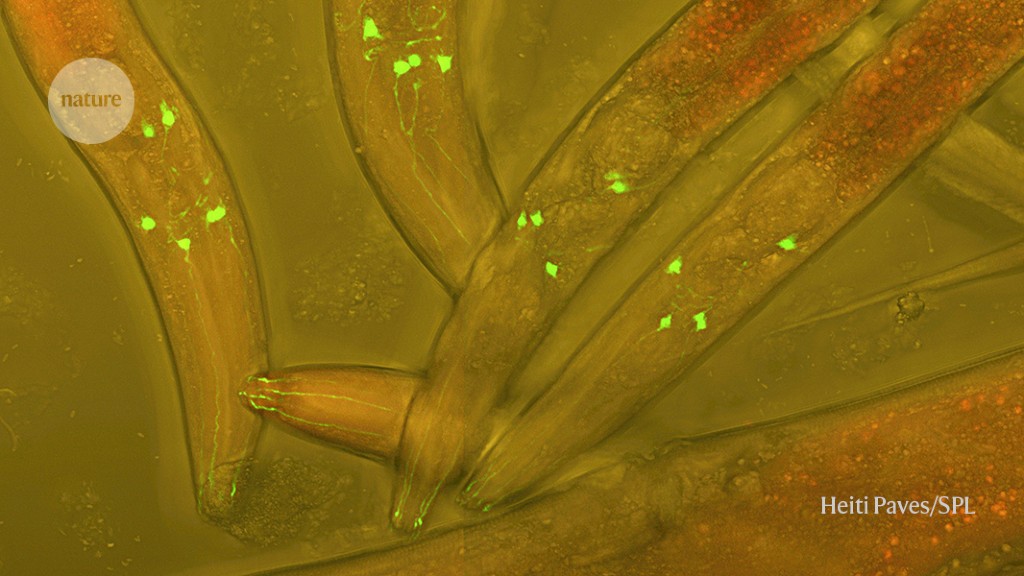
Researchers have developed an AI-based method using a convolutional neural network (CNN) to track neurons in moving and deforming animals, such as the roundworm Caenorhabditis elegans. This innovative technique, which incorporates targeted augmentation, reduces the need for manual image annotation and significantly increases analysis efficiency. The CNN method has revealed complex interneuron behaviors and responses to stimuli, deepening insights into neuronal activities. This breakthrough has the potential to accelerate research in brain imaging and enhance our understanding of neural circuits and behaviors.
Two recent studies have revealed the existence of a 'wireless' nerve network in the worm Caenorhabditis elegans, challenging the traditional understanding that nerve cells communicate only through synapses. The studies mapped out the entire network of neuropeptide communication in C. elegans, showing that neuropeptides can pass messages between cells over longer distances. This wireless communication, which involves the release and interception of neuropeptides by different neurons, was found to directly activate neurons and contribute significantly to the propagation of signals in the worm's nervous system. The findings suggest that neuropeptide communication is equally important and complex as synaptic signaling, and understanding this network could have implications for the development of drugs and our understanding of neural dynamics in other organisms, including humans.