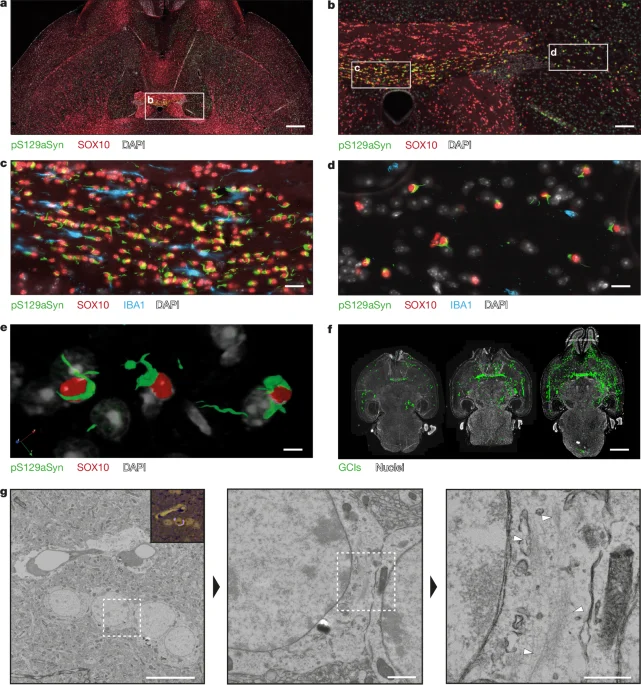
Synthetic α-synuclein fibrils of strain 1B can replicate in mice, inducing MSA-like pathology through a prion-like templating process, with structural similarities to human MSA fibrils demonstrated by cryo-EM analysis.
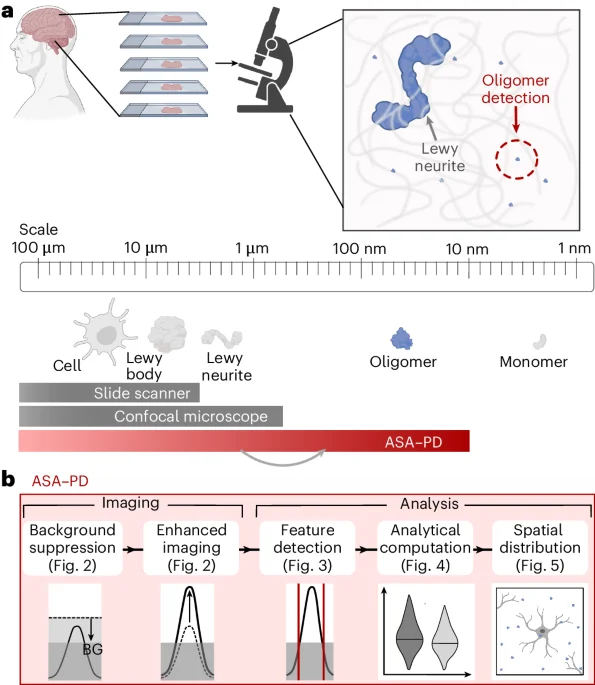
The article presents ASA–PD, a novel imaging platform that enables large-scale, high-sensitivity visualization and analysis of α-synuclein oligomers in post-mortem human brain tissue, revealing a disease-specific subpopulation of nanoscale assemblies associated with Parkinson's disease, and providing insights into their distribution, size, and potential role in disease progression.
Researchers at Tel Aviv University have identified the TMEM16F protein as a key factor in the spread of Parkinson's disease pathology. A mutation in TMEM16F increases the secretion of toxic α-synuclein, which forms harmful Lewy bodies in the brain. Mice lacking this protein showed reduced disease spread, suggesting TMEM16F as a potential therapeutic target. This mutation is notably common among Ashkenazi Jews, offering insights into genetic risk factors and potential interventions for Parkinson's.
Researchers have discovered that a mutated version of the α-synuclein protein, implicated in Parkinson's disease, propagates through the brain's glymphatic system before forming clumps. By tracking fluorescent α-synuclein in mice, they observed early spread of the protein, with fibril formation occurring much later. This suggests that targeting the monomeric α-synuclein and its propagation through the glymphatic system may be a potential strategy to halt the progression of Parkinson's disease.
Researchers have developed a new test, the α-synuclein seed amplification assay (ASA), that can detect abnormal α-synuclein, the major pathological protein in Parkinson’s disease, in brain and body cells. The test can accurately detect pathology in spinal fluid not only in people diagnosed with Parkinson’s disease but also in individuals who have not yet been diagnosed or shown clinical symptoms of the disease but are at a high risk of developing it. This breakthrough opens up new possibilities for research and treatment, and people with Parkinson's can expect faster care and improved treatments.
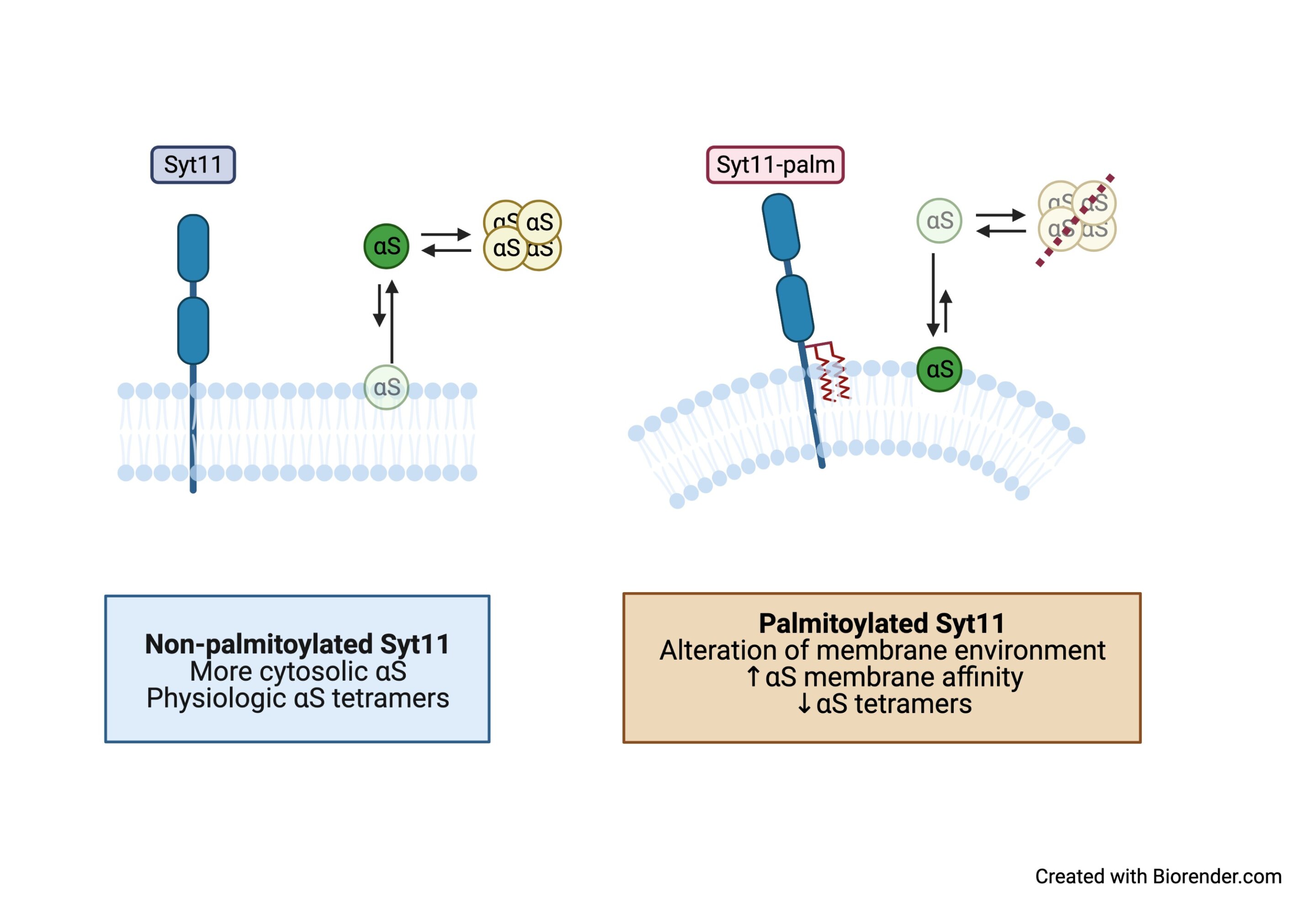
Scientists have identified two proteins, synaptotagmin-11 (Syt11) and alpha-synuclein (α-synuclein), that exacerbate the progression of Parkinson's disease. The study found that palmitoylation of Syt11 disrupted α-synuclein homeostasis in neurons, leading to an increase in the aggregation-prone, disease-linked form of α-synuclein. The research provides new insights into the molecular mechanisms underlying Parkinson's disease, which affects over 10 million people worldwide, and may help in the development of new treatments.