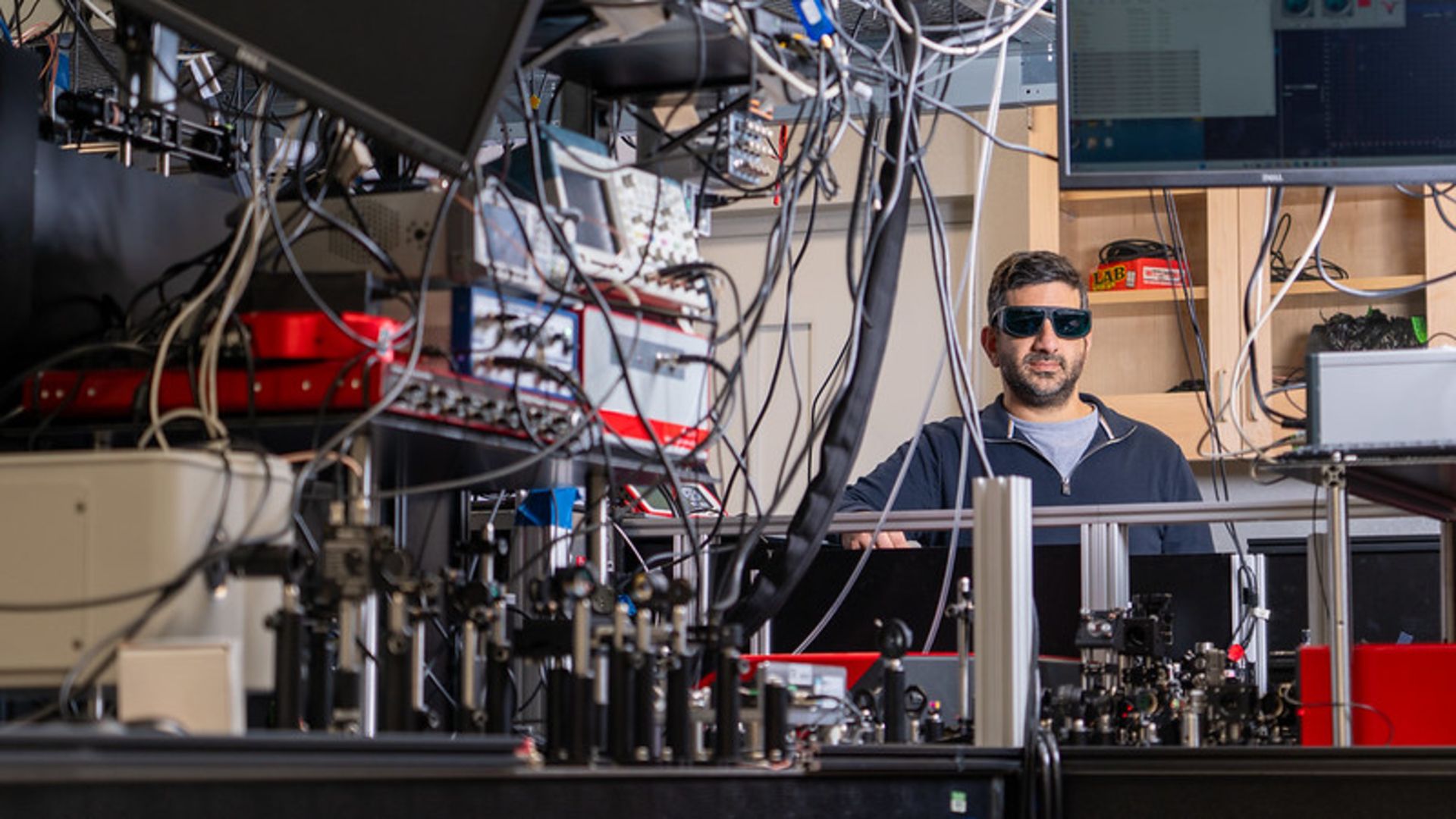
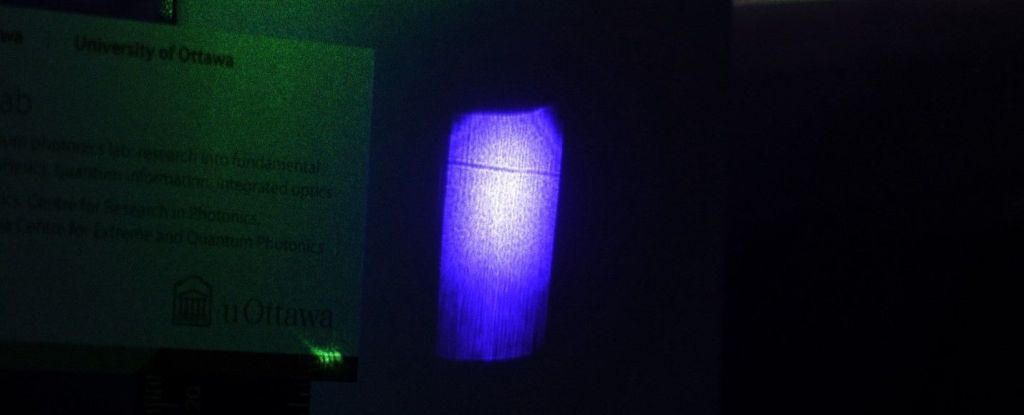
Scientists have developed a novel laser-based technique to 'draw' crystals precisely where needed in electronic devices using plasmonic heating of gold nanoparticles, potentially reducing costs and improving performance in applications like solar cells and sensors.
Hundreds gathered at Lake Harriet in Minneapolis to celebrate the life of 10-year-old Harper Moyski, a shooting victim, highlighting her joyful spirit and the community's support, with memorials emphasizing love and resilience.
Physicists have experimentally observed how light behaves during 'imaginary time' using microwave pulses in a circular cable setup, revealing that imaginary numbers can describe real, measurable processes in light transmission, thus providing new insights into the behavior of light and electromagnetic interactions.
Physicists have experimentally observed how light behaves in 'imaginary time' using microwave pulses in a circular cable setup, revealing that imaginary numbers can describe real, measurable processes in light transmission, thus providing new insights into the behavior of light and electromagnetic interactions.
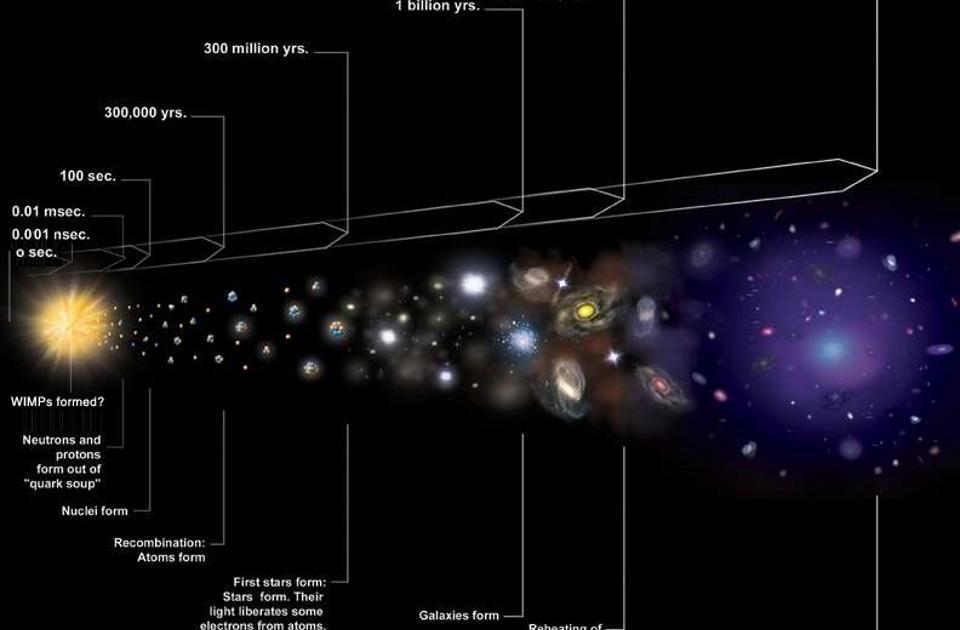
Light in the universe's early moments was initially trapped in a dense, hot environment after the Big Bang, but around 380,000 years later, cooling allowed photons to escape, creating the cosmic microwave background and marking the universe's first light, which paved the way for star and galaxy formation.
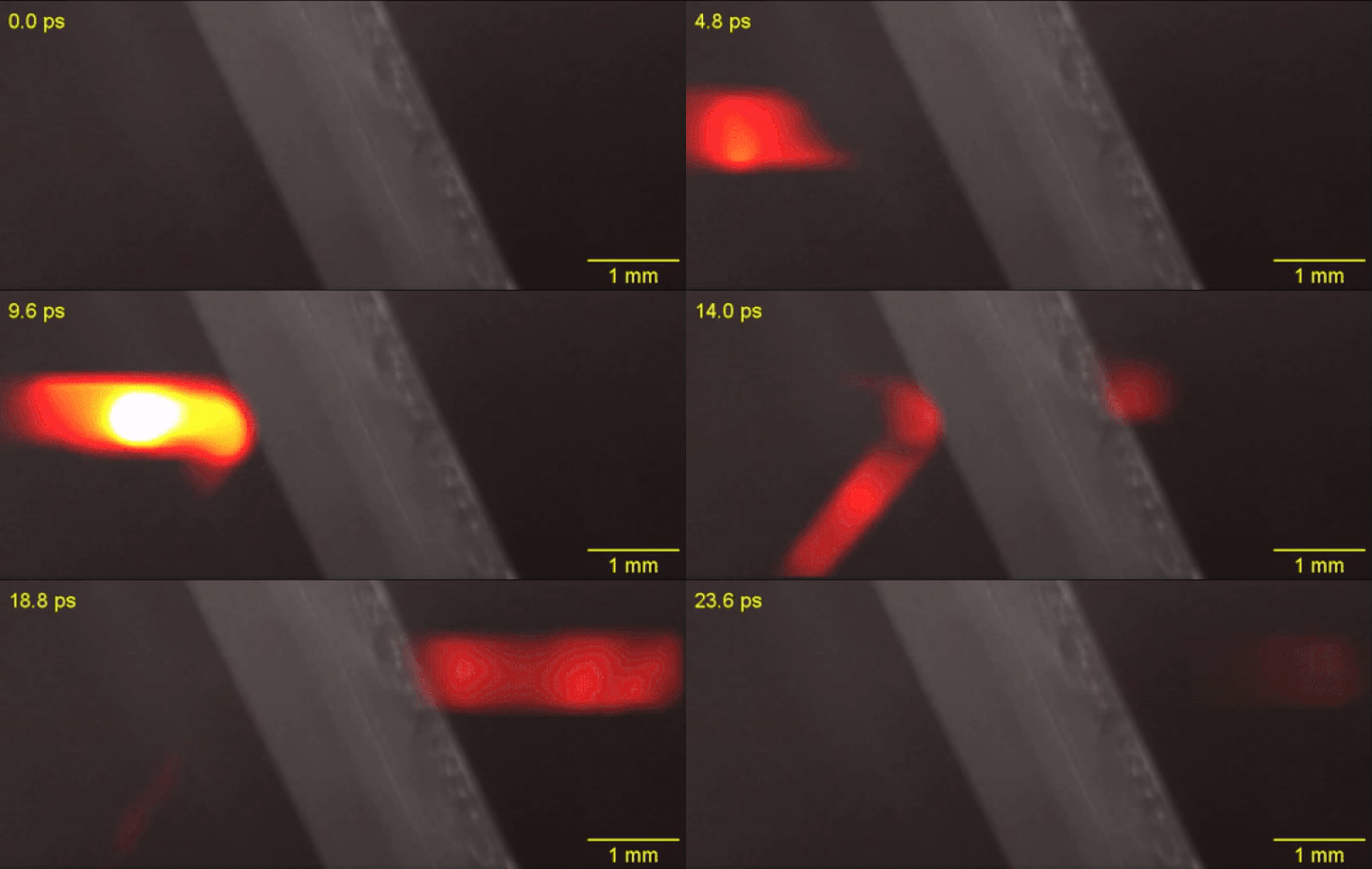
Light travels at a constant speed and does not lose energy over vast distances in space unless scattered, with its behavior influenced by relativistic effects like time dilation, especially at speeds close to that of light.
Light travels through space at a constant speed and does not wear out or lose energy when it moves through the vacuum of space, unless it interacts with matter. Its ability to travel vast distances without losing energy is due to the emptiness of space and the nature of electromagnetic radiation, which is massless and unaffected by friction or resistance in a vacuum.
Biophysicist Dakota McCoy and her team have discovered that the heart cockle clam, Corculum cardissa, has shell structures that function like fiber optic cables, allowing beneficial sunlight to penetrate and sustain algae living inside. This natural phenomenon, reminiscent of stained glass windows, was detailed in a recent Nature Communications paper, highlighting the clam's unique adaptation long before human engineering achieved similar results.
MIT researchers have developed a new photonic neural network processor that uses light to perform calculations, potentially overcoming limitations of traditional electronic computing. This new system, which incorporates nonlinear optical function units (NOFUs), allows all neural network processing to occur on the chip, achieving high accuracy and ultra-low latency. The photonic chip, fabricated with standard semiconductor tools, could be manufactured at scale, offering a faster alternative to electronic processors for machine learning tasks.
The nature of light as both a particle and a wave has puzzled scientists for centuries, with key experiments by Thomas Young and Albert Einstein providing evidence for its dual nature. Young's double-slit experiment demonstrated light's wave properties, while Einstein's explanation of the photoelectric effect revealed its particle characteristics. This wave-particle duality is fundamental to quantum mechanics and essential for the stability of atoms and the existence of life.
Scientists have discovered that lasers can create shadows by using nonlinear materials, such as ruby, to block light. When two laser beams intersect in a specific way, the primary beam is obstructed by the secondary, casting a shadow. This finding challenges traditional notions of shadows and light interactions, and could have applications in optical switching and light transmission technologies. The research is set to be published in Optica.
The question of whether photons have a finite lifetime has been a topic of interest. While there were initial hypotheses suggesting that light might lose energy and decay over time, observations have falsified these ideas. Photons can interact with other particles, scatter, or convert into other particles, but they will never truly die out. Even as the Universe expands and the energy density of photons decreases, the presence of dark energy ensures that new photons will always be created, leading to a Universe with a finite and positive photon number and energy density at all times.
The expansion of the Universe does not break the speed of light. The speed of the expansion of space is not a constant value, but rather varies depending on the distance of the object being observed. The redshift observed in light from distant objects is caused by the expanding Universe, gravitational potential differences, and relative motion between the source and the observer. The expansion rate is typically expressed in terms of kilometers-per-second-per-megaparsec, and current measurements fall within a range of 67 to 74 km/s/Mpc. Objects closer than 14 billion light-years are receding from us at speeds slower than light, while those farther away are receding faster than light due to the expanding space between them.
The concept of wave-particle duality, which describes the behavior of quanta such as light and electrons, has its origins in the 17th century with Christiaan Huygens and Isaac Newton. The idea that light is a wave was initially proposed by Huygens, while Newton described light as a series of rays or corpuscles. Thomas Young's double slit experiment in the early 19th century provided evidence for the wave nature of light, and subsequent experiments by Augustin-Jean Fresnel and François Arago further supported the wave theory. Maxwell's equations in the 19th century revealed light as an electromagnetic wave, and Einstein's work on the photoelectric effect demonstrated that light's energy is quantized into individual packets known as photons. Modern experiments continue to confirm the wave-particle duality of quanta, showing that they behave as waves when unobserved and as particles when measured or compelled to interact with other quanta.
New research suggests that flying insects are not actually attracted to light, but rather become confused by artificial lights at night, which scramble their innate navigational systems. Insects do not fly directly toward a light source, but tilt their backs toward it, causing midair confusion. This study used motion-capture video to observe how insects react to different light sources, finding that their flight is least disrupted by lights shining straight downward.