Scientists in Vienna successfully rewound the quantum state of a photon with over 95% accuracy using a novel protocol that manipulates quantum interference without direct measurement, paving the way for advanced quantum diagnostics and memory stability.
Photons exhibit collective behavior only after reaching a certain number, favoring the more populated state, which could be harnessed to develop more powerful lasers, according to a study published in Physical Review Letters.
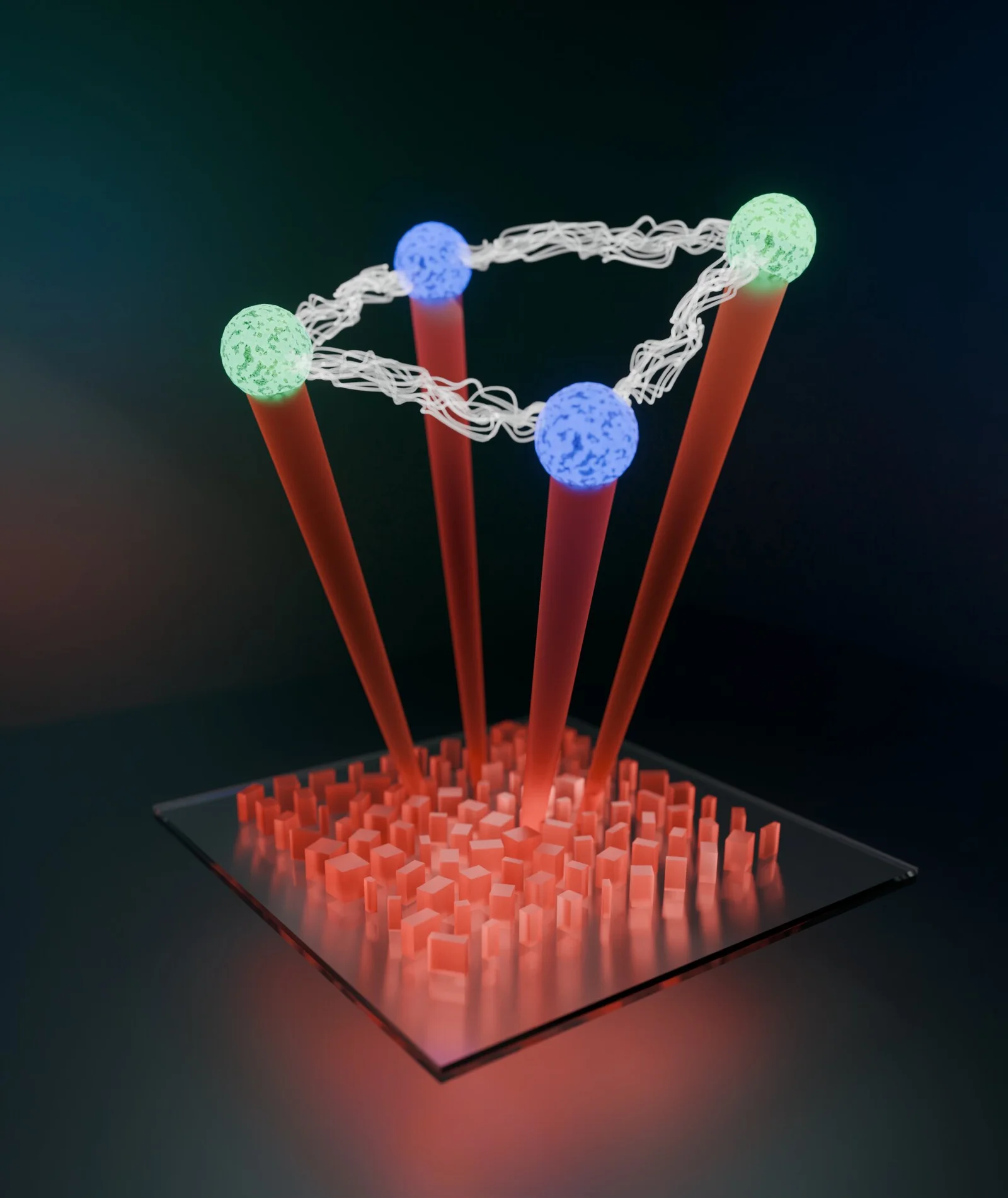
Researchers at Harvard have developed ultra-thin metasurfaces that can manipulate and entangle photons for quantum information processing, potentially replacing bulky optical components and enabling scalable, robust quantum devices at room temperature.
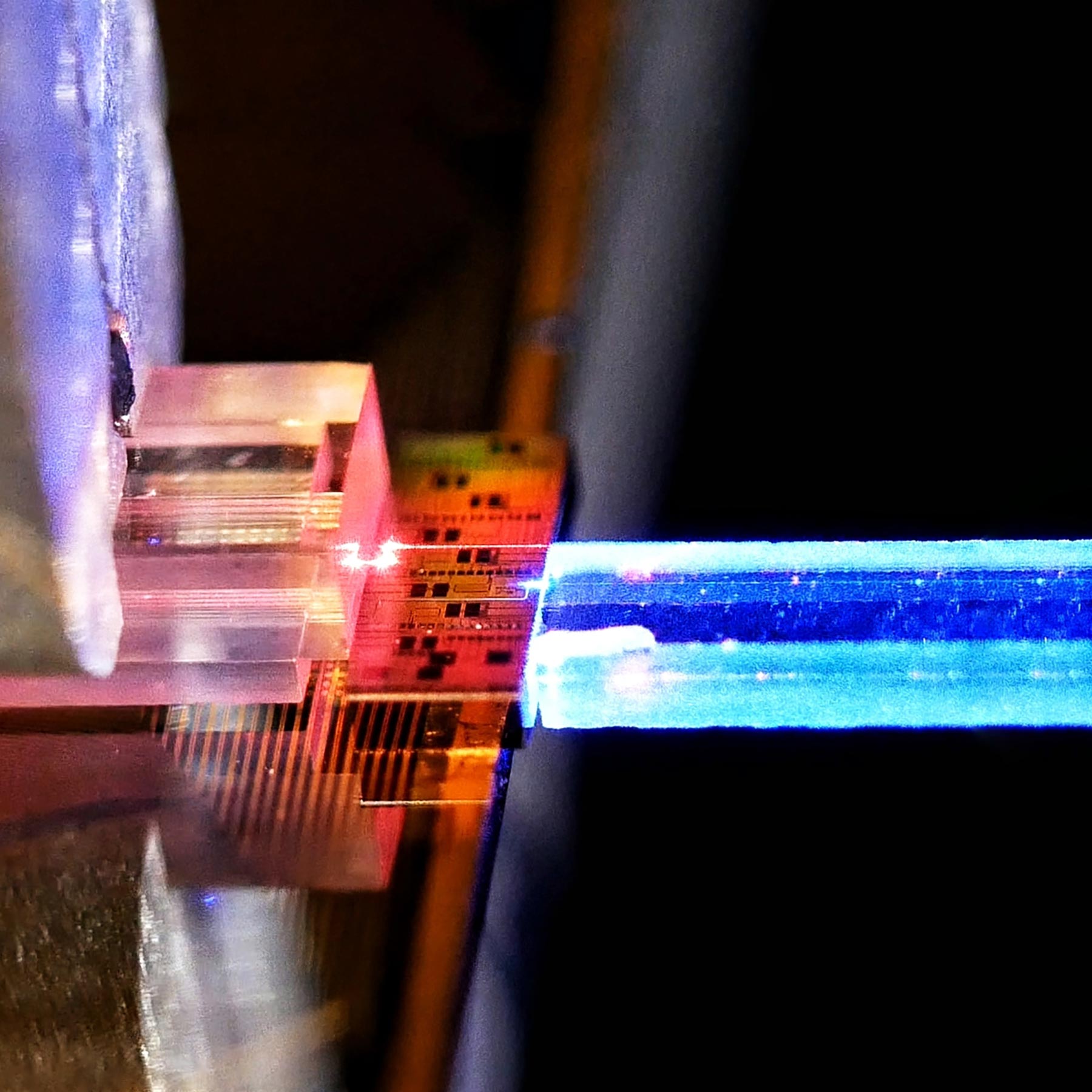
Researchers at the University of Rochester and RIT have developed the Rochester Quantum Network (RoQNET), an 11-mile-long quantum communication system using photons transmitted over fiber-optic cables, which could enhance secure communications and enable new quantum technologies. The system leverages integrated photonic chips and aims to connect various research facilities, advancing scalable and cost-effective quantum networking.
Scientists at the Princeton Plasma Physics Laboratory have discovered that a photon's polarization is a topological property, which remains unchanged across different environments. This insight could lead to better methods for heating fusion plasma in tokamaks, potentially enhancing the efficiency of fusion energy generation. The findings also clarify the behavior of photons' angular momentum, contributing to a deeper theoretical understanding that could improve experimental approaches in fusion research.
Researchers from China, Europe, and the US have independently developed new protocols for generating verifiable quantum entanglement between distant nodes, potentially advancing the creation of a quantum Internet. These protocols involve using atomic ensembles and solid-state quantum memories to entangle qubits over city-sized networks. Despite the progress, some experts remain skeptical about the practical implications for building large-scale quantum computers.
The question of whether photons have a finite lifetime has been a topic of interest. While there were initial hypotheses suggesting that light might lose energy and decay over time, observations have falsified these ideas. Photons can interact with other particles, scatter, or convert into other particles, but they will never truly die out. Even as the Universe expands and the energy density of photons decreases, the presence of dark energy ensures that new photons will always be created, leading to a Universe with a finite and positive photon number and energy density at all times.
Neutrinos and photons are the fastest things in the universe, with neutrinos taking the top prize due to their extremely small mass. While light travels at approximately 186,000 miles per second in a vacuum, particles like neutrinos can exceed this speed when given enough energy. Physicists have detected ultra-fast particles, such as the Oh-My-God particle, originating from cosmic rays, and have observed high-energy neutrinos in the IceCube experiment at the South Pole. These record-setting superfast particles are produced by naturally occurring particle accelerators in the universe, showcasing the incredible capabilities of nature compared to human-made accelerators.
Physicists have developed a method to manipulate laser beams in order to utilize photons for quantum computing, creating a quantum light source that encodes information in photons rather than physical qubits, such as electrons. This development opens up new possibilities for quantum calculations and represents a significant advancement in the field of quantum computing.
Einstein's experiment on the photoelectric effect led him to propose that light is quantized into discrete bundles of energy called photons. This solved the problem of electrons behaving unexpectedly and opened the door to the quantum world. Einstein's discovery of photons was a significant contribution to the understanding of the microscopic, quantum nature of the universe.
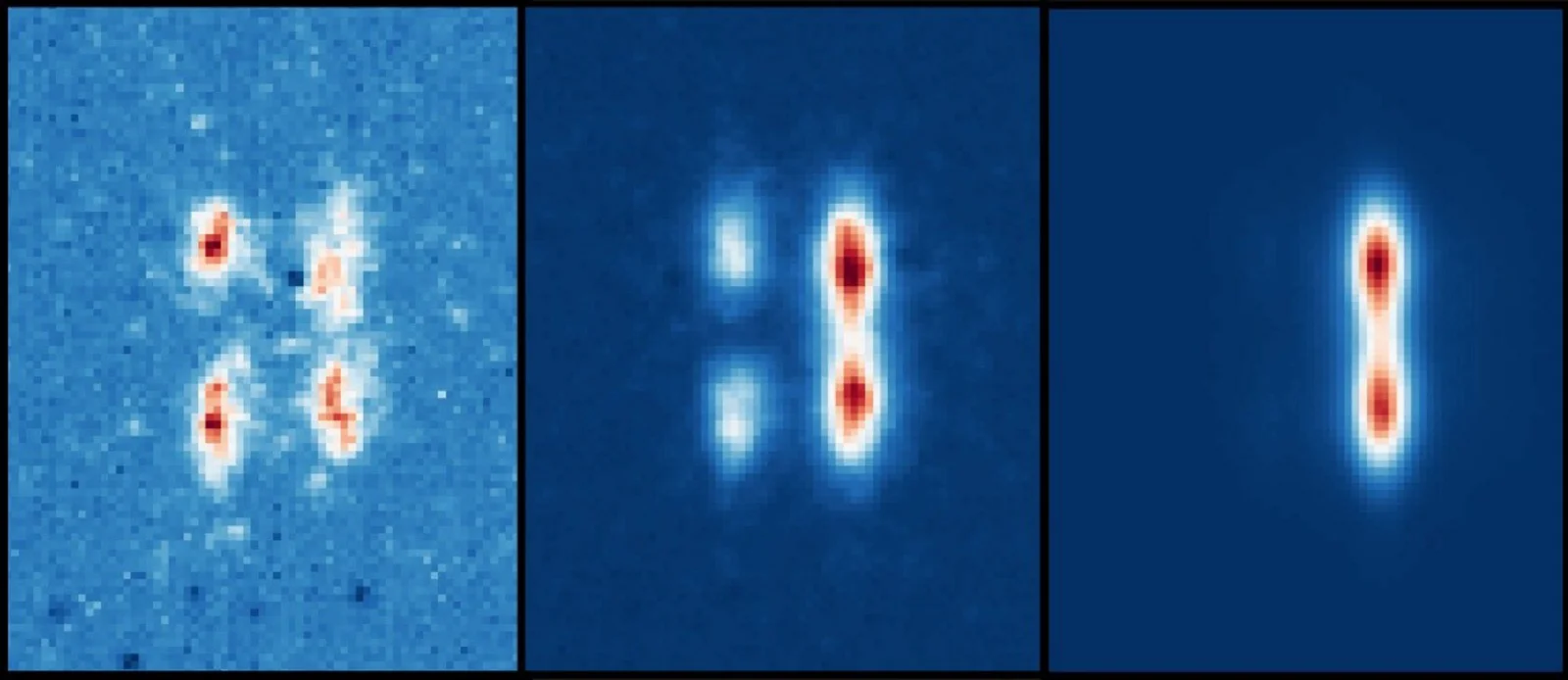
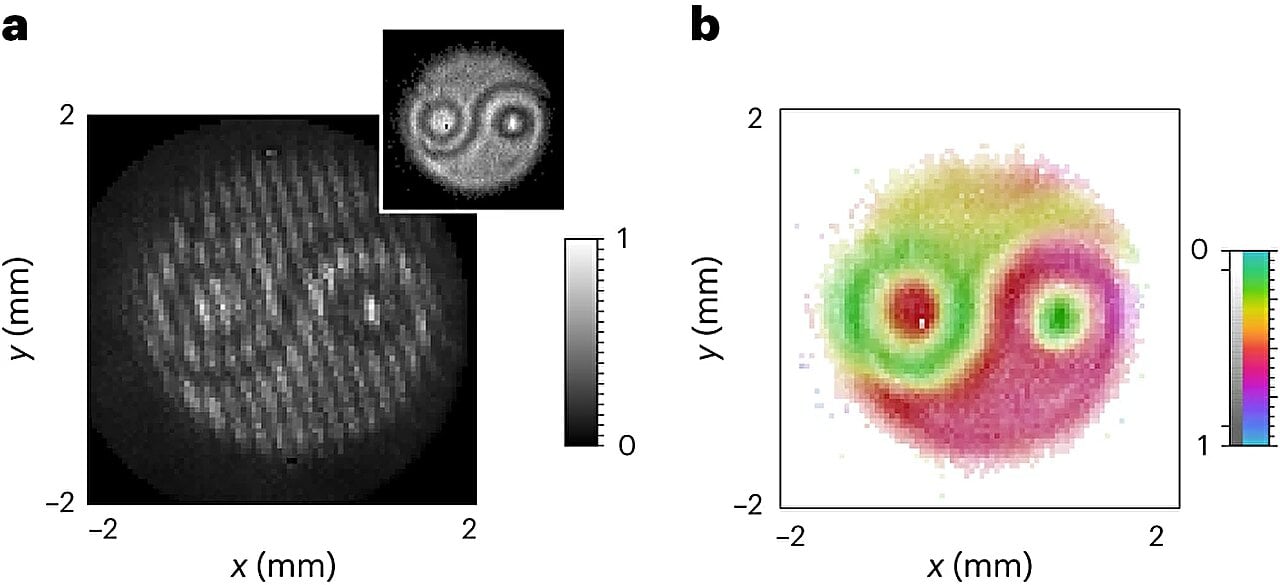
Scientists have developed a new technique using advanced camera technology to visualize the wave function of entangled photons in real-time, allowing for the swift and efficient reconstruction of the full quantum state of entangled particles. This method is exponentially faster than previous techniques, taking minutes or seconds instead of days, and has the potential to advance quantum technology by improving quantum state characterization, quantum communication, and quantum imaging techniques.
Neutrinos, elusive particles that typically pass through matter without interacting, may actually interact with light in powerful magnetic fields found in plasma surrounding stars, according to new calculations. This discovery could help explain why the Sun's atmosphere is hotter than its surface and provide insights into fundamental particle physics. Neutrinos, which are abundant in the Universe, have minimal mass and rarely interact with matter. The research suggests that under extreme conditions, neutrinos can interact with photons, releasing energy that heats up the solar corona. Further investigations are planned to explore how neutrinos and photons exchange energy in extreme environments.
Researchers at Hokkaido University have discovered that neutrinos, elusive particles that rarely interact with other particles, can interact with photons in the presence of uniform magnetic fields found in plasma. This unexpected interaction, known as the electroweak Hall effect, provides new insights into the quantum mechanical interactions of fundamental particles and may help explain phenomena in the sun and other stars. The findings could also contribute to understanding the solar corona heating puzzle, as the interaction between neutrinos and photons releases energy that heats up the sun's outermost atmosphere. Further research is needed to explore the energy transfer between neutrinos and photons under extreme conditions.
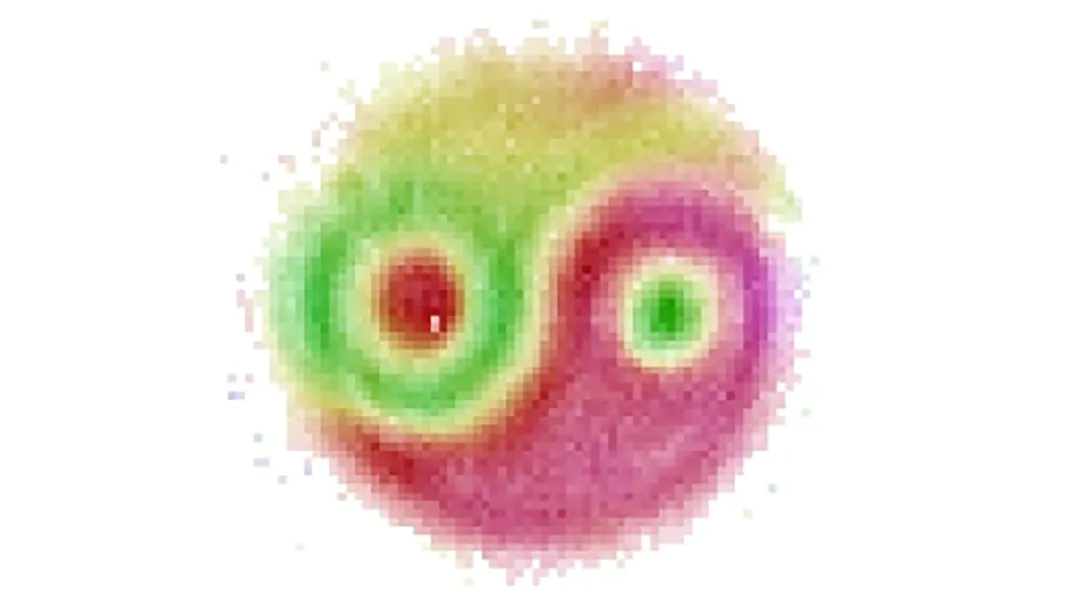
Researchers from the University of Ottawa and the Sapienza University of Rome have developed a technique using digital holography to visualize the wavefunction of an entangled pair of photons, demonstrating the reality of quantum entanglement. The technique involves superimposing the wave of the entangled photons with a reference wave and analyzing the distribution of coincidences. The resulting image resembles a Yin and Yang symbol and has implications for quantum technologies such as quantum computers. The technique also has the potential to inspire new imaging techniques beyond the limits of classical optics.
Researchers at the University of Ottawa have developed a novel technique that allows for the real-time visualization of the wave function of entangled photons. By using an advanced camera and interferometric imaging, the team was able to reconstruct the unknown wave function of two entangled photons, a process known as quantum tomography, in minutes or seconds instead of days. This breakthrough has the potential to accelerate advancements in quantum technology, including quantum state characterization, quantum communication, and quantum imaging techniques.