Tag

Big Bang

All articles tagged with #big bang

Lab recreates the Big Bang’s first millisecond, revealing a soupy primordial plasma
physics-and-mathematics10 days ago

Lab recreates the Big Bang’s first millisecond, revealing a soupy primordial plasma

Physicists at the LHC's CMS collaboration watched a high-energy quark traverse quark-gluon plasma by using Z bosons as a clean directional tag. They observed a subtle less-than-1% dip in backward-produced hadrons, consistent with a wake in the primordial soup and offering new insight into the liquid-like properties of the early-universe plasma.
Memories in the vacuum: are we living as Boltzmann Brains?
science1 month ago

Memories in the vacuum: are we living as Boltzmann Brains?

Physicists propose the Boltzmann Brain hypothesis: given enough time, random fluctuations could create a brain with all your memories, making our recollections potentially illusory. In a paper in Entropy, lead author David Wolpert and co-authors Carlo Rovelli and Jordan Scharnhorst argue this is a plausible consequence of physics, though there’s no rigorous way to prove or disprove it. They connect the idea to thermodynamics and argue that grounding our sense of time still rests on the Big Bang, concluding we shouldn’t panic, but the notion challenges the reliability of memory as a reflection of past reality.

Einstein–Rosen Bridges: Time Mirrors, Not Tunnels
space1 month ago

Einstein–Rosen Bridges: Time Mirrors, Not Tunnels

A new study reframes the Einstein–Rosen bridge from a travel conduit to a time-symmetric link that preserves unitarity in curved spacetime, suggesting wormholes aren’t cosmic tunnels, potentially resolves the black hole information paradox, and portrays the Big Bang as a quantum bounce between opposing arrows of time with possible connections to dark matter.

Theories on the Universe's Final Fate
science3 months ago

Theories on the Universe's Final Fate

The universe, originating from the Big Bang about 14 billion years ago, is expected to continue expanding, with star formation ceasing and galaxies merging into larger elliptical galaxies over trillions of years. Ultimately, the universe may fade into darkness, driven by dark energy, but its exact future remains uncertain and open to new discoveries.

Potential Clues to the Pre-Big Bang Universe
science3 months ago

Potential Clues to the Pre-Big Bang Universe

Recent cosmological research suggests that understanding the universe's ultimate fate—whether it will end in a Big Crunch, Big Freeze, or a cyclical Big Bounce—could provide insights into what preceded the Big Bang, especially with new evidence indicating that dark energy may not be constant but evolving over time, possibly involving particles called axions that influence cosmic expansion.

Why the Universe's Expansion Had Limits
science4 months ago

Why the Universe's Expansion Had Limits

The article explains that the universe could not have expanded forever into the past due to the implications of the Borde-Guth-Vilenkin theorem, which shows that inflationary spacetimes are past-timelike-incomplete, meaning they cannot be eternal and must have had some initial state, possibly a singularity or a different pre-inflationary condition.

Physicists Unveil New Insights into the Early Universe's Extreme Temperatures
science4 months ago

Physicists Unveil New Insights into the Early Universe's Extreme Temperatures

The article discusses the uncertainties surrounding the maximum temperature of the early universe during the Big Bang, highlighting how cosmic inflation and observational data from the cosmic microwave background help constrain this temperature, which is estimated to be between 10^24 and 10^28 Kelvin, well below the Planck scale.

New Study Suggests the Big Bang Was a Rebound from a Black Hole
science5 months ago

New Study Suggests the Big Bang Was a Rebound from a Black Hole

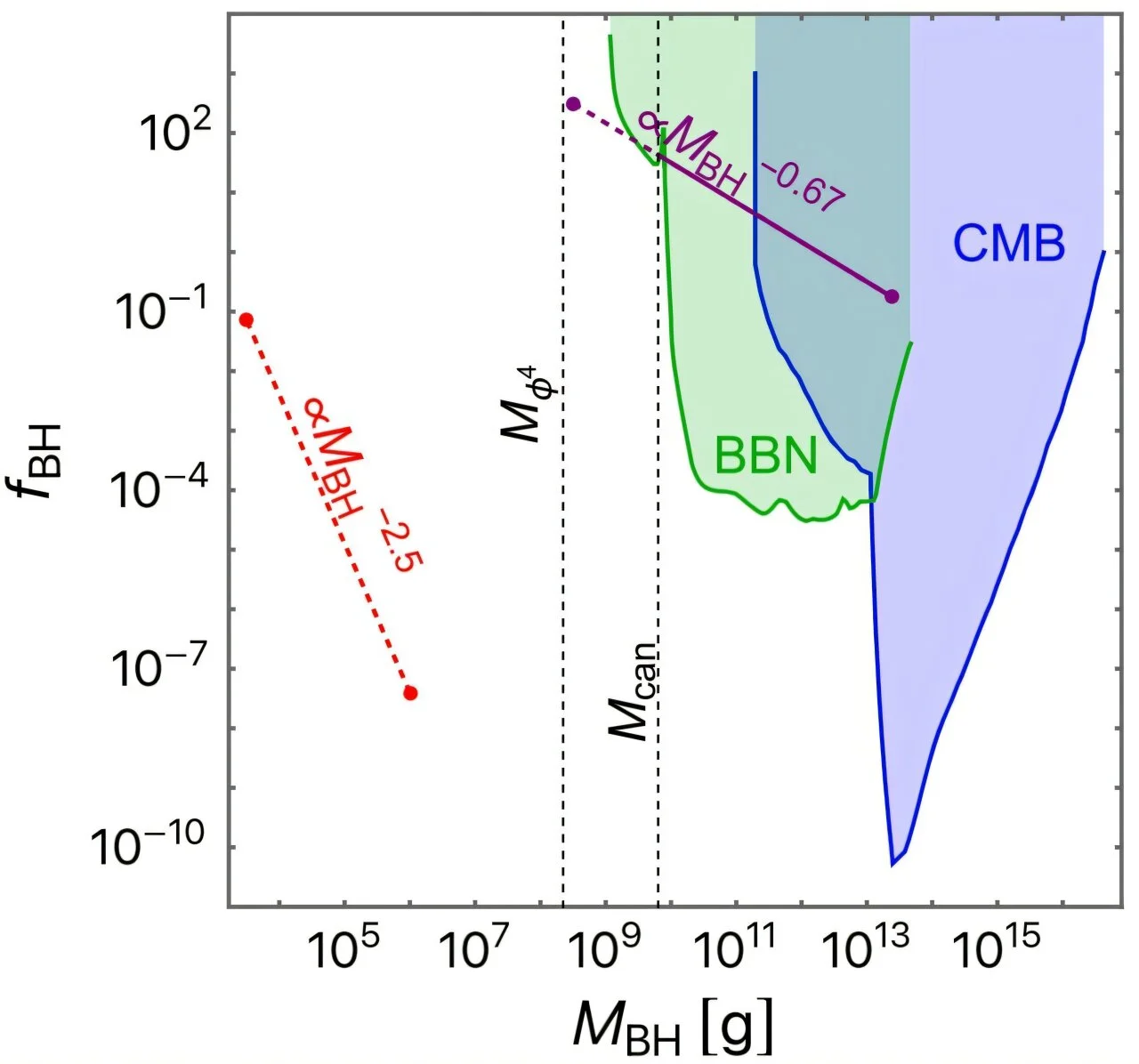
A new study suggests our universe may be inside a black hole that experienced a 'Big Bounce' instead of a traditional Big Bang, potentially explaining cosmic inflation and dark energy without extra assumptions. The model proposes the universe's origin as a rebound from a collapsing black hole, with testable predictions like slight curvature and relic black holes, opening new avenues for understanding cosmic origins.

Scientists Recreate the Universe's Birth, Uncovering Early Cosmic Secrets
science5 months ago

Scientists Recreate the Universe's Birth, Uncovering Early Cosmic Secrets

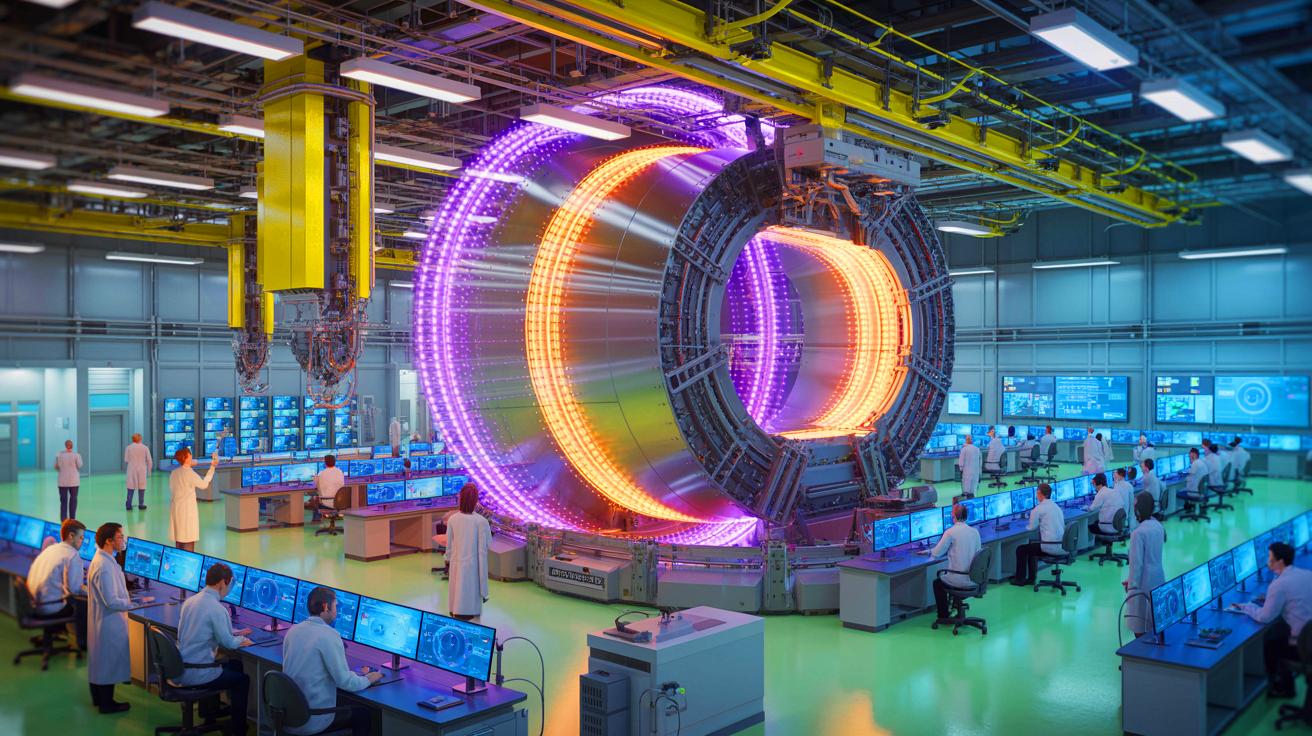
The sPHENIX detector at Brookhaven National Laboratory has successfully tested a new technology that captures detailed data from high-energy collisions, helping scientists better understand the universe's earliest moments and the elusive quark-gluon plasma formed shortly after the Big Bang, marking a significant advancement in cosmic research.