Tag

Physics

All articles tagged with #physics

Cosmic Fate Rewritten: Could the Universe End in a Big Crunch
science5 days ago

Cosmic Fate Rewritten: Could the Universe End in a Big Crunch

A Cornell-led analysis proposes the expansion of the universe could be temporary and eventually reverse if the cosmological constant is negative, driven by an ultralight axion field. The model places the universe’s total lifespan at about 33.3 billion years, with a slow crunch starting in roughly 11 billion years and final collapse about 8 billion years later (around 19–20 billion years from now). If dark energy’s behavior continues to deviate from a true constant, this Big Crunch scenario could hold; upcoming surveys and missions (Euclid, Rubin Observatory, SPHEREx) are expected to refine measurements and test the idea.

Thirty Cosmos Facts That Will Blow Your Mind
space8 days ago

Thirty Cosmos Facts That Will Blow Your Mind

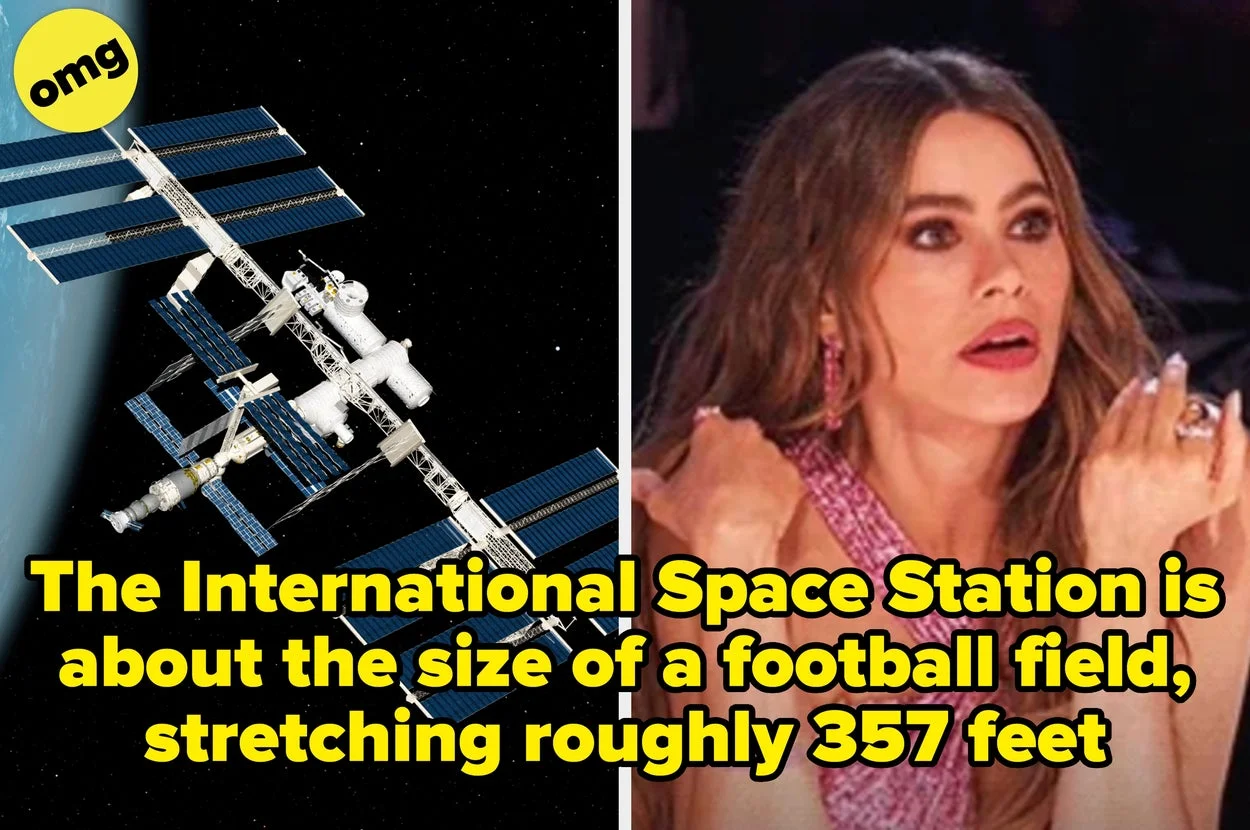
BuzzFeed’s list of 30 mind-blowing space facts spans the cosmos—from the observable universe’s staggering scale (about one septillion stars) and a universe dominated by dark energy and dark matter to eye-opening specifics like Venus’s day lasting longer than its year, Saturn’s ultra-low density (it would float in water), Olympus Mons dwarfing Earth’s tallest mountain, and the Moon’s regolith preserving footprints for up to 100 million years. It also covers neutron stars’ immense density, interstellar visitors like Oumuamua and Borisov, a giant reservoir of water 12 billion light-years away, blue sunsets on Mars, and even the Sun’s hypothetical roar in space.

Scientists Photograph Light in Motion, Revealing Terrell Rotation at Near-Light Speeds
science9 days ago

Scientists Photograph Light in Motion, Revealing Terrell Rotation at Near-Light Speeds

Researchers from the University of Vienna used pulsed lasers and ultrafast cameras to photograph light moving at near-light speeds, recreating the Terrell–Penrose rotation and showing how objects would appear rotated rather than squashed; by capturing slices of light and stitching them, they slowed light to about 2 m/s to visualize the motion, with implications for relativity studies, particle physics, and astrophysics.

physics15 days ago

Decoding Quantum Chaos with a Single Scramblon

A combined experiment/theory study using solid-state NMR on a powder of adamantane demonstrates that quantum chaos in a many-body system can be captured by a single scramblon mode. By applying scramblon theory to disentangle intrinsic chaotic scrambling from imperfections in time reversal, researchers extract a quantum Lyapunov exponent and a universal decay parameter, supporting a universal, simple description of chaotic dynamics that could bridge tabletop quantum experiments with holographic gravity concepts.

Graphene bilayers reveal a reversible superfluid-to-supersolid transition in excitons
physics17 days ago

Graphene bilayers reveal a reversible superfluid-to-supersolid transition in excitons

Physicists using two closely spaced graphene layers, a strong magnetic field, and ultracold temperatures observed bilayer excitons transition from a superfluid to an insulating, lattice-like state (interpreted as a supersolid) and then revert back to a superfluid, marking the first reported reversible superfluid-to-supersolid transition in this system in a Nature study led by Cory Dean and colleagues.

Could Our Cosmos Be a Giant Computer Simulation?
science23 days ago

Could Our Cosmos Be a Giant Computer Simulation?

The article surveys the simulation hypothesis—the idea that our universe might be a highly realistic computer simulation—by tracing Nick Bostrom’s argument that advanced beings could run trillions of simulations. It notes that, while the logic remains compelling for some (and figures like Neil deGrasse Tyson have called the odds roughly 50-50), there is no empirical proof, and critics argue that computing such vast simulations may be infeasible or that apparent glitches don’t prove we’re in a simulation. The discussion also connects physics and cosmology to the idea, including limits like the finite observable horizon and the idea of reality as potentially ‘pixelated’ at small scales."}{

Masers Rise Again: From Microwave Marvel to Room-Temperature Quantum Possibility
technology28 days ago

Masers Rise Again: From Microwave Marvel to Room-Temperature Quantum Possibility

Masers are the microwave cousins of lasers that power cryogenic amplifiers for deep-space signals, provide precise timekeeping with hydrogen and cesium clocks, and appear in natural astrophysical sources; advances in new materials could enable room-temperature masers and even chip-scale devices for quantum computing, signaling a potential revival beyond their historical role.

Memories in the vacuum: are we living as Boltzmann Brains?
science1 month ago

Memories in the vacuum: are we living as Boltzmann Brains?

Physicists propose the Boltzmann Brain hypothesis: given enough time, random fluctuations could create a brain with all your memories, making our recollections potentially illusory. In a paper in Entropy, lead author David Wolpert and co-authors Carlo Rovelli and Jordan Scharnhorst argue this is a plausible consequence of physics, though there’s no rigorous way to prove or disprove it. They connect the idea to thermodynamics and argue that grounding our sense of time still rests on the Big Bang, concluding we shouldn’t panic, but the notion challenges the reliability of memory as a reflection of past reality.

Emergent Topology Arises in Quantum-Critical CeRu4Sn6
physics1 month ago

Emergent Topology Arises in Quantum-Critical CeRu4Sn6

Researchers at TU Wien report that the quantum material CeRu4Sn6 enters a quantum-critical regime at ultra-low temperatures where electrons lose their particle-like character, yet the system hosts an emergent topological semimetal state. They observed a spontaneous (anomalous) Hall effect without an external magnetic field, linking quantum fluctuations to topology and suggesting that topological properties can arise even when the conventional particle-picture fails. The work also points to a generalized, emergent view of topology and proposes focusing on quantum-critical materials to discover new topological phases.

Thermodynamics Reimagined: A New Framework for Non‑Equilibrium Energy
science1 month ago

Thermodynamics Reimagined: A New Framework for Non‑Equilibrium Energy

Researchers at West Virginia University have expanded the first law of thermodynamics to describe energy conversion in non‑equilibrium systems by incorporating additional quantitative descriptors beyond density and temperature, enabling a more complete account of energy flow in complex substances such as plasmas, chemistry, circuitry, and quantum systems; the breakthrough could reshape how scientists model energetic processes across multiple fields.

Sticky Space? New Idea Says the Vacuum Could Be a Viscous Fluid Shaping the Cosmos
physics-and-mathematics1 month ago

Sticky Space? New Idea Says the Vacuum Could Be a Viscous Fluid Shaping the Cosmos

A new arXiv preprint proposes space may have bulk viscosity, effectively making the vacuum a viscous medium with spatial phonons that could slow cosmic expansion and better align DESI observations with reality. If true, this viscous-space model would challenge the standard Lambda-CDM cosmology and the cosmological constant, potentially redefining our understanding of dark energy. However, the idea is unreviewed and data-driven, with questions about whether viscosity is fundamental or a measurement artifact; upcoming data from Euclid and further DESI analyses will be crucial to test this hypothesis.

Is Reality Made of Equations? The Minimalist Math Universe
science1 month ago

Is Reality Made of Equations? The Minimalist Math Universe

Part 2 explores Max Tegmark’s Mathematical Universe Hypothesis, arguing that the universe may be fundamentally mathematical and that human concepts are “baggage” to be stripped away. By applying Occam’s razor, the piece suggests reality reduces to pure math—relationships and structures—so a final theory of everything could be a single mathematical description that explains all of reality, potentially eliminating constants, dimensions, and the need for a separate physics framework.