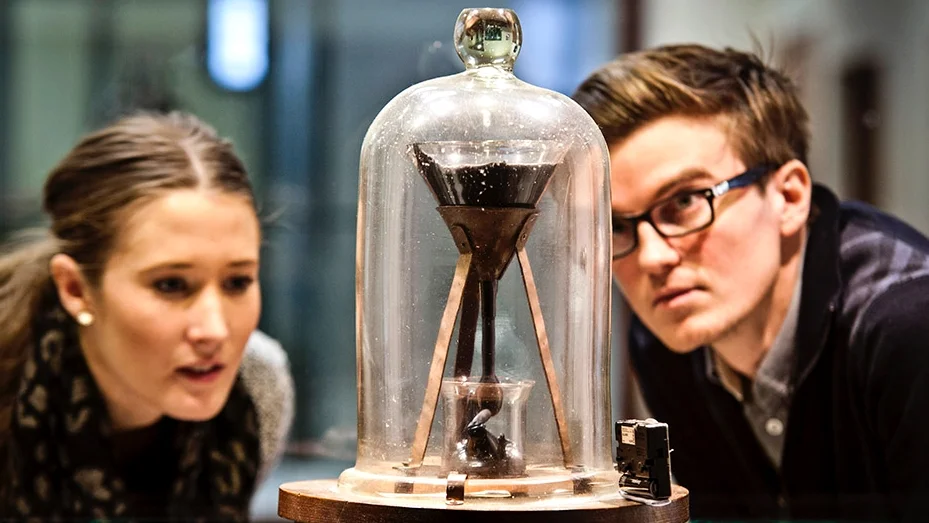
Since 1927, Thomas Parnell’s Pitch Drop Experiment at the University of Queensland has run continuously, slowly dripping pitch; by 2014 it had only nine drops, with the 10th expected in the 2020s, and current custodian Andrew White keeps vigil as the livestreamed, decades-spanning patience of science endures.
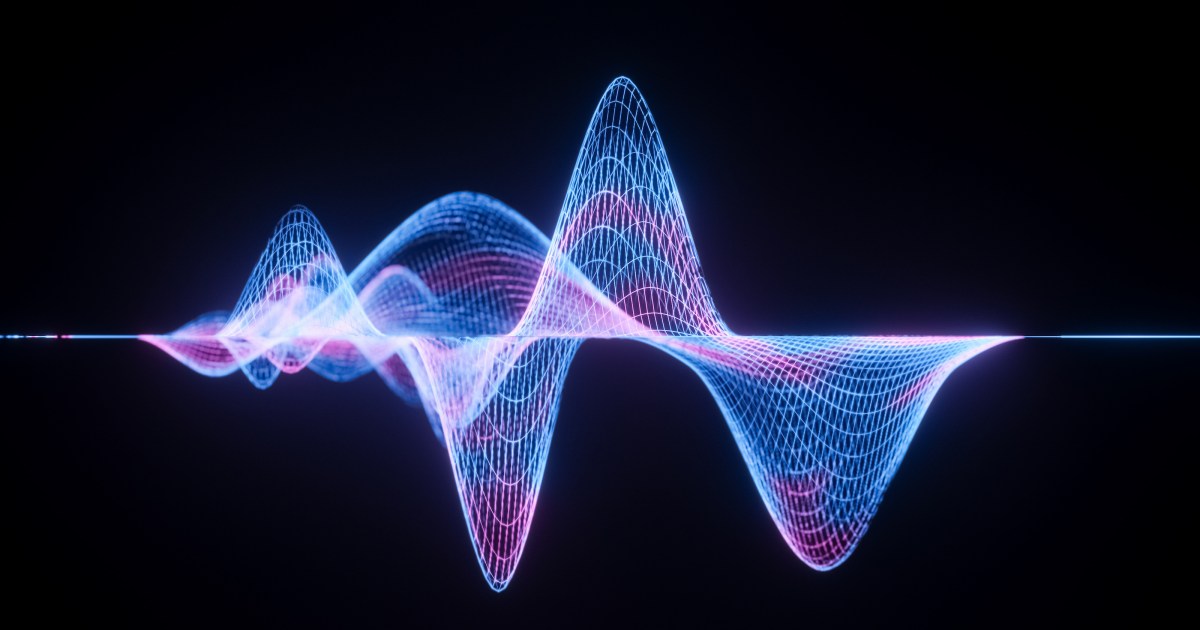
The concept of wave-particle duality, which describes the behavior of quanta such as light and electrons, has its origins in the 17th century with Christiaan Huygens and Isaac Newton. The idea that light is a wave was initially proposed by Huygens, while Newton described light as a series of rays or corpuscles. Thomas Young's double slit experiment in the early 19th century provided evidence for the wave nature of light, and subsequent experiments by Augustin-Jean Fresnel and François Arago further supported the wave theory. Maxwell's equations in the 19th century revealed light as an electromagnetic wave, and Einstein's work on the photoelectric effect demonstrated that light's energy is quantized into individual packets known as photons. Modern experiments continue to confirm the wave-particle duality of quanta, showing that they behave as waves when unobserved and as particles when measured or compelled to interact with other quanta.