physics9.055 min read
Decoding Quantum Chaos with a Single Scramblon
15 days ago•Source: American Physical Society

The latest physics stories, summarized by AI

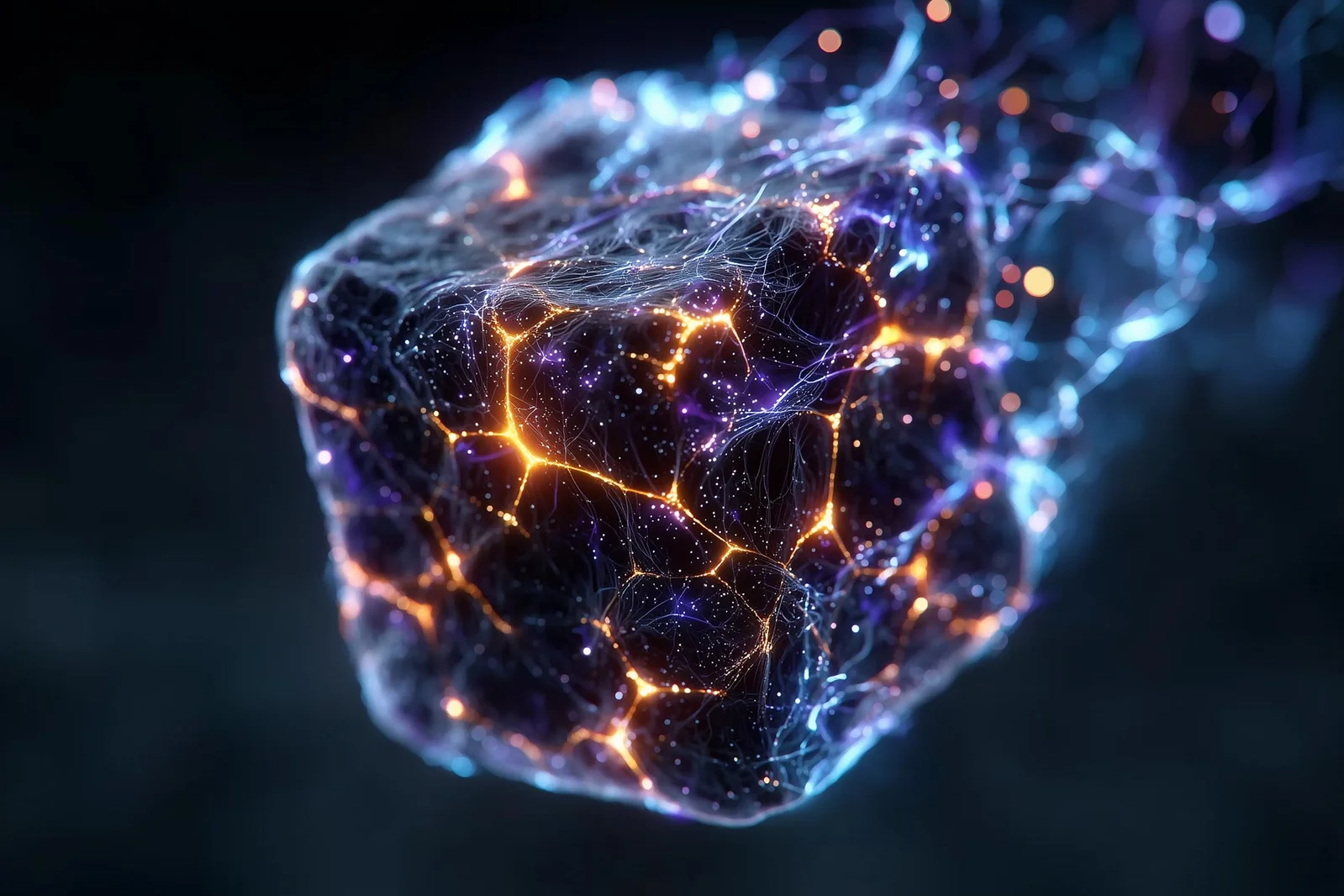
Physicists using two closely spaced graphene layers, a strong magnetic field, and ultracold temperatures observed bilayer excitons transition from a superfluid to an insulating, lattice-like state (interpreted as a supersolid) and then revert back to a superfluid, marking the first reported reversible superfluid-to-supersolid transition in this system in a Nature study led by Cory Dean and colleagues.
Nature•2 months ago
American Physical Society•8 months ago

Physicists are exploring the nature of singularities—points where space and time break down—predicted by Einstein's general relativity, and recent research suggests these may be more than mathematical artifacts, potentially existing in black holes and the early universe, challenging the quest for a complete quantum theory of gravity.
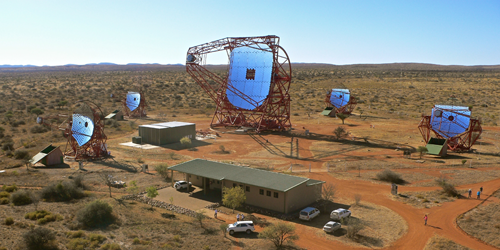
The H.E.S.S. Collaboration has extended the measurement of cosmic-ray electron and positron spectra to 40 TeV, revealing a significant spectral break at 1 TeV. This breakthrough challenges existing models of cosmic-ray origins and propagation, suggesting that local sources like pulsars or supernova remnants may play a role. The findings also constrain the potential contribution of dark matter annihilation to the cosmic-ray flux, prompting a reevaluation of cosmic-ray acceleration models.
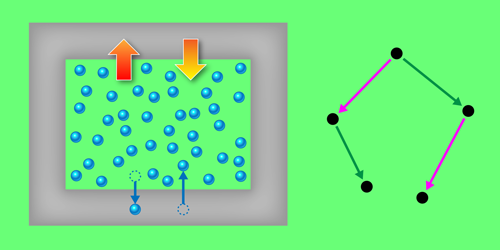
Researchers have discovered a new type of symmetry in statistical mechanics, identified as a gauge transformation, which leaves microstates and observable properties unchanged. This finding, by Matthias Schmidt and colleagues, offers a unified framework for deriving and verifying hyperforce relations, potentially leading to more efficient computational methods in molecular simulations. The study highlights the role of gauge invariance in understanding the collective behavior of particle systems and its implications for future research in both equilibrium and dynamic properties.
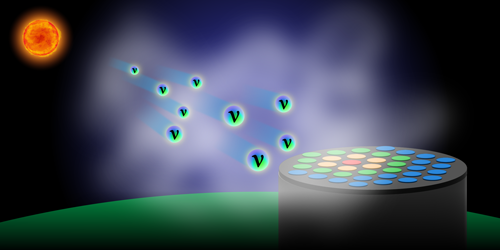
Two dark matter experiments, PandaX and XENON, have detected signals from solar neutrinos, known as the "neutrino fog," which could complicate future dark matter searches. These experiments, using liquid xenon detectors, observed coherent elastic neutrino-nucleus scattering (CEvNS) events, a process predicted to mimic dark matter signals. While the neutrino fog poses a potential challenge, it is not expected to significantly impact dark matter searches for at least a decade. The findings also open new avenues for neutrino research and standard-model testing.

Researchers in Germany have successfully sent single electrons along structured chiral paths, achieving chirality in electron matter waves without angular momentum. This work, which parallels earlier research with photons, could have significant applications in electron microscopy and the study of magnetic materials. However, some scientists are skeptical about the claim of chirality without angular momentum and the lack of citation of previous related work.
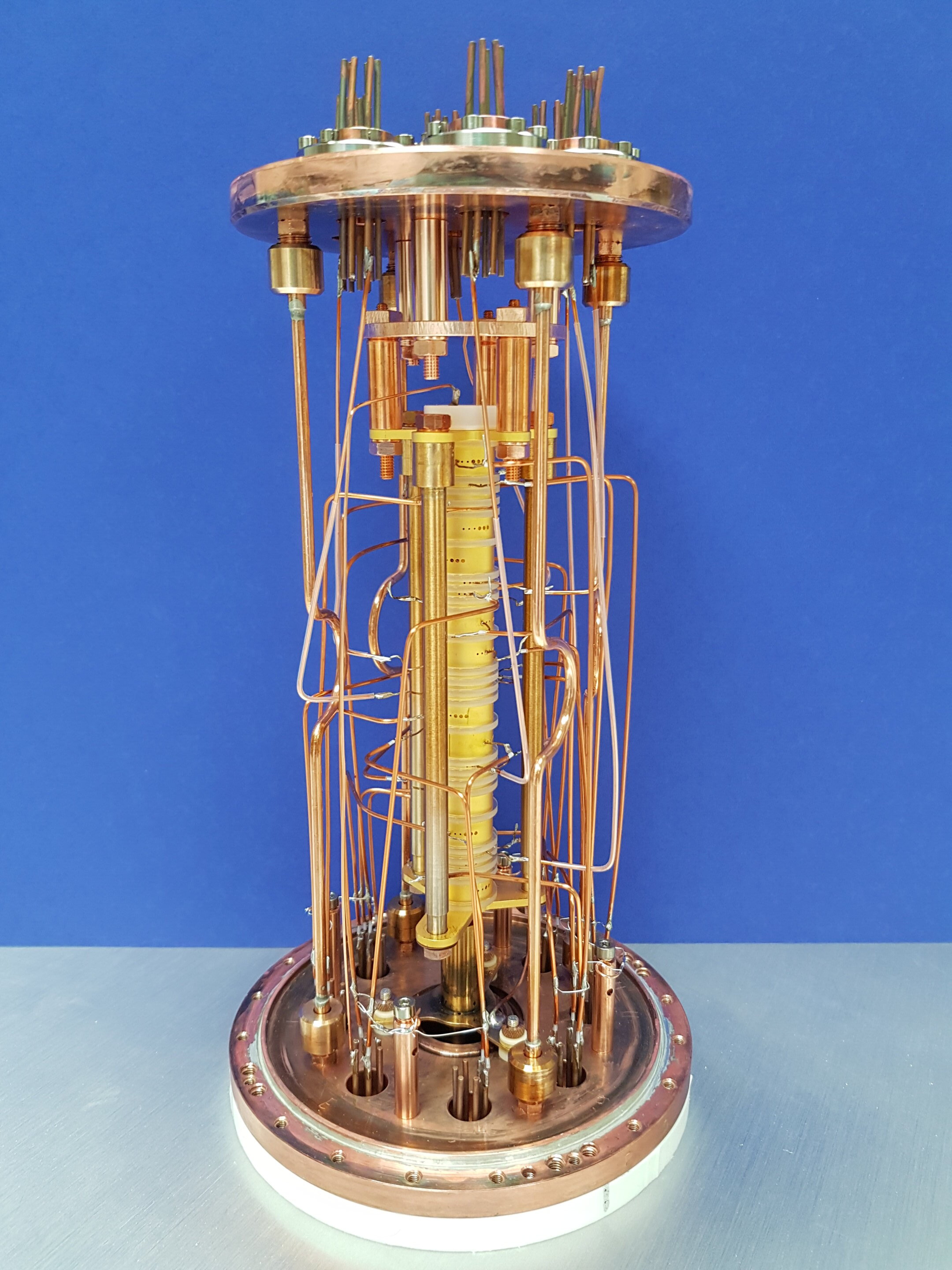
Researchers have made a significant contribution to determining the mass of neutrinos, a fundamental yet elusive aspect of particle physics, by using a Penning trap to measure the change in mass of a holmium-163 isotope with extreme precision. This method allows for the determination of the Q value 50 times more accurately than before, potentially revealing systematic errors in the determination of the neutrino mass. The findings offer a major step forward in understanding the mysterious neutrino masses and the potential existence of new physics beyond the standard model.

Physicists have made progress in measuring the mass of neutrinos, elusive particles that could challenge the Standard Model of particle physics. Neutrinos, which lack electrical charge and have almost no mass, are difficult to measure due to their elusive nature. The researchers used an experiment with unprecedented sensitivity to measure the upper limit of the neutrino's mass, providing a more precise estimate than previous experiments. This achievement could lead to new discoveries in physics and a deeper understanding of the universe.

Researchers in Germany and Austria have made progress in developing a nuclear clock based on thorium-229, demonstrating the ability to put nuclei of the isotope into a low-lying metastable state with exceptionally low excitation energy. This advancement could lead to a more stable and practical solid-state nuclear clock, offering potential applications in detecting time variations related to new physics beyond the Standard Model and measuring time dilation due to gravitational differences.

Theoretical physicists have delved into the mysterious world of granular materials, shedding light on the propagation of sound through these materials, particularly near the "jamming transition." Their study, published in the European Physical Journal E, reveals universal and non-universal statistical features of the vibrational spectra of granular packings, described by random matrix theory. This work not only provides insights into everyday scientific mysteries but also presents a unified model for stress distribution and vibrational spectra, highlighting the importance of studying fundamental problems in the everyday world around us.
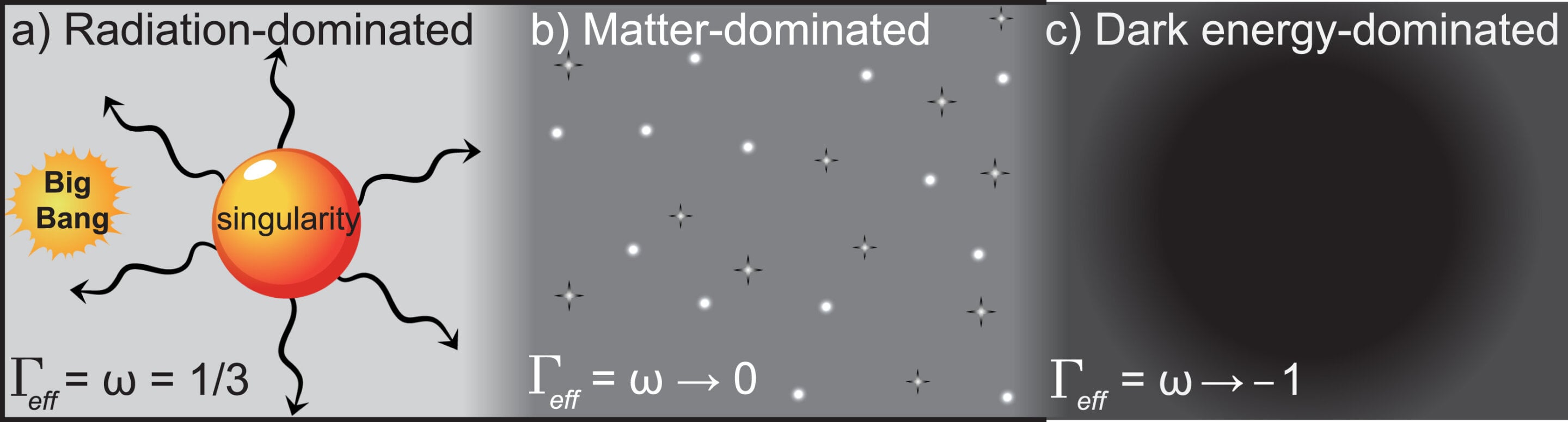
A study published in Results in Physics uses the Grüneisen parameter from thermodynamics to describe the expansion of the universe, suggesting that the accelerating expansion is adiabatic and anisotropic. The research proposes that the Grüneisen parameter is time-dependent in the dark energy-dominated era and could lead to a novel interpretation of the expansion of the universe in terms of thermodynamics and condensed matter physics. The study also explores the relationship between the expansion of the universe and fundamental concepts in thermodynamics, offering a new perspective on the dynamics associated with the universe's expansion.