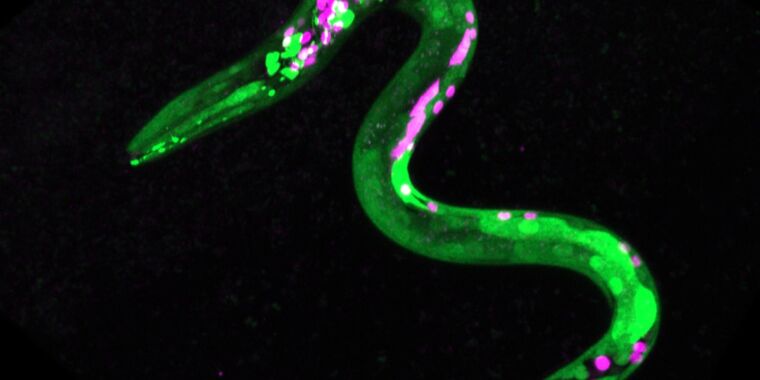
Scientists discovered that sensory signals like touch can influence lifespan by regulating a key longevity gene, fmo-2, in worms, revealing potential pathways to extend life without extreme lifestyle changes.
Researchers discovered that in C. elegans, the neuropeptide FLP-11 acts on the receptor DMSR-1 in different neurons to both initiate and terminate sleep, revealing a potential universal sleep switch mechanism that could inform understanding of sleep control in humans.
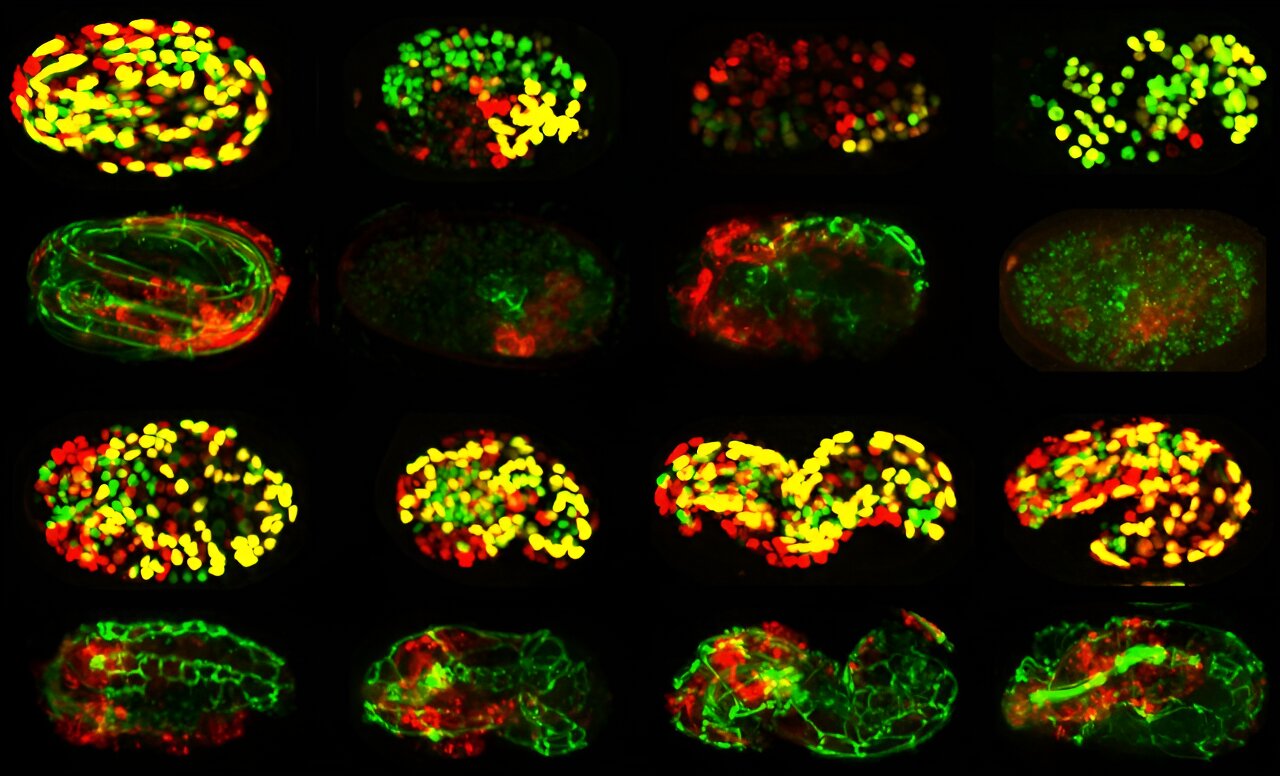
Researchers at UC San Diego have developed a "genetic atlas" using the model organism C. elegans to profile the function of nearly 500 genes during embryonic development. By blocking each gene one at a time and using time-lapse 4D imaging and computer vision, they tracked how these genes influence tissue formation and cell identity. This study, published in Cell, provides new insights into gene functions and their roles in development, with implications for understanding human developmental disorders. The data is now available through an online resource called PhenoBank.
A study has found that the microbes in kombucha tea can induce changes in fat metabolism in the intestines of a model worm species similar to those seen during fasting. The probiotic microbes in kombucha alter gene expression related to fat metabolism, leading to reduced fat stores in the worms. While more research is needed to confirm these effects in humans, the findings suggest that kombucha's reported health benefits may be linked to its probiotic microbes and their impact on metabolism.
New research on the roundworm species C. elegans has revealed that imbalances in RNA communication between cells and from the external environment can lead to a shortened lifespan, shedding light on the genetic regulation of aging. The study, conducted by scientists from the State University of Campinas (UNICAMP) in Brazil, demonstrates that disruptions in the transfer of RNA molecules can impact the organism's lifespan, providing insights into the aging process and associated diseases. The findings contribute to a better understanding of the intertissue signaling mechanism and its role in regulating lifespan.
Scientists have discovered critical patterns of fatty acid attachment in the model organism C. elegans, shedding light on the protein modification process and its link to specific fat metabolic pathways. This finding has implications for understanding and treating various human diseases, including cancer, neurodegeneration, cardiovascular disorders, and infectious diseases. The study also reveals the first example of abundant protein modification with branched-chain fatty acids, potentially opening new avenues in nutritional science and highlighting the connection between diet, gut health, and protein modification.
Researchers at Princeton University have used the transparent worm, Caenorhabditis elegans, to study how neural information flows in the brain. By employing advanced techniques like optogenetics, they were able to visually track signal flow in real-time, neuron by neuron, and discovered unexpected "wireless signals" involving molecular releases that affect neural dynamics. This groundbreaking research challenges existing predictions based on the worm's connectome and provides valuable insights into understanding neural response.
A study led by researchers at Massachusetts General Hospital has found that metformin, a drug commonly used to treat type 2 diabetes, can extend the lifespan of C. elegans, a model organism. The drug achieves this by stimulating the production of ether lipids, a component of cell membranes. Increasing ether lipid synthesis alone was also found to extend the lifespan of C. elegans. While these findings are promising, further research is needed to determine the implications for human health.
MIT researchers have studied a single neuron in the C. elegans worm and discovered its role in regulating multiple behaviors. The neuron, known as HSN, uses various neurotransmitters and can "borrow" serotonin from other neurons, shedding light on potential psychiatric treatments in more complex organisms. The study reveals how a single neuron can influence a broad range of behaviors over multiple timescales and demonstrates that neurons can share serotonin to control behavior. The findings also highlight the complexity of neuronal connections and neurotransmitter systems in orchestrating behavior.
Researchers at MIT have successfully mapped the neural activity of the C. elegans worm, providing insights into how its brain cells encode behaviors such as movement and feeding. Using a new microscope and software system, the team tracked the behaviors and activity of every neuron in the worm's head, revealing that neurons encode both current and past behaviors. They also discovered that 30% of the neurons can remap their behavior encoding, adapting their functions based on changing circumstances. The findings, data, and models are freely available on the "WormWideWeb," providing a comprehensive understanding of how the worm's nervous system controls behavior.
Researchers have identified a single gene, VPS-34, that plays a crucial role in motor aging and could potentially extend healthy human longevity. By inhibiting VPS-34, the researchers observed improved motor function, synaptic transmission, and muscle integrity in both worms and mice. This discovery provides a potential actionable target for delaying motor aging and promoting healthy aging. However, further research is needed to fully understand the implications and potential risks associated with VPS-34 inhibition in different contexts.
Researchers have discovered that tiny nematodes, including the famous Caenorhabditis elegans, use electrical fields to disperse far afield into new habitats. The worms can piggyback on electrical fields to jump a surprising distance, such as onto the back of a bumblebee for a ride to a new locale. The researchers found that electrostatic force helps power the worms' leaps, and they can hitchhike on passing bees to disperse through the environment. Further studies on the electric field and the behavior of C. elegans are expected to provide more details on the electrical ethology of microorganisms.
A study on C. elegans worms shows that sleep is essential for maintaining memories associated with particular smells. The worms have a critical sleep window of 1-2 hours after odour training, during which they solidify their memories. Disturbing their sleep prevents crucial changes to their nervous system that are involved in forming long-lasting memories. The research paves the way for scientists to delve more into the processes that occur at the cellular and molecular level during sleep.
Researchers at MIT have conducted a comprehensive study on serotonin, a key molecule in influencing mood and behavior, tracing its impact from the molecular level to the brain’s overall functioning using the simple animal model of C. elegans. The study identified the functional roles of the worm’s six serotonin receptors, revealing complex interactions between them that likely have direct relevance to psychiatric drugs targeting these receptors. Findings from this research could be crucial in improving existing psychiatric drugs and developing new ones targeting the serotonin system.
A new study published in the journal Current Biology found that roundworms, C. elegans, experience the munchies when dosed with cannabinoids. The worms showed a marked preference for high-calorie junk food. The endocannabinoid system (ECS) regulates and controls several critical bodily functions, including appetite. Cannabis plants have substances that bind to the same receptors as the ECS, notably marijuana's active ingredient, tetrahydrocannabinol (THC), which stimulates appetite by binding to CB1 receptors and mimicking the activity of the body's naturally produced cannabinoids. The study could further our understanding of the endocannabinoid system and help drug development.