Tag

Brain Signals

All articles tagged with #brain signals

neuroscience1 year ago

"Decoding the Influence of Dopamine and Serotonin on Social Behavior"

A study published in Nature Human Behavior reveals the roles of dopamine and serotonin in social decision-making, shedding light on how these neurotransmitters influence responses to offers in an ultimatum game. The research, conducted in Parkinson’s disease patients undergoing brain surgery, shows that dopamine and serotonin dynamically interact to influence decision-making based on social context, offering potential for new treatments for Parkinson’s and psychiatric conditions.

neuroscience2 years ago

Unveiling the Intricacies of Brain Signals and Synapses

Researchers at Princeton University have used the transparent worm, Caenorhabditis elegans, to study how neural information flows in the brain. By employing advanced techniques like optogenetics, they were able to visually track signal flow in real-time, neuron by neuron, and discovered unexpected "wireless signals" involving molecular releases that affect neural dynamics. This groundbreaking research challenges existing predictions based on the worm's connectome and provides valuable insights into understanding neural response.

neuroscience2 years ago

Decoding the Secrets of Superior Memory: Unveiling Brain Signals

Researchers at the University of Basel have discovered a direct link between brain activity in specific regions, such as the hippocampus, and memory performance. In a study involving nearly 1,500 participants, the researchers found that individuals with better memory exhibited stronger brain activation in these areas. The findings could have implications for future research on the biological characteristics associated with brain signals and memory performance.

neuroscience2 years ago

Cracking the Code of Memory Diversity: Decoding Brain Signals

Researchers have conducted the largest functional imaging study on memory, involving 1,500 participants, and have identified brain signals associated with variations in memory performance. The study found that brain regions, particularly the hippocampus, exhibited a direct association between their activity during the memorization process and subsequent memory performance. Individuals with better memory showed stronger activation in these brain areas. The study also identified functional brain networks related to memory performance, highlighting the complexity of brain communication during information storage. The findings have implications for future research linking biological characteristics, such as genetic markers, to brain signals.

health2 years ago

"Stanford's Groundbreaking Treatment: Reversing Brain Signals to Combat Depression"

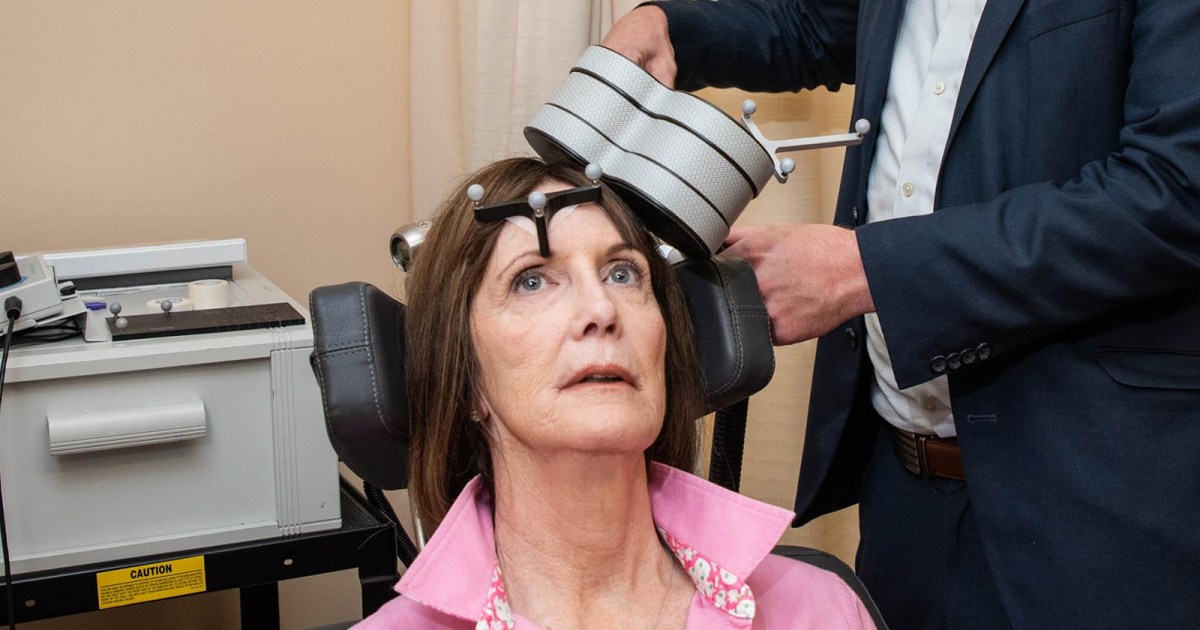
Researchers at Stanford Medicine have discovered that transcranial magnetic stimulation (TMS), a treatment for severe depression, works by reversing abnormal brain signals. The study also identified a potential biomarker for diagnosing depression - the backward flow of neural activity between key areas of the brain. By applying magnetic pulses to stimulate the brain, TMS can rapidly alleviate symptoms in individuals for whom traditional treatments have been ineffective. The research team used functional magnetic resonance imaging (fMRI) to analyze brain activity and found that the flow of signals between specific brain regions was reversed in depressed patients. However, after receiving TMS treatment, the flow of neural activity shifted back to normal, coinciding with an improvement in depression symptoms. This discovery could help develop personalized treatments and biomarkers for depression.

neuroscience2 years ago

Spiral Brain Waves and Cognitive Function: A Correlation

Researchers have discovered swirling spiral patterns of brain signals on the human cortex that play a crucial role in organizing brain activity and cognitive processing. These spirals facilitate intricate interactions for computational efficiency and allow for flexible reconfiguration of brain activity during various tasks involving natural language processing and working memory. The study's findings were obtained from functional magnetic resonance imaging (fMRI) brain scans of 100 young adults, which the researchers analyzed using methods typically employed to understand complex wave patterns in turbulence.

health2 years ago

Unraveling the Mystery of Magnetic Stimulation for Depression Relief.

A new study has found that stimulating the brain with magnetic fields can help relieve depression symptoms by reversing brain signals going in the wrong direction. The study also found that these neural streams of activity going in the wrong direction could be used as a way of diagnosing depression in the future. The treatment, known as Transcranial Magnetic Stimulation (TMS), is non-invasive, can be personalized to each patient, and has received regulatory approval. The study involved patients diagnosed with treatment-resistant major depressive disorder, and the researchers were able to fix abnormal brain signals in the majority of patients with depression.

health2 years ago

Uncovering Brain Signatures of Chronic Pain for Objective Measurement and Treatment

Scientists have discovered brain signals that can indicate the amount of pain a person is experiencing, which could lead to breakthrough treatments for chronic pain. The study shows that it’s possible to track and predict recurrences of chronic pain even when sufferers are going about their daily lives. The discovery raises the possibility of treating chronic pain with brain stimulation therapy, which is already used to treat depression and Parkinson’s. The current treatments for chronic pain are not very effective, and opioids are addictive, hence the search for new ways to manage the problem.

health2 years ago

Identifying Brain Signals for Chronic Pain

Researchers have discovered objective biomarkers of chronic pain severity in four patients with chronic pain using a brain implant that can record neural signals over many months. The study found that low frequencies in the orbitofrontal cortex corresponded with each of the patients’ subjective pain intensities, providing an objective measure of chronic pain. The experiment provides the first direct evidence that chronic pain involves information-processing areas of the brain distinct from those involved in acute pain. The discovery could improve the diagnosis of chronic pain conditions and help develop new treatments such as deep brain stimulation.

health2 years ago

Reversing Brain Signals with Depression Treatment.

Researchers at Stanford University have discovered that certain brain signals flow the wrong way in people with treatment-resistant depression, but transcranial magnetic stimulation (TMS) can correct the misdirection and help patients feel better. The study found that in 75% of people with depression, some of the signals flowed the opposite way, and the more severe a person’s depression, the greater the proportion of wrong-way signals. Within three days of finishing the TMS treatment, the reversed signals were flowing in the right direction, and patients were reporting an improvement in their mood.

neuroscience2 years ago

"AI Decodes Brain Signals to Predict Perception and Speech"

EPFL researchers have developed a machine-learning algorithm called CEBRA that can predict what mice see based on decoding their neural activity. The algorithm maps brain activity to specific frames and can predict unseen movie frames directly from brain signals alone after an initial training period. CEBRA can also be used to predict movements of the arm in primates and to reconstruct the positions of rats as they move around an arena, suggesting potential clinical applications.

neuroscience2 years ago

AI Decodes Mouse Brain Signals to Predict Visual Perception

EPFL researchers have developed a machine-learning algorithm called CEBRA that can predict what mice see based on decoding their neural activity. The algorithm maps brain activity to specific frames and can predict unseen movie frames directly from brain signals alone after an initial training period. CEBRA can also be used to predict movements of the arm in primates and to reconstruct the positions of rats as they move around an arena, suggesting potential clinical applications.